Original: $8.99
-65%$8.99
$3.15The Story
What Are NeilMed Sinus Rinse Sachets and How Can They Help You?
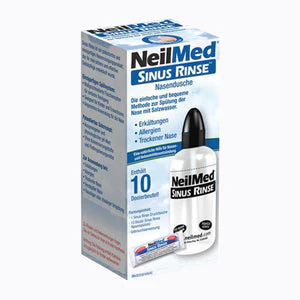
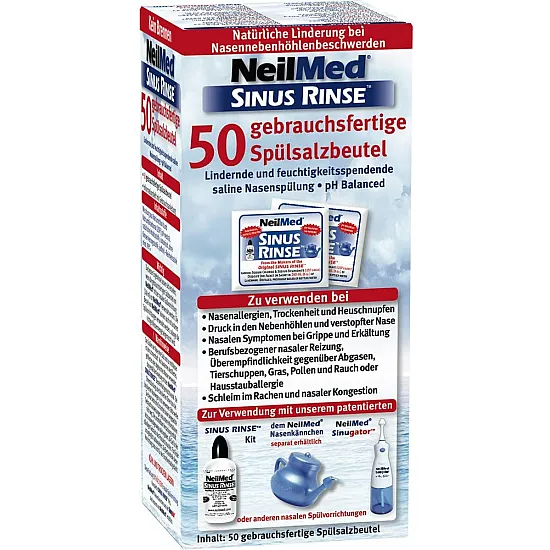
If blocked sinuses, persistent congestion, or hay fever are making daily life uncomfortable, you are not alone. Millions of people in the UK experience nasal symptoms every year, whether triggered by seasonal pollen, dust mites, pet dander, or recurrent sinus infections. The NeilMed Sinus Rinse Refill Kit — 50 Sachets offers a simple, drug-free way to manage these symptoms at home. Each pack contains 50 pre-measured sinus rinse sachets, designed to be used with the NeilMed Sinus Rinse bottle (sold separately) to deliver a gentle, buffered saline flush directly into the nasal passages. At just £8.99, it represents excellent value for anyone managing ongoing nasal symptoms. You can also explore our wider range of allergy and hay fever treatments if you need additional support alongside nasal rinsing.
Each sachet contains a carefully balanced mixture of sodium chloride (salt) and sodium bicarbonate (baking soda). Together, these ingredients create an isotonic or hypertonic saline solution — one that closely matches the body's own fluid concentration — making it far more comfortable to use than plain water or unbalanced salt solutions. The sachets are individually sealed, making them hygienic and easy to store or carry when travelling.
How Does NeilMed Sinus Rinse Work to Clear Your Nasal Passages?
Nasal irrigation works by physically flushing the nasal cavity with a saline solution, removing the mucus, debris, allergens, and bacteria that accumulate there. It is a technique with a long history in clinical practice and is recommended by NHS guidelines for managing sinusitis and nasal congestion. Here is what happens when you use a sinus rinse sachet:
- The saline solution enters one nostril and flows through the nasal cavity.
- It loosens and dislodges thick or dried mucus, making it easier to clear.
- Allergens such as pollen and dust particles are physically washed away from the nasal lining.
- The sodium bicarbonate buffers the solution, reducing the stinging sensation that plain saline can cause.
- The moisturising effect soothes irritated nasal mucosa, which can become dry and inflamed during allergy season or after a cold.
Unlike decongestant sprays, there is no risk of rebound congestion (rhinitis medicamentosa) with saline rinses. You can use them regularly without worrying about dependency.
Who Is NeilMed Sinus Rinse Suitable For?
This product is suitable for a wide range of people dealing with nasal and sinus symptoms. It is drug-free, which makes it an appealing option for those who prefer to avoid medicated sprays or who cannot take certain medicines due to other health conditions. It is particularly useful for:
- Adults and children aged 2 years and over with nasal congestion or sinusitis.
- Hay fever sufferers looking to reduce pollen load in the nasal passages.
- People recovering from nasal or sinus surgery, as directed by their surgeon.
- Those with chronic rhinitis or post-nasal drip who need regular nasal hygiene support.
It is not suitable for people with a completely blocked nasal passage on both sides, or those with a known perforation of the nasal septum. If you are pregnant, breastfeeding, or have had recent ear surgery, speak to your GP or pharmacist before use.
How Does NeilMed Sinus Rinse Compare to Other Nasal Saline Products?
| Feature | NeilMed Sinus Rinse Sachets | Standard Saline Nasal Spray |
|---|---|---|
| Volume delivered per use | Up to 240 ml (full nasal flush) | Approx. 0.1–0.15 ml per spray |
| Allergen removal | High — physically flushes nasal cavity | Low — surface moisturisation only |
| Buffered formula | Yes — sodium bicarbonate included | Varies by brand |
| Suitable for children (2+) | Yes (with paediatric bottle) | Yes (most brands) |
| Drug-free | Yes | Yes (saline only versions) |
Is NeilMed Sinus Rinse Safe to Store and Use Long-Term?
The sinus rinse sachets should be stored below 25°C in a dry place, away from direct sunlight and out of reach of children. Each sachet is individually sealed to maintain sterility until opened — once a sachet is opened, use it immediately and discard any unused portion. The NeilMed bottle itself should be cleaned thoroughly after every use and allowed to air dry, as moisture left inside can encourage bacterial growth. If you are also managing eye symptoms alongside nasal congestion, our ear, nose and throat range includes additional products that may help.
Do not use tap water that has not been boiled and cooled, or distilled water, as untreated tap water may contain microorganisms that could cause infection when introduced directly into the nasal passages. This is a key safety point highlighted by health authorities.
This product is a medicine. Speak to your doctor or pharmacist before using if you have an underlying medical condition or are taking other medicines.
NeilMed Sinus Rinse Refill Kit - 50 Sachets specifications
| Treatment category | Nasal congestion, sinusitis, allergic rhinitis, hay fever |
| Mechanism of action | Isotonic/hypertonic saline nasal irrigation — physically flushes mucus and allergens from nasal passages |
| Effective for | Blocked sinuses, nasal congestion, hay fever, post-nasal drip, chronic rhinitis |
| Suitable for | Adults and children aged 2 years and over |
| Active ingredients | Sodium chloride, sodium bicarbonate |
| Pack size | 50 sachets |
| UK classification | General Sale / Medical Device |
| Preparation | Powder for solution |
| Route of administration | Nasal |
Specifications of NeilMed Sinus Rinse Refill Kit - 50 Sachets
What Is NeilMed Sinus Rinse and What Is It Used For?
NeilMed Sinus Rinse Refill Kit — 50 Sachets is a drug-free nasal irrigation product used to relieve the symptoms of nasal congestion, sinusitis, allergic rhinitis, and hay fever. Each sachet contains a pre-measured blend of pharmaceutical-quality sodium chloride and sodium bicarbonate. When dissolved in the correct volume of water, this creates a buffered saline solution that gently cleanses the nasal passages. The NHS recommends nasal irrigation as a first-line self-care measure for sinusitis, noting that it can help relieve symptoms and reduce the need for antibiotics in many cases. It is used by people of all ages — from adults managing chronic sinus problems to children aged 2 and over with recurrent nasal congestion, always under appropriate supervision.
What Do You Need to Know Before Using NeilMed Sinus Rinse?
Before using this product, read the following carefully. While nasal saline irrigation is generally very well tolerated, there are some situations where caution is needed.
Do not use this product if you:
- Have a completely blocked nose on both sides — the solution will not be able to flow through.
- Have a known perforation (hole) in your nasal septum.
- Have recently had nasal or ear surgery, unless specifically advised by your surgeon.
- Are allergic to any of the ingredients (sodium chloride or sodium bicarbonate).
Take care and speak to your pharmacist or GP if you:
- Are pregnant or breastfeeding.
- Have a history of recurrent ear infections or Eustachian tube problems.
- Are using this product in a child under 2 years of age.
- Experience persistent sinus pain, fever, or symptoms lasting more than 7 days.
Drug interactions:
- No clinically significant drug interactions are known for topical saline nasal irrigation.
- If you use medicated nasal sprays (such as corticosteroid sprays for hay fever), using the saline rinse first may improve their effectiveness by clearing the nasal passages — but always follow your prescriber's advice.
How Should You Use NeilMed Sinus Rinse Correctly?
Always use previously boiled and cooled water, or commercially distilled or sterile water. Never use unboiled tap water directly, as it may contain microorganisms that are unsafe when introduced into the nasal passages. Follow these steps carefully each time:
- Wash your hands thoroughly with soap and water before handling the bottle or sachets.
- Fill the NeilMed Sinus Rinse bottle with 240 ml (8 fl oz) of the appropriate water.
- Cut or tear open one sachet and pour the entire contents into the bottle.
- Replace the cap securely and shake gently until the powder is fully dissolved.
- Stand over a sink, tilt your head to one side at approximately 45 degrees, and insert the bottle tip into your upper nostril.
- Squeeze the bottle gently and steadily — breathe through your mouth throughout.
- The solution will flow through the nasal cavity and drain from the lower nostril (or mouth — this is normal).
- Blow your nose gently to clear any remaining solution, then repeat on the other side.
- After use, rinse the bottle with clean water, air dry completely, and store in a clean, dry place.
| Indication | Age Group | Dose | Frequency |
|---|---|---|---|
| Nasal congestion / sinusitis | Adults and children 12+ | 1 sachet in 240 ml water | Once or twice daily |
| Allergic rhinitis / hay fever | Adults and children 12+ | 1 sachet in 240 ml water | Once or twice daily |
| Nasal congestion | Children aged 2–11 | 1 sachet in 120 ml water (paediatric bottle) | Once daily or as directed by GP |
If you are managing hay fever alongside nasal congestion, you may find it helpful to browse our allergy and hay fever collection for complementary treatments such as antihistamines or corticosteroid nasal sprays.
What Are the Possible Side Effects of NeilMed Sinus Rinse?
NeilMed Sinus Rinse is generally very well tolerated. Because it contains no active drugs, the risk of systemic side effects is extremely low. However, some people do experience mild local effects, particularly when first starting nasal irrigation.
Common side effects:
- Mild nasal stinging or burning sensation, especially if the nasal lining is inflamed.
- Temporary increase in nasal discharge immediately after rinsing.
- A brief sensation of water in the ears — this usually resolves within minutes.
Less common side effects:
- Mild nausea if solution is accidentally swallowed in large amounts.
- Temporary ear fullness or muffled hearing — if this persists, stop use and consult your GP.
- Nasal dryness with very frequent use — reducing frequency usually resolves this.
If you experience severe pain, significant bleeding from the nose, or worsening symptoms after use, stop immediately and seek medical advice. These reactions are rare but warrant prompt attention.
How Should You Store NeilMed Sinus Rinse Sachets?
Proper storage keeps the sachets effective and hygienic throughout their shelf life. For those also managing cold and flu symptoms alongside sinus congestion, our cold and flu range offers additional self-care options.
- Store below 25°C in a cool, dry place away from direct sunlight and heat sources.
- Keep sachets in their original packaging until use to maintain sterility.
- Once a sachet is opened, use it immediately — do not store dissolved solution for later use.
- Keep out of the reach and sight of children.
- Do not use after the expiry date printed on the packaging.
- Clean and dry the NeilMed bottle thoroughly after every use to prevent microbial contamination.
References
- https://www.nhs.uk/conditions/sinusitis-sinus-infection/
- https://www.nhs.uk/conditions/hay-fever/
- https://www.nhs.uk/conditions/allergic-rhinitis/
- https://www.nhs.uk/conditions/nasal-polyps/
- https://www.nhs.uk/conditions/blocked-nose/
- https://www.nice.org.uk/guidance/ng198
Written and reviewed by our qualified team
Your safety and success are our highest priorities. Our medical team rigorously evaluates every product and piece of advice we provide, ensuring you receive only the most effective, science-backed solutions available.
Frequently Asked Questions
Where can I buy NeilMed Sinus Rinse Refill sachets online in the UK?
You can buy the NeilMed Sinus Rinse Refill Kit — 50 Sachets directly from Cured Pharmacy online for just £8.99, with fast UK delivery. No prescription is required, as this is an over-the-counter product. It is also available in some high street pharmacies, though online purchasing often offers better value and convenience.
How do NeilMed sinus rinse sachets work in the nasal passages?
Each sachet dissolves in water to create a buffered isotonic saline solution that physically flushes the nasal cavity when squeezed through the NeilMed bottle. This process removes mucus, allergens such as pollen, bacteria, and other irritants from the nasal lining. The sodium bicarbonate in the formula buffers the solution, making it gentler and less likely to sting than plain salt water.
How do I use NeilMed Sinus Rinse sachets step by step?
Fill the NeilMed bottle with 240 ml of previously boiled and cooled water or distilled water, then add one sachet and shake until dissolved. Lean over a sink, tilt your head to one side, insert the bottle tip into your upper nostril, and squeeze gently while breathing through your mouth. The solution flows through and drains from the lower nostril — repeat on the other side, then blow your nose gently.
How often should I use NeilMed sinus rinse sachets each day?
Adults and children aged 12 and over can use one sachet once or twice daily, depending on the severity of their symptoms. During peak hay fever season or an acute sinus infection, twice-daily use is commonly recommended by healthcare professionals. Children aged 2 to 11 should use a paediatric bottle with a reduced volume and frequency as directed by their GP.
What are the side effects of using NeilMed sinus rinse sachets?
Side effects are uncommon and usually mild — the most frequently reported are a brief stinging sensation in the nose, temporary increased nasal discharge, and a fleeting feeling of ear fullness. These effects typically resolve within minutes and are not a sign that anything is wrong. If you experience persistent ear pain, significant nosebleeds, or worsening symptoms, stop use and consult your GP or pharmacist.
Can children use NeilMed Sinus Rinse sachets safely?
Yes — NeilMed Sinus Rinse is suitable for children aged 2 years and over when used with the appropriate paediatric NeilMed bottle and under adult supervision. The dose for younger children uses a smaller volume of water (around 120 ml) with one sachet. Always consult your GP or pharmacist before starting nasal irrigation in a young child, particularly if they have a history of ear problems.
Who is eligible to use NeilMed Sinus Rinse sachets?
This product is suitable for most adults and children aged 2 and over who experience nasal congestion, sinusitis, allergic rhinitis, or hay fever. It is not suitable for people with a completely blocked nose on both sides, a perforated nasal septum, or those who have recently had nasal or ear surgery without surgical clearance. Pregnant or breastfeeding women should speak to their GP before use.
What happens if I use tap water instead of boiled or distilled water?
Using unboiled tap water is not recommended and can be dangerous, as tap water may contain microorganisms — including rare but serious pathogens — that are safe to drink but unsafe when introduced directly into the nasal passages. Always use water that has been boiled and allowed to cool, or commercially distilled or sterile water. This is a key safety point highlighted by health authorities worldwide.
What are the alternatives to NeilMed Sinus Rinse sachets?
Alternatives include standard saline nasal sprays such as Sterimar, Neti pot irrigation systems, or other branded nasal rinse kits. Compared to simple sprays, NeilMed sinus rinse sachets deliver a much higher volume of solution, providing a more thorough flush of the nasal cavity. You can also explore our ear, nose and throat range for other nasal and sinus products.
How long can I use NeilMed Sinus Rinse sachets for?
NeilMed Sinus Rinse sachets can be used as part of a long-term daily nasal hygiene routine without the risk of dependency or rebound congestion, unlike some medicated nasal sprays. Many people with chronic rhinitis or hay fever use nasal irrigation year-round. However, if your symptoms have not improved after 7 days of regular use, it is worth speaking to your GP to rule out an underlying infection or other cause.
Do NeilMed sinus rinse sachets help with hay fever?
Yes — nasal irrigation with saline is recognised as a helpful self-care measure for hay fever, as it physically removes pollen from the nasal lining before it can trigger an allergic response. The NHS recommends rinsing the inside of your nose with a saline solution as part of hay fever management. For broader hay fever relief, you might also consider browsing our allergy and hay fever collection for antihistamines and nasal corticosteroid sprays.
Can I use NeilMed Sinus Rinse sachets after nasal surgery?
Nasal irrigation is frequently recommended by ENT surgeons following procedures such as septoplasty, functional endoscopic sinus surgery (FESS), or turbinate reduction, as it helps to keep the nasal passages clear during healing. However, you must only begin using it after surgery if your surgeon has specifically advised you to do so and has confirmed it is safe. Never start nasal rinsing post-operatively without explicit medical clearance.
What is the best time of day to use NeilMed sinus rinse sachets?
Many people find that using the rinse in the morning helps to clear overnight mucus build-up and prepares the nasal passages for the day ahead, particularly during hay fever season when pollen counts rise. A second rinse in the evening can help remove allergens and pollutants accumulated throughout the day. If you also use a medicated nasal spray, use the saline rinse first to clear the passages and improve spray absorption.
Are NeilMed sinus rinse sachets suitable during pregnancy?
Saline nasal irrigation is generally considered safe during pregnancy as it contains no active drugs and works purely mechanically. However, because nasal congestion in pregnancy (known as rhinitis of pregnancy) can have specific causes, it is always advisable to speak to your midwife or GP before starting any new self-care product during pregnancy. They can confirm whether nasal rinsing is appropriate for your individual situation.
What does the latest research say about nasal irrigation for sinusitis?
Clinical evidence supports the use of saline nasal irrigation as an effective and safe first-line treatment for both acute and chronic sinusitis, with NICE guidance recommending it as part of self-care management. Studies have shown that regular nasal irrigation can reduce symptom severity, decrease antibiotic use, and improve quality of life in people with chronic rhinosinusitis. The NHS also endorses nasal rinsing as a practical self-care step for sinusitis sufferers.
Description
What Are NeilMed Sinus Rinse Sachets and How Can They Help You?
If blocked sinuses, persistent congestion, or hay fever are making daily life uncomfortable, you are not alone. Millions of people in the UK experience nasal symptoms every year, whether triggered by seasonal pollen, dust mites, pet dander, or recurrent sinus infections. The NeilMed Sinus Rinse Refill Kit — 50 Sachets offers a simple, drug-free way to manage these symptoms at home. Each pack contains 50 pre-measured sinus rinse sachets, designed to be used with the NeilMed Sinus Rinse bottle (sold separately) to deliver a gentle, buffered saline flush directly into the nasal passages. At just £8.99, it represents excellent value for anyone managing ongoing nasal symptoms. You can also explore our wider range of allergy and hay fever treatments if you need additional support alongside nasal rinsing.
Each sachet contains a carefully balanced mixture of sodium chloride (salt) and sodium bicarbonate (baking soda). Together, these ingredients create an isotonic or hypertonic saline solution — one that closely matches the body's own fluid concentration — making it far more comfortable to use than plain water or unbalanced salt solutions. The sachets are individually sealed, making them hygienic and easy to store or carry when travelling.
How Does NeilMed Sinus Rinse Work to Clear Your Nasal Passages?
Nasal irrigation works by physically flushing the nasal cavity with a saline solution, removing the mucus, debris, allergens, and bacteria that accumulate there. It is a technique with a long history in clinical practice and is recommended by NHS guidelines for managing sinusitis and nasal congestion. Here is what happens when you use a sinus rinse sachet:
- The saline solution enters one nostril and flows through the nasal cavity.
- It loosens and dislodges thick or dried mucus, making it easier to clear.
- Allergens such as pollen and dust particles are physically washed away from the nasal lining.
- The sodium bicarbonate buffers the solution, reducing the stinging sensation that plain saline can cause.
- The moisturising effect soothes irritated nasal mucosa, which can become dry and inflamed during allergy season or after a cold.
Unlike decongestant sprays, there is no risk of rebound congestion (rhinitis medicamentosa) with saline rinses. You can use them regularly without worrying about dependency.
Who Is NeilMed Sinus Rinse Suitable For?
This product is suitable for a wide range of people dealing with nasal and sinus symptoms. It is drug-free, which makes it an appealing option for those who prefer to avoid medicated sprays or who cannot take certain medicines due to other health conditions. It is particularly useful for:
- Adults and children aged 2 years and over with nasal congestion or sinusitis.
- Hay fever sufferers looking to reduce pollen load in the nasal passages.
- People recovering from nasal or sinus surgery, as directed by their surgeon.
- Those with chronic rhinitis or post-nasal drip who need regular nasal hygiene support.
It is not suitable for people with a completely blocked nasal passage on both sides, or those with a known perforation of the nasal septum. If you are pregnant, breastfeeding, or have had recent ear surgery, speak to your GP or pharmacist before use.
How Does NeilMed Sinus Rinse Compare to Other Nasal Saline Products?
| Feature | NeilMed Sinus Rinse Sachets | Standard Saline Nasal Spray |
|---|---|---|
| Volume delivered per use | Up to 240 ml (full nasal flush) | Approx. 0.1–0.15 ml per spray |
| Allergen removal | High — physically flushes nasal cavity | Low — surface moisturisation only |
| Buffered formula | Yes — sodium bicarbonate included | Varies by brand |
| Suitable for children (2+) | Yes (with paediatric bottle) | Yes (most brands) |
| Drug-free | Yes | Yes (saline only versions) |
Is NeilMed Sinus Rinse Safe to Store and Use Long-Term?
The sinus rinse sachets should be stored below 25°C in a dry place, away from direct sunlight and out of reach of children. Each sachet is individually sealed to maintain sterility until opened — once a sachet is opened, use it immediately and discard any unused portion. The NeilMed bottle itself should be cleaned thoroughly after every use and allowed to air dry, as moisture left inside can encourage bacterial growth. If you are also managing eye symptoms alongside nasal congestion, our ear, nose and throat range includes additional products that may help.
Do not use tap water that has not been boiled and cooled, or distilled water, as untreated tap water may contain microorganisms that could cause infection when introduced directly into the nasal passages. This is a key safety point highlighted by health authorities.
This product is a medicine. Speak to your doctor or pharmacist before using if you have an underlying medical condition or are taking other medicines.
NeilMed Sinus Rinse Refill Kit - 50 Sachets specifications
| Treatment category | Nasal congestion, sinusitis, allergic rhinitis, hay fever |
| Mechanism of action | Isotonic/hypertonic saline nasal irrigation — physically flushes mucus and allergens from nasal passages |
| Effective for | Blocked sinuses, nasal congestion, hay fever, post-nasal drip, chronic rhinitis |
| Suitable for | Adults and children aged 2 years and over |
| Active ingredients | Sodium chloride, sodium bicarbonate |
| Pack size | 50 sachets |
| UK classification | General Sale / Medical Device |
| Preparation | Powder for solution |
| Route of administration | Nasal |
Specifications of NeilMed Sinus Rinse Refill Kit - 50 Sachets
What Is NeilMed Sinus Rinse and What Is It Used For?
NeilMed Sinus Rinse Refill Kit — 50 Sachets is a drug-free nasal irrigation product used to relieve the symptoms of nasal congestion, sinusitis, allergic rhinitis, and hay fever. Each sachet contains a pre-measured blend of pharmaceutical-quality sodium chloride and sodium bicarbonate. When dissolved in the correct volume of water, this creates a buffered saline solution that gently cleanses the nasal passages. The NHS recommends nasal irrigation as a first-line self-care measure for sinusitis, noting that it can help relieve symptoms and reduce the need for antibiotics in many cases. It is used by people of all ages — from adults managing chronic sinus problems to children aged 2 and over with recurrent nasal congestion, always under appropriate supervision.
What Do You Need to Know Before Using NeilMed Sinus Rinse?
Before using this product, read the following carefully. While nasal saline irrigation is generally very well tolerated, there are some situations where caution is needed.
Do not use this product if you:
- Have a completely blocked nose on both sides — the solution will not be able to flow through.
- Have a known perforation (hole) in your nasal septum.
- Have recently had nasal or ear surgery, unless specifically advised by your surgeon.
- Are allergic to any of the ingredients (sodium chloride or sodium bicarbonate).
Take care and speak to your pharmacist or GP if you:
- Are pregnant or breastfeeding.
- Have a history of recurrent ear infections or Eustachian tube problems.
- Are using this product in a child under 2 years of age.
- Experience persistent sinus pain, fever, or symptoms lasting more than 7 days.
Drug interactions:
- No clinically significant drug interactions are known for topical saline nasal irrigation.
- If you use medicated nasal sprays (such as corticosteroid sprays for hay fever), using the saline rinse first may improve their effectiveness by clearing the nasal passages — but always follow your prescriber's advice.
How Should You Use NeilMed Sinus Rinse Correctly?
Always use previously boiled and cooled water, or commercially distilled or sterile water. Never use unboiled tap water directly, as it may contain microorganisms that are unsafe when introduced into the nasal passages. Follow these steps carefully each time:
- Wash your hands thoroughly with soap and water before handling the bottle or sachets.
- Fill the NeilMed Sinus Rinse bottle with 240 ml (8 fl oz) of the appropriate water.
- Cut or tear open one sachet and pour the entire contents into the bottle.
- Replace the cap securely and shake gently until the powder is fully dissolved.
- Stand over a sink, tilt your head to one side at approximately 45 degrees, and insert the bottle tip into your upper nostril.
- Squeeze the bottle gently and steadily — breathe through your mouth throughout.
- The solution will flow through the nasal cavity and drain from the lower nostril (or mouth — this is normal).
- Blow your nose gently to clear any remaining solution, then repeat on the other side.
- After use, rinse the bottle with clean water, air dry completely, and store in a clean, dry place.
| Indication | Age Group | Dose | Frequency |
|---|---|---|---|
| Nasal congestion / sinusitis | Adults and children 12+ | 1 sachet in 240 ml water | Once or twice daily |
| Allergic rhinitis / hay fever | Adults and children 12+ | 1 sachet in 240 ml water | Once or twice daily |
| Nasal congestion | Children aged 2–11 | 1 sachet in 120 ml water (paediatric bottle) | Once daily or as directed by GP |
If you are managing hay fever alongside nasal congestion, you may find it helpful to browse our allergy and hay fever collection for complementary treatments such as antihistamines or corticosteroid nasal sprays.
What Are the Possible Side Effects of NeilMed Sinus Rinse?
NeilMed Sinus Rinse is generally very well tolerated. Because it contains no active drugs, the risk of systemic side effects is extremely low. However, some people do experience mild local effects, particularly when first starting nasal irrigation.
Common side effects:
- Mild nasal stinging or burning sensation, especially if the nasal lining is inflamed.
- Temporary increase in nasal discharge immediately after rinsing.
- A brief sensation of water in the ears — this usually resolves within minutes.
Less common side effects:
- Mild nausea if solution is accidentally swallowed in large amounts.
- Temporary ear fullness or muffled hearing — if this persists, stop use and consult your GP.
- Nasal dryness with very frequent use — reducing frequency usually resolves this.
If you experience severe pain, significant bleeding from the nose, or worsening symptoms after use, stop immediately and seek medical advice. These reactions are rare but warrant prompt attention.
How Should You Store NeilMed Sinus Rinse Sachets?
Proper storage keeps the sachets effective and hygienic throughout their shelf life. For those also managing cold and flu symptoms alongside sinus congestion, our cold and flu range offers additional self-care options.
- Store below 25°C in a cool, dry place away from direct sunlight and heat sources.
- Keep sachets in their original packaging until use to maintain sterility.
- Once a sachet is opened, use it immediately — do not store dissolved solution for later use.
- Keep out of the reach and sight of children.
- Do not use after the expiry date printed on the packaging.
- Clean and dry the NeilMed bottle thoroughly after every use to prevent microbial contamination.
References
- https://www.nhs.uk/conditions/sinusitis-sinus-infection/
- https://www.nhs.uk/conditions/hay-fever/
- https://www.nhs.uk/conditions/allergic-rhinitis/
- https://www.nhs.uk/conditions/nasal-polyps/
- https://www.nhs.uk/conditions/blocked-nose/
- https://www.nice.org.uk/guidance/ng198
Written and reviewed by our qualified team
Your safety and success are our highest priorities. Our medical team rigorously evaluates every product and piece of advice we provide, ensuring you receive only the most effective, science-backed solutions available.
Frequently Asked Questions
Where can I buy NeilMed Sinus Rinse Refill sachets online in the UK?
You can buy the NeilMed Sinus Rinse Refill Kit — 50 Sachets directly from Cured Pharmacy online for just £8.99, with fast UK delivery. No prescription is required, as this is an over-the-counter product. It is also available in some high street pharmacies, though online purchasing often offers better value and convenience.
How do NeilMed sinus rinse sachets work in the nasal passages?
Each sachet dissolves in water to create a buffered isotonic saline solution that physically flushes the nasal cavity when squeezed through the NeilMed bottle. This process removes mucus, allergens such as pollen, bacteria, and other irritants from the nasal lining. The sodium bicarbonate in the formula buffers the solution, making it gentler and less likely to sting than plain salt water.
How do I use NeilMed Sinus Rinse sachets step by step?
Fill the NeilMed bottle with 240 ml of previously boiled and cooled water or distilled water, then add one sachet and shake until dissolved. Lean over a sink, tilt your head to one side, insert the bottle tip into your upper nostril, and squeeze gently while breathing through your mouth. The solution flows through and drains from the lower nostril — repeat on the other side, then blow your nose gently.
How often should I use NeilMed sinus rinse sachets each day?
Adults and children aged 12 and over can use one sachet once or twice daily, depending on the severity of their symptoms. During peak hay fever season or an acute sinus infection, twice-daily use is commonly recommended by healthcare professionals. Children aged 2 to 11 should use a paediatric bottle with a reduced volume and frequency as directed by their GP.
What are the side effects of using NeilMed sinus rinse sachets?
Side effects are uncommon and usually mild — the most frequently reported are a brief stinging sensation in the nose, temporary increased nasal discharge, and a fleeting feeling of ear fullness. These effects typically resolve within minutes and are not a sign that anything is wrong. If you experience persistent ear pain, significant nosebleeds, or worsening symptoms, stop use and consult your GP or pharmacist.
Can children use NeilMed Sinus Rinse sachets safely?
Yes — NeilMed Sinus Rinse is suitable for children aged 2 years and over when used with the appropriate paediatric NeilMed bottle and under adult supervision. The dose for younger children uses a smaller volume of water (around 120 ml) with one sachet. Always consult your GP or pharmacist before starting nasal irrigation in a young child, particularly if they have a history of ear problems.
Who is eligible to use NeilMed Sinus Rinse sachets?
This product is suitable for most adults and children aged 2 and over who experience nasal congestion, sinusitis, allergic rhinitis, or hay fever. It is not suitable for people with a completely blocked nose on both sides, a perforated nasal septum, or those who have recently had nasal or ear surgery without surgical clearance. Pregnant or breastfeeding women should speak to their GP before use.
What happens if I use tap water instead of boiled or distilled water?
Using unboiled tap water is not recommended and can be dangerous, as tap water may contain microorganisms — including rare but serious pathogens — that are safe to drink but unsafe when introduced directly into the nasal passages. Always use water that has been boiled and allowed to cool, or commercially distilled or sterile water. This is a key safety point highlighted by health authorities worldwide.
What are the alternatives to NeilMed Sinus Rinse sachets?
Alternatives include standard saline nasal sprays such as Sterimar, Neti pot irrigation systems, or other branded nasal rinse kits. Compared to simple sprays, NeilMed sinus rinse sachets deliver a much higher volume of solution, providing a more thorough flush of the nasal cavity. You can also explore our ear, nose and throat range for other nasal and sinus products.
How long can I use NeilMed Sinus Rinse sachets for?
NeilMed Sinus Rinse sachets can be used as part of a long-term daily nasal hygiene routine without the risk of dependency or rebound congestion, unlike some medicated nasal sprays. Many people with chronic rhinitis or hay fever use nasal irrigation year-round. However, if your symptoms have not improved after 7 days of regular use, it is worth speaking to your GP to rule out an underlying infection or other cause.
Do NeilMed sinus rinse sachets help with hay fever?
Yes — nasal irrigation with saline is recognised as a helpful self-care measure for hay fever, as it physically removes pollen from the nasal lining before it can trigger an allergic response. The NHS recommends rinsing the inside of your nose with a saline solution as part of hay fever management. For broader hay fever relief, you might also consider browsing our allergy and hay fever collection for antihistamines and nasal corticosteroid sprays.
Can I use NeilMed Sinus Rinse sachets after nasal surgery?
Nasal irrigation is frequently recommended by ENT surgeons following procedures such as septoplasty, functional endoscopic sinus surgery (FESS), or turbinate reduction, as it helps to keep the nasal passages clear during healing. However, you must only begin using it after surgery if your surgeon has specifically advised you to do so and has confirmed it is safe. Never start nasal rinsing post-operatively without explicit medical clearance.
What is the best time of day to use NeilMed sinus rinse sachets?
Many people find that using the rinse in the morning helps to clear overnight mucus build-up and prepares the nasal passages for the day ahead, particularly during hay fever season when pollen counts rise. A second rinse in the evening can help remove allergens and pollutants accumulated throughout the day. If you also use a medicated nasal spray, use the saline rinse first to clear the passages and improve spray absorption.
Are NeilMed sinus rinse sachets suitable during pregnancy?
Saline nasal irrigation is generally considered safe during pregnancy as it contains no active drugs and works purely mechanically. However, because nasal congestion in pregnancy (known as rhinitis of pregnancy) can have specific causes, it is always advisable to speak to your midwife or GP before starting any new self-care product during pregnancy. They can confirm whether nasal rinsing is appropriate for your individual situation.
What does the latest research say about nasal irrigation for sinusitis?
Clinical evidence supports the use of saline nasal irrigation as an effective and safe first-line treatment for both acute and chronic sinusitis, with NICE guidance recommending it as part of self-care management. Studies have shown that regular nasal irrigation can reduce symptom severity, decrease antibiotic use, and improve quality of life in people with chronic rhinosinusitis. The NHS also endorses nasal rinsing as a practical self-care step for sinusitis sufferers.