The Story
Are Optase Allergy Eye Drops Right for You?
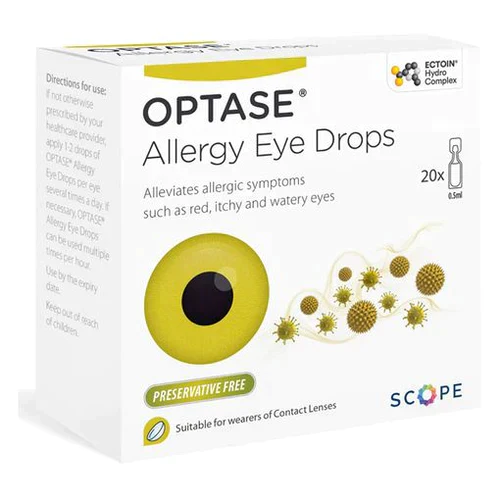
If your eyes itch, water, or turn red every time pollen season arrives — or whenever you're near a cat — you're not alone. Allergic conjunctivitis affects millions of people in the UK, and finding a reliable, gentle solution matters. Allergy eye drops like Optase Allergy Eye Drops 20 x 0.5ml offer targeted, preservative-free relief in convenient single-dose units, making them a practical choice for everyday use. Each pack contains 20 individual 0.5ml vials, so you always have a fresh, uncontaminated dose ready when you need it. You can browse the full range of eye care products at Cured Pharmacy if you're looking for additional support alongside these drops.
The active ingredient is sodium cromoglicate 2%, a well-established mast cell stabiliser that has been used in eye care for decades. It works by preventing the release of histamine from mast cells in the conjunctiva — the thin membrane covering the white of your eye. Because it's preservative-free, it's particularly well suited to people with sensitive eyes or those who use eye drops frequently throughout the day.
How Do Optase Allergy Eye Drops Work?
When an allergen — pollen, dust mite particles, animal dander — comes into contact with your eye, it triggers an immune response. Mast cells in the conjunctiva release histamine and other inflammatory mediators, causing the familiar itch, redness, and watering. Sodium cromoglicate interrupts this process before it starts.
- Sodium cromoglicate binds to mast cell membranes in the conjunctival tissue.
- It stabilises the cell membrane, preventing degranulation (the release of histamine).
- With less histamine released, the inflammatory cascade is reduced.
- Symptoms — itching, redness, watering — are relieved or prevented.
Because it works preventatively rather than reactively, regular use throughout the allergy season tends to give better results than using it only when symptoms flare. Think of it as keeping the door closed rather than trying to push the allergens back out once they're in.
Who Should Use Optase Allergy Eye Drops?
These drops are designed for adults and children aged 6 and over who experience symptoms of allergic conjunctivitis. Whether your triggers are seasonal (like grass or tree pollen) or perennial (like dust mites or pet hair), sodium cromoglicate can help manage the ocular symptoms. They're also a sensible option if you've found that preserved eye drops cause irritation — the preservative-free formulation removes that concern entirely.
- Adults and children (6 years and over) with allergic conjunctivitis
- People with hay fever who experience significant eye symptoms
- Those with perennial allergies triggered by dust mites or animal dander
- Individuals with sensitive eyes who need a preservative-free option
How Do Optase Allergy Eye Drops Compare to Other Options?
| Feature | Optase Allergy Eye Drops | Standard Preserved Eye Drops |
|---|---|---|
| Preservative-free | Yes — single-dose units | No — contains preservatives |
| Active ingredient | Sodium cromoglicate 2% | Varies (e.g. sodium cromoglicate, antihistamine) |
| Suitable for sensitive eyes | Yes | May cause irritation in some users |
| Contact lens use | Remove lenses; reinsert after 30 mins | Varies by product |
How Should You Store Optase Allergy Eye Drops?
Store Optase Allergy Eye Drops below 25°C and keep them out of direct sunlight. Do not freeze. Because each vial is a single-dose unit, you must discard it immediately after use — even if some liquid remains. Using a vial more than once risks contamination and potential eye infection. If you're managing broader seasonal symptoms alongside your eye care, it's worth exploring the allergy and hay fever range at Cured Pharmacy for complementary treatments.
Keep all medicines, including these drops, out of the sight and reach of children. Check the expiry date printed on the packaging before use and do not use if the seal is broken.
This product is a medicine. Speak to your doctor or pharmacist before using if you have an underlying medical condition or are taking other medicines.
Optase Allergy Eye Drops 20 x 0.5ml specifications
| Treatment category | Allergic conjunctivitis / Ocular allergy relief |
| Mechanism of action | Mast cell stabiliser — prevents histamine release |
| Effective for | Itching, redness, and watering caused by allergic conjunctivitis |
| Suitable for | Adults and children aged 6 years and over |
| Active ingredient | Sodium cromoglicate 2% |
| Pack size | 20 x 0.5ml single-dose units |
| Strength | 2% w/v |
| UK classification | General Sale List (GSL) |
| Drug class | Mast cell stabiliser (cromone) |
| Preparation | Sterile aqueous eye drops solution |
| Route of administration | Ophthalmic (topical) |
Specifications of Optase Allergy Eye Drops 20 x 0.5ml
What Are Optase Allergy Eye Drops and What Are They Used For?
Optase Allergy Eye Drops 20 x 0.5ml are a sterile, preservative-free ophthalmic solution containing sodium cromoglicate 2% w/v. They are used to relieve and prevent the symptoms of allergic conjunctivitis — the inflammation of the conjunctiva triggered by allergens. Common symptoms include itching, redness, watering, and a gritty or burning sensation in the eyes.
Allergic conjunctivitis can be seasonal (triggered by pollen) or perennial (triggered year-round by dust mites, mould spores, or animal dander). According to the NHS, hay fever — one of the most common causes of seasonal allergic conjunctivitis — affects around 1 in 5 people in the UK at some point in their lives. These allergy eye drops are available over the counter without a prescription and are suitable for adults and children aged 6 and over.
What Do You Need to Know Before Using Optase Allergy Eye Drops?
Before using these drops, read the following carefully. There are some situations where you should not use them, or where you should seek advice first.
Do not use Optase Allergy Eye Drops if you:
- Are allergic to sodium cromoglicate or any other ingredient in the formulation
- Have an active eye infection (bacterial, viral, or fungal) — treat the infection first
- Are wearing soft contact lenses at the time of instillation
Warnings and precautions:
- Remove soft contact lenses before use and wait at least 30 minutes before reinserting
- Do not touch the tip of the vial to your eye or any surface — this risks contamination
- Discard each single-dose unit immediately after use, even if liquid remains
- If symptoms worsen or do not improve after a few days, consult a pharmacist or GP
- Seek medical advice before use if you are pregnant or breastfeeding
- Consult a pharmacist before use in children under 6 years
Drug interactions:
- No clinically significant interactions have been reported for topical sodium cromoglicate at standard ophthalmic doses
- If you are using other eye drops or eye ointments, allow at least 5 minutes between applications
- Always inform your pharmacist of all medicines you are currently taking
How Should You Use Optase Allergy Eye Drops?
Using these drops correctly makes a real difference to how well they work. Follow these steps each time you apply them.
- Wash your hands thoroughly with soap and water before handling the vials.
- Twist off the top of one single-dose unit — do not use scissors or a blade.
- Tilt your head back slightly and look upward.
- Gently pull down your lower eyelid to create a small pocket.
- Hold the vial above your eye and squeeze gently to instil one to two drops.
- Blink gently to spread the drops across the eye surface.
- Repeat in the other eye if required.
- Discard the vial immediately — do not store for later use.
| Indication | Age Group | Dose | Frequency |
|---|---|---|---|
| Allergic conjunctivitis | Adults | 1–2 drops per eye | 4 times daily |
| Allergic conjunctivitis | Children (6 years and over) | 1–2 drops per eye | 4 times daily |
| Children under 6 years | — | Not recommended without medical advice | — |
What Are the Possible Side Effects of Optase Allergy Eye Drops?
Like all medicines, Optase Allergy Eye Drops can cause side effects, although not everyone experiences them. Most side effects are mild and resolve quickly on their own.
Common side effects:
- Transient stinging or burning sensation immediately after instillation
- Temporary blurred vision — avoid driving or operating machinery until vision clears
- Mild watering of the eye immediately after use
Less common side effects:
- Localised irritation or redness of the eye
- Sensitivity to light (photophobia)
- Eyelid swelling or puffiness
If you experience a severe allergic reaction — including significant swelling of the face, lips, or throat, difficulty breathing, or a widespread rash — stop using the drops immediately and seek urgent medical attention. This type of reaction is rare but requires prompt assessment. You can find further guidance on managing eye-related allergy symptoms through the NHS. If you're also dealing with nasal or skin allergy symptoms, exploring hay fever and allergy treatments alongside your eye drops may help address the full picture.
How Should You Store Optase Allergy Eye Drops?
- Store below 25°C — do not refrigerate or freeze
- Keep away from direct sunlight and heat sources
- Store in the original packaging to protect from light
- Keep out of the sight and reach of children
- Do not use after the expiry date printed on the packaging
- Discard each single-dose vial immediately after use — never reuse
- Do not dispose of medicines via wastewater or household waste — return unused medicines to your pharmacy
References
- https://www.nhs.uk/conditions/conjunctivitis/
- https://www.nhs.uk/conditions/hay-fever/
- https://www.nhs.uk/conditions/allergies/
- https://www.nhs.uk/conditions/eye-health/
- https://bnf.nice.org.uk/drugs/sodium-cromoglicate/
Written and reviewed by our qualified team
Your safety and success are our highest priorities. Our medical team rigorously evaluates every product and piece of advice we provide, ensuring you receive only the most effective, science-backed solutions available.
Frequently Asked Questions
Where can I buy Optase Allergy Eye Drops online in the UK?
You can buy Optase Allergy Eye Drops 20 x 0.5ml directly from Cured Pharmacy, a GPhC-registered online pharmacy. They are available without a prescription and can be ordered for home delivery across the UK. No appointment or GP referral is needed — simply add to your basket and check out.
How do Optase Allergy Eye Drops work in the eye?
Optase Allergy Eye Drops contain sodium cromoglicate 2%, which acts as a mast cell stabiliser. When allergens enter the eye, mast cells would normally release histamine — the chemical responsible for itching and redness. Sodium cromoglicate prevents this release, reducing the allergic response before symptoms take hold.
How do I use Optase Allergy Eye Drops step by step?
Wash your hands, then twist off the top of one single-dose vial. Tilt your head back, pull down your lower eyelid gently, and squeeze one to two drops into the eye. Blink gently, then discard the vial — never save it for a second use, as this risks contamination and infection.
How many times a day should I use Optase Allergy Eye Drops?
The recommended dose is one to two drops in each affected eye, four times daily. For best results, use them consistently throughout the allergy season rather than only when symptoms are at their worst. Regular use allows the sodium cromoglicate to maintain its protective effect on the conjunctival mast cells.
How long does it take for Optase Allergy Eye Drops to work?
Because sodium cromoglicate works preventatively, it may take a few days of regular use before you notice the full benefit. Some people see an improvement in itching and redness within two to three days. If there is no improvement after seven days of consistent use, speak to your pharmacist or GP.
Are Optase Allergy Eye Drops safe for contact lens wearers?
You must remove soft contact lenses before applying Optase Allergy Eye Drops and wait at least 30 minutes before reinserting them. Hard or rigid gas permeable lenses should also be removed prior to use. If you wear contact lenses and suffer from eye allergies, it is worth discussing your options with an optometrist or pharmacist.
Can children use Optase Allergy Eye Drops?
Optase Allergy Eye Drops are generally considered suitable for children aged 6 years and over at the same dose as adults. For children under 6, you should consult a GP or pharmacist before use. Parental supervision is recommended during application to ensure the drops are instilled correctly and safely.
What are the side effects of Optase Allergy Eye Drops?
The most commonly reported side effects are a brief stinging or burning sensation immediately after instillation and temporary blurred vision. These are usually mild and pass within a minute or two. Less commonly, some people experience localised redness, light sensitivity, or mild eyelid swelling — if these persist, stop use and seek pharmacist advice.
Can I use Optase Allergy Eye Drops if I am pregnant or breastfeeding?
If you are pregnant or breastfeeding, you should seek advice from your GP or pharmacist before using any eye drops, including these. While topical sodium cromoglicate has limited systemic absorption, it is always best to confirm suitability with a healthcare professional during pregnancy or lactation. Do not self-medicate without guidance during these periods.
What happens if I miss a dose of Optase Allergy Eye Drops?
If you forget a dose, simply apply the drops as soon as you remember — unless it is nearly time for your next scheduled dose, in which case skip the missed one. Do not use a double dose to make up for a missed application. Consistent, regular use gives the best results with this type of allergy eye drop.
Are Optase Allergy Eye Drops preservative-free?
Yes — Optase Allergy Eye Drops are formulated without preservatives, which is one of their key advantages. Preservatives in multi-dose eye drops can cause irritation with frequent use, particularly in people with sensitive eyes. The single-dose unit format ensures each application is sterile and free from preservative-related side effects.
What are the alternatives to Optase Allergy Eye Drops?
Alternatives include other sodium cromoglicate eye drops (such as Opticrom), antihistamine eye drops containing azelastine or ketotifen, and combination products. The right choice depends on your symptoms, how quickly you need relief, and whether you prefer a preventative or reactive approach. Browse the eye care range at Cured Pharmacy to compare available options.
How long can I use Optase Allergy Eye Drops for?
These drops can be used throughout the allergy season, which for hay fever sufferers typically runs from late March to September in the UK. For perennial allergies, longer-term use may be appropriate — but if you find yourself relying on them year-round, it is worth speaking to your GP about whether further investigation or prescription treatment is needed.
Can I use Optase Allergy Eye Drops alongside antihistamine tablets for hay fever?
Yes — using allergy eye drops alongside oral antihistamines is a common and generally safe approach for managing hay fever symptoms that affect both the eyes and nose. There are no known interactions between topical sodium cromoglicate and oral antihistamines. If you need broader hay fever relief, explore the allergy and hay fever treatments available at Cured Pharmacy.
What is the latest research on sodium cromoglicate eye drops for allergies?
Sodium cromoglicate has been used in ophthalmic allergy treatment for several decades and remains a well-supported first-line option for allergic conjunctivitis in UK clinical guidelines. Research continues to confirm its safety profile and efficacy as a preventative mast cell stabiliser. It is listed in the British National Formulary (BNF) as a recommended treatment for allergic conjunctivitis in both adults and children.
Description
Are Optase Allergy Eye Drops Right for You?
If your eyes itch, water, or turn red every time pollen season arrives — or whenever you're near a cat — you're not alone. Allergic conjunctivitis affects millions of people in the UK, and finding a reliable, gentle solution matters. Allergy eye drops like Optase Allergy Eye Drops 20 x 0.5ml offer targeted, preservative-free relief in convenient single-dose units, making them a practical choice for everyday use. Each pack contains 20 individual 0.5ml vials, so you always have a fresh, uncontaminated dose ready when you need it. You can browse the full range of eye care products at Cured Pharmacy if you're looking for additional support alongside these drops.
The active ingredient is sodium cromoglicate 2%, a well-established mast cell stabiliser that has been used in eye care for decades. It works by preventing the release of histamine from mast cells in the conjunctiva — the thin membrane covering the white of your eye. Because it's preservative-free, it's particularly well suited to people with sensitive eyes or those who use eye drops frequently throughout the day.
How Do Optase Allergy Eye Drops Work?
When an allergen — pollen, dust mite particles, animal dander — comes into contact with your eye, it triggers an immune response. Mast cells in the conjunctiva release histamine and other inflammatory mediators, causing the familiar itch, redness, and watering. Sodium cromoglicate interrupts this process before it starts.
- Sodium cromoglicate binds to mast cell membranes in the conjunctival tissue.
- It stabilises the cell membrane, preventing degranulation (the release of histamine).
- With less histamine released, the inflammatory cascade is reduced.
- Symptoms — itching, redness, watering — are relieved or prevented.
Because it works preventatively rather than reactively, regular use throughout the allergy season tends to give better results than using it only when symptoms flare. Think of it as keeping the door closed rather than trying to push the allergens back out once they're in.
Who Should Use Optase Allergy Eye Drops?
These drops are designed for adults and children aged 6 and over who experience symptoms of allergic conjunctivitis. Whether your triggers are seasonal (like grass or tree pollen) or perennial (like dust mites or pet hair), sodium cromoglicate can help manage the ocular symptoms. They're also a sensible option if you've found that preserved eye drops cause irritation — the preservative-free formulation removes that concern entirely.
- Adults and children (6 years and over) with allergic conjunctivitis
- People with hay fever who experience significant eye symptoms
- Those with perennial allergies triggered by dust mites or animal dander
- Individuals with sensitive eyes who need a preservative-free option
How Do Optase Allergy Eye Drops Compare to Other Options?
| Feature | Optase Allergy Eye Drops | Standard Preserved Eye Drops |
|---|---|---|
| Preservative-free | Yes — single-dose units | No — contains preservatives |
| Active ingredient | Sodium cromoglicate 2% | Varies (e.g. sodium cromoglicate, antihistamine) |
| Suitable for sensitive eyes | Yes | May cause irritation in some users |
| Contact lens use | Remove lenses; reinsert after 30 mins | Varies by product |
How Should You Store Optase Allergy Eye Drops?
Store Optase Allergy Eye Drops below 25°C and keep them out of direct sunlight. Do not freeze. Because each vial is a single-dose unit, you must discard it immediately after use — even if some liquid remains. Using a vial more than once risks contamination and potential eye infection. If you're managing broader seasonal symptoms alongside your eye care, it's worth exploring the allergy and hay fever range at Cured Pharmacy for complementary treatments.
Keep all medicines, including these drops, out of the sight and reach of children. Check the expiry date printed on the packaging before use and do not use if the seal is broken.
This product is a medicine. Speak to your doctor or pharmacist before using if you have an underlying medical condition or are taking other medicines.
Optase Allergy Eye Drops 20 x 0.5ml specifications
| Treatment category | Allergic conjunctivitis / Ocular allergy relief |
| Mechanism of action | Mast cell stabiliser — prevents histamine release |
| Effective for | Itching, redness, and watering caused by allergic conjunctivitis |
| Suitable for | Adults and children aged 6 years and over |
| Active ingredient | Sodium cromoglicate 2% |
| Pack size | 20 x 0.5ml single-dose units |
| Strength | 2% w/v |
| UK classification | General Sale List (GSL) |
| Drug class | Mast cell stabiliser (cromone) |
| Preparation | Sterile aqueous eye drops solution |
| Route of administration | Ophthalmic (topical) |
Specifications of Optase Allergy Eye Drops 20 x 0.5ml
What Are Optase Allergy Eye Drops and What Are They Used For?
Optase Allergy Eye Drops 20 x 0.5ml are a sterile, preservative-free ophthalmic solution containing sodium cromoglicate 2% w/v. They are used to relieve and prevent the symptoms of allergic conjunctivitis — the inflammation of the conjunctiva triggered by allergens. Common symptoms include itching, redness, watering, and a gritty or burning sensation in the eyes.
Allergic conjunctivitis can be seasonal (triggered by pollen) or perennial (triggered year-round by dust mites, mould spores, or animal dander). According to the NHS, hay fever — one of the most common causes of seasonal allergic conjunctivitis — affects around 1 in 5 people in the UK at some point in their lives. These allergy eye drops are available over the counter without a prescription and are suitable for adults and children aged 6 and over.
What Do You Need to Know Before Using Optase Allergy Eye Drops?
Before using these drops, read the following carefully. There are some situations where you should not use them, or where you should seek advice first.
Do not use Optase Allergy Eye Drops if you:
- Are allergic to sodium cromoglicate or any other ingredient in the formulation
- Have an active eye infection (bacterial, viral, or fungal) — treat the infection first
- Are wearing soft contact lenses at the time of instillation
Warnings and precautions:
- Remove soft contact lenses before use and wait at least 30 minutes before reinserting
- Do not touch the tip of the vial to your eye or any surface — this risks contamination
- Discard each single-dose unit immediately after use, even if liquid remains
- If symptoms worsen or do not improve after a few days, consult a pharmacist or GP
- Seek medical advice before use if you are pregnant or breastfeeding
- Consult a pharmacist before use in children under 6 years
Drug interactions:
- No clinically significant interactions have been reported for topical sodium cromoglicate at standard ophthalmic doses
- If you are using other eye drops or eye ointments, allow at least 5 minutes between applications
- Always inform your pharmacist of all medicines you are currently taking
How Should You Use Optase Allergy Eye Drops?
Using these drops correctly makes a real difference to how well they work. Follow these steps each time you apply them.
- Wash your hands thoroughly with soap and water before handling the vials.
- Twist off the top of one single-dose unit — do not use scissors or a blade.
- Tilt your head back slightly and look upward.
- Gently pull down your lower eyelid to create a small pocket.
- Hold the vial above your eye and squeeze gently to instil one to two drops.
- Blink gently to spread the drops across the eye surface.
- Repeat in the other eye if required.
- Discard the vial immediately — do not store for later use.
| Indication | Age Group | Dose | Frequency |
|---|---|---|---|
| Allergic conjunctivitis | Adults | 1–2 drops per eye | 4 times daily |
| Allergic conjunctivitis | Children (6 years and over) | 1–2 drops per eye | 4 times daily |
| Children under 6 years | — | Not recommended without medical advice | — |
What Are the Possible Side Effects of Optase Allergy Eye Drops?
Like all medicines, Optase Allergy Eye Drops can cause side effects, although not everyone experiences them. Most side effects are mild and resolve quickly on their own.
Common side effects:
- Transient stinging or burning sensation immediately after instillation
- Temporary blurred vision — avoid driving or operating machinery until vision clears
- Mild watering of the eye immediately after use
Less common side effects:
- Localised irritation or redness of the eye
- Sensitivity to light (photophobia)
- Eyelid swelling or puffiness
If you experience a severe allergic reaction — including significant swelling of the face, lips, or throat, difficulty breathing, or a widespread rash — stop using the drops immediately and seek urgent medical attention. This type of reaction is rare but requires prompt assessment. You can find further guidance on managing eye-related allergy symptoms through the NHS. If you're also dealing with nasal or skin allergy symptoms, exploring hay fever and allergy treatments alongside your eye drops may help address the full picture.
How Should You Store Optase Allergy Eye Drops?
- Store below 25°C — do not refrigerate or freeze
- Keep away from direct sunlight and heat sources
- Store in the original packaging to protect from light
- Keep out of the sight and reach of children
- Do not use after the expiry date printed on the packaging
- Discard each single-dose vial immediately after use — never reuse
- Do not dispose of medicines via wastewater or household waste — return unused medicines to your pharmacy
References
- https://www.nhs.uk/conditions/conjunctivitis/
- https://www.nhs.uk/conditions/hay-fever/
- https://www.nhs.uk/conditions/allergies/
- https://www.nhs.uk/conditions/eye-health/
- https://bnf.nice.org.uk/drugs/sodium-cromoglicate/
Written and reviewed by our qualified team
Your safety and success are our highest priorities. Our medical team rigorously evaluates every product and piece of advice we provide, ensuring you receive only the most effective, science-backed solutions available.
Frequently Asked Questions
Where can I buy Optase Allergy Eye Drops online in the UK?
You can buy Optase Allergy Eye Drops 20 x 0.5ml directly from Cured Pharmacy, a GPhC-registered online pharmacy. They are available without a prescription and can be ordered for home delivery across the UK. No appointment or GP referral is needed — simply add to your basket and check out.
How do Optase Allergy Eye Drops work in the eye?
Optase Allergy Eye Drops contain sodium cromoglicate 2%, which acts as a mast cell stabiliser. When allergens enter the eye, mast cells would normally release histamine — the chemical responsible for itching and redness. Sodium cromoglicate prevents this release, reducing the allergic response before symptoms take hold.
How do I use Optase Allergy Eye Drops step by step?
Wash your hands, then twist off the top of one single-dose vial. Tilt your head back, pull down your lower eyelid gently, and squeeze one to two drops into the eye. Blink gently, then discard the vial — never save it for a second use, as this risks contamination and infection.
How many times a day should I use Optase Allergy Eye Drops?
The recommended dose is one to two drops in each affected eye, four times daily. For best results, use them consistently throughout the allergy season rather than only when symptoms are at their worst. Regular use allows the sodium cromoglicate to maintain its protective effect on the conjunctival mast cells.
How long does it take for Optase Allergy Eye Drops to work?
Because sodium cromoglicate works preventatively, it may take a few days of regular use before you notice the full benefit. Some people see an improvement in itching and redness within two to three days. If there is no improvement after seven days of consistent use, speak to your pharmacist or GP.
Are Optase Allergy Eye Drops safe for contact lens wearers?
You must remove soft contact lenses before applying Optase Allergy Eye Drops and wait at least 30 minutes before reinserting them. Hard or rigid gas permeable lenses should also be removed prior to use. If you wear contact lenses and suffer from eye allergies, it is worth discussing your options with an optometrist or pharmacist.
Can children use Optase Allergy Eye Drops?
Optase Allergy Eye Drops are generally considered suitable for children aged 6 years and over at the same dose as adults. For children under 6, you should consult a GP or pharmacist before use. Parental supervision is recommended during application to ensure the drops are instilled correctly and safely.
What are the side effects of Optase Allergy Eye Drops?
The most commonly reported side effects are a brief stinging or burning sensation immediately after instillation and temporary blurred vision. These are usually mild and pass within a minute or two. Less commonly, some people experience localised redness, light sensitivity, or mild eyelid swelling — if these persist, stop use and seek pharmacist advice.
Can I use Optase Allergy Eye Drops if I am pregnant or breastfeeding?
If you are pregnant or breastfeeding, you should seek advice from your GP or pharmacist before using any eye drops, including these. While topical sodium cromoglicate has limited systemic absorption, it is always best to confirm suitability with a healthcare professional during pregnancy or lactation. Do not self-medicate without guidance during these periods.
What happens if I miss a dose of Optase Allergy Eye Drops?
If you forget a dose, simply apply the drops as soon as you remember — unless it is nearly time for your next scheduled dose, in which case skip the missed one. Do not use a double dose to make up for a missed application. Consistent, regular use gives the best results with this type of allergy eye drop.
Are Optase Allergy Eye Drops preservative-free?
Yes — Optase Allergy Eye Drops are formulated without preservatives, which is one of their key advantages. Preservatives in multi-dose eye drops can cause irritation with frequent use, particularly in people with sensitive eyes. The single-dose unit format ensures each application is sterile and free from preservative-related side effects.
What are the alternatives to Optase Allergy Eye Drops?
Alternatives include other sodium cromoglicate eye drops (such as Opticrom), antihistamine eye drops containing azelastine or ketotifen, and combination products. The right choice depends on your symptoms, how quickly you need relief, and whether you prefer a preventative or reactive approach. Browse the eye care range at Cured Pharmacy to compare available options.
How long can I use Optase Allergy Eye Drops for?
These drops can be used throughout the allergy season, which for hay fever sufferers typically runs from late March to September in the UK. For perennial allergies, longer-term use may be appropriate — but if you find yourself relying on them year-round, it is worth speaking to your GP about whether further investigation or prescription treatment is needed.
Can I use Optase Allergy Eye Drops alongside antihistamine tablets for hay fever?
Yes — using allergy eye drops alongside oral antihistamines is a common and generally safe approach for managing hay fever symptoms that affect both the eyes and nose. There are no known interactions between topical sodium cromoglicate and oral antihistamines. If you need broader hay fever relief, explore the allergy and hay fever treatments available at Cured Pharmacy.
What is the latest research on sodium cromoglicate eye drops for allergies?
Sodium cromoglicate has been used in ophthalmic allergy treatment for several decades and remains a well-supported first-line option for allergic conjunctivitis in UK clinical guidelines. Research continues to confirm its safety profile and efficacy as a preventative mast cell stabiliser. It is listed in the British National Formulary (BNF) as a recommended treatment for allergic conjunctivitis in both adults and children.