Original: $6.99
-65%$6.99
$2.45The Story
Is Benadryl Children's Oral Solution a Good Children's Antihistamine Liquid?
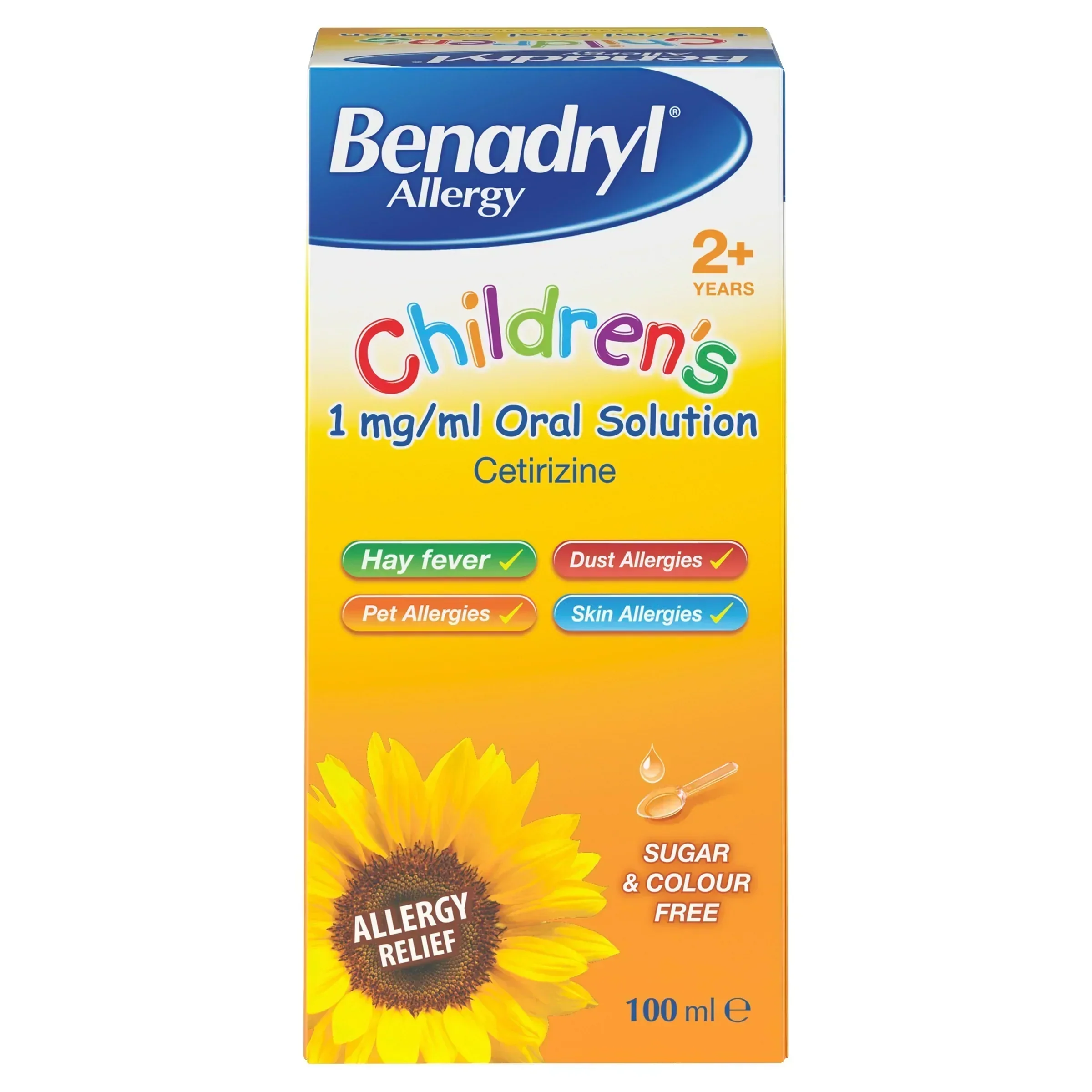
If your child suffers from hay fever, hives, or other allergic reactions, finding a medicine they'll actually take can feel like a challenge in itself. Benadryl Allergy Children's 1mg/ml Oral Solution is a sugar-free, non-drowsy liquid antihistamine designed specifically for children aged 2 years and over. It contains cetirizine hydrochloride — a well-established second-generation antihistamine — at a concentration of 1mg per ml, making it straightforward to measure an accurate dose. You can browse our full range of allergy and hay fever treatments if you're looking for options for the whole family.
At just £6.99 for a 120ml bottle, it offers a practical, pharmacist-recommended solution for managing seasonal and perennial allergic symptoms in children. The liquid format makes it particularly suitable for younger children who struggle to swallow tablets.
How Does Benadryl Children's Oral Solution Work in the Body?
Cetirizine hydrochloride works by selectively blocking peripheral H1 histamine receptors. When your child encounters an allergen — pollen, pet dander, dust mites — their immune system releases histamine, which triggers the familiar symptoms of sneezing, itching, watery eyes, and a runny nose. By blocking the receptor histamine binds to, cetirizine interrupts this chain reaction before symptoms take hold.
- Cetirizine is absorbed rapidly from the gastrointestinal tract after oral administration.
- Peak plasma concentration is typically reached within one hour.
- It has low sedative potential compared to first-generation antihistamines such as chlorphenamine.
- The effect can last up to 24 hours, though the paediatric dosing schedule is twice daily for younger children.
Who Should Use Benadryl Allergy Children's Oral Solution?
This children's antihistamine liquid is suitable for children aged 2 to 12 years who experience allergic symptoms. It is particularly useful during hay fever season, but it can also be used year-round for perennial allergic rhinitis or chronic urticaria (hives). Parents of children who cannot swallow tablets will find the liquid format especially convenient.
- Children aged 2–12 years with seasonal allergic rhinitis (hay fever)
- Children with perennial allergic rhinitis triggered by dust mites or pet dander
- Children experiencing urticaria (hives) or allergic skin reactions
- Children who require a sugar-free formulation due to dietary needs
How Does Benadryl Children's Solution Compare to Other Children's Antihistamines?
| Feature | Benadryl Children's 1mg/ml Solution | Piriton Syrup (Chlorphenamine 2mg/5ml) |
|---|---|---|
| Active ingredient | Cetirizine hydrochloride | Chlorphenamine maleate |
| Generation | Second-generation (non-drowsy) | First-generation (may cause drowsiness) |
| Minimum age | 2 years | 1 year (under medical supervision) |
| Sugar-free | Yes | No |
How Should You Store Benadryl Children's Oral Solution?
Store the bottle below 25°C, away from direct sunlight and heat sources. Keep it out of the reach and sight of children at all times — this is especially important given the liquid format. Once opened, check the product packaging for any in-use shelf-life guidance, as liquid medicines can degrade more quickly than tablets once the seal is broken.
If you're managing multiple health products for your child, our baby and toddler collection includes a range of age-appropriate health essentials. Always check the expiry date before each use and discard any unused medicine safely — your local pharmacy can advise on safe disposal.
This product is a medicine. Speak to your doctor or pharmacist before using if you have an underlying medical condition or are taking other medicines.
Benadryl Allergy Children's 1mg/ml Oral Solution 120ml specifications
| Treatment category | Allergic rhinitis, urticaria |
| Mechanism of action | Selective peripheral H1 histamine receptor antagonist |
| Effective for | Hay fever, hives, allergic skin reactions |
| Suitable for | Children aged 2–12 years |
| Active ingredient | Cetirizine hydrochloride 1mg/ml |
| Pack size | 120ml |
| Strength | 1mg/ml |
| UK classification | P (Pharmacy medicine) |
| Drug class | Second-generation antihistamine |
| Preparation | Oral solution |
| Route of administration | Oral |
Specifications of Benadryl Allergy Children's 1mg/ml Oral Solution 120ml
What Is Benadryl Allergy Children's Oral Solution and What Is It Used For?
Benadryl Allergy Children's 1mg/ml Oral Solution is an over-the-counter antihistamine medicine containing cetirizine hydrochloride. It is licensed for the symptomatic relief of allergic conditions in children aged 2 to 12 years, including seasonal allergic rhinitis (hay fever), perennial allergic rhinitis, and urticaria (hives). The NHS recognises cetirizine as one of the preferred non-drowsy antihistamines for managing these conditions in both adults and children.
What Do You Need to Know Before Using Benadryl Children's Oral Solution?
Before giving this medicine to your child, read the following carefully. There are certain situations where this product should not be used, or where extra caution is needed.
Do not use if your child:
- Is under 2 years of age
- Has a known allergy to cetirizine hydrochloride, hydroxyzine, or any other ingredient in the solution
- Has severe kidney disease (renal impairment)
Speak to a doctor or pharmacist first if your child:
- Has epilepsy or a history of seizures
- Has kidney problems (mild to moderate renal impairment may require dose adjustment)
- Has a condition affecting urination, such as spinal cord injury
- Is taking other medicines, particularly sedatives or medicines that affect the central nervous system
Potential drug interactions to be aware of:
- CNS depressants (e.g. sedatives, sleeping medicines) — may increase drowsiness
- Alcohol — should be avoided alongside antihistamine use
- Theophylline — may slightly reduce the clearance of cetirizine at high doses
How Should You Use Benadryl Allergy Children's Oral Solution?
Always follow the dosage instructions on the packaging or as directed by your pharmacist. Use the measuring device provided — never use a household spoon, as this can lead to inaccurate dosing.
- Shake the bottle gently before use if instructed on the label.
- Use the oral syringe or measuring cup provided to draw up the correct dose.
- Administer the liquid directly into your child's mouth.
- Give with or without food — cetirizine can be taken either way.
- Record the time of each dose to avoid accidental double-dosing.
| Age Group | Dose | Frequency | Maximum Daily Dose |
|---|---|---|---|
| 2–6 years | 2.5ml (2.5mg) | Twice daily | 5ml (5mg) |
| 6–12 years | 5ml (5mg) | Twice daily | 10ml (10mg) |
What Are the Possible Side Effects of Benadryl Children's Oral Solution?
Like all medicines, cetirizine can cause side effects, although not every child will experience them. The NHS advises that most side effects of second-generation antihistamines are mild and resolve on their own.
Common side effects (may affect up to 1 in 10 children):
- Drowsiness or fatigue
- Headache
- Dry mouth
- Dizziness
Less common side effects (may affect up to 1 in 100 children):
- Stomach pain or nausea
- Agitation or restlessness (particularly in younger children)
- Skin rash or itching
- Difficulty passing urine
Stop giving the medicine and seek medical advice immediately if your child develops signs of a serious allergic reaction, such as swelling of the face, lips, or throat, difficulty breathing, or a severe skin rash. You can find further guidance on managing allergic reactions on the NHS website. If you're also managing skin-related allergy symptoms, our skin care collection includes products that may help alongside antihistamine treatment.
How Should You Store Benadryl Children's Oral Solution?
- Store below 25°C in a cool, dry place
- Keep away from direct sunlight and heat
- Keep the bottle tightly closed when not in use
- Store out of the reach and sight of children
- Do not use after the expiry date printed on the bottle
- Do not dispose of medicines via wastewater or household waste — return unused medicine to your pharmacy
If you're looking for additional allergy support products for your child, our ear, nose and throat range includes nasal sprays and other treatments that can complement antihistamine therapy during hay fever season.
References
- https://www.nhs.uk/medicines/cetirizine/
- https://www.nhs.uk/conditions/hay-fever/
- https://www.nhs.uk/conditions/antihistamines/
- https://www.nhs.uk/conditions/urticaria-hives/
- https://bnf.nice.org.uk/drugs/cetirizine-hydrochloride/
Written and reviewed by our qualified team
Your safety and success are our highest priorities. Our medical team rigorously evaluates every product and piece of advice we provide, ensuring you receive only the most effective, science-backed solutions available.
Frequently Asked Questions
Where can I buy Benadryl Allergy Children's Oral Solution online in the UK?
You can buy Benadryl Allergy Children's 1mg/ml Oral Solution directly from Cured Pharmacy, a GPhC-registered UK online pharmacy, for £6.99. It is available without a prescription as it is classified as a Pharmacy (P) medicine. Browse our full allergy and hay fever range for additional options to manage your child's symptoms.
How does Benadryl Children's Oral Solution work in the body?
The active ingredient, cetirizine hydrochloride, is a second-generation antihistamine that selectively blocks peripheral H1 histamine receptors. When your child is exposed to an allergen, histamine is released and triggers symptoms like sneezing, itching, and a runny nose — cetirizine prevents histamine from binding to these receptors, reducing those symptoms. It is absorbed quickly and typically starts working within one hour of taking a dose.
What age can children take Benadryl Allergy Children's Oral Solution?
This product is licensed for children aged 2 years and over, up to 12 years of age. It must not be given to children under 2 years old. If your child is between 2 and 6 years, the dose is lower than for older children, so always check the packaging carefully before administering.
What is the correct dose of Benadryl Children's Oral Solution?
Children aged 2 to 6 years should receive 2.5ml (2.5mg) twice daily, giving a maximum daily dose of 5mg. Children aged 6 to 12 years should receive 5ml (5mg) twice daily, up to a maximum of 10mg per day. Always use the measuring device provided with the bottle — never estimate using a household spoon.
Does Benadryl Children's Oral Solution cause drowsiness?
Cetirizine is classified as a non-drowsy antihistamine, meaning it is far less likely to cause sedation than older first-generation antihistamines like chlorphenamine. However, a small number of children may still experience mild drowsiness, particularly at the start of treatment. If your child seems unusually sleepy, avoid activities that require alertness and speak to your pharmacist if you are concerned.
Can I give Benadryl Children's Oral Solution alongside other medicines?
You should always speak to a pharmacist or GP before combining this product with other medicines. Particular caution is needed with sedatives, sleeping medicines, or any other central nervous system depressants, as these may increase the risk of drowsiness. Alcohol should also be avoided during treatment, though this is rarely relevant in the paediatric age group.
What happens if I accidentally give my child too much of this medicine?
If you think your child has received more than the recommended dose, contact NHS 111 immediately or take them to your nearest A&E department. Bring the packaging with you so healthcare professionals can quickly assess how much cetirizine was taken. Symptoms of overdose may include agitation, restlessness, or excessive drowsiness.
How long does it take for Benadryl Children's Oral Solution to start working?
Cetirizine is absorbed rapidly after oral administration, with peak plasma levels typically reached within one hour. Most children will notice a reduction in allergy symptoms — such as sneezing, itching, and runny nose — within this timeframe. The effect can last throughout the day, which is why twice-daily dosing is sufficient for younger children.
Is Benadryl Children's Oral Solution suitable for children with hay fever?
Yes, this product is specifically licensed for the relief of seasonal allergic rhinitis, which is the medical term for hay fever. It helps to relieve sneezing, itchy and watery eyes, and a blocked or runny nose caused by pollen exposure. It can be used throughout the hay fever season, which in the UK typically runs from late March to September.
Can Benadryl Children's Oral Solution be used for hives?
Yes, cetirizine is licensed for the treatment of urticaria (hives) in children aged 2 years and over. Hives appear as raised, itchy welts on the skin and are often triggered by an allergic reaction. If your child's hives are severe, widespread, or accompanied by swelling of the face or throat, seek urgent medical attention rather than relying on an antihistamine alone.
What are the alternatives to Benadryl Children's Oral Solution?
The main alternative children's antihistamine liquid available in the UK is Piriton Syrup, which contains chlorphenamine maleate — a first-generation antihistamine that is more likely to cause drowsiness. For children who can swallow tablets, cetirizine is also available in tablet form from various brands. Speak to your pharmacist about which option is most appropriate for your child's age and symptoms.
How long can my child use Benadryl Children's Oral Solution for?
For seasonal hay fever, this product can be used throughout the allergy season as needed. For ongoing conditions such as perennial allergic rhinitis or chronic urticaria, it is advisable to review treatment with a GP or pharmacist periodically. If symptoms do not improve after a reasonable period of use, or if they worsen, seek medical advice.
What should I do if my child misses a dose of Benadryl Children's Oral Solution?
If you miss a dose, give it as soon as you remember — unless it is nearly time for the next scheduled dose. In that case, skip the missed dose and continue with the regular dosing schedule. Never give a double dose to make up for a missed one, as this increases the risk of side effects.
Is Benadryl Children's Oral Solution sugar-free?
Yes, Benadryl Allergy Children's 1mg/ml Oral Solution is formulated without sugar, making it suitable for children who need to limit their sugar intake or who are at risk of dental caries. This is an important consideration for medicines that may be taken regularly over a prolonged period. If your child has specific dietary requirements, always check the full list of excipients on the product packaging.
What are the latest findings on cetirizine use in children?
Cetirizine remains one of the most widely studied and recommended antihistamines for paediatric allergy management, and its safety and efficacy profile in children is well established in clinical literature. The NHS and BNF continue to list it as a first-line option for allergic rhinitis and urticaria in children. No significant new safety concerns have emerged in recent years that would change its recommended use in the licensed age group.
Description
Is Benadryl Children's Oral Solution a Good Children's Antihistamine Liquid?
If your child suffers from hay fever, hives, or other allergic reactions, finding a medicine they'll actually take can feel like a challenge in itself. Benadryl Allergy Children's 1mg/ml Oral Solution is a sugar-free, non-drowsy liquid antihistamine designed specifically for children aged 2 years and over. It contains cetirizine hydrochloride — a well-established second-generation antihistamine — at a concentration of 1mg per ml, making it straightforward to measure an accurate dose. You can browse our full range of allergy and hay fever treatments if you're looking for options for the whole family.
At just £6.99 for a 120ml bottle, it offers a practical, pharmacist-recommended solution for managing seasonal and perennial allergic symptoms in children. The liquid format makes it particularly suitable for younger children who struggle to swallow tablets.
How Does Benadryl Children's Oral Solution Work in the Body?
Cetirizine hydrochloride works by selectively blocking peripheral H1 histamine receptors. When your child encounters an allergen — pollen, pet dander, dust mites — their immune system releases histamine, which triggers the familiar symptoms of sneezing, itching, watery eyes, and a runny nose. By blocking the receptor histamine binds to, cetirizine interrupts this chain reaction before symptoms take hold.
- Cetirizine is absorbed rapidly from the gastrointestinal tract after oral administration.
- Peak plasma concentration is typically reached within one hour.
- It has low sedative potential compared to first-generation antihistamines such as chlorphenamine.
- The effect can last up to 24 hours, though the paediatric dosing schedule is twice daily for younger children.
Who Should Use Benadryl Allergy Children's Oral Solution?
This children's antihistamine liquid is suitable for children aged 2 to 12 years who experience allergic symptoms. It is particularly useful during hay fever season, but it can also be used year-round for perennial allergic rhinitis or chronic urticaria (hives). Parents of children who cannot swallow tablets will find the liquid format especially convenient.
- Children aged 2–12 years with seasonal allergic rhinitis (hay fever)
- Children with perennial allergic rhinitis triggered by dust mites or pet dander
- Children experiencing urticaria (hives) or allergic skin reactions
- Children who require a sugar-free formulation due to dietary needs
How Does Benadryl Children's Solution Compare to Other Children's Antihistamines?
| Feature | Benadryl Children's 1mg/ml Solution | Piriton Syrup (Chlorphenamine 2mg/5ml) |
|---|---|---|
| Active ingredient | Cetirizine hydrochloride | Chlorphenamine maleate |
| Generation | Second-generation (non-drowsy) | First-generation (may cause drowsiness) |
| Minimum age | 2 years | 1 year (under medical supervision) |
| Sugar-free | Yes | No |
How Should You Store Benadryl Children's Oral Solution?
Store the bottle below 25°C, away from direct sunlight and heat sources. Keep it out of the reach and sight of children at all times — this is especially important given the liquid format. Once opened, check the product packaging for any in-use shelf-life guidance, as liquid medicines can degrade more quickly than tablets once the seal is broken.
If you're managing multiple health products for your child, our baby and toddler collection includes a range of age-appropriate health essentials. Always check the expiry date before each use and discard any unused medicine safely — your local pharmacy can advise on safe disposal.
This product is a medicine. Speak to your doctor or pharmacist before using if you have an underlying medical condition or are taking other medicines.
Benadryl Allergy Children's 1mg/ml Oral Solution 120ml specifications
| Treatment category | Allergic rhinitis, urticaria |
| Mechanism of action | Selective peripheral H1 histamine receptor antagonist |
| Effective for | Hay fever, hives, allergic skin reactions |
| Suitable for | Children aged 2–12 years |
| Active ingredient | Cetirizine hydrochloride 1mg/ml |
| Pack size | 120ml |
| Strength | 1mg/ml |
| UK classification | P (Pharmacy medicine) |
| Drug class | Second-generation antihistamine |
| Preparation | Oral solution |
| Route of administration | Oral |
Specifications of Benadryl Allergy Children's 1mg/ml Oral Solution 120ml
What Is Benadryl Allergy Children's Oral Solution and What Is It Used For?
Benadryl Allergy Children's 1mg/ml Oral Solution is an over-the-counter antihistamine medicine containing cetirizine hydrochloride. It is licensed for the symptomatic relief of allergic conditions in children aged 2 to 12 years, including seasonal allergic rhinitis (hay fever), perennial allergic rhinitis, and urticaria (hives). The NHS recognises cetirizine as one of the preferred non-drowsy antihistamines for managing these conditions in both adults and children.
What Do You Need to Know Before Using Benadryl Children's Oral Solution?
Before giving this medicine to your child, read the following carefully. There are certain situations where this product should not be used, or where extra caution is needed.
Do not use if your child:
- Is under 2 years of age
- Has a known allergy to cetirizine hydrochloride, hydroxyzine, or any other ingredient in the solution
- Has severe kidney disease (renal impairment)
Speak to a doctor or pharmacist first if your child:
- Has epilepsy or a history of seizures
- Has kidney problems (mild to moderate renal impairment may require dose adjustment)
- Has a condition affecting urination, such as spinal cord injury
- Is taking other medicines, particularly sedatives or medicines that affect the central nervous system
Potential drug interactions to be aware of:
- CNS depressants (e.g. sedatives, sleeping medicines) — may increase drowsiness
- Alcohol — should be avoided alongside antihistamine use
- Theophylline — may slightly reduce the clearance of cetirizine at high doses
How Should You Use Benadryl Allergy Children's Oral Solution?
Always follow the dosage instructions on the packaging or as directed by your pharmacist. Use the measuring device provided — never use a household spoon, as this can lead to inaccurate dosing.
- Shake the bottle gently before use if instructed on the label.
- Use the oral syringe or measuring cup provided to draw up the correct dose.
- Administer the liquid directly into your child's mouth.
- Give with or without food — cetirizine can be taken either way.
- Record the time of each dose to avoid accidental double-dosing.
| Age Group | Dose | Frequency | Maximum Daily Dose |
|---|---|---|---|
| 2–6 years | 2.5ml (2.5mg) | Twice daily | 5ml (5mg) |
| 6–12 years | 5ml (5mg) | Twice daily | 10ml (10mg) |
What Are the Possible Side Effects of Benadryl Children's Oral Solution?
Like all medicines, cetirizine can cause side effects, although not every child will experience them. The NHS advises that most side effects of second-generation antihistamines are mild and resolve on their own.
Common side effects (may affect up to 1 in 10 children):
- Drowsiness or fatigue
- Headache
- Dry mouth
- Dizziness
Less common side effects (may affect up to 1 in 100 children):
- Stomach pain or nausea
- Agitation or restlessness (particularly in younger children)
- Skin rash or itching
- Difficulty passing urine
Stop giving the medicine and seek medical advice immediately if your child develops signs of a serious allergic reaction, such as swelling of the face, lips, or throat, difficulty breathing, or a severe skin rash. You can find further guidance on managing allergic reactions on the NHS website. If you're also managing skin-related allergy symptoms, our skin care collection includes products that may help alongside antihistamine treatment.
How Should You Store Benadryl Children's Oral Solution?
- Store below 25°C in a cool, dry place
- Keep away from direct sunlight and heat
- Keep the bottle tightly closed when not in use
- Store out of the reach and sight of children
- Do not use after the expiry date printed on the bottle
- Do not dispose of medicines via wastewater or household waste — return unused medicine to your pharmacy
If you're looking for additional allergy support products for your child, our ear, nose and throat range includes nasal sprays and other treatments that can complement antihistamine therapy during hay fever season.
References
- https://www.nhs.uk/medicines/cetirizine/
- https://www.nhs.uk/conditions/hay-fever/
- https://www.nhs.uk/conditions/antihistamines/
- https://www.nhs.uk/conditions/urticaria-hives/
- https://bnf.nice.org.uk/drugs/cetirizine-hydrochloride/
Written and reviewed by our qualified team
Your safety and success are our highest priorities. Our medical team rigorously evaluates every product and piece of advice we provide, ensuring you receive only the most effective, science-backed solutions available.
Frequently Asked Questions
Where can I buy Benadryl Allergy Children's Oral Solution online in the UK?
You can buy Benadryl Allergy Children's 1mg/ml Oral Solution directly from Cured Pharmacy, a GPhC-registered UK online pharmacy, for £6.99. It is available without a prescription as it is classified as a Pharmacy (P) medicine. Browse our full allergy and hay fever range for additional options to manage your child's symptoms.
How does Benadryl Children's Oral Solution work in the body?
The active ingredient, cetirizine hydrochloride, is a second-generation antihistamine that selectively blocks peripheral H1 histamine receptors. When your child is exposed to an allergen, histamine is released and triggers symptoms like sneezing, itching, and a runny nose — cetirizine prevents histamine from binding to these receptors, reducing those symptoms. It is absorbed quickly and typically starts working within one hour of taking a dose.
What age can children take Benadryl Allergy Children's Oral Solution?
This product is licensed for children aged 2 years and over, up to 12 years of age. It must not be given to children under 2 years old. If your child is between 2 and 6 years, the dose is lower than for older children, so always check the packaging carefully before administering.
What is the correct dose of Benadryl Children's Oral Solution?
Children aged 2 to 6 years should receive 2.5ml (2.5mg) twice daily, giving a maximum daily dose of 5mg. Children aged 6 to 12 years should receive 5ml (5mg) twice daily, up to a maximum of 10mg per day. Always use the measuring device provided with the bottle — never estimate using a household spoon.
Does Benadryl Children's Oral Solution cause drowsiness?
Cetirizine is classified as a non-drowsy antihistamine, meaning it is far less likely to cause sedation than older first-generation antihistamines like chlorphenamine. However, a small number of children may still experience mild drowsiness, particularly at the start of treatment. If your child seems unusually sleepy, avoid activities that require alertness and speak to your pharmacist if you are concerned.
Can I give Benadryl Children's Oral Solution alongside other medicines?
You should always speak to a pharmacist or GP before combining this product with other medicines. Particular caution is needed with sedatives, sleeping medicines, or any other central nervous system depressants, as these may increase the risk of drowsiness. Alcohol should also be avoided during treatment, though this is rarely relevant in the paediatric age group.
What happens if I accidentally give my child too much of this medicine?
If you think your child has received more than the recommended dose, contact NHS 111 immediately or take them to your nearest A&E department. Bring the packaging with you so healthcare professionals can quickly assess how much cetirizine was taken. Symptoms of overdose may include agitation, restlessness, or excessive drowsiness.
How long does it take for Benadryl Children's Oral Solution to start working?
Cetirizine is absorbed rapidly after oral administration, with peak plasma levels typically reached within one hour. Most children will notice a reduction in allergy symptoms — such as sneezing, itching, and runny nose — within this timeframe. The effect can last throughout the day, which is why twice-daily dosing is sufficient for younger children.
Is Benadryl Children's Oral Solution suitable for children with hay fever?
Yes, this product is specifically licensed for the relief of seasonal allergic rhinitis, which is the medical term for hay fever. It helps to relieve sneezing, itchy and watery eyes, and a blocked or runny nose caused by pollen exposure. It can be used throughout the hay fever season, which in the UK typically runs from late March to September.
Can Benadryl Children's Oral Solution be used for hives?
Yes, cetirizine is licensed for the treatment of urticaria (hives) in children aged 2 years and over. Hives appear as raised, itchy welts on the skin and are often triggered by an allergic reaction. If your child's hives are severe, widespread, or accompanied by swelling of the face or throat, seek urgent medical attention rather than relying on an antihistamine alone.
What are the alternatives to Benadryl Children's Oral Solution?
The main alternative children's antihistamine liquid available in the UK is Piriton Syrup, which contains chlorphenamine maleate — a first-generation antihistamine that is more likely to cause drowsiness. For children who can swallow tablets, cetirizine is also available in tablet form from various brands. Speak to your pharmacist about which option is most appropriate for your child's age and symptoms.
How long can my child use Benadryl Children's Oral Solution for?
For seasonal hay fever, this product can be used throughout the allergy season as needed. For ongoing conditions such as perennial allergic rhinitis or chronic urticaria, it is advisable to review treatment with a GP or pharmacist periodically. If symptoms do not improve after a reasonable period of use, or if they worsen, seek medical advice.
What should I do if my child misses a dose of Benadryl Children's Oral Solution?
If you miss a dose, give it as soon as you remember — unless it is nearly time for the next scheduled dose. In that case, skip the missed dose and continue with the regular dosing schedule. Never give a double dose to make up for a missed one, as this increases the risk of side effects.
Is Benadryl Children's Oral Solution sugar-free?
Yes, Benadryl Allergy Children's 1mg/ml Oral Solution is formulated without sugar, making it suitable for children who need to limit their sugar intake or who are at risk of dental caries. This is an important consideration for medicines that may be taken regularly over a prolonged period. If your child has specific dietary requirements, always check the full list of excipients on the product packaging.
What are the latest findings on cetirizine use in children?
Cetirizine remains one of the most widely studied and recommended antihistamines for paediatric allergy management, and its safety and efficacy profile in children is well established in clinical literature. The NHS and BNF continue to list it as a first-line option for allergic rhinitis and urticaria in children. No significant new safety concerns have emerged in recent years that would change its recommended use in the licensed age group.