Original: $4.99
-65%$4.99
$1.75The Story
What Is Athlete's Foot Cream and Does It Work?
Athlete's foot — known medically as tinea pedis — is a common fungal infection that affects the skin of the feet, particularly between the toes. It causes itching, scaling, redness, and sometimes cracking or blistering. According to the NHS, it is one of the most frequently occurring fungal skin infections in the UK, and it spreads easily in warm, damp environments like changing rooms and swimming pools. The good news? It responds well to topical antifungal treatment. Athlete's foot cream is one of the most accessible and effective ways to tackle the infection at home, without needing a prescription. You can browse the full range of treatments in our athlete's foot and fungal infections collection at Cured Pharmacy.
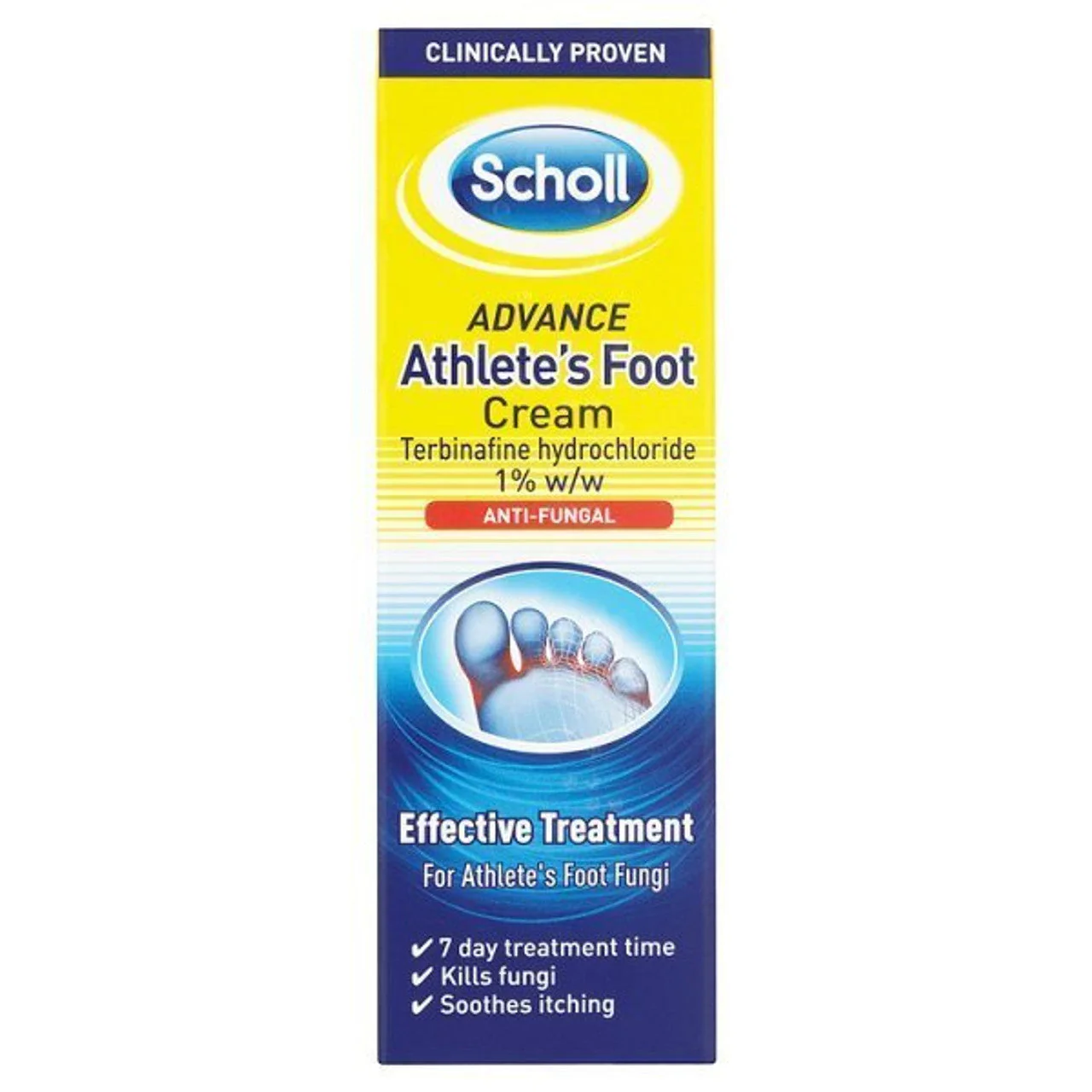
Scholl Athlete's Foot Cream 15g is a topical antifungal cream containing clotrimazole 1% as its active ingredient. Clotrimazole is a well-established antifungal medicine that has been used for decades to treat a range of fungal skin conditions. At just £4.99, this 15g tube offers a practical, affordable option for managing athlete's foot at home.
How Does Scholl Athlete's Foot Cream Work?
Clotrimazole belongs to the azole class of antifungals. It works by targeting the fungal cell membrane — specifically by inhibiting the synthesis of ergosterol, a key component that keeps the fungal cell intact. Without ergosterol, the cell membrane becomes leaky and unstable, ultimately killing the fungus. Here's a simple breakdown of the mechanism:
- Clotrimazole inhibits the enzyme lanosterol 14α-demethylase, which is essential for ergosterol production.
- Without ergosterol, the fungal cell membrane loses structural integrity.
- The fungal cells become permeable, leading to cell death (fungicidal action).
- At lower concentrations, it may also inhibit fungal growth (fungistatic action), preventing the infection from spreading further.
This dual action — killing existing fungal cells and stopping new ones from forming — is why clotrimazole is so widely recommended for athlete's foot and similar conditions.
Who Should Use Scholl Athlete's Foot Cream?
This cream is designed for adults and young people aged 12 and over who are experiencing symptoms of athlete's foot. It's particularly useful if you've noticed itching, peeling, or redness between your toes or on the soles of your feet. That said, it's not suitable for everyone.
This product may be appropriate for you if:
- You have confirmed or suspected athlete's foot (tinea pedis).
- You are aged 12 or over.
- You have no known allergy to clotrimazole or any other ingredient in the cream.
- Your skin is not broken, severely inflamed, or showing signs of bacterial infection.
It is not recommended for children under 12 without medical supervision, or for use during pregnancy or breastfeeding without first speaking to a healthcare professional.
How Does Scholl Athlete's Foot Cream Compare to Other Antifungal Creams?
| Feature | Scholl Athlete's Foot Cream 15g | Lamisil AT Cream (Terbinafine 1%) |
|---|---|---|
| Active ingredient | Clotrimazole 1% | Terbinafine 1% |
| Drug class | Azole antifungal | Allylamine antifungal |
| Typical treatment duration | 2–4 weeks | 1–2 weeks |
| OTC availability | Yes | Yes |
Is Scholl Athlete's Foot Cream Safe to Store at Home?
Yes — this cream is straightforward to store safely at home. Keep it below 25°C, away from direct sunlight and out of reach of children. Do not use it after the expiry date printed on the tube. Once opened, use within the period indicated on the packaging. If you're managing other skin concerns alongside fungal infections, you might also find our skin care collection helpful for complementary products.
This product is a medicine. Speak to your doctor or pharmacist before using if you have an underlying medical condition or are taking other medicines.
Scholl Athlete's Foot Cream 15g specifications
| Treatment category | Antifungal / Foot care |
| Active ingredient | Clotrimazole 1% |
| Mechanism of action | Inhibits ergosterol synthesis in fungal cell membranes |
| Effective against | Tinea pedis (athlete's foot), dermatophyte fungi |
| Suitable for | Adults and children aged 12 and over |
| Pack size | 15g |
| Strength | 1% w/w clotrimazole |
| UK classification | General Sale List (GSL) |
| Drug class | Azole antifungal |
| Preparation | Topical cream |
| Route of administration | Topical (external use only) |
Specifications of Scholl Athlete's Foot Cream 15g
What Is Scholl Athlete's Foot Cream and What Is It Used For?
Scholl Athlete's Foot Cream 15g is a topical antifungal medicine containing clotrimazole 1% w/w. It is used to treat athlete's foot (tinea pedis), a fungal infection of the skin on the feet caused by dermatophyte fungi such as Trichophyton rubrum. The NHS notes that athlete's foot is very common and can cause itching, scaling, redness, and cracking — particularly between the toes and on the soles of the feet. This cream works directly on the affected skin to clear the infection and relieve symptoms. It is available over the counter without a prescription and is classified as a General Sale List (GSL) medicine in the UK.
What Do You Need to Know Before Using Scholl Athlete's Foot Cream?
Before applying this cream, it's important to check whether it is appropriate for you. Do not use Scholl Athlete's Foot Cream if any of the following apply:
- You are allergic to clotrimazole or any other ingredient in the cream.
- You are under 12 years of age.
- The affected skin is severely broken, blistered, or shows signs of bacterial infection (such as pus or significant swelling).
- You are pregnant or breastfeeding — speak to your pharmacist or GP before use.
- You have previously had a severe skin reaction to any antifungal product.
There are no clinically significant drug interactions known for topical clotrimazole at this concentration. However, if you are using other topical products on the same area, speak to your pharmacist before combining them. You may also find it useful to explore our foot care collection for complementary products such as antifungal powders or moisture-wicking insoles.
How Should You Use Scholl Athlete's Foot Cream?
Using this cream correctly is key to clearing the infection fully. Follow these steps each time you apply it:
- Wash the affected area gently with soap and water.
- Dry the skin thoroughly — particularly between the toes — as fungi thrive in moisture.
- Squeeze a small amount of cream onto your fingertip.
- Apply a thin layer to the affected skin and the surrounding area.
- Gently rub in until absorbed.
- Wash your hands after application unless your hands are the area being treated.
| Indication | Age Group | Dose | Frequency |
|---|---|---|---|
| Athlete's foot (tinea pedis) | Adults and children 12+ | Thin layer to affected area | 2–3 times daily |
| Athlete's foot (tinea pedis) | Under 12 | Not recommended without medical advice | — |
What Are the Possible Side Effects of Scholl Athlete's Foot Cream?
Like all medicines, Scholl Athlete's Foot Cream can cause side effects, although not everyone experiences them. Most side effects are mild and localised to the area of application.
Common side effects:
- Mild skin irritation at the application site
- Redness or erythema
- Slight burning or stinging sensation after application
Less common side effects:
- Skin peeling or flaking (may be part of the healing process)
- Localised rash or urticaria (hives)
- Blistering or swelling — stop use immediately and seek medical advice if this occurs
Serious allergic reactions (anaphylaxis) to topical clotrimazole are extremely rare. If you notice swelling of the face, lips, or throat, or have difficulty breathing after applying this cream, seek emergency medical attention immediately. If you're managing other skin conditions alongside athlete's foot, our creams and ointments collection includes a range of topical treatments that your pharmacist can advise on.
How Should You Store Scholl Athlete's Foot Cream?
- Store below 25°C in a cool, dry place.
- Keep away from direct sunlight and heat sources.
- Do not freeze.
- Keep the tube tightly closed when not in use.
- Keep out of the sight and reach of children.
- Do not use after the expiry date printed on the tube or carton.
- Do not dispose of medicines via wastewater or household waste — return unused medicines to your pharmacy.
References
- https://www.nhs.uk/conditions/athletes-foot/
- https://www.nhs.uk/conditions/athletes-foot/treatment/
- https://www.nhs.uk/conditions/fungal-nail-infection/
- https://www.nhs.uk/medicines/clotrimazole-for-skin/
- https://bnf.nice.org.uk/drugs/clotrimazole/
Written and reviewed by our qualified team
Your safety and success are our highest priorities. Our medical team rigorously evaluates every product and piece of advice we provide, ensuring you receive only the most effective, science-backed solutions available.
Frequently Asked Questions
Where can I buy Scholl Athlete's Foot Cream online in the UK?
You can buy Scholl Athlete's Foot Cream 15g online from Cured Pharmacy for just £4.99, with fast UK delivery straight to your door. It is available without a prescription as an over-the-counter antifungal treatment. You can also browse our full athlete's foot and fungal infections collection for additional treatment options.
How does Scholl Athlete's Foot Cream work in the body?
Scholl Athlete's Foot Cream contains clotrimazole 1%, an azole antifungal that works by inhibiting the production of ergosterol — a vital component of the fungal cell membrane. Without ergosterol, the fungal cell membrane breaks down, killing the fungus and stopping the infection from spreading. This makes it effective against the dermatophyte fungi responsible for athlete's foot.
How do I use Scholl Athlete's Foot Cream step by step?
Start by washing and thoroughly drying the affected area, paying close attention to the spaces between your toes. Apply a thin layer of the cream to the affected skin and the surrounding area two to three times daily. Always wash your hands after application unless your hands are the area being treated.
How long does Scholl Athlete's Foot Cream take to work?
Many people notice a reduction in itching and redness within a few days of starting treatment. However, it is important to continue using the cream for the full recommended course — usually two to four weeks — even if symptoms appear to have cleared. Stopping too early can allow the infection to return.
What are the side effects of Scholl Athlete's Foot Cream?
Side effects are uncommon but can include mild skin irritation, redness, or a slight burning sensation at the site of application. Rarely, some people may experience a localised rash or blistering — if this happens, stop using the cream and speak to your pharmacist or GP. Serious allergic reactions are very rare but require immediate medical attention.
Who is Scholl Athlete's Foot Cream suitable for?
This cream is suitable for adults and young people aged 12 and over who have athlete's foot or a suspected fungal skin infection on the feet. It is not recommended for children under 12, and those who are pregnant or breastfeeding should consult a healthcare professional before use. People with a known allergy to clotrimazole should not use this product.
Can I use Scholl Athlete's Foot Cream if I am pregnant?
If you are pregnant or breastfeeding, you should speak to your GP or pharmacist before using any antifungal cream, including this one. While topical clotrimazole is generally considered low risk, it is always best to seek professional advice during pregnancy. Your pharmacist can help you weigh up the benefits and any potential risks.
What happens if I miss an application of Scholl Athlete's Foot Cream?
If you forget to apply the cream at your usual time, apply it as soon as you remember and then continue with your regular schedule. Do not apply a double dose to make up for a missed application. Consistency is important — missing doses can slow your recovery and increase the risk of the infection returning.
What are alternatives to Scholl Athlete's Foot Cream?
Alternatives include other clotrimazole-based creams such as Canesten Athlete's Foot Cream, or terbinafine-based products like Lamisil AT Cream, which may require a shorter treatment course. Antifungal sprays and powders are also available for those who prefer a different format. Your pharmacist can advise on the most suitable option based on your symptoms and preferences.
How long can you use Scholl Athlete's Foot Cream for?
The recommended treatment duration is two to four weeks, applied two to three times daily. If your symptoms have not improved after four weeks of consistent use, you should stop and consult your GP or pharmacist, as you may need a different treatment or further investigation. Do not use this cream for longer than recommended without medical advice.
Can athlete's foot come back after using the cream?
Yes — athlete's foot can recur, particularly if you are regularly exposed to warm, damp environments such as communal showers or swimming pools. To reduce the risk of reinfection, keep your feet clean and dry, change socks daily, and avoid walking barefoot in public areas. Completing the full course of treatment is also essential to prevent relapse.
Is Scholl Athlete's Foot Cream the same as Canesten?
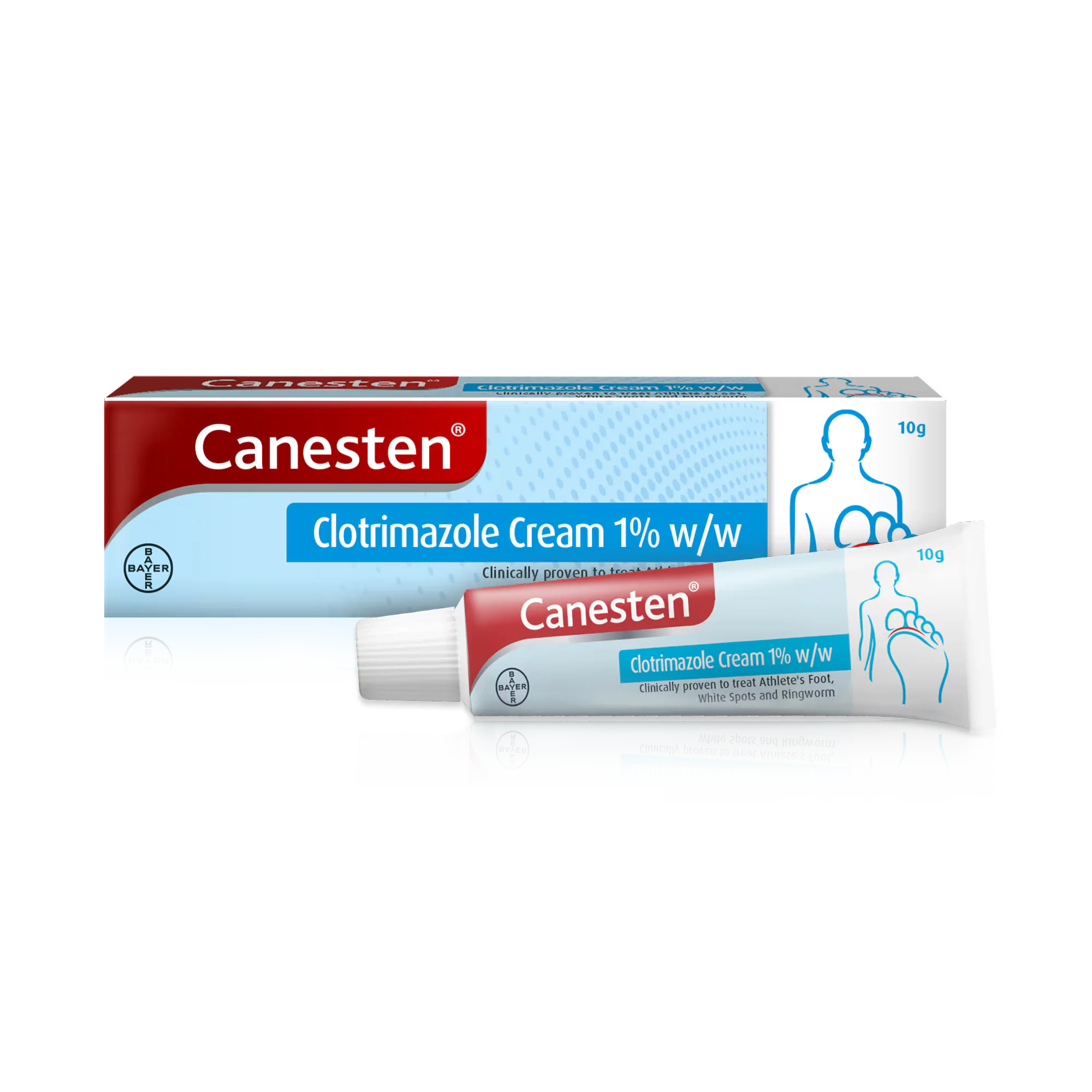
Both Scholl Athlete's Foot Cream and Canesten Athlete's Foot Cream contain clotrimazole 1% as the active ingredient, so they work in the same way. The main differences are in the brand, packaging, and price. Scholl Athlete's Foot Cream at £4.99 offers a cost-effective option with the same active ingredient.
Can I use Scholl Athlete's Foot Cream on my nails?
No — this cream is formulated for use on the skin only and is not suitable for treating fungal nail infections (onychomycosis). Fungal nail infections require specific antifungal nail treatments, which penetrate the nail plate differently. If you suspect a fungal nail infection, speak to your pharmacist about appropriate nail treatment options.
Does Scholl Athlete's Foot Cream interact with other medicines?
There are no clinically significant drug interactions known for topical clotrimazole at 1% concentration when used as directed on the skin. However, if you are applying other topical products to the same area, it is worth checking with your pharmacist to avoid any potential issues. Always inform your pharmacist of all medicines you are currently using.
What are the latest research findings on clotrimazole for athlete's foot?
Clotrimazole has been used clinically for over 50 years and remains one of the most well-evidenced topical antifungals for tinea pedis. Published clinical literature consistently supports its efficacy and safety profile for treating athlete's foot in adults. The NHS continues to recommend clotrimazole-based creams as a first-line treatment for athlete's foot. You can also explore our wider skin care collection for further evidence-based topical treatments.
Description
What Is Athlete's Foot Cream and Does It Work?
Athlete's foot — known medically as tinea pedis — is a common fungal infection that affects the skin of the feet, particularly between the toes. It causes itching, scaling, redness, and sometimes cracking or blistering. According to the NHS, it is one of the most frequently occurring fungal skin infections in the UK, and it spreads easily in warm, damp environments like changing rooms and swimming pools. The good news? It responds well to topical antifungal treatment. Athlete's foot cream is one of the most accessible and effective ways to tackle the infection at home, without needing a prescription. You can browse the full range of treatments in our athlete's foot and fungal infections collection at Cured Pharmacy.
Scholl Athlete's Foot Cream 15g is a topical antifungal cream containing clotrimazole 1% as its active ingredient. Clotrimazole is a well-established antifungal medicine that has been used for decades to treat a range of fungal skin conditions. At just £4.99, this 15g tube offers a practical, affordable option for managing athlete's foot at home.
How Does Scholl Athlete's Foot Cream Work?
Clotrimazole belongs to the azole class of antifungals. It works by targeting the fungal cell membrane — specifically by inhibiting the synthesis of ergosterol, a key component that keeps the fungal cell intact. Without ergosterol, the cell membrane becomes leaky and unstable, ultimately killing the fungus. Here's a simple breakdown of the mechanism:
- Clotrimazole inhibits the enzyme lanosterol 14α-demethylase, which is essential for ergosterol production.
- Without ergosterol, the fungal cell membrane loses structural integrity.
- The fungal cells become permeable, leading to cell death (fungicidal action).
- At lower concentrations, it may also inhibit fungal growth (fungistatic action), preventing the infection from spreading further.
This dual action — killing existing fungal cells and stopping new ones from forming — is why clotrimazole is so widely recommended for athlete's foot and similar conditions.
Who Should Use Scholl Athlete's Foot Cream?
This cream is designed for adults and young people aged 12 and over who are experiencing symptoms of athlete's foot. It's particularly useful if you've noticed itching, peeling, or redness between your toes or on the soles of your feet. That said, it's not suitable for everyone.
This product may be appropriate for you if:
- You have confirmed or suspected athlete's foot (tinea pedis).
- You are aged 12 or over.
- You have no known allergy to clotrimazole or any other ingredient in the cream.
- Your skin is not broken, severely inflamed, or showing signs of bacterial infection.
It is not recommended for children under 12 without medical supervision, or for use during pregnancy or breastfeeding without first speaking to a healthcare professional.
How Does Scholl Athlete's Foot Cream Compare to Other Antifungal Creams?
| Feature | Scholl Athlete's Foot Cream 15g | Lamisil AT Cream (Terbinafine 1%) |
|---|---|---|
| Active ingredient | Clotrimazole 1% | Terbinafine 1% |
| Drug class | Azole antifungal | Allylamine antifungal |
| Typical treatment duration | 2–4 weeks | 1–2 weeks |
| OTC availability | Yes | Yes |
Is Scholl Athlete's Foot Cream Safe to Store at Home?
Yes — this cream is straightforward to store safely at home. Keep it below 25°C, away from direct sunlight and out of reach of children. Do not use it after the expiry date printed on the tube. Once opened, use within the period indicated on the packaging. If you're managing other skin concerns alongside fungal infections, you might also find our skin care collection helpful for complementary products.
This product is a medicine. Speak to your doctor or pharmacist before using if you have an underlying medical condition or are taking other medicines.
Scholl Athlete's Foot Cream 15g specifications
| Treatment category | Antifungal / Foot care |
| Active ingredient | Clotrimazole 1% |
| Mechanism of action | Inhibits ergosterol synthesis in fungal cell membranes |
| Effective against | Tinea pedis (athlete's foot), dermatophyte fungi |
| Suitable for | Adults and children aged 12 and over |
| Pack size | 15g |
| Strength | 1% w/w clotrimazole |
| UK classification | General Sale List (GSL) |
| Drug class | Azole antifungal |
| Preparation | Topical cream |
| Route of administration | Topical (external use only) |
Specifications of Scholl Athlete's Foot Cream 15g
What Is Scholl Athlete's Foot Cream and What Is It Used For?
Scholl Athlete's Foot Cream 15g is a topical antifungal medicine containing clotrimazole 1% w/w. It is used to treat athlete's foot (tinea pedis), a fungal infection of the skin on the feet caused by dermatophyte fungi such as Trichophyton rubrum. The NHS notes that athlete's foot is very common and can cause itching, scaling, redness, and cracking — particularly between the toes and on the soles of the feet. This cream works directly on the affected skin to clear the infection and relieve symptoms. It is available over the counter without a prescription and is classified as a General Sale List (GSL) medicine in the UK.
What Do You Need to Know Before Using Scholl Athlete's Foot Cream?
Before applying this cream, it's important to check whether it is appropriate for you. Do not use Scholl Athlete's Foot Cream if any of the following apply:
- You are allergic to clotrimazole or any other ingredient in the cream.
- You are under 12 years of age.
- The affected skin is severely broken, blistered, or shows signs of bacterial infection (such as pus or significant swelling).
- You are pregnant or breastfeeding — speak to your pharmacist or GP before use.
- You have previously had a severe skin reaction to any antifungal product.
There are no clinically significant drug interactions known for topical clotrimazole at this concentration. However, if you are using other topical products on the same area, speak to your pharmacist before combining them. You may also find it useful to explore our foot care collection for complementary products such as antifungal powders or moisture-wicking insoles.
How Should You Use Scholl Athlete's Foot Cream?
Using this cream correctly is key to clearing the infection fully. Follow these steps each time you apply it:
- Wash the affected area gently with soap and water.
- Dry the skin thoroughly — particularly between the toes — as fungi thrive in moisture.
- Squeeze a small amount of cream onto your fingertip.
- Apply a thin layer to the affected skin and the surrounding area.
- Gently rub in until absorbed.
- Wash your hands after application unless your hands are the area being treated.
| Indication | Age Group | Dose | Frequency |
|---|---|---|---|
| Athlete's foot (tinea pedis) | Adults and children 12+ | Thin layer to affected area | 2–3 times daily |
| Athlete's foot (tinea pedis) | Under 12 | Not recommended without medical advice | — |
What Are the Possible Side Effects of Scholl Athlete's Foot Cream?
Like all medicines, Scholl Athlete's Foot Cream can cause side effects, although not everyone experiences them. Most side effects are mild and localised to the area of application.
Common side effects:
- Mild skin irritation at the application site
- Redness or erythema
- Slight burning or stinging sensation after application
Less common side effects:
- Skin peeling or flaking (may be part of the healing process)
- Localised rash or urticaria (hives)
- Blistering or swelling — stop use immediately and seek medical advice if this occurs
Serious allergic reactions (anaphylaxis) to topical clotrimazole are extremely rare. If you notice swelling of the face, lips, or throat, or have difficulty breathing after applying this cream, seek emergency medical attention immediately. If you're managing other skin conditions alongside athlete's foot, our creams and ointments collection includes a range of topical treatments that your pharmacist can advise on.
How Should You Store Scholl Athlete's Foot Cream?
- Store below 25°C in a cool, dry place.
- Keep away from direct sunlight and heat sources.
- Do not freeze.
- Keep the tube tightly closed when not in use.
- Keep out of the sight and reach of children.
- Do not use after the expiry date printed on the tube or carton.
- Do not dispose of medicines via wastewater or household waste — return unused medicines to your pharmacy.
References
- https://www.nhs.uk/conditions/athletes-foot/
- https://www.nhs.uk/conditions/athletes-foot/treatment/
- https://www.nhs.uk/conditions/fungal-nail-infection/
- https://www.nhs.uk/medicines/clotrimazole-for-skin/
- https://bnf.nice.org.uk/drugs/clotrimazole/
Written and reviewed by our qualified team
Your safety and success are our highest priorities. Our medical team rigorously evaluates every product and piece of advice we provide, ensuring you receive only the most effective, science-backed solutions available.
Frequently Asked Questions
Where can I buy Scholl Athlete's Foot Cream online in the UK?
You can buy Scholl Athlete's Foot Cream 15g online from Cured Pharmacy for just £4.99, with fast UK delivery straight to your door. It is available without a prescription as an over-the-counter antifungal treatment. You can also browse our full athlete's foot and fungal infections collection for additional treatment options.
How does Scholl Athlete's Foot Cream work in the body?
Scholl Athlete's Foot Cream contains clotrimazole 1%, an azole antifungal that works by inhibiting the production of ergosterol — a vital component of the fungal cell membrane. Without ergosterol, the fungal cell membrane breaks down, killing the fungus and stopping the infection from spreading. This makes it effective against the dermatophyte fungi responsible for athlete's foot.
How do I use Scholl Athlete's Foot Cream step by step?
Start by washing and thoroughly drying the affected area, paying close attention to the spaces between your toes. Apply a thin layer of the cream to the affected skin and the surrounding area two to three times daily. Always wash your hands after application unless your hands are the area being treated.
How long does Scholl Athlete's Foot Cream take to work?
Many people notice a reduction in itching and redness within a few days of starting treatment. However, it is important to continue using the cream for the full recommended course — usually two to four weeks — even if symptoms appear to have cleared. Stopping too early can allow the infection to return.
What are the side effects of Scholl Athlete's Foot Cream?
Side effects are uncommon but can include mild skin irritation, redness, or a slight burning sensation at the site of application. Rarely, some people may experience a localised rash or blistering — if this happens, stop using the cream and speak to your pharmacist or GP. Serious allergic reactions are very rare but require immediate medical attention.
Who is Scholl Athlete's Foot Cream suitable for?
This cream is suitable for adults and young people aged 12 and over who have athlete's foot or a suspected fungal skin infection on the feet. It is not recommended for children under 12, and those who are pregnant or breastfeeding should consult a healthcare professional before use. People with a known allergy to clotrimazole should not use this product.
Can I use Scholl Athlete's Foot Cream if I am pregnant?
If you are pregnant or breastfeeding, you should speak to your GP or pharmacist before using any antifungal cream, including this one. While topical clotrimazole is generally considered low risk, it is always best to seek professional advice during pregnancy. Your pharmacist can help you weigh up the benefits and any potential risks.
What happens if I miss an application of Scholl Athlete's Foot Cream?
If you forget to apply the cream at your usual time, apply it as soon as you remember and then continue with your regular schedule. Do not apply a double dose to make up for a missed application. Consistency is important — missing doses can slow your recovery and increase the risk of the infection returning.
What are alternatives to Scholl Athlete's Foot Cream?
Alternatives include other clotrimazole-based creams such as Canesten Athlete's Foot Cream, or terbinafine-based products like Lamisil AT Cream, which may require a shorter treatment course. Antifungal sprays and powders are also available for those who prefer a different format. Your pharmacist can advise on the most suitable option based on your symptoms and preferences.
How long can you use Scholl Athlete's Foot Cream for?
The recommended treatment duration is two to four weeks, applied two to three times daily. If your symptoms have not improved after four weeks of consistent use, you should stop and consult your GP or pharmacist, as you may need a different treatment or further investigation. Do not use this cream for longer than recommended without medical advice.
Can athlete's foot come back after using the cream?
Yes — athlete's foot can recur, particularly if you are regularly exposed to warm, damp environments such as communal showers or swimming pools. To reduce the risk of reinfection, keep your feet clean and dry, change socks daily, and avoid walking barefoot in public areas. Completing the full course of treatment is also essential to prevent relapse.
Is Scholl Athlete's Foot Cream the same as Canesten?
Both Scholl Athlete's Foot Cream and Canesten Athlete's Foot Cream contain clotrimazole 1% as the active ingredient, so they work in the same way. The main differences are in the brand, packaging, and price. Scholl Athlete's Foot Cream at £4.99 offers a cost-effective option with the same active ingredient.
Can I use Scholl Athlete's Foot Cream on my nails?
No — this cream is formulated for use on the skin only and is not suitable for treating fungal nail infections (onychomycosis). Fungal nail infections require specific antifungal nail treatments, which penetrate the nail plate differently. If you suspect a fungal nail infection, speak to your pharmacist about appropriate nail treatment options.
Does Scholl Athlete's Foot Cream interact with other medicines?
There are no clinically significant drug interactions known for topical clotrimazole at 1% concentration when used as directed on the skin. However, if you are applying other topical products to the same area, it is worth checking with your pharmacist to avoid any potential issues. Always inform your pharmacist of all medicines you are currently using.
What are the latest research findings on clotrimazole for athlete's foot?
Clotrimazole has been used clinically for over 50 years and remains one of the most well-evidenced topical antifungals for tinea pedis. Published clinical literature consistently supports its efficacy and safety profile for treating athlete's foot in adults. The NHS continues to recommend clotrimazole-based creams as a first-line treatment for athlete's foot. You can also explore our wider skin care collection for further evidence-based topical treatments.