The Story
What Is the Vicks Nasal Inhaler and How Does It Help?
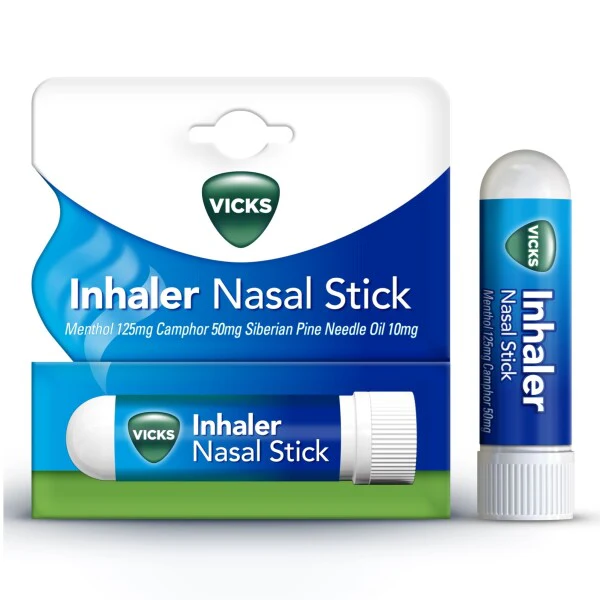
A blocked nose is one of those things that sounds minor until you're actually dealing with it. Struggling to breathe through your nose at night, feeling stuffy during the day, or trying to concentrate at work while your sinuses feel like they're packed with cotton wool — it's genuinely miserable. The Vicks nasal inhaler is a compact, portable nasal stick designed to give you fast, on-the-go relief from nasal congestion caused by colds, flu, and hay fever. At just £2.75, it's one of the most accessible decongestant options available without a prescription. You can browse our full range of cold and flu remedies if you're looking for additional support alongside this product.
Nasal congestion occurs when the tissues lining the nose become swollen due to inflamed blood vessels, often triggered by a viral infection or an allergic reaction. The NHS notes that a blocked nose is a very common symptom of colds and flu, and while it usually resolves on its own, symptomatic relief can make a real difference to your comfort and daily functioning. The Vicks Inhaler Nasal Stick offers a non-drowsy, drug-free inhalation option — no tablets, no sprays, just a quick inhale when you need it.
How Does the Vicks Inhaler Nasal Stick Work?
The active ingredient in the Vicks Inhaler Nasal Stick is levomenthol. When you inhale through the stick, levomenthol vapour stimulates cold-sensitive receptors (TRPM8 receptors) in the nasal mucosa. This creates a cooling sensation that makes the nasal airway feel more open and easier to breathe through. It's worth noting that levomenthol doesn't physically shrink swollen nasal tissue the way a decongestant spray containing xylometazoline might — instead, it works by altering the perception of airflow, making breathing feel noticeably more comfortable.
- Levomenthol activates cold-sensitive nerve receptors in the nasal lining
- This produces a cooling, refreshing sensation with each inhalation
- The effect is immediate and does not require systemic absorption
- No rebound congestion risk, unlike some nasal decongestant sprays used long-term
Who Is the Vicks Inhaler Nasal Stick Suitable For?
This product is suitable for most adults and children aged 6 years and over who are experiencing nasal congestion. It's particularly useful for people who prefer not to take oral decongestants — for example, those with high blood pressure who may be advised to avoid pseudoephedrine-containing products. It's also a handy option for anyone who wants something discreet and portable, whether you're at the office, travelling, or simply don't want to carry a bottle of nasal spray.
- Adults experiencing blocked nose due to colds or flu
- Hay fever sufferers with nasal congestion as a symptom
- Children aged 6 and over (with adult supervision)
- People seeking a non-drowsy, tablet-free congestion remedy
If you suffer from seasonal nasal congestion alongside other hay fever symptoms such as itchy eyes or sneezing, you may also want to explore our allergy and hay fever treatments for a more complete approach to symptom management.
How Does the Vicks Inhaler Nasal Stick Compare to a Nasal Decongestant Spray?
| Feature | Vicks Inhaler Nasal Stick | Nasal Decongestant Spray (e.g. xylometazoline) |
|---|---|---|
| Active ingredient | Levomenthol | Xylometazoline or oxymetazoline |
| Mechanism | Sensory cooling effect via TRPM8 receptors | Vasoconstriction of nasal blood vessels |
| Rebound congestion risk | No known risk | Yes, if used for more than 7 days |
| Suitable for children under 6 | No | No (most formulations) |
| Portability | Pocket-sized stick — very portable | Bottle — less discreet |
How Should You Store the Vicks Inhaler Nasal Stick?
Store the Vicks nasal inhaler below 25°C, away from direct sunlight and sources of heat. Keep the cap firmly in place when not in use to preserve the potency of the levomenthol vapour. Avoid leaving it in a hot car or on a sunny windowsill, as heat can degrade the active ingredient more quickly. Keep out of reach and sight of children.
Each inhaler stick has a shelf life — check the expiry date printed on the packaging before use. Once opened, the product is typically effective for the duration stated in the patient information leaflet. If you're unsure whether your inhaler is still active, a noticeably reduced menthol scent when uncapped is a practical indicator that it may need replacing.
This product is a medicine. Speak to your doctor or pharmacist before using if you have an underlying medical condition or are taking other medicines.
Vicks Inhaler Nasal Stick specifications
| Treatment category | Nasal congestion relief |
| Mechanism of action | Levomenthol stimulates TRPM8 cold receptors in nasal mucosa, producing a cooling sensation that eases the perception of nasal blockage |
| Effective for | Blocked nose due to colds, flu, and hay fever |
| Suitable for | Adults and children aged 6 years and over |
| Active ingredient | Levomenthol |
| Pack size | 1 inhaler stick |
| UK classification | General Sale List (GSL) |
| Drug class | Nasal decongestant (inhalation) |
| Preparation | Medicated nasal inhaler stick |
| Route of administration | Nasal inhalation |
Specifications of Vicks Inhaler Nasal Stick
What Is the Vicks Inhaler Nasal Stick and What Is It Used For?
The Vicks Inhaler Nasal Stick is an over-the-counter nasal decongestant in stick form, containing levomenthol as its active ingredient. It is used to provide temporary relief from nasal congestion — that uncomfortable blocked, stuffy feeling in your nose — associated with common colds, flu, and hay fever. The NHS describes nasal congestion as one of the most frequently reported symptoms of upper respiratory tract infections, and it can significantly disrupt sleep, concentration, and general wellbeing.
Unlike oral decongestants, this product works locally through inhalation rather than being absorbed into the bloodstream. That makes it a useful option for people who want targeted nasal relief without systemic effects. It is classified as a General Sale List (GSL) medicine in the UK, meaning it can be purchased without a prescription from pharmacies and other retail outlets.
What Do You Need to Know Before Using the Vicks Inhaler Nasal Stick?
Before using this product, read the following contraindications and warnings carefully. If any of these apply to you, speak to a pharmacist or GP before use.
- Do not use in children under 6 years of age
- Avoid contact with eyes — if contact occurs, rinse thoroughly with water
- Do not insert the inhaler deeply into the nostril; gentle placement at the nostril opening is sufficient
- If you have a known hypersensitivity to menthol or any other ingredient, do not use this product
- Consult your pharmacist or GP if you are pregnant or breastfeeding before use
- Do not use on broken or irritated nasal skin
In terms of drug interactions, the Vicks Inhaler Nasal Stick is used topically via inhalation and is not known to interact with other medicines. However, if you are taking monoamine oxidase inhibitors (MAOIs) or have any complex medical history, it is always sensible to check with your pharmacist first. If you're managing multiple symptoms alongside congestion — such as pain or discomfort — our pain relief range may also be worth exploring.
- No clinically significant drug interactions are currently documented for levomenthol inhalation at this dose
- Inform your pharmacist of all medicines you are taking as a precaution
How Should You Use the Vicks Inhaler Nasal Stick?
Using the inhaler correctly ensures you get the most benefit from each application. Follow these steps:
- Remove the cap from the inhaler stick
- Hold one nostril closed with a finger
- Place the tip of the inhaler at the opening of the other nostril — do not insert deeply
- Inhale slowly and steadily through the nostril
- Repeat for the other nostril if needed
- Replace the cap firmly after use to preserve the active ingredient
| Age Group | Dose | Frequency |
|---|---|---|
| Adults and children aged 6+ | 1–2 inhalations per nostril | As needed; do not exceed recommended daily use |
| Children under 6 | Not suitable | Not applicable |
What Are the Possible Side Effects of the Vicks Inhaler Nasal Stick?
Side effects with this product are uncommon when used as directed. Most people tolerate it well. However, as with any medicine, some individuals may experience reactions.
Common side effects:
- Mild cooling or tingling sensation in the nasal passages (this is expected and part of how it works)
- Temporary sneezing immediately after use
Less common side effects:
- Mild nasal irritation or dryness
- Skin irritation around the nostrils if the product contacts the skin repeatedly
- Headache (rare)
If you experience any allergic reaction — such as rash, swelling, or difficulty breathing — stop use immediately and seek medical attention. The NHS advises that allergic reactions to menthol-containing products are rare but possible. You should also stop use and consult a pharmacist if your symptoms worsen or do not improve after 7 days. For ear, nose, and throat concerns more broadly, our ear, nose and throat collection includes a range of relevant products.
How Should You Store the Vicks Inhaler Nasal Stick?
- Store below 25°C in a cool, dry place
- Keep away from direct sunlight and sources of heat
- Always replace the cap after use to prevent evaporation of the active ingredient
- Keep out of reach and sight of children
- Do not use after the expiry date printed on the packaging
- Do not store in a bathroom or near a sink where humidity is high
References
- https://www.nhs.uk/conditions/common-cold/
- https://www.nhs.uk/conditions/nasal-polyps/
- https://www.nhs.uk/conditions/hay-fever/
- https://www.nhs.uk/conditions/flu/
- https://www.nhs.uk/medicines/decongestants/
- https://bnf.nice.org.uk/drugs/levomenthol/
Written and reviewed by our qualified team
Your safety and success are our highest priorities. Our medical team rigorously evaluates every product and piece of advice we provide, ensuring you receive only the most effective, science-backed solutions available.
Frequently Asked Questions
Where can I buy the Vicks Inhaler Nasal Stick online in the UK?
You can buy the Vicks Inhaler Nasal Stick directly from Cured Pharmacy online for just £2.75. It is a General Sale List medicine and does not require a prescription. Simply add it to your basket and it will be dispatched to your door.
How does the Vicks nasal inhaler work in the body?
The Vicks nasal inhaler contains levomenthol, which activates cold-sensitive TRPM8 receptors in the lining of your nasal passages when inhaled. This creates a cooling sensation that makes your nasal airway feel more open and easier to breathe through. It does not physically reduce nasal swelling but significantly improves the perception of airflow.
How do I use the Vicks Inhaler Nasal Stick step by step?
Remove the cap, hold one nostril closed, and place the tip of the inhaler at the opening of the other nostril. Inhale slowly and steadily, then repeat on the other side if needed. Always replace the cap firmly after use to preserve the levomenthol vapour.
How often can I use the Vicks nasal inhaler each day?
The Vicks Inhaler Nasal Stick can be used as needed throughout the day by adults and children aged 6 and over. There is no fixed maximum number of uses stated, but it should be used only as required for symptom relief. If you find yourself needing it very frequently, speak to your pharmacist for further advice.
Is the Vicks Inhaler Nasal Stick safe for children?
The Vicks Inhaler Nasal Stick is not recommended for children under 6 years of age. For children aged 6 and over, it can be used under adult supervision. If you are looking for congestion relief options for younger children, speak to your pharmacist — our baby and toddler range may have suitable alternatives.
Can I use the Vicks nasal inhaler during pregnancy?
If you are pregnant or breastfeeding, you should speak to your GP or pharmacist before using the Vicks Inhaler Nasal Stick. While levomenthol inhalation is localised and not significantly absorbed systemically, professional guidance is always recommended during pregnancy. Your healthcare provider can advise on the safest options for you.
What are the side effects of the Vicks Inhaler Nasal Stick?
Side effects are uncommon but may include mild nasal irritation, temporary sneezing, or a tingling sensation in the nasal passages — the latter is a normal part of how the product works. Rarely, some people may experience mild skin irritation around the nostrils. If you notice any signs of an allergic reaction, stop use immediately and seek medical advice.
Who is eligible to use the Vicks Inhaler Nasal Stick?
Most adults and children aged 6 and over experiencing nasal congestion from colds, flu, or hay fever are suitable candidates for this product. It is particularly useful for those who prefer to avoid oral decongestants, such as people with high blood pressure. Always check with your pharmacist if you have an underlying health condition.
How long can you use the Vicks nasal inhaler for?
The Vicks Inhaler Nasal Stick is intended for short-term use to relieve temporary nasal congestion. If your symptoms persist beyond 7 days without improvement, you should consult your pharmacist or GP to rule out an underlying condition. Unlike some nasal decongestant sprays, there is no documented risk of rebound congestion with this product.
What happens if I accidentally get the inhaler in my eye?
If the inhaler comes into contact with your eye, rinse the affected eye thoroughly with clean, lukewarm water for several minutes. Avoid rubbing the eye. If irritation persists or you experience any pain or vision changes, seek medical attention promptly.
What are the alternatives to the Vicks nasal inhaler for blocked nose?
Alternatives include nasal decongestant sprays containing xylometazoline or oxymetazoline, saline nasal rinses, and oral decongestants such as pseudoephedrine (though these are not suitable for everyone). Steam inhalation is also a commonly recommended home remedy by the NHS. Browse our ear, nose and throat collection for a range of options.
Does the Vicks Inhaler Nasal Stick interact with any medicines?
No clinically significant drug interactions are currently documented for levomenthol used via nasal inhalation at the doses found in this product. However, as a precaution, always inform your pharmacist of any medicines you are currently taking. This is especially important if you are on MAOIs or have a complex medical history.
Can I use the Vicks nasal inhaler alongside hay fever tablets?
Yes, in most cases the Vicks Inhaler Nasal Stick can be used alongside antihistamine hay fever tablets, as it works locally via inhalation rather than systemically. However, if you are unsure about combining products, check with your pharmacist first. For a broader approach to hay fever management, explore our allergy and hay fever treatments.
What is the latest research on menthol nasal inhalers?
Research confirms that menthol activates TRPM8 thermoreceptors in the nasal mucosa, producing a subjective sensation of improved nasal airflow even without measurable changes in nasal resistance. Studies published in respiratory and sensory pharmacology journals support its use as a safe, well-tolerated option for symptomatic congestion relief. It remains a widely recommended non-pharmacological adjunct for cold and flu symptoms.
How should I store the Vicks Inhaler Nasal Stick to keep it effective?
Store the inhaler below 25°C in a cool, dry place away from direct sunlight and heat sources. Always replace the cap firmly after each use to prevent the levomenthol from evaporating. A noticeably reduced menthol scent when you open the cap is a sign that the product may be losing its effectiveness and should be replaced.
Description
What Is the Vicks Nasal Inhaler and How Does It Help?
A blocked nose is one of those things that sounds minor until you're actually dealing with it. Struggling to breathe through your nose at night, feeling stuffy during the day, or trying to concentrate at work while your sinuses feel like they're packed with cotton wool — it's genuinely miserable. The Vicks nasal inhaler is a compact, portable nasal stick designed to give you fast, on-the-go relief from nasal congestion caused by colds, flu, and hay fever. At just £2.75, it's one of the most accessible decongestant options available without a prescription. You can browse our full range of cold and flu remedies if you're looking for additional support alongside this product.
Nasal congestion occurs when the tissues lining the nose become swollen due to inflamed blood vessels, often triggered by a viral infection or an allergic reaction. The NHS notes that a blocked nose is a very common symptom of colds and flu, and while it usually resolves on its own, symptomatic relief can make a real difference to your comfort and daily functioning. The Vicks Inhaler Nasal Stick offers a non-drowsy, drug-free inhalation option — no tablets, no sprays, just a quick inhale when you need it.
How Does the Vicks Inhaler Nasal Stick Work?
The active ingredient in the Vicks Inhaler Nasal Stick is levomenthol. When you inhale through the stick, levomenthol vapour stimulates cold-sensitive receptors (TRPM8 receptors) in the nasal mucosa. This creates a cooling sensation that makes the nasal airway feel more open and easier to breathe through. It's worth noting that levomenthol doesn't physically shrink swollen nasal tissue the way a decongestant spray containing xylometazoline might — instead, it works by altering the perception of airflow, making breathing feel noticeably more comfortable.
- Levomenthol activates cold-sensitive nerve receptors in the nasal lining
- This produces a cooling, refreshing sensation with each inhalation
- The effect is immediate and does not require systemic absorption
- No rebound congestion risk, unlike some nasal decongestant sprays used long-term
Who Is the Vicks Inhaler Nasal Stick Suitable For?
This product is suitable for most adults and children aged 6 years and over who are experiencing nasal congestion. It's particularly useful for people who prefer not to take oral decongestants — for example, those with high blood pressure who may be advised to avoid pseudoephedrine-containing products. It's also a handy option for anyone who wants something discreet and portable, whether you're at the office, travelling, or simply don't want to carry a bottle of nasal spray.
- Adults experiencing blocked nose due to colds or flu
- Hay fever sufferers with nasal congestion as a symptom
- Children aged 6 and over (with adult supervision)
- People seeking a non-drowsy, tablet-free congestion remedy
If you suffer from seasonal nasal congestion alongside other hay fever symptoms such as itchy eyes or sneezing, you may also want to explore our allergy and hay fever treatments for a more complete approach to symptom management.
How Does the Vicks Inhaler Nasal Stick Compare to a Nasal Decongestant Spray?
| Feature | Vicks Inhaler Nasal Stick | Nasal Decongestant Spray (e.g. xylometazoline) |
|---|---|---|
| Active ingredient | Levomenthol | Xylometazoline or oxymetazoline |
| Mechanism | Sensory cooling effect via TRPM8 receptors | Vasoconstriction of nasal blood vessels |
| Rebound congestion risk | No known risk | Yes, if used for more than 7 days |
| Suitable for children under 6 | No | No (most formulations) |
| Portability | Pocket-sized stick — very portable | Bottle — less discreet |
How Should You Store the Vicks Inhaler Nasal Stick?
Store the Vicks nasal inhaler below 25°C, away from direct sunlight and sources of heat. Keep the cap firmly in place when not in use to preserve the potency of the levomenthol vapour. Avoid leaving it in a hot car or on a sunny windowsill, as heat can degrade the active ingredient more quickly. Keep out of reach and sight of children.
Each inhaler stick has a shelf life — check the expiry date printed on the packaging before use. Once opened, the product is typically effective for the duration stated in the patient information leaflet. If you're unsure whether your inhaler is still active, a noticeably reduced menthol scent when uncapped is a practical indicator that it may need replacing.
This product is a medicine. Speak to your doctor or pharmacist before using if you have an underlying medical condition or are taking other medicines.
Vicks Inhaler Nasal Stick specifications
| Treatment category | Nasal congestion relief |
| Mechanism of action | Levomenthol stimulates TRPM8 cold receptors in nasal mucosa, producing a cooling sensation that eases the perception of nasal blockage |
| Effective for | Blocked nose due to colds, flu, and hay fever |
| Suitable for | Adults and children aged 6 years and over |
| Active ingredient | Levomenthol |
| Pack size | 1 inhaler stick |
| UK classification | General Sale List (GSL) |
| Drug class | Nasal decongestant (inhalation) |
| Preparation | Medicated nasal inhaler stick |
| Route of administration | Nasal inhalation |
Specifications of Vicks Inhaler Nasal Stick
What Is the Vicks Inhaler Nasal Stick and What Is It Used For?
The Vicks Inhaler Nasal Stick is an over-the-counter nasal decongestant in stick form, containing levomenthol as its active ingredient. It is used to provide temporary relief from nasal congestion — that uncomfortable blocked, stuffy feeling in your nose — associated with common colds, flu, and hay fever. The NHS describes nasal congestion as one of the most frequently reported symptoms of upper respiratory tract infections, and it can significantly disrupt sleep, concentration, and general wellbeing.
Unlike oral decongestants, this product works locally through inhalation rather than being absorbed into the bloodstream. That makes it a useful option for people who want targeted nasal relief without systemic effects. It is classified as a General Sale List (GSL) medicine in the UK, meaning it can be purchased without a prescription from pharmacies and other retail outlets.
What Do You Need to Know Before Using the Vicks Inhaler Nasal Stick?
Before using this product, read the following contraindications and warnings carefully. If any of these apply to you, speak to a pharmacist or GP before use.
- Do not use in children under 6 years of age
- Avoid contact with eyes — if contact occurs, rinse thoroughly with water
- Do not insert the inhaler deeply into the nostril; gentle placement at the nostril opening is sufficient
- If you have a known hypersensitivity to menthol or any other ingredient, do not use this product
- Consult your pharmacist or GP if you are pregnant or breastfeeding before use
- Do not use on broken or irritated nasal skin
In terms of drug interactions, the Vicks Inhaler Nasal Stick is used topically via inhalation and is not known to interact with other medicines. However, if you are taking monoamine oxidase inhibitors (MAOIs) or have any complex medical history, it is always sensible to check with your pharmacist first. If you're managing multiple symptoms alongside congestion — such as pain or discomfort — our pain relief range may also be worth exploring.
- No clinically significant drug interactions are currently documented for levomenthol inhalation at this dose
- Inform your pharmacist of all medicines you are taking as a precaution
How Should You Use the Vicks Inhaler Nasal Stick?
Using the inhaler correctly ensures you get the most benefit from each application. Follow these steps:
- Remove the cap from the inhaler stick
- Hold one nostril closed with a finger
- Place the tip of the inhaler at the opening of the other nostril — do not insert deeply
- Inhale slowly and steadily through the nostril
- Repeat for the other nostril if needed
- Replace the cap firmly after use to preserve the active ingredient
| Age Group | Dose | Frequency |
|---|---|---|
| Adults and children aged 6+ | 1–2 inhalations per nostril | As needed; do not exceed recommended daily use |
| Children under 6 | Not suitable | Not applicable |
What Are the Possible Side Effects of the Vicks Inhaler Nasal Stick?
Side effects with this product are uncommon when used as directed. Most people tolerate it well. However, as with any medicine, some individuals may experience reactions.
Common side effects:
- Mild cooling or tingling sensation in the nasal passages (this is expected and part of how it works)
- Temporary sneezing immediately after use
Less common side effects:
- Mild nasal irritation or dryness
- Skin irritation around the nostrils if the product contacts the skin repeatedly
- Headache (rare)
If you experience any allergic reaction — such as rash, swelling, or difficulty breathing — stop use immediately and seek medical attention. The NHS advises that allergic reactions to menthol-containing products are rare but possible. You should also stop use and consult a pharmacist if your symptoms worsen or do not improve after 7 days. For ear, nose, and throat concerns more broadly, our ear, nose and throat collection includes a range of relevant products.
How Should You Store the Vicks Inhaler Nasal Stick?
- Store below 25°C in a cool, dry place
- Keep away from direct sunlight and sources of heat
- Always replace the cap after use to prevent evaporation of the active ingredient
- Keep out of reach and sight of children
- Do not use after the expiry date printed on the packaging
- Do not store in a bathroom or near a sink where humidity is high
References
- https://www.nhs.uk/conditions/common-cold/
- https://www.nhs.uk/conditions/nasal-polyps/
- https://www.nhs.uk/conditions/hay-fever/
- https://www.nhs.uk/conditions/flu/
- https://www.nhs.uk/medicines/decongestants/
- https://bnf.nice.org.uk/drugs/levomenthol/
Written and reviewed by our qualified team
Your safety and success are our highest priorities. Our medical team rigorously evaluates every product and piece of advice we provide, ensuring you receive only the most effective, science-backed solutions available.
Frequently Asked Questions
Where can I buy the Vicks Inhaler Nasal Stick online in the UK?
You can buy the Vicks Inhaler Nasal Stick directly from Cured Pharmacy online for just £2.75. It is a General Sale List medicine and does not require a prescription. Simply add it to your basket and it will be dispatched to your door.
How does the Vicks nasal inhaler work in the body?
The Vicks nasal inhaler contains levomenthol, which activates cold-sensitive TRPM8 receptors in the lining of your nasal passages when inhaled. This creates a cooling sensation that makes your nasal airway feel more open and easier to breathe through. It does not physically reduce nasal swelling but significantly improves the perception of airflow.
How do I use the Vicks Inhaler Nasal Stick step by step?
Remove the cap, hold one nostril closed, and place the tip of the inhaler at the opening of the other nostril. Inhale slowly and steadily, then repeat on the other side if needed. Always replace the cap firmly after use to preserve the levomenthol vapour.
How often can I use the Vicks nasal inhaler each day?
The Vicks Inhaler Nasal Stick can be used as needed throughout the day by adults and children aged 6 and over. There is no fixed maximum number of uses stated, but it should be used only as required for symptom relief. If you find yourself needing it very frequently, speak to your pharmacist for further advice.
Is the Vicks Inhaler Nasal Stick safe for children?
The Vicks Inhaler Nasal Stick is not recommended for children under 6 years of age. For children aged 6 and over, it can be used under adult supervision. If you are looking for congestion relief options for younger children, speak to your pharmacist — our baby and toddler range may have suitable alternatives.
Can I use the Vicks nasal inhaler during pregnancy?
If you are pregnant or breastfeeding, you should speak to your GP or pharmacist before using the Vicks Inhaler Nasal Stick. While levomenthol inhalation is localised and not significantly absorbed systemically, professional guidance is always recommended during pregnancy. Your healthcare provider can advise on the safest options for you.
What are the side effects of the Vicks Inhaler Nasal Stick?
Side effects are uncommon but may include mild nasal irritation, temporary sneezing, or a tingling sensation in the nasal passages — the latter is a normal part of how the product works. Rarely, some people may experience mild skin irritation around the nostrils. If you notice any signs of an allergic reaction, stop use immediately and seek medical advice.
Who is eligible to use the Vicks Inhaler Nasal Stick?
Most adults and children aged 6 and over experiencing nasal congestion from colds, flu, or hay fever are suitable candidates for this product. It is particularly useful for those who prefer to avoid oral decongestants, such as people with high blood pressure. Always check with your pharmacist if you have an underlying health condition.
How long can you use the Vicks nasal inhaler for?
The Vicks Inhaler Nasal Stick is intended for short-term use to relieve temporary nasal congestion. If your symptoms persist beyond 7 days without improvement, you should consult your pharmacist or GP to rule out an underlying condition. Unlike some nasal decongestant sprays, there is no documented risk of rebound congestion with this product.
What happens if I accidentally get the inhaler in my eye?
If the inhaler comes into contact with your eye, rinse the affected eye thoroughly with clean, lukewarm water for several minutes. Avoid rubbing the eye. If irritation persists or you experience any pain or vision changes, seek medical attention promptly.
What are the alternatives to the Vicks nasal inhaler for blocked nose?
Alternatives include nasal decongestant sprays containing xylometazoline or oxymetazoline, saline nasal rinses, and oral decongestants such as pseudoephedrine (though these are not suitable for everyone). Steam inhalation is also a commonly recommended home remedy by the NHS. Browse our ear, nose and throat collection for a range of options.
Does the Vicks Inhaler Nasal Stick interact with any medicines?
No clinically significant drug interactions are currently documented for levomenthol used via nasal inhalation at the doses found in this product. However, as a precaution, always inform your pharmacist of any medicines you are currently taking. This is especially important if you are on MAOIs or have a complex medical history.
Can I use the Vicks nasal inhaler alongside hay fever tablets?
Yes, in most cases the Vicks Inhaler Nasal Stick can be used alongside antihistamine hay fever tablets, as it works locally via inhalation rather than systemically. However, if you are unsure about combining products, check with your pharmacist first. For a broader approach to hay fever management, explore our allergy and hay fever treatments.
What is the latest research on menthol nasal inhalers?
Research confirms that menthol activates TRPM8 thermoreceptors in the nasal mucosa, producing a subjective sensation of improved nasal airflow even without measurable changes in nasal resistance. Studies published in respiratory and sensory pharmacology journals support its use as a safe, well-tolerated option for symptomatic congestion relief. It remains a widely recommended non-pharmacological adjunct for cold and flu symptoms.
How should I store the Vicks Inhaler Nasal Stick to keep it effective?
Store the inhaler below 25°C in a cool, dry place away from direct sunlight and heat sources. Always replace the cap firmly after each use to prevent the levomenthol from evaporating. A noticeably reduced menthol scent when you open the cap is a sign that the product may be losing its effectiveness and should be replaced.