The Story
What Is a Baby Nasal Aspirator and How Can It Help?
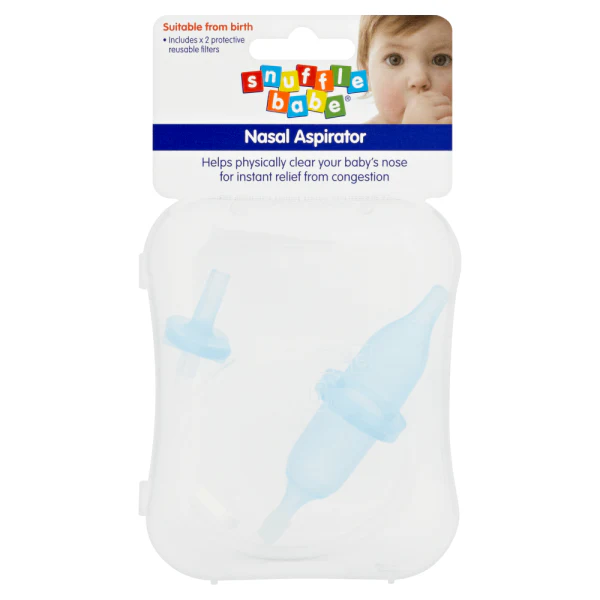
When your little one has a blocked nose, it can be distressing for both of you. Babies are obligate nasal breathers for the first few months of life, which means nasal congestion can make feeding, sleeping, and settling genuinely difficult. The baby nasal aspirator from Snufflebabe is a simple, parent-operated device designed to gently remove mucus from your baby's nasal passages — no medication required. You can find it alongside other essentials in our baby and toddler range.
Nasal congestion in infants is extremely common, particularly during the colder months when colds and respiratory viruses circulate more freely. The NHS notes that most colds in young children resolve on their own within 7 to 10 days, but in the meantime, keeping the nasal passages clear can make a real difference to your baby's comfort and feeding ability.
How Does the Snufflebabe Nasal Aspirator Work?
The device works through gentle, controlled suction. Unlike bulb syringes, which can be difficult to regulate, this aspirator uses a mouthpiece that allows you — the parent or carer — to control exactly how much suction is applied. A hygienic filter sits inside the tube to ensure no mucus reaches your mouth.
- A soft, flexible nozzle is placed gently at the entrance of the baby's nostril — never inserted deeply
- The parent applies slow, steady suction through the mouthpiece
- Mucus is drawn into a collection chamber, away from the mouthpiece
- The internal filter prevents any transfer of mucus or bacteria to the parent
- The process is repeated on the other nostril as needed
Who Should Use the Snufflebabe Nasal Aspirator?
This device is suitable for parents and carers of babies and young toddlers who are experiencing nasal congestion due to colds, minor respiratory infections, or general stuffiness. It is particularly useful before feeds, as a clear nose makes it much easier for babies to latch and feed comfortably.
- Newborns and young babies with cold-related congestion
- Toddlers who cannot yet blow their own nose
- Babies struggling to feed due to a blocked nose
- Parents looking for a drug-free, non-medicated option
Do not use this device if your baby has a nasal injury, has recently had nasal surgery, or if there is any sign of a nosebleed. If your child has a high temperature, is under three months old and unwell, or symptoms are worsening rather than improving, seek medical advice promptly.
How Does the Snufflebabe Aspirator Compare to a Bulb Syringe?
| Feature | Snufflebabe Nasal Aspirator | Bulb Syringe |
|---|---|---|
| Suction control | Parent-controlled via mouthpiece | Fixed — harder to regulate |
| Hygiene filter | Yes — internal filter included | No filter |
| Ease of cleaning | Disassembles fully for thorough cleaning | Difficult to clean inside bulb |
| Suitable for newborns | Yes | Yes, but suction harder to control |
Is the Snufflebabe Nasal Aspirator Safe to Use Regularly?
Used correctly, this baby nasal aspirator is considered safe for regular use during periods of congestion. Most healthcare professionals recommend limiting use to two or three times per day to avoid over-stimulating the delicate nasal mucosa. If you are also using saline nasal drops — which the NHS recommends as a first-line measure for infant nasal congestion — applying them a few minutes before using the aspirator can help loosen thicker mucus and make the process more comfortable for your baby. You can browse related products in our ear, nose and throat range.
This product is a medical device. Speak to your doctor or pharmacist before using if your baby has an underlying medical condition or has recently had nasal surgery.
Snufflebabe Nasal Aspirator specifications
| Treatment category | Infant nasal congestion relief |
| Mechanism of action | Gentle manual suction to remove nasal mucus |
| Effective for | Blocked nose in babies and toddlers |
| Suitable for | Newborns and toddlers |
| Active ingredient | None — mechanical device |
| UK classification | Medical device (non-medicinal) |
| Preparation | Handheld aspirator with mouthpiece and collection chamber |
| Route of administration | Nasal (external use only) |
Specifications of Snufflebabe Nasal Aspirator
What Is the Snufflebabe Nasal Aspirator and What Is It Used For?
The Snufflebabe Nasal Aspirator is a handheld, parent-operated medical device used to clear mucus from the nasal passages of babies and young toddlers. It is not a medicine — it contains no active pharmaceutical ingredients. Instead, it works purely through gentle mechanical suction, making it a drug-free option for managing infant nasal congestion caused by colds, minor upper respiratory tract infections, or general stuffiness.
Nasal congestion is one of the most common complaints in young children. The NHS advises that colds in children are very common — children can have up to 12 colds per year — and that keeping the nasal passages clear can help with feeding and sleeping comfort while the illness resolves naturally.
What Do You Need to Know Before Using the Snufflebabe Nasal Aspirator?
Before using this device, it is important to be aware of the following contraindications and precautions:
- Do not use if your baby has a nasal injury or wound inside the nose
- Do not use following recent nasal surgery
- Do not use if there is active bleeding from the nose
- Stop use immediately if your baby becomes very distressed or shows signs of pain
- Do not insert the nozzle deeply into the nostril — place it only at the entrance
- Seek medical advice if your baby is under three months old and has a temperature, is feeding poorly, or seems unusually unwell
- Consult your GP if congestion persists beyond 10 days or is accompanied by a high fever, ear pain, or difficulty breathing
There are no known drug interactions as this is a mechanical device with no pharmaceutical components.
- No known interactions with medicines
- Can be used alongside saline nasal drops without concern
How Should You Use the Snufflebabe Nasal Aspirator?
Using the aspirator correctly is key to making the experience as comfortable as possible for your baby. Follow these steps each time:
- Wash your hands thoroughly before handling the device
- Ensure all parts are clean and correctly assembled
- If using saline drops, apply them to each nostril and wait 1–2 minutes to allow mucus to loosen
- Sit your baby in a semi-upright position or lay them on their back with their head slightly elevated
- Place the soft nozzle gently at the entrance of one nostril — do not push it inside
- Apply slow, gentle suction through the mouthpiece — short, controlled breaths work best
- Check the collection chamber and empty if needed before moving to the other nostril
- Repeat on the second nostril
- Disassemble and clean all parts immediately after use
| Age Group | Frequency of Use | Notes |
|---|---|---|
| Newborn (0–3 months) | Up to 2–3 times daily | Use minimal suction; seek GP advice if unwell |
| Infant (3–12 months) | Up to 2–3 times daily | Particularly useful before feeds |
| Toddler (1–3 years) | As needed, up to 3 times daily | Encourage cooperation; use saline drops first |
For broader support during cold and flu season, you may also find helpful products in our cold and flu range.
What Are the Possible Side Effects of the Snufflebabe Nasal Aspirator?
Because this is a mechanical device rather than a medicine, side effects are uncommon. However, as with any nasal device used in infants, there are a small number of things to watch for.
Common side effects:
- Mild temporary redness around the nostrils
- Brief discomfort or crying during use
- Minor nasal irritation after repeated use
Less common side effects:
- Swelling of the nasal lining if the device is used too frequently
- Very minor nosebleed if the nozzle is inserted too deeply or suction is too forceful
If you notice persistent redness, swelling, or any bleeding, stop using the device and consult your pharmacist or GP.
How Should You Store the Snufflebabe Nasal Aspirator?
Proper storage keeps the device hygienic and ready for use whenever your baby needs it.
- Store in a clean, dry place away from direct sunlight
- Keep out of reach of older children and pets
- Disassemble all parts after cleaning and allow to air dry completely before storing
- Do not store in a damp environment such as a bathroom cabinet where moisture can accumulate
- Check all parts for signs of wear or damage before each use and replace if necessary
If you are looking for additional support for your child's health during cold season, our vitamins and supplements range includes options suitable for children, such as vitamin C and zinc products that may support immune function.
References
- https://www.nhs.uk/conditions/common-cold/
- https://www.nhs.uk/conditions/baby/health/common-health-problems-in-babies/
- https://www.nhs.uk/conditions/bronchiolitis/
- https://www.nhs.uk/conditions/baby/health/when-should-i-worry-about-my-childs-health/
- https://www.nhs.uk/conditions/sinusitis-sinus-infection/
- https://www.nice.org.uk/guidance/ng143
Written and reviewed by our qualified team
Your safety and success are our highest priorities. Our medical team rigorously evaluates every product and piece of advice we provide, ensuring you receive only the most effective, science-backed solutions available.
Frequently Asked Questions
Where can I buy a baby nasal aspirator online in the UK?
You can buy the Snufflebabe Nasal Aspirator directly from Cured Pharmacy online for just £7.00, with fast UK delivery. It is available without a prescription as it is a medical device rather than a licensed medicine. You can also browse our full baby and toddler range for related products.
How does a baby nasal aspirator work in practice?
The Snufflebabe Nasal Aspirator uses gentle, parent-controlled suction to draw mucus out of a baby's nasal passages. A soft nozzle is placed at the nostril entrance and the parent applies slow suction through a mouthpiece, with an internal filter preventing any mucus from reaching the parent's mouth. It is a completely drug-free method of relieving infant nasal congestion.
How do I use the Snufflebabe Nasal Aspirator step by step?
Start by washing your hands and assembling the device, then optionally apply saline drops to loosen mucus. Place the soft nozzle gently at the entrance of one nostril and apply slow, steady suction through the mouthpiece before repeating on the other side. Always disassemble and clean all parts thoroughly after every use.
How often can I use a nasal aspirator on my baby each day?
Most healthcare professionals recommend using a nasal aspirator no more than two to three times per day to avoid irritating your baby's delicate nasal lining. Overuse can cause the nasal mucosa to become swollen and more congested, which is counterproductive. If congestion is severe or persistent, speak to your GP or health visitor.
Is the Snufflebabe Nasal Aspirator safe for newborns?
Yes, the Snufflebabe Nasal Aspirator is designed for use in babies from birth, including newborns, when used with care and minimal suction. However, if your newborn is under three months old and appears unwell, has a temperature, or is feeding poorly, you should seek medical advice promptly rather than relying solely on nasal clearance. The NHS advises that any illness in a baby under three months warrants early medical review.
What are the side effects of using a nasal aspirator on a baby?
Side effects are uncommon but can include mild temporary redness around the nostrils, brief discomfort during use, and minor nasal irritation with repeated use. In rare cases, using too much suction or inserting the nozzle too deeply can cause a very minor nosebleed. Stop use and consult your pharmacist or GP if you notice persistent redness, swelling, or any bleeding.
What are the alternatives to a baby nasal aspirator?
The main alternatives include saline nasal drops or sprays, which the NHS recommends as a first-line measure for infant nasal congestion, and electric nasal aspirators, which provide consistent suction without requiring parental effort. Saline drops can also be used alongside the Snufflebabe aspirator to loosen thicker mucus before aspiration. You can explore related options in our ear, nose and throat range.
How do I clean the Snufflebabe Nasal Aspirator properly?
After every use, disassemble all parts of the aspirator and wash them in warm soapy water, then rinse thoroughly under clean running water. Allow all components to air dry completely before reassembling and storing, as trapped moisture can encourage bacterial growth. Regular, thorough cleaning is essential to keep the device safe and hygienic for your baby.
Can I use the nasal aspirator before my baby's feeds?
Yes — using the aspirator shortly before a feed is one of the most practical times to do so, as a clear nose makes it significantly easier for babies to latch and feed comfortably without interruption. Applying saline drops a minute or two beforehand can help loosen mucus and make the process quicker. This is particularly helpful for breastfed babies, who rely entirely on nasal breathing during feeds.
Who is eligible to use the Snufflebabe Nasal Aspirator?
The device is suitable for use in babies and toddlers of any age who are experiencing nasal congestion, provided there is no nasal injury, recent nasal surgery, or active nosebleed. It is not suitable for use in children who are old enough to blow their own nose effectively. Parents or carers of children with underlying health conditions affecting the nose or airways should consult a GP before use.
What happens if I use too much suction with the aspirator?
Applying too much suction can cause discomfort, temporary swelling of the nasal lining, or in rare cases a very minor nosebleed. The mouthpiece design of the Snufflebabe aspirator is intended to help you regulate suction naturally — short, gentle breaths are all that is needed. If your baby seems distressed or you notice any bleeding, stop immediately and allow the nose to settle before trying again more gently.
Should I use saline drops before using the nasal aspirator?
Using saline nasal drops one to two minutes before aspiration is widely recommended by healthcare professionals, as it helps to soften and loosen thicker mucus, making it easier to remove. The NHS suggests saline drops as a first-line approach for infant nasal congestion, and they can be used safely alongside the aspirator. They are available over the counter and are suitable for use from birth.
How long can I keep using the Snufflebabe Nasal Aspirator?
You can continue using the aspirator for as long as your baby experiences nasal congestion and the device remains in good condition. Inspect all parts before each use for signs of wear, cracking, or damage, and replace the device if any component is compromised. There is no set expiry for the device itself, but hygiene and component integrity are the key factors in determining when to replace it.
What are the latest recommendations on managing infant nasal congestion?
Current NHS guidance recommends saline nasal drops as the first-line approach for infant nasal congestion, with mechanical aspiration as a useful complementary tool. Decongestant medicines are not recommended for children under six years old in the UK, making drug-free options like nasal aspirators particularly relevant. NICE guidance on upper respiratory tract infections in children also emphasises supportive care over medication in most cases.
Can the Snufflebabe Nasal Aspirator be used for toddlers as well as babies?
Yes, the aspirator is suitable for toddlers as well as babies, particularly those who have not yet learned to blow their own nose effectively. Toddlers may be more resistant to the process, so it can help to make it part of a calm, reassuring routine and use saline drops first to minimise discomfort. Once a child can blow their nose independently, the aspirator is generally no longer needed. You can find additional products to support your toddler's health in our cold and flu range.

Details & Craftsmanship
Every detail has been carefully considered to bring you the perfect product.
Description
What Is a Baby Nasal Aspirator and How Can It Help?
When your little one has a blocked nose, it can be distressing for both of you. Babies are obligate nasal breathers for the first few months of life, which means nasal congestion can make feeding, sleeping, and settling genuinely difficult. The baby nasal aspirator from Snufflebabe is a simple, parent-operated device designed to gently remove mucus from your baby's nasal passages — no medication required. You can find it alongside other essentials in our baby and toddler range.
Nasal congestion in infants is extremely common, particularly during the colder months when colds and respiratory viruses circulate more freely. The NHS notes that most colds in young children resolve on their own within 7 to 10 days, but in the meantime, keeping the nasal passages clear can make a real difference to your baby's comfort and feeding ability.
How Does the Snufflebabe Nasal Aspirator Work?
The device works through gentle, controlled suction. Unlike bulb syringes, which can be difficult to regulate, this aspirator uses a mouthpiece that allows you — the parent or carer — to control exactly how much suction is applied. A hygienic filter sits inside the tube to ensure no mucus reaches your mouth.
- A soft, flexible nozzle is placed gently at the entrance of the baby's nostril — never inserted deeply
- The parent applies slow, steady suction through the mouthpiece
- Mucus is drawn into a collection chamber, away from the mouthpiece
- The internal filter prevents any transfer of mucus or bacteria to the parent
- The process is repeated on the other nostril as needed
Who Should Use the Snufflebabe Nasal Aspirator?
This device is suitable for parents and carers of babies and young toddlers who are experiencing nasal congestion due to colds, minor respiratory infections, or general stuffiness. It is particularly useful before feeds, as a clear nose makes it much easier for babies to latch and feed comfortably.
- Newborns and young babies with cold-related congestion
- Toddlers who cannot yet blow their own nose
- Babies struggling to feed due to a blocked nose
- Parents looking for a drug-free, non-medicated option
Do not use this device if your baby has a nasal injury, has recently had nasal surgery, or if there is any sign of a nosebleed. If your child has a high temperature, is under three months old and unwell, or symptoms are worsening rather than improving, seek medical advice promptly.
How Does the Snufflebabe Aspirator Compare to a Bulb Syringe?
| Feature | Snufflebabe Nasal Aspirator | Bulb Syringe |
|---|---|---|
| Suction control | Parent-controlled via mouthpiece | Fixed — harder to regulate |
| Hygiene filter | Yes — internal filter included | No filter |
| Ease of cleaning | Disassembles fully for thorough cleaning | Difficult to clean inside bulb |
| Suitable for newborns | Yes | Yes, but suction harder to control |
Is the Snufflebabe Nasal Aspirator Safe to Use Regularly?
Used correctly, this baby nasal aspirator is considered safe for regular use during periods of congestion. Most healthcare professionals recommend limiting use to two or three times per day to avoid over-stimulating the delicate nasal mucosa. If you are also using saline nasal drops — which the NHS recommends as a first-line measure for infant nasal congestion — applying them a few minutes before using the aspirator can help loosen thicker mucus and make the process more comfortable for your baby. You can browse related products in our ear, nose and throat range.
This product is a medical device. Speak to your doctor or pharmacist before using if your baby has an underlying medical condition or has recently had nasal surgery.
Snufflebabe Nasal Aspirator specifications
| Treatment category | Infant nasal congestion relief |
| Mechanism of action | Gentle manual suction to remove nasal mucus |
| Effective for | Blocked nose in babies and toddlers |
| Suitable for | Newborns and toddlers |
| Active ingredient | None — mechanical device |
| UK classification | Medical device (non-medicinal) |
| Preparation | Handheld aspirator with mouthpiece and collection chamber |
| Route of administration | Nasal (external use only) |
Specifications of Snufflebabe Nasal Aspirator
What Is the Snufflebabe Nasal Aspirator and What Is It Used For?
The Snufflebabe Nasal Aspirator is a handheld, parent-operated medical device used to clear mucus from the nasal passages of babies and young toddlers. It is not a medicine — it contains no active pharmaceutical ingredients. Instead, it works purely through gentle mechanical suction, making it a drug-free option for managing infant nasal congestion caused by colds, minor upper respiratory tract infections, or general stuffiness.
Nasal congestion is one of the most common complaints in young children. The NHS advises that colds in children are very common — children can have up to 12 colds per year — and that keeping the nasal passages clear can help with feeding and sleeping comfort while the illness resolves naturally.
What Do You Need to Know Before Using the Snufflebabe Nasal Aspirator?
Before using this device, it is important to be aware of the following contraindications and precautions:
- Do not use if your baby has a nasal injury or wound inside the nose
- Do not use following recent nasal surgery
- Do not use if there is active bleeding from the nose
- Stop use immediately if your baby becomes very distressed or shows signs of pain
- Do not insert the nozzle deeply into the nostril — place it only at the entrance
- Seek medical advice if your baby is under three months old and has a temperature, is feeding poorly, or seems unusually unwell
- Consult your GP if congestion persists beyond 10 days or is accompanied by a high fever, ear pain, or difficulty breathing
There are no known drug interactions as this is a mechanical device with no pharmaceutical components.
- No known interactions with medicines
- Can be used alongside saline nasal drops without concern
How Should You Use the Snufflebabe Nasal Aspirator?
Using the aspirator correctly is key to making the experience as comfortable as possible for your baby. Follow these steps each time:
- Wash your hands thoroughly before handling the device
- Ensure all parts are clean and correctly assembled
- If using saline drops, apply them to each nostril and wait 1–2 minutes to allow mucus to loosen
- Sit your baby in a semi-upright position or lay them on their back with their head slightly elevated
- Place the soft nozzle gently at the entrance of one nostril — do not push it inside
- Apply slow, gentle suction through the mouthpiece — short, controlled breaths work best
- Check the collection chamber and empty if needed before moving to the other nostril
- Repeat on the second nostril
- Disassemble and clean all parts immediately after use
| Age Group | Frequency of Use | Notes |
|---|---|---|
| Newborn (0–3 months) | Up to 2–3 times daily | Use minimal suction; seek GP advice if unwell |
| Infant (3–12 months) | Up to 2–3 times daily | Particularly useful before feeds |
| Toddler (1–3 years) | As needed, up to 3 times daily | Encourage cooperation; use saline drops first |
For broader support during cold and flu season, you may also find helpful products in our cold and flu range.
What Are the Possible Side Effects of the Snufflebabe Nasal Aspirator?
Because this is a mechanical device rather than a medicine, side effects are uncommon. However, as with any nasal device used in infants, there are a small number of things to watch for.
Common side effects:
- Mild temporary redness around the nostrils
- Brief discomfort or crying during use
- Minor nasal irritation after repeated use
Less common side effects:
- Swelling of the nasal lining if the device is used too frequently
- Very minor nosebleed if the nozzle is inserted too deeply or suction is too forceful
If you notice persistent redness, swelling, or any bleeding, stop using the device and consult your pharmacist or GP.
How Should You Store the Snufflebabe Nasal Aspirator?
Proper storage keeps the device hygienic and ready for use whenever your baby needs it.
- Store in a clean, dry place away from direct sunlight
- Keep out of reach of older children and pets
- Disassemble all parts after cleaning and allow to air dry completely before storing
- Do not store in a damp environment such as a bathroom cabinet where moisture can accumulate
- Check all parts for signs of wear or damage before each use and replace if necessary
If you are looking for additional support for your child's health during cold season, our vitamins and supplements range includes options suitable for children, such as vitamin C and zinc products that may support immune function.
References
- https://www.nhs.uk/conditions/common-cold/
- https://www.nhs.uk/conditions/baby/health/common-health-problems-in-babies/
- https://www.nhs.uk/conditions/bronchiolitis/
- https://www.nhs.uk/conditions/baby/health/when-should-i-worry-about-my-childs-health/
- https://www.nhs.uk/conditions/sinusitis-sinus-infection/
- https://www.nice.org.uk/guidance/ng143
Written and reviewed by our qualified team
Your safety and success are our highest priorities. Our medical team rigorously evaluates every product and piece of advice we provide, ensuring you receive only the most effective, science-backed solutions available.
Frequently Asked Questions
Where can I buy a baby nasal aspirator online in the UK?
You can buy the Snufflebabe Nasal Aspirator directly from Cured Pharmacy online for just £7.00, with fast UK delivery. It is available without a prescription as it is a medical device rather than a licensed medicine. You can also browse our full baby and toddler range for related products.
How does a baby nasal aspirator work in practice?
The Snufflebabe Nasal Aspirator uses gentle, parent-controlled suction to draw mucus out of a baby's nasal passages. A soft nozzle is placed at the nostril entrance and the parent applies slow suction through a mouthpiece, with an internal filter preventing any mucus from reaching the parent's mouth. It is a completely drug-free method of relieving infant nasal congestion.
How do I use the Snufflebabe Nasal Aspirator step by step?
Start by washing your hands and assembling the device, then optionally apply saline drops to loosen mucus. Place the soft nozzle gently at the entrance of one nostril and apply slow, steady suction through the mouthpiece before repeating on the other side. Always disassemble and clean all parts thoroughly after every use.
How often can I use a nasal aspirator on my baby each day?
Most healthcare professionals recommend using a nasal aspirator no more than two to three times per day to avoid irritating your baby's delicate nasal lining. Overuse can cause the nasal mucosa to become swollen and more congested, which is counterproductive. If congestion is severe or persistent, speak to your GP or health visitor.
Is the Snufflebabe Nasal Aspirator safe for newborns?
Yes, the Snufflebabe Nasal Aspirator is designed for use in babies from birth, including newborns, when used with care and minimal suction. However, if your newborn is under three months old and appears unwell, has a temperature, or is feeding poorly, you should seek medical advice promptly rather than relying solely on nasal clearance. The NHS advises that any illness in a baby under three months warrants early medical review.
What are the side effects of using a nasal aspirator on a baby?
Side effects are uncommon but can include mild temporary redness around the nostrils, brief discomfort during use, and minor nasal irritation with repeated use. In rare cases, using too much suction or inserting the nozzle too deeply can cause a very minor nosebleed. Stop use and consult your pharmacist or GP if you notice persistent redness, swelling, or any bleeding.
What are the alternatives to a baby nasal aspirator?
The main alternatives include saline nasal drops or sprays, which the NHS recommends as a first-line measure for infant nasal congestion, and electric nasal aspirators, which provide consistent suction without requiring parental effort. Saline drops can also be used alongside the Snufflebabe aspirator to loosen thicker mucus before aspiration. You can explore related options in our ear, nose and throat range.
How do I clean the Snufflebabe Nasal Aspirator properly?
After every use, disassemble all parts of the aspirator and wash them in warm soapy water, then rinse thoroughly under clean running water. Allow all components to air dry completely before reassembling and storing, as trapped moisture can encourage bacterial growth. Regular, thorough cleaning is essential to keep the device safe and hygienic for your baby.
Can I use the nasal aspirator before my baby's feeds?
Yes — using the aspirator shortly before a feed is one of the most practical times to do so, as a clear nose makes it significantly easier for babies to latch and feed comfortably without interruption. Applying saline drops a minute or two beforehand can help loosen mucus and make the process quicker. This is particularly helpful for breastfed babies, who rely entirely on nasal breathing during feeds.
Who is eligible to use the Snufflebabe Nasal Aspirator?
The device is suitable for use in babies and toddlers of any age who are experiencing nasal congestion, provided there is no nasal injury, recent nasal surgery, or active nosebleed. It is not suitable for use in children who are old enough to blow their own nose effectively. Parents or carers of children with underlying health conditions affecting the nose or airways should consult a GP before use.
What happens if I use too much suction with the aspirator?
Applying too much suction can cause discomfort, temporary swelling of the nasal lining, or in rare cases a very minor nosebleed. The mouthpiece design of the Snufflebabe aspirator is intended to help you regulate suction naturally — short, gentle breaths are all that is needed. If your baby seems distressed or you notice any bleeding, stop immediately and allow the nose to settle before trying again more gently.
Should I use saline drops before using the nasal aspirator?
Using saline nasal drops one to two minutes before aspiration is widely recommended by healthcare professionals, as it helps to soften and loosen thicker mucus, making it easier to remove. The NHS suggests saline drops as a first-line approach for infant nasal congestion, and they can be used safely alongside the aspirator. They are available over the counter and are suitable for use from birth.
How long can I keep using the Snufflebabe Nasal Aspirator?
You can continue using the aspirator for as long as your baby experiences nasal congestion and the device remains in good condition. Inspect all parts before each use for signs of wear, cracking, or damage, and replace the device if any component is compromised. There is no set expiry for the device itself, but hygiene and component integrity are the key factors in determining when to replace it.
What are the latest recommendations on managing infant nasal congestion?
Current NHS guidance recommends saline nasal drops as the first-line approach for infant nasal congestion, with mechanical aspiration as a useful complementary tool. Decongestant medicines are not recommended for children under six years old in the UK, making drug-free options like nasal aspirators particularly relevant. NICE guidance on upper respiratory tract infections in children also emphasises supportive care over medication in most cases.
Can the Snufflebabe Nasal Aspirator be used for toddlers as well as babies?
Yes, the aspirator is suitable for toddlers as well as babies, particularly those who have not yet learned to blow their own nose effectively. Toddlers may be more resistant to the process, so it can help to make it part of a calm, reassuring routine and use saline drops first to minimise discomfort. Once a child can blow their nose independently, the aspirator is generally no longer needed. You can find additional products to support your toddler's health in our cold and flu range.