The Story
What Is PoxClin Cool Mousse — Chickenpox Relief for Children?
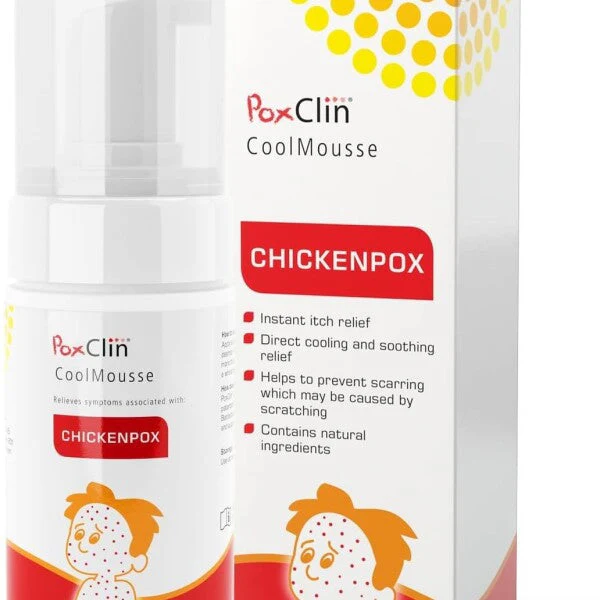
Chickenpox is one of those childhood illnesses that feels relentless — the spots appear quickly, the itching is intense, and keeping little hands away from the blisters is a battle in itself. Chickenpox relief for children is exactly what PoxClin Cool Mousse is designed to provide. This 100ml cooling foam is applied directly to the skin to soothe itching, calm irritated blisters, and help reduce the risk of scratching that can lead to scarring or secondary infection. It is available over the counter, requires no prescription, and is straightforward to use at home.
Chickenpox (varicella) is caused by the varicella-zoster virus and typically affects children under 10, though it can occur at any age. According to the NHS, most children recover fully within one to two weeks, but the itching during the blister phase can be significant and distressing. Managing that itch effectively — without resorting to antihistamines that may cause drowsiness — is where a topical product like PoxClin Cool Mousse can genuinely help. You can also explore our skin care range for additional products to support your child's skin during recovery.
How Does PoxClin Cool Mousse Work on Chickenpox Blisters?
The mousse works through a physical rather than pharmacological mechanism. When applied to the skin, it forms a thin, breathable film over the chickenpox blisters. This film has two key effects: it cools the surface of the skin, which immediately reduces the sensation of itching, and it creates a light protective barrier that discourages scratching.
- The cooling effect is delivered almost instantly on application, providing rapid comfort.
- Hydroxypropyl methylcellulose (HPMC) — the key ingredient — forms the protective film over blisters.
- Glycerol helps maintain skin hydration, supporting the skin's natural barrier function.
- The mousse dries quickly and is non-greasy, making it practical for use on children.
- It does not contain antihistamines, steroids, or calamine, so it avoids the sedative effects sometimes associated with oral antihistamines.
Because it works physically rather than chemically, it is generally considered suitable for use alongside other chickenpox management strategies recommended by the NHS, such as keeping nails short and wearing loose clothing.
Who Should Use PoxClin Cool Mousse for Chickenpox?
PoxClin Cool Mousse is specifically formulated for children experiencing active chickenpox. It is particularly useful during the blister phase, when itching is at its most intense and the risk of scratching — and subsequent scarring or infection — is highest. Parents and carers looking for a non-sedating, easy-to-apply topical option will find it a practical choice.
- Children with active chickenpox blisters causing significant itching.
- Children where oral antihistamines are not preferred or appropriate.
- Families wanting a product that is quick to apply and dries without residue.
- Children prone to scratching who are at higher risk of scarring.
It is not intended to treat the chickenpox virus itself, nor is it a substitute for medical advice if your child develops complications such as a high fever, breathing difficulties, or signs of a secondary bacterial skin infection.
How Does PoxClin Cool Mousse Compare to Calamine Lotion?
| Feature | PoxClin Cool Mousse | Calamine Lotion |
|---|---|---|
| Application format | Lightweight foam mousse | Liquid lotion |
| Drying time | Dries quickly, non-greasy | Can leave chalky residue |
| Active mechanism | Cooling film-forming barrier (HPMC) | Zinc oxide — mild astringent |
| Sedation risk | None | None |
| Suitable for children | Yes | Yes (traditional use) |
Is PoxClin Cool Mousse Safe to Store and Use at Home?
Yes — PoxClin Cool Mousse is designed for straightforward home use. Store it below 25°C, away from direct sunlight, and keep it out of reach of children when not in use. Do not freeze the product, and do not use it after the expiry date printed on the packaging. The 100ml aerosol format means it is easy to dispense the right amount without waste.
Avoid applying the mousse near the eyes, mouth, or mucous membranes. If your child has chickenpox spots on the face, apply carefully and avoid the eye area. If you are looking for additional first aid support during your child's illness, our first aid collection includes a range of products to help manage minor skin concerns at home.
This product is a medicine. Speak to your doctor or pharmacist before using if you have an underlying medical condition or are taking other medicines.
PoxClin Cool Mousse For Children With Chickenpox 100ml specifications
| Treatment category | Chickenpox symptom relief |
| Mechanism of action | Forms a cooling, film-forming barrier over blisters to reduce itching and protect skin |
| Effective for | Relieving itching and discomfort associated with chickenpox blisters |
| Suitable for | Children with active chickenpox |
| Active ingredient | Hydroxypropyl methylcellulose (HPMC), glycerol |
| Pack size | 100ml |
| UK classification | General Sale / OTC |
| Drug class | Topical skin protectant / barrier product |
| Preparation | Foam mousse (aerosol) |
| Route of administration | Topical (applied to skin) |
Specifications of PoxClin Cool Mousse For Children With Chickenpox 100ml
What Is PoxClin Cool Mousse and What Is It Used For?
PoxClin Cool Mousse is a topical, non-medicated foam designed to relieve the itching and discomfort caused by chickenpox blisters in children. It is applied directly to affected areas of skin, where it forms a cooling, protective film that soothes irritation and helps discourage scratching. Scratching chickenpox blisters can introduce bacteria into broken skin, increasing the risk of secondary infection and permanent scarring — so reducing that urge to scratch is genuinely important.
The product does not treat the varicella-zoster virus itself. It is a symptomatic treatment only, aimed at making your child more comfortable while the infection runs its natural course. The NHS advises that most children recover from chickenpox within one to two weeks without specific antiviral treatment, though symptom management is an important part of care during that time.
What Do You Need to Know Before Using PoxClin Cool Mousse?
Before applying PoxClin Cool Mousse, read the following contraindications and precautions carefully:
- Do not use if your child is allergic to any of the ingredients, including hydroxypropyl methylcellulose or glycerol.
- Do not apply to the eye area or mucous membranes.
- Do not apply to severely infected skin — seek medical advice first if blisters appear infected (increased redness, warmth, pus, or spreading redness around spots).
- Consult your GP before use if your child is immunocompromised, on immunosuppressant medication, or has a chronic skin condition.
- Seek urgent medical advice if your child develops a high fever, difficulty breathing, a rash that spreads rapidly, or appears very unwell — these may indicate complications requiring prompt treatment.
- Not intended for use in adults with chickenpox without first seeking pharmacist or GP advice.
Drug interactions:
- No known drug interactions have been identified for PoxClin Cool Mousse when used as directed.
- If your child is taking any prescribed medicines, including antivirals such as aciclovir, continue those as directed by your doctor — PoxClin Cool Mousse can be used alongside them.
How Should You Use PoxClin Cool Mousse?
Using PoxClin Cool Mousse correctly will help you get the most from it. Follow these steps each time you apply it:
- Shake the aerosol can well before use.
- Dispense a small amount of mousse onto clean fingertips or a cotton pad.
- Gently dab or smooth the mousse over the affected chickenpox blisters — do not rub vigorously.
- Allow the mousse to dry naturally on the skin. Do not cover with tight bandages or occlusive dressings.
- Wash your hands thoroughly after application.
- Repeat up to four times daily, or as needed when itching returns.
| Indication | Age Group | Dose | Frequency |
|---|---|---|---|
| Chickenpox itch relief | Children (consult GP for infants under 12 months) | Small amount to cover affected area | Up to 4 times daily |
If your child's symptoms worsen or do not improve after a few days, or if you notice signs of a secondary skin infection, stop use and consult your GP. You may also find our baby and toddler range helpful for other products to support your child's comfort during illness.
What Are the Possible Side Effects of PoxClin Cool Mousse?
PoxClin Cool Mousse is generally well tolerated. Because it works through a physical mechanism rather than a pharmacological one, systemic side effects are not expected. However, as with any topical product, local skin reactions are possible in some children.
Common side effects:
- Mild, temporary stinging or tingling on application, particularly on broken or raw skin.
- Slight tightness of the skin as the film dries.
Less common side effects:
- Localised skin redness or irritation at the site of application.
- Allergic contact reaction — if your child develops increased redness, swelling, or a worsening rash after application, discontinue use and seek advice from your pharmacist or GP.
If you suspect a serious allergic reaction (swelling of the face, lips, or throat, difficulty breathing), seek emergency medical attention immediately by calling 999.
How Should You Store PoxClin Cool Mousse?
Correct storage keeps the product safe and effective for the duration of your child's illness. Follow these guidelines:
- Store below 25°C in a cool, dry place away from direct sunlight.
- Do not freeze the product.
- Keep the aerosol away from heat sources and open flames — it is pressurised.
- Keep out of reach and sight of children when not in use.
- Do not use after the expiry date printed on the can.
- Do not puncture or incinerate the aerosol, even when empty.
If you are managing other aspects of your child's health during their recovery, our pain relief collection includes children's paracetamol and ibuprofen options that the NHS recommends for managing fever associated with chickenpox — noting that ibuprofen should be used with caution in chickenpox and only on GP advice.
References
- https://www.nhs.uk/conditions/chickenpox/
- https://www.nhs.uk/conditions/chickenpox/treatment/
- https://www.nhs.uk/conditions/chickenpox/complications/
- https://www.nhs.uk/conditions/chickenpox/symptoms/
- https://www.nhs.uk/medicines/aciclovir/
- https://bnf.nice.org.uk/treatment-summaries/chickenpox/
Written and reviewed by our qualified team
Your safety and success are our highest priorities. Our medical team rigorously evaluates every product and piece of advice we provide, ensuring you receive only the most effective, science-backed solutions available.
Frequently Asked Questions
Where can I buy PoxClin Cool Mousse online in the UK?
You can buy PoxClin Cool Mousse for children online at Cured Pharmacy, a GPhC-registered UK online pharmacy. It is available without a prescription as an over-the-counter product. Simply add it to your basket and it will be dispatched directly to your door.
How does PoxClin Cool Mousse work on chickenpox blisters?
PoxClin Cool Mousse works by forming a thin, cooling film over chickenpox blisters when applied to the skin. The key ingredient, hydroxypropyl methylcellulose (HPMC), creates this protective barrier, which soothes the itch and physically discourages scratching. It does not contain antihistamines or steroids, so it works entirely through this physical mechanism.
How do I apply PoxClin Cool Mousse step by step?
Shake the can well, then dispense a small amount of mousse onto clean fingertips or a cotton pad. Gently dab it over the affected blisters and allow it to dry naturally — do not rub it in vigorously. Wash your hands after each application and repeat up to four times daily as needed.
How often should I apply PoxClin Cool Mousse to my child?
PoxClin Cool Mousse can be applied up to four times daily throughout the itchy phase of chickenpox. You can reapply whenever your child's itching returns between applications. Continue until the blisters have fully crusted over and the itching has settled.
What are the side effects of PoxClin Cool Mousse?
PoxClin Cool Mousse is generally well tolerated, but a mild stinging or tingling sensation on broken skin can occasionally occur on application. Less commonly, some children may experience localised redness or irritation. If your child develops signs of an allergic reaction — such as increased swelling or a worsening rash — stop use and consult your pharmacist or GP.
Is PoxClin Cool Mousse suitable for babies and toddlers?
PoxClin Cool Mousse is designed for children with chickenpox, but you should always consult your GP or pharmacist before using it on very young infants, particularly those under 12 months. For general baby and toddler health products, you can browse our baby and toddler collection. Always seek medical advice promptly if a very young baby develops chickenpox.
Can PoxClin Cool Mousse help prevent chickenpox scarring?
Yes — by reducing the urge to scratch, PoxClin Cool Mousse helps lower the risk of blisters becoming infected or leaving permanent scars. Scratching breaks the skin and introduces bacteria, which is one of the most common causes of chickenpox scarring in children. The mousse does not treat the virus itself, but managing the itch is a key part of preventing long-term skin damage.
Does PoxClin Cool Mousse contain antihistamines or steroids?
No — PoxClin Cool Mousse does not contain antihistamines, steroids, or calamine. It works entirely through a physical, film-forming mechanism using hydroxypropyl methylcellulose and glycerol. This means there is no risk of the drowsiness sometimes associated with oral antihistamines used for itch relief.
How long does a 100ml bottle of PoxClin Cool Mousse last?
A 100ml bottle is designed to last the full duration of a typical chickenpox episode when used as directed. Most chickenpox infections in children resolve within one to two weeks according to the NHS. Using the mousse up to four times daily across the blister phase, a 100ml can should provide sufficient coverage for the whole illness.
What is the best time to apply PoxClin Cool Mousse?
Apply PoxClin Cool Mousse whenever your child's itching is at its most intense — this is often in the evening and at night, when children tend to scratch more. Applying before bedtime can help your child sleep more comfortably. You can also apply it after a lukewarm bath, once the skin has been gently patted dry.
Can I use PoxClin Cool Mousse on my child's face?
You can apply PoxClin Cool Mousse to chickenpox spots on the face, but take care to avoid the eye area and mucous membranes such as the lips and nostrils. Use a small amount on a fingertip and apply carefully around facial spots. If spots are very close to the eyes, consult your pharmacist before applying.
What are the alternatives to PoxClin Cool Mousse for chickenpox itch?
Common alternatives include calamine lotion, which has a long history of use for chickenpox itch, and oral antihistamines such as chlorphenamine — though the NHS notes that antihistamines may cause drowsiness and are not always recommended for young children. Cool baths, loose clothing, and keeping nails short are also recommended by the NHS as non-pharmacological measures. For other skin care products that may support recovery, browse our range online.
How long does chickenpox last in children?
According to the NHS, chickenpox typically lasts one to two weeks in children. The spots usually appear in crops over several days, blister, then crust over. Children are generally considered no longer contagious once all the blisters have crusted over, which usually takes around five to six days from the first spots appearing.
Are there any medicines that interact with PoxClin Cool Mousse?
No known drug interactions have been identified for PoxClin Cool Mousse when used as directed. Because it works topically and is not absorbed systemically, it is unlikely to interact with oral or systemic medicines. If your child is taking prescribed antiviral medication such as aciclovir, PoxClin Cool Mousse can be used alongside it — but always confirm with your pharmacist if you are unsure.
What are the latest findings on topical treatments for chickenpox itch in children?
Current NHS and clinical guidance continues to recommend symptomatic topical treatments to manage chickenpox itch and reduce scratching-related complications. Film-forming barrier products like PoxClin Cool Mousse are considered a practical, non-sedating option for children. There is no current evidence that they are inferior to traditional calamine lotion, and their ease of application may improve adherence in young children.
Description
What Is PoxClin Cool Mousse — Chickenpox Relief for Children?
Chickenpox is one of those childhood illnesses that feels relentless — the spots appear quickly, the itching is intense, and keeping little hands away from the blisters is a battle in itself. Chickenpox relief for children is exactly what PoxClin Cool Mousse is designed to provide. This 100ml cooling foam is applied directly to the skin to soothe itching, calm irritated blisters, and help reduce the risk of scratching that can lead to scarring or secondary infection. It is available over the counter, requires no prescription, and is straightforward to use at home.
Chickenpox (varicella) is caused by the varicella-zoster virus and typically affects children under 10, though it can occur at any age. According to the NHS, most children recover fully within one to two weeks, but the itching during the blister phase can be significant and distressing. Managing that itch effectively — without resorting to antihistamines that may cause drowsiness — is where a topical product like PoxClin Cool Mousse can genuinely help. You can also explore our skin care range for additional products to support your child's skin during recovery.
How Does PoxClin Cool Mousse Work on Chickenpox Blisters?
The mousse works through a physical rather than pharmacological mechanism. When applied to the skin, it forms a thin, breathable film over the chickenpox blisters. This film has two key effects: it cools the surface of the skin, which immediately reduces the sensation of itching, and it creates a light protective barrier that discourages scratching.
- The cooling effect is delivered almost instantly on application, providing rapid comfort.
- Hydroxypropyl methylcellulose (HPMC) — the key ingredient — forms the protective film over blisters.
- Glycerol helps maintain skin hydration, supporting the skin's natural barrier function.
- The mousse dries quickly and is non-greasy, making it practical for use on children.
- It does not contain antihistamines, steroids, or calamine, so it avoids the sedative effects sometimes associated with oral antihistamines.
Because it works physically rather than chemically, it is generally considered suitable for use alongside other chickenpox management strategies recommended by the NHS, such as keeping nails short and wearing loose clothing.
Who Should Use PoxClin Cool Mousse for Chickenpox?
PoxClin Cool Mousse is specifically formulated for children experiencing active chickenpox. It is particularly useful during the blister phase, when itching is at its most intense and the risk of scratching — and subsequent scarring or infection — is highest. Parents and carers looking for a non-sedating, easy-to-apply topical option will find it a practical choice.
- Children with active chickenpox blisters causing significant itching.
- Children where oral antihistamines are not preferred or appropriate.
- Families wanting a product that is quick to apply and dries without residue.
- Children prone to scratching who are at higher risk of scarring.
It is not intended to treat the chickenpox virus itself, nor is it a substitute for medical advice if your child develops complications such as a high fever, breathing difficulties, or signs of a secondary bacterial skin infection.
How Does PoxClin Cool Mousse Compare to Calamine Lotion?
| Feature | PoxClin Cool Mousse | Calamine Lotion |
|---|---|---|
| Application format | Lightweight foam mousse | Liquid lotion |
| Drying time | Dries quickly, non-greasy | Can leave chalky residue |
| Active mechanism | Cooling film-forming barrier (HPMC) | Zinc oxide — mild astringent |
| Sedation risk | None | None |
| Suitable for children | Yes | Yes (traditional use) |
Is PoxClin Cool Mousse Safe to Store and Use at Home?
Yes — PoxClin Cool Mousse is designed for straightforward home use. Store it below 25°C, away from direct sunlight, and keep it out of reach of children when not in use. Do not freeze the product, and do not use it after the expiry date printed on the packaging. The 100ml aerosol format means it is easy to dispense the right amount without waste.
Avoid applying the mousse near the eyes, mouth, or mucous membranes. If your child has chickenpox spots on the face, apply carefully and avoid the eye area. If you are looking for additional first aid support during your child's illness, our first aid collection includes a range of products to help manage minor skin concerns at home.
This product is a medicine. Speak to your doctor or pharmacist before using if you have an underlying medical condition or are taking other medicines.
PoxClin Cool Mousse For Children With Chickenpox 100ml specifications
| Treatment category | Chickenpox symptom relief |
| Mechanism of action | Forms a cooling, film-forming barrier over blisters to reduce itching and protect skin |
| Effective for | Relieving itching and discomfort associated with chickenpox blisters |
| Suitable for | Children with active chickenpox |
| Active ingredient | Hydroxypropyl methylcellulose (HPMC), glycerol |
| Pack size | 100ml |
| UK classification | General Sale / OTC |
| Drug class | Topical skin protectant / barrier product |
| Preparation | Foam mousse (aerosol) |
| Route of administration | Topical (applied to skin) |
Specifications of PoxClin Cool Mousse For Children With Chickenpox 100ml
What Is PoxClin Cool Mousse and What Is It Used For?
PoxClin Cool Mousse is a topical, non-medicated foam designed to relieve the itching and discomfort caused by chickenpox blisters in children. It is applied directly to affected areas of skin, where it forms a cooling, protective film that soothes irritation and helps discourage scratching. Scratching chickenpox blisters can introduce bacteria into broken skin, increasing the risk of secondary infection and permanent scarring — so reducing that urge to scratch is genuinely important.
The product does not treat the varicella-zoster virus itself. It is a symptomatic treatment only, aimed at making your child more comfortable while the infection runs its natural course. The NHS advises that most children recover from chickenpox within one to two weeks without specific antiviral treatment, though symptom management is an important part of care during that time.
What Do You Need to Know Before Using PoxClin Cool Mousse?
Before applying PoxClin Cool Mousse, read the following contraindications and precautions carefully:
- Do not use if your child is allergic to any of the ingredients, including hydroxypropyl methylcellulose or glycerol.
- Do not apply to the eye area or mucous membranes.
- Do not apply to severely infected skin — seek medical advice first if blisters appear infected (increased redness, warmth, pus, or spreading redness around spots).
- Consult your GP before use if your child is immunocompromised, on immunosuppressant medication, or has a chronic skin condition.
- Seek urgent medical advice if your child develops a high fever, difficulty breathing, a rash that spreads rapidly, or appears very unwell — these may indicate complications requiring prompt treatment.
- Not intended for use in adults with chickenpox without first seeking pharmacist or GP advice.
Drug interactions:
- No known drug interactions have been identified for PoxClin Cool Mousse when used as directed.
- If your child is taking any prescribed medicines, including antivirals such as aciclovir, continue those as directed by your doctor — PoxClin Cool Mousse can be used alongside them.
How Should You Use PoxClin Cool Mousse?
Using PoxClin Cool Mousse correctly will help you get the most from it. Follow these steps each time you apply it:
- Shake the aerosol can well before use.
- Dispense a small amount of mousse onto clean fingertips or a cotton pad.
- Gently dab or smooth the mousse over the affected chickenpox blisters — do not rub vigorously.
- Allow the mousse to dry naturally on the skin. Do not cover with tight bandages or occlusive dressings.
- Wash your hands thoroughly after application.
- Repeat up to four times daily, or as needed when itching returns.
| Indication | Age Group | Dose | Frequency |
|---|---|---|---|
| Chickenpox itch relief | Children (consult GP for infants under 12 months) | Small amount to cover affected area | Up to 4 times daily |
If your child's symptoms worsen or do not improve after a few days, or if you notice signs of a secondary skin infection, stop use and consult your GP. You may also find our baby and toddler range helpful for other products to support your child's comfort during illness.
What Are the Possible Side Effects of PoxClin Cool Mousse?
PoxClin Cool Mousse is generally well tolerated. Because it works through a physical mechanism rather than a pharmacological one, systemic side effects are not expected. However, as with any topical product, local skin reactions are possible in some children.
Common side effects:
- Mild, temporary stinging or tingling on application, particularly on broken or raw skin.
- Slight tightness of the skin as the film dries.
Less common side effects:
- Localised skin redness or irritation at the site of application.
- Allergic contact reaction — if your child develops increased redness, swelling, or a worsening rash after application, discontinue use and seek advice from your pharmacist or GP.
If you suspect a serious allergic reaction (swelling of the face, lips, or throat, difficulty breathing), seek emergency medical attention immediately by calling 999.
How Should You Store PoxClin Cool Mousse?
Correct storage keeps the product safe and effective for the duration of your child's illness. Follow these guidelines:
- Store below 25°C in a cool, dry place away from direct sunlight.
- Do not freeze the product.
- Keep the aerosol away from heat sources and open flames — it is pressurised.
- Keep out of reach and sight of children when not in use.
- Do not use after the expiry date printed on the can.
- Do not puncture or incinerate the aerosol, even when empty.
If you are managing other aspects of your child's health during their recovery, our pain relief collection includes children's paracetamol and ibuprofen options that the NHS recommends for managing fever associated with chickenpox — noting that ibuprofen should be used with caution in chickenpox and only on GP advice.
References
- https://www.nhs.uk/conditions/chickenpox/
- https://www.nhs.uk/conditions/chickenpox/treatment/
- https://www.nhs.uk/conditions/chickenpox/complications/
- https://www.nhs.uk/conditions/chickenpox/symptoms/
- https://www.nhs.uk/medicines/aciclovir/
- https://bnf.nice.org.uk/treatment-summaries/chickenpox/
Written and reviewed by our qualified team
Your safety and success are our highest priorities. Our medical team rigorously evaluates every product and piece of advice we provide, ensuring you receive only the most effective, science-backed solutions available.
Frequently Asked Questions
Where can I buy PoxClin Cool Mousse online in the UK?
You can buy PoxClin Cool Mousse for children online at Cured Pharmacy, a GPhC-registered UK online pharmacy. It is available without a prescription as an over-the-counter product. Simply add it to your basket and it will be dispatched directly to your door.
How does PoxClin Cool Mousse work on chickenpox blisters?
PoxClin Cool Mousse works by forming a thin, cooling film over chickenpox blisters when applied to the skin. The key ingredient, hydroxypropyl methylcellulose (HPMC), creates this protective barrier, which soothes the itch and physically discourages scratching. It does not contain antihistamines or steroids, so it works entirely through this physical mechanism.
How do I apply PoxClin Cool Mousse step by step?
Shake the can well, then dispense a small amount of mousse onto clean fingertips or a cotton pad. Gently dab it over the affected blisters and allow it to dry naturally — do not rub it in vigorously. Wash your hands after each application and repeat up to four times daily as needed.
How often should I apply PoxClin Cool Mousse to my child?
PoxClin Cool Mousse can be applied up to four times daily throughout the itchy phase of chickenpox. You can reapply whenever your child's itching returns between applications. Continue until the blisters have fully crusted over and the itching has settled.
What are the side effects of PoxClin Cool Mousse?
PoxClin Cool Mousse is generally well tolerated, but a mild stinging or tingling sensation on broken skin can occasionally occur on application. Less commonly, some children may experience localised redness or irritation. If your child develops signs of an allergic reaction — such as increased swelling or a worsening rash — stop use and consult your pharmacist or GP.
Is PoxClin Cool Mousse suitable for babies and toddlers?
PoxClin Cool Mousse is designed for children with chickenpox, but you should always consult your GP or pharmacist before using it on very young infants, particularly those under 12 months. For general baby and toddler health products, you can browse our baby and toddler collection. Always seek medical advice promptly if a very young baby develops chickenpox.
Can PoxClin Cool Mousse help prevent chickenpox scarring?
Yes — by reducing the urge to scratch, PoxClin Cool Mousse helps lower the risk of blisters becoming infected or leaving permanent scars. Scratching breaks the skin and introduces bacteria, which is one of the most common causes of chickenpox scarring in children. The mousse does not treat the virus itself, but managing the itch is a key part of preventing long-term skin damage.
Does PoxClin Cool Mousse contain antihistamines or steroids?
No — PoxClin Cool Mousse does not contain antihistamines, steroids, or calamine. It works entirely through a physical, film-forming mechanism using hydroxypropyl methylcellulose and glycerol. This means there is no risk of the drowsiness sometimes associated with oral antihistamines used for itch relief.
How long does a 100ml bottle of PoxClin Cool Mousse last?
A 100ml bottle is designed to last the full duration of a typical chickenpox episode when used as directed. Most chickenpox infections in children resolve within one to two weeks according to the NHS. Using the mousse up to four times daily across the blister phase, a 100ml can should provide sufficient coverage for the whole illness.
What is the best time to apply PoxClin Cool Mousse?
Apply PoxClin Cool Mousse whenever your child's itching is at its most intense — this is often in the evening and at night, when children tend to scratch more. Applying before bedtime can help your child sleep more comfortably. You can also apply it after a lukewarm bath, once the skin has been gently patted dry.
Can I use PoxClin Cool Mousse on my child's face?
You can apply PoxClin Cool Mousse to chickenpox spots on the face, but take care to avoid the eye area and mucous membranes such as the lips and nostrils. Use a small amount on a fingertip and apply carefully around facial spots. If spots are very close to the eyes, consult your pharmacist before applying.
What are the alternatives to PoxClin Cool Mousse for chickenpox itch?
Common alternatives include calamine lotion, which has a long history of use for chickenpox itch, and oral antihistamines such as chlorphenamine — though the NHS notes that antihistamines may cause drowsiness and are not always recommended for young children. Cool baths, loose clothing, and keeping nails short are also recommended by the NHS as non-pharmacological measures. For other skin care products that may support recovery, browse our range online.
How long does chickenpox last in children?
According to the NHS, chickenpox typically lasts one to two weeks in children. The spots usually appear in crops over several days, blister, then crust over. Children are generally considered no longer contagious once all the blisters have crusted over, which usually takes around five to six days from the first spots appearing.
Are there any medicines that interact with PoxClin Cool Mousse?
No known drug interactions have been identified for PoxClin Cool Mousse when used as directed. Because it works topically and is not absorbed systemically, it is unlikely to interact with oral or systemic medicines. If your child is taking prescribed antiviral medication such as aciclovir, PoxClin Cool Mousse can be used alongside it — but always confirm with your pharmacist if you are unsure.
What are the latest findings on topical treatments for chickenpox itch in children?
Current NHS and clinical guidance continues to recommend symptomatic topical treatments to manage chickenpox itch and reduce scratching-related complications. Film-forming barrier products like PoxClin Cool Mousse are considered a practical, non-sedating option for children. There is no current evidence that they are inferior to traditional calamine lotion, and their ease of application may improve adherence in young children.