The Story
What Is Paracetamol Suspension for Children?
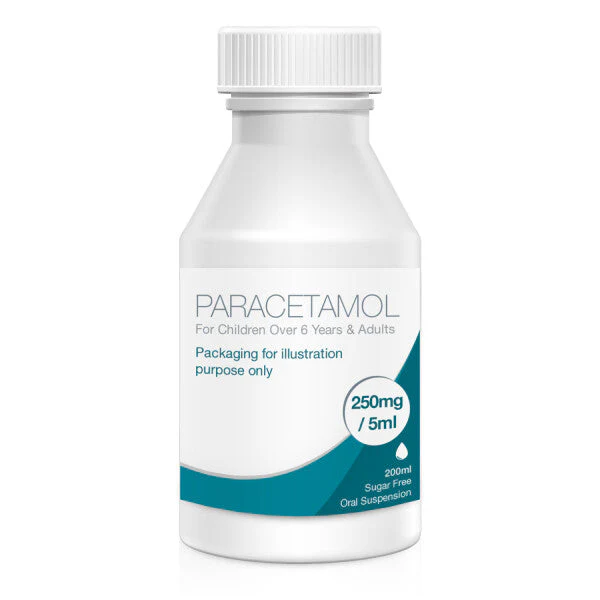
When your child has a fever or is in pain, you want something that works — and works safely. Paracetamol suspension for children is one of the most widely used and well-established medicines for managing mild to moderate pain and high temperature in children aged 6 years and over. This 200ml sugar-free oral suspension contains 250mg of paracetamol per 5ml, making it straightforward to measure an accurate dose every time. It's free from sugar, which matters if your child has diabetes or you simply want to protect their teeth.
Paracetamol has been used safely in children for decades and is recommended by the NHS as a first-line option for childhood fever and pain relief. Whether it's a post-vaccination temperature, a sore throat, earache, or a headache, this suspension offers a gentle yet effective option. You can also browse our Baby and Toddler collection for other products suited to younger children's health needs.
How Does Paracetamol Oral Suspension Work?
Paracetamol's mechanism of action is well understood. It works centrally in the brain and spinal cord to reduce the perception of pain and lower an elevated body temperature. Here's a simplified breakdown of how it works:
- Inhibits the enzyme cyclooxygenase (COX) in the central nervous system, reducing prostaglandin synthesis
- Prostaglandins are chemicals that sensitise nerve endings to pain and signal the hypothalamus to raise body temperature
- By reducing prostaglandin levels, paracetamol lowers fever (antipyretic effect) and reduces pain signals (analgesic effect)
- Unlike ibuprofen, it does not significantly inhibit peripheral COX enzymes, so it causes minimal stomach irritation
The liquid formulation means it's absorbed quickly through the gastrointestinal tract, typically beginning to work within 30 to 60 minutes of administration.
Who Should Use This Paracetamol Suspension?
This suspension is specifically formulated for children aged 6 years and over. It's particularly useful for children who struggle to swallow tablets or capsules. It's also a practical choice for parents who need a reliable, easy-to-dose liquid medicine at home.
- Children aged 6 to 12 years with mild to moderate pain or fever
- Children with diabetes or those who need a sugar-free formulation
- Children recovering from vaccinations who develop a post-immunisation fever
- Children with sore throats, earache, headaches, or teething discomfort (in appropriate age groups)
It is not suitable for children under 6 years at this concentration — a lower-strength formulation (120mg/5ml) is available for younger children. Always check the age and weight guidance before administering.
How Does This Suspension Compare to Other Children's Pain Relievers?
| Feature | Paracetamol 250mg/5ml Suspension | Ibuprofen 100mg/5ml Suspension |
|---|---|---|
| Active ingredient | Paracetamol | Ibuprofen |
| Suitable for asthma | Generally yes (check with pharmacist) | Caution — may worsen asthma |
| Stomach irritation risk | Low | Moderate — take with food |
| Sugar-free option | Yes (this product) | Available in some brands |
| Age suitability (this strength) | 6 years and over | 3 months and over (lower dose) |
How Should You Store This Suspension and Is It Clinically Suitable?
This paracetamol suspension for children should be stored below 25°C, away from direct sunlight and heat. Do not refrigerate it — cold temperatures can affect the consistency of the suspension. Once opened, use within the period stated on the label (typically 28 days). Always keep it out of the reach and sight of children, even though it is a children's medicine. If you're managing other aspects of your child's health, our Cold and Flu collection includes additional products that may help during illness.
Clinically, this suspension is appropriate for children who have no known hypersensitivity to paracetamol and no severe hepatic impairment. Children with liver or kidney conditions should only use this medicine under medical supervision. Always read the label and patient information leaflet before use.
This product is a medicine. Speak to your doctor or pharmacist before using if you have an underlying medical condition or are taking other medicines.
Paracetamol 250mg/5ml Oral Suspension Sugar Free 200ml specifications
| Treatment category | Fever and mild to moderate pain relief |
| Mechanism of action | Central COX inhibition reducing prostaglandin synthesis |
| Effective for | Fever, headache, sore throat, earache, post-vaccination temperature |
| Suitable for | Children aged 6 years and over |
| Active ingredient | Paracetamol 250mg per 5ml |
| Pack size | 200ml |
| Strength | 250mg/5ml |
| UK classification | General Sale List (GSL) |
| Drug class | Analgesic / Antipyretic |
| Preparation | Oral suspension (sugar-free) |
| Route of administration | Oral |
Specifications of Paracetamol 250mg/5ml Oral Suspension Sugar Free 200ml
What Is Paracetamol 250mg/5ml Suspension and What Is It Used For?
Paracetamol 250mg/5ml Oral Suspension Sugar Free is a liquid medicine used to relieve mild to moderate pain and reduce fever in children aged 6 years and over. Each 5ml dose contains 250mg of paracetamol as the active ingredient. The suspension is sugar-free, making it suitable for children with diabetes or those following a low-sugar diet. It is classified as a General Sale List (GSL) medicine in the UK, meaning it can be purchased without a prescription.
Common uses include relief of fever associated with colds, flu, and post-vaccination reactions, as well as pain from headaches, sore throats, toothache, and earache. The NHS recommends paracetamol as a first-line treatment for childhood fever and pain when used at the correct dose for the child's age and weight.
What Do You Need to Know Before Using This Suspension?
Before giving this medicine to your child, read the following carefully. There are situations where this suspension should not be used, or where extra caution is needed.
Do not use this suspension if your child:
- Is allergic to paracetamol or any other ingredient in the suspension
- Is under 6 years of age (a lower-strength formulation is required)
- Has severe liver disease or severe kidney impairment
- Is already taking another medicine containing paracetamol
Use with caution and speak to a pharmacist or doctor if your child:
- Has liver or kidney problems
- Is malnourished or has a low body weight
- Is taking other prescribed medicines regularly
Known drug interactions to be aware of:
- Warfarin — regular use of paracetamol may enhance the anticoagulant effect
- Other paracetamol-containing products — concurrent use increases overdose risk
- Metoclopramide and domperidone — may increase the rate of paracetamol absorption
- Cholestyramine — may reduce paracetamol absorption if taken within one hour
How Should You Give This Suspension to Your Child?
Always follow the dosage instructions on the label or in the patient information leaflet. Use the oral syringe or measuring device provided — never use a household teaspoon, as this can lead to inaccurate dosing.
- Shake the bottle well before each use
- Check your child's age and weight against the dosage table below
- Measure the correct dose using the oral syringe or measuring spoon provided
- Give the suspension by mouth — it can be swallowed directly or mixed with a small amount of water
- Record the time of each dose to avoid accidental double-dosing
- Wait at least 4 hours before giving the next dose
- Do not give more than 4 doses in any 24-hour period
| Age Group | Dose (ml) | Dose (mg) | Frequency |
|---|---|---|---|
| 6–8 years | 5ml | 250mg | Every 4–6 hours (max 4 doses/24 hrs) |
| 8–10 years | 7.5ml | 375mg | Every 4–6 hours (max 4 doses/24 hrs) |
| 10–12 years | 10ml | 500mg | Every 4–6 hours (max 4 doses/24 hrs) |
If your child's symptoms persist for more than 3 days, or if their fever is very high or worsening, seek medical advice. You may also find our Pain Relief collection helpful for other age-appropriate options.
What Are the Possible Side Effects of This Suspension?
Paracetamol is generally very well tolerated when used at the correct dose. Side effects are uncommon, but it's important to know what to look out for.
Common side effects (may affect up to 1 in 10 children):
- Nausea (feeling sick)
- Stomach discomfort
Less common or rare side effects:
- Skin rash or itching — stop use and seek medical advice
- Allergic reactions including swelling of the face, lips, or throat — seek emergency help immediately
- Blood disorders (very rare — such as thrombocytopenia or agranulocytosis)
- Liver damage — only if the recommended dose is exceeded
If you notice any side effect not listed here, or if you are concerned about your child's reaction to this medicine, contact your pharmacist or GP promptly.
How Should You Store This Suspension?
Correct storage helps maintain the medicine's effectiveness and safety throughout its shelf life.
- Store below 25°C in a cool, dry place
- Do not refrigerate or freeze
- Keep away from direct sunlight and heat sources
- Once opened, use within 28 days and discard any remaining suspension after this period
- Keep the bottle tightly closed when not in use
- Store out of the reach and sight of children
- Do not use after the expiry date printed on the label
- Do not dispose of medicines via wastewater or household waste — return unused medicine to your pharmacist
If you're looking for other health essentials to keep at home, our First Aid collection has a range of products to help you be prepared for common childhood ailments.
References
- https://www.nhs.uk/medicines/paracetamol-for-children/
- https://www.nhs.uk/conditions/fever-in-children/
- https://www.nhs.uk/conditions/pain-in-children/
- https://www.nhs.uk/medicines/paracetamol-for-adults/who-can-and-cannot-take-paracetamol/
- https://www.nhs.uk/medicines/paracetamol-for-children/side-effects-of-paracetamol-for-children/
- https://bnf.nice.org.uk/drugs/paracetamol/
Written and reviewed by our qualified team
Your safety and success are our highest priorities. Our medical team rigorously evaluates every product and piece of advice we provide, ensuring you receive only the most effective, science-backed solutions available.
Frequently Asked Questions
Where can I buy paracetamol suspension for children online in the UK?
You can order Paracetamol 250mg/5ml Oral Suspension Sugar Free 200ml directly from Cured Pharmacy, a GPhC-registered UK online pharmacy. It is available without a prescription as an over-the-counter medicine. Simply add it to your basket and it will be dispatched to your door.
How does paracetamol suspension work in the body?
Paracetamol works by inhibiting the production of prostaglandins in the central nervous system — chemicals responsible for signalling pain and raising body temperature. This dual action makes it both an analgesic (pain reliever) and an antipyretic (fever reducer). It does not significantly irritate the stomach lining, unlike some anti-inflammatory medicines.
How do I give paracetamol oral suspension to my child step by step?
Shake the bottle well before each use, then measure the correct dose using the oral syringe or measuring spoon provided — never a household teaspoon. Give the suspension by mouth and record the time of each dose to avoid accidental repeat dosing. Always wait at least 4 hours between doses and give no more than 4 doses in 24 hours.
What is the correct dose of paracetamol 250mg/5ml for my child?
The dose depends on your child's age: children aged 6–8 years take 5ml (250mg), children aged 8–10 years take 7.5ml (375mg), and children aged 10–12 years take 10ml (500mg). Each dose can be repeated every 4 to 6 hours, up to a maximum of 4 doses in any 24-hour period. Always check the packaging for the most up-to-date dosage guidance.
What are the side effects of children's paracetamol liquid?
Side effects are uncommon when paracetamol is used at the correct dose. Occasionally, children may experience nausea or mild stomach discomfort. Rarely, allergic reactions such as a skin rash or facial swelling can occur — if this happens, stop the medicine and seek medical advice immediately.
How do I manage side effects of paracetamol suspension in children?
Most side effects are mild and resolve on their own once the medicine is stopped or the dose is corrected. If your child develops a rash, swelling, or difficulty breathing, seek emergency medical help straight away. For general concerns about side effects, speak to your pharmacist or GP before continuing use.
Who is eligible to use paracetamol 250mg/5ml oral suspension?
This suspension is suitable for children aged 6 years and over who need relief from mild to moderate pain or fever. It is particularly well suited to children with diabetes, as it is sugar-free. Children under 6 years require a lower-strength formulation (120mg/5ml), and this product should not be used in that age group.
What happens if my child accidentally takes too much paracetamol suspension?
A paracetamol overdose is a medical emergency, even if your child appears well initially, because liver damage may not become apparent for several days. Go to your nearest A&E department immediately or call 999. Do not wait for symptoms to develop before seeking help.
Is sugar-free paracetamol suspension suitable for children with diabetes?
Yes, this formulation is specifically sugar-free, meaning it does not contain sucrose or glucose, making it a suitable choice for children with diabetes or those managing their sugar intake. Always check the full list of excipients on the label if your child has specific dietary requirements or allergies.
Can I give this paracetamol suspension alongside ibuprofen?
Paracetamol and ibuprofen can sometimes be used together or alternated for fever management in children, but this should only be done on the advice of a healthcare professional. Never give both medicines at the same time without guidance. If your child's fever is not responding to one medicine, speak to your GP or pharmacist before switching or combining.
Can I give this suspension with other medicines my child is taking?
Do not give this suspension alongside any other product containing paracetamol, including cold and flu remedies, as this significantly increases the risk of overdose. If your child is taking prescribed medicines such as warfarin or metoclopramide, speak to your pharmacist first. You can browse our Cold and Flu collection for compatible products.
What are the alternatives to paracetamol suspension for children?
The main alternative for children's fever and pain relief is ibuprofen oral suspension (100mg/5ml), which is suitable from 3 months of age and above a minimum weight threshold. Ibuprofen has anti-inflammatory properties that paracetamol lacks, but it is not suitable for all children — particularly those with asthma or stomach problems. Speak to your pharmacist about which option is most appropriate for your child.
How long can my child take paracetamol suspension for?
For fever, the NHS advises seeking medical advice if your child's temperature does not improve after 3 days of treatment. For pain, if symptoms persist beyond 3 days without improvement, consult your GP. Paracetamol suspension is intended for short-term use only and should not be given continuously without medical supervision.
What is the best time to give paracetamol suspension to a child with fever?
There is no single "best" time — doses should be given when your child is clearly uncomfortable or distressed by their fever or pain, rather than on a strict schedule. Space doses at least 4 hours apart and avoid waking a sleeping child solely to give a dose unless advised by a healthcare professional. Keeping a note of each dose time helps prevent accidental double-dosing.
What does the latest research say about paracetamol use in children?
Current clinical guidance from the NHS and NICE continues to support paracetamol as a safe and effective first-line option for mild to moderate pain and fever in children when used at the correct dose. Research consistently shows that paracetamol is well tolerated in children and carries a low risk of side effects at therapeutic doses. Parents are encouraged to use the lowest effective dose for the shortest necessary duration. You can also explore our Vitamins and Supplements collection to support your child's general wellbeing.
Description
What Is Paracetamol Suspension for Children?
When your child has a fever or is in pain, you want something that works — and works safely. Paracetamol suspension for children is one of the most widely used and well-established medicines for managing mild to moderate pain and high temperature in children aged 6 years and over. This 200ml sugar-free oral suspension contains 250mg of paracetamol per 5ml, making it straightforward to measure an accurate dose every time. It's free from sugar, which matters if your child has diabetes or you simply want to protect their teeth.
Paracetamol has been used safely in children for decades and is recommended by the NHS as a first-line option for childhood fever and pain relief. Whether it's a post-vaccination temperature, a sore throat, earache, or a headache, this suspension offers a gentle yet effective option. You can also browse our Baby and Toddler collection for other products suited to younger children's health needs.
How Does Paracetamol Oral Suspension Work?
Paracetamol's mechanism of action is well understood. It works centrally in the brain and spinal cord to reduce the perception of pain and lower an elevated body temperature. Here's a simplified breakdown of how it works:
- Inhibits the enzyme cyclooxygenase (COX) in the central nervous system, reducing prostaglandin synthesis
- Prostaglandins are chemicals that sensitise nerve endings to pain and signal the hypothalamus to raise body temperature
- By reducing prostaglandin levels, paracetamol lowers fever (antipyretic effect) and reduces pain signals (analgesic effect)
- Unlike ibuprofen, it does not significantly inhibit peripheral COX enzymes, so it causes minimal stomach irritation
The liquid formulation means it's absorbed quickly through the gastrointestinal tract, typically beginning to work within 30 to 60 minutes of administration.
Who Should Use This Paracetamol Suspension?
This suspension is specifically formulated for children aged 6 years and over. It's particularly useful for children who struggle to swallow tablets or capsules. It's also a practical choice for parents who need a reliable, easy-to-dose liquid medicine at home.
- Children aged 6 to 12 years with mild to moderate pain or fever
- Children with diabetes or those who need a sugar-free formulation
- Children recovering from vaccinations who develop a post-immunisation fever
- Children with sore throats, earache, headaches, or teething discomfort (in appropriate age groups)
It is not suitable for children under 6 years at this concentration — a lower-strength formulation (120mg/5ml) is available for younger children. Always check the age and weight guidance before administering.
How Does This Suspension Compare to Other Children's Pain Relievers?
| Feature | Paracetamol 250mg/5ml Suspension | Ibuprofen 100mg/5ml Suspension |
|---|---|---|
| Active ingredient | Paracetamol | Ibuprofen |
| Suitable for asthma | Generally yes (check with pharmacist) | Caution — may worsen asthma |
| Stomach irritation risk | Low | Moderate — take with food |
| Sugar-free option | Yes (this product) | Available in some brands |
| Age suitability (this strength) | 6 years and over | 3 months and over (lower dose) |
How Should You Store This Suspension and Is It Clinically Suitable?
This paracetamol suspension for children should be stored below 25°C, away from direct sunlight and heat. Do not refrigerate it — cold temperatures can affect the consistency of the suspension. Once opened, use within the period stated on the label (typically 28 days). Always keep it out of the reach and sight of children, even though it is a children's medicine. If you're managing other aspects of your child's health, our Cold and Flu collection includes additional products that may help during illness.
Clinically, this suspension is appropriate for children who have no known hypersensitivity to paracetamol and no severe hepatic impairment. Children with liver or kidney conditions should only use this medicine under medical supervision. Always read the label and patient information leaflet before use.
This product is a medicine. Speak to your doctor or pharmacist before using if you have an underlying medical condition or are taking other medicines.
Paracetamol 250mg/5ml Oral Suspension Sugar Free 200ml specifications
| Treatment category | Fever and mild to moderate pain relief |
| Mechanism of action | Central COX inhibition reducing prostaglandin synthesis |
| Effective for | Fever, headache, sore throat, earache, post-vaccination temperature |
| Suitable for | Children aged 6 years and over |
| Active ingredient | Paracetamol 250mg per 5ml |
| Pack size | 200ml |
| Strength | 250mg/5ml |
| UK classification | General Sale List (GSL) |
| Drug class | Analgesic / Antipyretic |
| Preparation | Oral suspension (sugar-free) |
| Route of administration | Oral |
Specifications of Paracetamol 250mg/5ml Oral Suspension Sugar Free 200ml
What Is Paracetamol 250mg/5ml Suspension and What Is It Used For?
Paracetamol 250mg/5ml Oral Suspension Sugar Free is a liquid medicine used to relieve mild to moderate pain and reduce fever in children aged 6 years and over. Each 5ml dose contains 250mg of paracetamol as the active ingredient. The suspension is sugar-free, making it suitable for children with diabetes or those following a low-sugar diet. It is classified as a General Sale List (GSL) medicine in the UK, meaning it can be purchased without a prescription.
Common uses include relief of fever associated with colds, flu, and post-vaccination reactions, as well as pain from headaches, sore throats, toothache, and earache. The NHS recommends paracetamol as a first-line treatment for childhood fever and pain when used at the correct dose for the child's age and weight.
What Do You Need to Know Before Using This Suspension?
Before giving this medicine to your child, read the following carefully. There are situations where this suspension should not be used, or where extra caution is needed.
Do not use this suspension if your child:
- Is allergic to paracetamol or any other ingredient in the suspension
- Is under 6 years of age (a lower-strength formulation is required)
- Has severe liver disease or severe kidney impairment
- Is already taking another medicine containing paracetamol
Use with caution and speak to a pharmacist or doctor if your child:
- Has liver or kidney problems
- Is malnourished or has a low body weight
- Is taking other prescribed medicines regularly
Known drug interactions to be aware of:
- Warfarin — regular use of paracetamol may enhance the anticoagulant effect
- Other paracetamol-containing products — concurrent use increases overdose risk
- Metoclopramide and domperidone — may increase the rate of paracetamol absorption
- Cholestyramine — may reduce paracetamol absorption if taken within one hour
How Should You Give This Suspension to Your Child?
Always follow the dosage instructions on the label or in the patient information leaflet. Use the oral syringe or measuring device provided — never use a household teaspoon, as this can lead to inaccurate dosing.
- Shake the bottle well before each use
- Check your child's age and weight against the dosage table below
- Measure the correct dose using the oral syringe or measuring spoon provided
- Give the suspension by mouth — it can be swallowed directly or mixed with a small amount of water
- Record the time of each dose to avoid accidental double-dosing
- Wait at least 4 hours before giving the next dose
- Do not give more than 4 doses in any 24-hour period
| Age Group | Dose (ml) | Dose (mg) | Frequency |
|---|---|---|---|
| 6–8 years | 5ml | 250mg | Every 4–6 hours (max 4 doses/24 hrs) |
| 8–10 years | 7.5ml | 375mg | Every 4–6 hours (max 4 doses/24 hrs) |
| 10–12 years | 10ml | 500mg | Every 4–6 hours (max 4 doses/24 hrs) |
If your child's symptoms persist for more than 3 days, or if their fever is very high or worsening, seek medical advice. You may also find our Pain Relief collection helpful for other age-appropriate options.
What Are the Possible Side Effects of This Suspension?
Paracetamol is generally very well tolerated when used at the correct dose. Side effects are uncommon, but it's important to know what to look out for.
Common side effects (may affect up to 1 in 10 children):
- Nausea (feeling sick)
- Stomach discomfort
Less common or rare side effects:
- Skin rash or itching — stop use and seek medical advice
- Allergic reactions including swelling of the face, lips, or throat — seek emergency help immediately
- Blood disorders (very rare — such as thrombocytopenia or agranulocytosis)
- Liver damage — only if the recommended dose is exceeded
If you notice any side effect not listed here, or if you are concerned about your child's reaction to this medicine, contact your pharmacist or GP promptly.
How Should You Store This Suspension?
Correct storage helps maintain the medicine's effectiveness and safety throughout its shelf life.
- Store below 25°C in a cool, dry place
- Do not refrigerate or freeze
- Keep away from direct sunlight and heat sources
- Once opened, use within 28 days and discard any remaining suspension after this period
- Keep the bottle tightly closed when not in use
- Store out of the reach and sight of children
- Do not use after the expiry date printed on the label
- Do not dispose of medicines via wastewater or household waste — return unused medicine to your pharmacist
If you're looking for other health essentials to keep at home, our First Aid collection has a range of products to help you be prepared for common childhood ailments.
References
- https://www.nhs.uk/medicines/paracetamol-for-children/
- https://www.nhs.uk/conditions/fever-in-children/
- https://www.nhs.uk/conditions/pain-in-children/
- https://www.nhs.uk/medicines/paracetamol-for-adults/who-can-and-cannot-take-paracetamol/
- https://www.nhs.uk/medicines/paracetamol-for-children/side-effects-of-paracetamol-for-children/
- https://bnf.nice.org.uk/drugs/paracetamol/
Written and reviewed by our qualified team
Your safety and success are our highest priorities. Our medical team rigorously evaluates every product and piece of advice we provide, ensuring you receive only the most effective, science-backed solutions available.
Frequently Asked Questions
Where can I buy paracetamol suspension for children online in the UK?
You can order Paracetamol 250mg/5ml Oral Suspension Sugar Free 200ml directly from Cured Pharmacy, a GPhC-registered UK online pharmacy. It is available without a prescription as an over-the-counter medicine. Simply add it to your basket and it will be dispatched to your door.
How does paracetamol suspension work in the body?
Paracetamol works by inhibiting the production of prostaglandins in the central nervous system — chemicals responsible for signalling pain and raising body temperature. This dual action makes it both an analgesic (pain reliever) and an antipyretic (fever reducer). It does not significantly irritate the stomach lining, unlike some anti-inflammatory medicines.
How do I give paracetamol oral suspension to my child step by step?
Shake the bottle well before each use, then measure the correct dose using the oral syringe or measuring spoon provided — never a household teaspoon. Give the suspension by mouth and record the time of each dose to avoid accidental repeat dosing. Always wait at least 4 hours between doses and give no more than 4 doses in 24 hours.
What is the correct dose of paracetamol 250mg/5ml for my child?
The dose depends on your child's age: children aged 6–8 years take 5ml (250mg), children aged 8–10 years take 7.5ml (375mg), and children aged 10–12 years take 10ml (500mg). Each dose can be repeated every 4 to 6 hours, up to a maximum of 4 doses in any 24-hour period. Always check the packaging for the most up-to-date dosage guidance.
What are the side effects of children's paracetamol liquid?
Side effects are uncommon when paracetamol is used at the correct dose. Occasionally, children may experience nausea or mild stomach discomfort. Rarely, allergic reactions such as a skin rash or facial swelling can occur — if this happens, stop the medicine and seek medical advice immediately.
How do I manage side effects of paracetamol suspension in children?
Most side effects are mild and resolve on their own once the medicine is stopped or the dose is corrected. If your child develops a rash, swelling, or difficulty breathing, seek emergency medical help straight away. For general concerns about side effects, speak to your pharmacist or GP before continuing use.
Who is eligible to use paracetamol 250mg/5ml oral suspension?
This suspension is suitable for children aged 6 years and over who need relief from mild to moderate pain or fever. It is particularly well suited to children with diabetes, as it is sugar-free. Children under 6 years require a lower-strength formulation (120mg/5ml), and this product should not be used in that age group.
What happens if my child accidentally takes too much paracetamol suspension?
A paracetamol overdose is a medical emergency, even if your child appears well initially, because liver damage may not become apparent for several days. Go to your nearest A&E department immediately or call 999. Do not wait for symptoms to develop before seeking help.
Is sugar-free paracetamol suspension suitable for children with diabetes?
Yes, this formulation is specifically sugar-free, meaning it does not contain sucrose or glucose, making it a suitable choice for children with diabetes or those managing their sugar intake. Always check the full list of excipients on the label if your child has specific dietary requirements or allergies.
Can I give this paracetamol suspension alongside ibuprofen?
Paracetamol and ibuprofen can sometimes be used together or alternated for fever management in children, but this should only be done on the advice of a healthcare professional. Never give both medicines at the same time without guidance. If your child's fever is not responding to one medicine, speak to your GP or pharmacist before switching or combining.
Can I give this suspension with other medicines my child is taking?
Do not give this suspension alongside any other product containing paracetamol, including cold and flu remedies, as this significantly increases the risk of overdose. If your child is taking prescribed medicines such as warfarin or metoclopramide, speak to your pharmacist first. You can browse our Cold and Flu collection for compatible products.
What are the alternatives to paracetamol suspension for children?
The main alternative for children's fever and pain relief is ibuprofen oral suspension (100mg/5ml), which is suitable from 3 months of age and above a minimum weight threshold. Ibuprofen has anti-inflammatory properties that paracetamol lacks, but it is not suitable for all children — particularly those with asthma or stomach problems. Speak to your pharmacist about which option is most appropriate for your child.
How long can my child take paracetamol suspension for?
For fever, the NHS advises seeking medical advice if your child's temperature does not improve after 3 days of treatment. For pain, if symptoms persist beyond 3 days without improvement, consult your GP. Paracetamol suspension is intended for short-term use only and should not be given continuously without medical supervision.
What is the best time to give paracetamol suspension to a child with fever?
There is no single "best" time — doses should be given when your child is clearly uncomfortable or distressed by their fever or pain, rather than on a strict schedule. Space doses at least 4 hours apart and avoid waking a sleeping child solely to give a dose unless advised by a healthcare professional. Keeping a note of each dose time helps prevent accidental double-dosing.
What does the latest research say about paracetamol use in children?
Current clinical guidance from the NHS and NICE continues to support paracetamol as a safe and effective first-line option for mild to moderate pain and fever in children when used at the correct dose. Research consistently shows that paracetamol is well tolerated in children and carries a low risk of side effects at therapeutic doses. Parents are encouraged to use the lowest effective dose for the shortest necessary duration. You can also explore our Vitamins and Supplements collection to support your child's general wellbeing.