The Story
What Is Otovent Glue Ear Treatment and How Can It Help?
Glue ear — medically known as otitis media with effusion (OME) — is one of the most common childhood ear conditions in the UK, though it can affect adults too. It occurs when thick, sticky fluid builds up in the middle ear, causing muffled hearing, a sensation of fullness, and sometimes mild discomfort. The NHS estimates that around 8 in 10 children will have glue ear at some point before the age of 10. Glue ear treatment has traditionally involved watchful waiting or surgical intervention, but Otovent offers a clinically supported, non-invasive alternative you can use at home. If you're looking for other ear, nose, and throat products, browse our Ear Nose Throat collection at Cured Pharmacy.
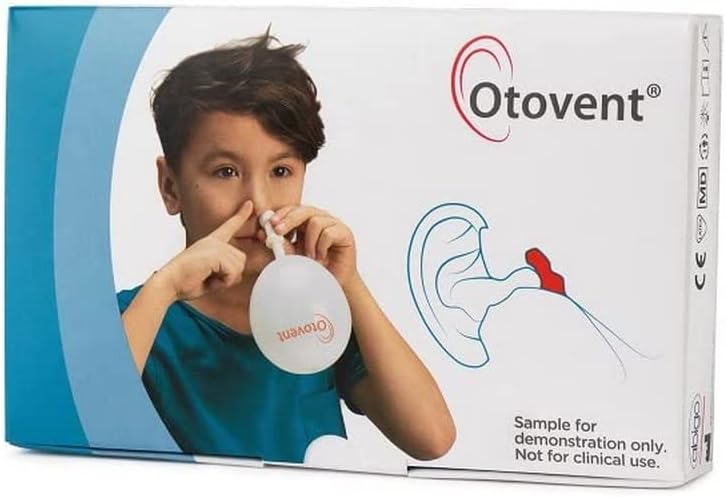
The Otovent Glue Ear Treatment kit contains one reusable nasal applicator and five replacement balloons. It is a CE-marked medical device — not a medicine — designed to be used by children aged 3 and over, as well as adults. Each pack provides enough balloons for a full course of treatment, making it a practical and cost-effective option for families managing this condition.
How Does Otovent Work to Relieve Glue Ear?
Otovent works through a technique called nasal autoinflation. By blowing a small balloon through one nostril, you generate controlled pressure in the nasopharynx — the area at the back of the nose and throat. This pressure is transmitted to the Eustachian tube, the narrow channel connecting the middle ear to the throat, encouraging it to open. When the Eustachian tube opens, the trapped fluid behind the eardrum can drain away naturally, restoring normal middle ear pressure and improving hearing.
- Increased nasopharyngeal pressure is created by blowing through the nose into the balloon
- This pressure travels along the Eustachian tube, encouraging it to open
- Fluid in the middle ear is able to drain via the now-open Eustachian tube
- Middle ear pressure normalises, reducing the sensation of fullness and improving sound conduction
A randomised controlled trial published in the Canadian Medical Association Journal found that autoinflation with a device like Otovent significantly improved tympanometric outcomes (a measure of middle ear pressure) compared to no treatment. It's a simple technique, but the science behind it is well established.
Who Should Use Otovent Glue Ear Treatment?
Otovent is suitable for anyone experiencing the symptoms of otitis media with effusion who is physically able to perform the blowing technique. It is particularly well suited to children aged 3 and above, as glue ear is most prevalent in this age group. Adults with Eustachian tube dysfunction — whether caused by colds, allergies, or pressure changes during flying — may also benefit.
- Children aged 3 and over with diagnosed or suspected glue ear
- Adults with Eustachian tube dysfunction or persistent ear fullness
- Individuals experiencing hearing difficulties related to middle ear fluid
- Those seeking a non-surgical, drug-free option before considering grommets
How Does Otovent Compare to Other Glue Ear Treatments?
| Feature | Otovent (Autoinflation) | Surgical Grommets |
|---|---|---|
| Invasiveness | Non-invasive, used at home | Surgical procedure under general anaesthetic |
| Age suitability | 3 years and over | Any age (clinician decision) |
| Drug-free | Yes — medical device only | Yes — mechanical device |
| Evidence base | Supported by RCT evidence | Supported by NICE guidance |
Is Otovent Clinically Proven and How Should It Be Stored?
Yes. Otovent has been evaluated in clinical research and is recommended in some NHS guidelines as a first-line approach for managing glue ear before surgical referral is considered. As a CE-marked medical device, it meets European safety and performance standards. It is not a medicine, so it does not interact with other medications — but if your child has a perforated eardrum, an active ear infection, or has recently had ear surgery, do not use this device without first speaking to your GP or ENT specialist.
Store Otovent below 25°C, away from direct sunlight and moisture. Keep the applicator clean by wiping it with a damp cloth after each use. Balloons should be replaced when they become difficult to inflate or show signs of wear. If you're managing related symptoms such as nasal congestion from allergies or hay fever, treating the underlying cause may also help improve Eustachian tube function.
This product is a medical device. Speak to your doctor or pharmacist before using if you have an underlying medical condition or are taking other medicines.
Otovent Glue Ear Treatment - 1 Applicator + 5 Balloons specifications
| Treatment category | Ear — Otitis Media with Effusion (Glue Ear) |
| Mechanism of action | Nasal autoinflation to open the Eustachian tube |
| Effective for | Glue ear, Eustachian tube dysfunction, middle ear fluid |
| Suitable for | Children aged 3 and over; adults |
| Active ingredient | None — medical device |
| Pack size | 1 applicator + 5 balloons |
| UK classification | CE-marked medical device |
| Preparation | Nasal balloon applicator |
| Route of administration | Nasal (autoinflation) |
Specifications of Otovent Glue Ear Treatment - 1 Applicator + 5 Balloons
What Is Otovent Glue Ear Treatment and What Is It Used For?
Otovent is a CE-marked, non-pharmacological medical device used to treat otitis media with effusion — commonly called glue ear. It is designed to help drain fluid from the middle ear by using a technique called nasal autoinflation. The device consists of a nasal applicator nozzle and a small balloon. When you blow through your nose into the balloon, the resulting pressure helps open the Eustachian tube, allowing trapped fluid to drain naturally.
Glue ear is the most common cause of hearing loss in children in the UK, according to the NHS. It can affect one or both ears and often follows a cold or upper respiratory tract infection. In many cases it resolves on its own within three months, but persistent glue ear can affect speech development and school performance in children. Otovent provides a safe, drug-free way to actively support recovery at home, and is often recommended before surgical options such as grommet insertion are considered.
What Do You Need to Know Before Using Otovent Glue Ear Treatment?
Before using Otovent, it is important to check that it is appropriate for you or your child. Do not use this device if any of the following apply:
- You have an active ear infection (acute otitis media)
- You have a perforated eardrum
- You have recently undergone ear surgery
- The child is under 3 years of age
- You have a severe nasal blockage that prevents nasal breathing
- You have been advised by a clinician not to perform the Valsalva manoeuvre
There are no known drug interactions, as Otovent contains no active pharmaceutical ingredients. However, if your child is using nasal corticosteroids or decongestants for associated nasal congestion, these should be used as directed by your pharmacist or GP. If you're also managing cold or flu symptoms that are contributing to Eustachian tube blockage, you may find our Cold and Flu collection helpful alongside this treatment.
How Should You Use Otovent Glue Ear Treatment?
Using Otovent correctly is key to getting the best results. The technique takes a little practice, especially for younger children, but most children can master it within a few attempts. Follow these steps carefully:
- Attach a balloon firmly onto the tip of the nasal applicator nozzle
- Blow your nose gently to clear any mucus before starting
- Close one nostril by pressing it shut with a finger
- Place the nozzle into the open nostril, ensuring a snug fit
- Close your mouth and blow steadily through your nose — not your mouth — until the balloon inflates to approximately the size of a grapefruit
- Remove the nozzle and allow the balloon to deflate
- Repeat the process through the other nostril
- Use three times daily — morning, midday, and evening
| Indication | Age Group | Dose | Frequency |
|---|---|---|---|
| Glue ear / OME | Children aged 3+ | 1 inflation per nostril per session | 3 times daily |
| Eustachian tube dysfunction | Adults | 1 inflation per nostril per session | 3 times daily |
What Are the Possible Side Effects of Otovent Glue Ear Treatment?
Because Otovent is a medical device rather than a medicine, it does not carry the same side effect profile as pharmaceutical treatments. Most people tolerate it very well. That said, some users do report minor sensations during or after use.
Common side effects:
- Mild pressure sensation in the ears during inflation
- Temporary feeling of fullness immediately after use
- Slight popping or clicking sound in the ear as the Eustachian tube opens
Less common side effects:
- Temporary dizziness or light-headedness
- Mild discomfort in the ear canal
- Nosebleed in individuals with fragile nasal mucosa (rare)
If you or your child experience significant pain, worsening hearing, or any discharge from the ear, stop using Otovent immediately and consult your GP. These symptoms may indicate an underlying condition that requires medical assessment. For children managing related discomfort, our Baby and Toddler collection includes a range of products to support your child's health.
How Should You Store Otovent Glue Ear Treatment?
- Store below 25°C in a cool, dry place
- Keep away from direct sunlight and sources of heat
- Keep out of reach of young children when not in use
- Clean the applicator nozzle with a damp cloth after each use — do not submerge in water
- Replace balloons when they become difficult to inflate, discoloured, or show signs of wear
- Do not use balloons that appear cracked or damaged
- Dispose of used balloons responsibly — do not leave within reach of small children as they present a choking hazard
References
- https://www.nhs.uk/conditions/glue-ear/
- https://www.nhs.uk/conditions/otitis-media-acute/
- https://www.nhs.uk/conditions/hearing-loss/
- https://www.nhs.uk/conditions/grommets/
- https://www.nice.org.uk/guidance/ng91
Written and reviewed by our qualified team
Your safety and success are our highest priorities. Our medical team rigorously evaluates every product and piece of advice we provide, ensuring you receive only the most effective, science-backed solutions available.
Frequently Asked Questions
Where can I buy Otovent glue ear treatment online in the UK?
You can buy Otovent Glue Ear Treatment online from Cured Pharmacy, a GPhC-registered UK online pharmacy, for £13.95. It is also stocked in some high street pharmacies and larger supermarkets. Buying online is convenient and means you can have it delivered directly to your door without needing a prescription.
How does Otovent work for glue ear?
Otovent uses nasal autoinflation — you blow a small balloon through one nostril, which increases pressure in the nasopharynx and encourages the Eustachian tube to open. When the Eustachian tube opens, fluid trapped in the middle ear can drain away naturally. This restores normal middle ear pressure and can improve hearing over time with regular use.
How do I use Otovent step by step?
Attach the balloon to the nozzle, close one nostril, place the nozzle in the other, and blow steadily through your nose until the balloon reaches roughly the size of a grapefruit. Repeat on the other side. Use three times daily — morning, midday, and evening — for best results.
How often should you use Otovent each day?
The recommended frequency is three times daily — once in the morning, once in the afternoon, and once in the evening. Each session involves inflating the balloon once through each nostril. Consistent daily use is important for achieving the best outcomes.
Is Otovent safe for children to use?
Otovent is suitable for children aged 3 and over who are able to understand and follow the blowing technique. Children under 3 should not use it without direct medical supervision. Most children can learn the technique quickly with a little encouragement and practice from a parent or carer.
What are the side effects of using Otovent?
Otovent is a drug-free medical device and is generally very well tolerated. Some users experience mild ear pressure, a temporary popping sensation, or brief dizziness during or after use. If you or your child experience pain, worsening symptoms, or ear discharge, stop use and consult your GP promptly.
How long does it take for Otovent to work?
Clinical evidence suggests that regular use over two to four weeks can lead to measurable improvements in middle ear pressure and hearing. Some people notice a difference sooner, particularly after the Eustachian tube opens during the first few sessions. Results vary between individuals, so consistent use is essential.
Who is eligible to use Otovent glue ear treatment?
Otovent is suitable for children aged 3 and over and adults experiencing glue ear or Eustachian tube dysfunction. It is not suitable for people with a perforated eardrum, an active ear infection, or those who have recently had ear surgery. If you are unsure whether it is right for you, speak to your pharmacist or GP before use.
What happens if I miss a session of Otovent?
If you miss a session, simply resume your normal routine at the next scheduled time — do not try to double up by inflating more times than recommended in one sitting. Consistency over the full treatment course is more important than any single session. Missing the occasional session is unlikely to significantly affect your overall results.
What are the alternatives to Otovent for glue ear?
Alternatives include watchful waiting (as glue ear often resolves on its own within three months), hearing aids to manage associated hearing loss, or surgical insertion of grommets for persistent cases. Otovent is widely recommended as a first-line, non-invasive option before surgical referral is considered. You can browse related products in our Ear Nose Throat collection.
How long can you use Otovent for?
Otovent is typically used for a course of two to four weeks, though some clinicians recommend continuing for up to three months if symptoms persist. You should reassess with your GP or ENT specialist if there is no improvement after a full course of treatment. Do not continue indefinitely without medical review.
Can adults use Otovent for Eustachian tube dysfunction?
Yes, Otovent is suitable for adults experiencing Eustachian tube dysfunction, which can cause ear fullness, muffled hearing, or discomfort — particularly after flying or during a cold. The technique and frequency of use are the same as for children. If symptoms are severe or persistent, seek medical advice to rule out other causes.
Can Otovent be used during a cold or when congested?
It is generally best to avoid using Otovent during an active ear infection or when nasal congestion is so severe that you cannot breathe through your nose at all. Mild congestion is not necessarily a barrier, but you should not force the technique if it causes pain. Treating nasal congestion first — for example with a saline rinse — may make autoinflation easier and more comfortable.
What does the latest research say about autoinflation for glue ear?
A randomised controlled trial published in the Canadian Medical Association Journal found that nasal autoinflation using a device like Otovent significantly improved tympanometric outcomes compared to no treatment in children with glue ear. NICE guidance on otitis media with effusion also acknowledges autoinflation as a management option. The evidence base continues to support its use as a safe, non-invasive first-line approach. If you're also managing allergy-related congestion that may be contributing to glue ear, our Allergy and Hay Fever collection may be useful.
How many balloons does the Otovent kit include and how long do they last?
Each Otovent kit includes one reusable nasal applicator nozzle and five replacement balloons. A single balloon can typically be used for multiple sessions before it needs replacing — replace it when it becomes difficult to inflate, discoloured, or shows signs of wear. Replacement balloon packs are available separately if you need to continue treatment beyond the initial kit.
Description
What Is Otovent Glue Ear Treatment and How Can It Help?
Glue ear — medically known as otitis media with effusion (OME) — is one of the most common childhood ear conditions in the UK, though it can affect adults too. It occurs when thick, sticky fluid builds up in the middle ear, causing muffled hearing, a sensation of fullness, and sometimes mild discomfort. The NHS estimates that around 8 in 10 children will have glue ear at some point before the age of 10. Glue ear treatment has traditionally involved watchful waiting or surgical intervention, but Otovent offers a clinically supported, non-invasive alternative you can use at home. If you're looking for other ear, nose, and throat products, browse our Ear Nose Throat collection at Cured Pharmacy.
The Otovent Glue Ear Treatment kit contains one reusable nasal applicator and five replacement balloons. It is a CE-marked medical device — not a medicine — designed to be used by children aged 3 and over, as well as adults. Each pack provides enough balloons for a full course of treatment, making it a practical and cost-effective option for families managing this condition.
How Does Otovent Work to Relieve Glue Ear?
Otovent works through a technique called nasal autoinflation. By blowing a small balloon through one nostril, you generate controlled pressure in the nasopharynx — the area at the back of the nose and throat. This pressure is transmitted to the Eustachian tube, the narrow channel connecting the middle ear to the throat, encouraging it to open. When the Eustachian tube opens, the trapped fluid behind the eardrum can drain away naturally, restoring normal middle ear pressure and improving hearing.
- Increased nasopharyngeal pressure is created by blowing through the nose into the balloon
- This pressure travels along the Eustachian tube, encouraging it to open
- Fluid in the middle ear is able to drain via the now-open Eustachian tube
- Middle ear pressure normalises, reducing the sensation of fullness and improving sound conduction
A randomised controlled trial published in the Canadian Medical Association Journal found that autoinflation with a device like Otovent significantly improved tympanometric outcomes (a measure of middle ear pressure) compared to no treatment. It's a simple technique, but the science behind it is well established.
Who Should Use Otovent Glue Ear Treatment?
Otovent is suitable for anyone experiencing the symptoms of otitis media with effusion who is physically able to perform the blowing technique. It is particularly well suited to children aged 3 and above, as glue ear is most prevalent in this age group. Adults with Eustachian tube dysfunction — whether caused by colds, allergies, or pressure changes during flying — may also benefit.
- Children aged 3 and over with diagnosed or suspected glue ear
- Adults with Eustachian tube dysfunction or persistent ear fullness
- Individuals experiencing hearing difficulties related to middle ear fluid
- Those seeking a non-surgical, drug-free option before considering grommets
How Does Otovent Compare to Other Glue Ear Treatments?
| Feature | Otovent (Autoinflation) | Surgical Grommets |
|---|---|---|
| Invasiveness | Non-invasive, used at home | Surgical procedure under general anaesthetic |
| Age suitability | 3 years and over | Any age (clinician decision) |
| Drug-free | Yes — medical device only | Yes — mechanical device |
| Evidence base | Supported by RCT evidence | Supported by NICE guidance |
Is Otovent Clinically Proven and How Should It Be Stored?
Yes. Otovent has been evaluated in clinical research and is recommended in some NHS guidelines as a first-line approach for managing glue ear before surgical referral is considered. As a CE-marked medical device, it meets European safety and performance standards. It is not a medicine, so it does not interact with other medications — but if your child has a perforated eardrum, an active ear infection, or has recently had ear surgery, do not use this device without first speaking to your GP or ENT specialist.
Store Otovent below 25°C, away from direct sunlight and moisture. Keep the applicator clean by wiping it with a damp cloth after each use. Balloons should be replaced when they become difficult to inflate or show signs of wear. If you're managing related symptoms such as nasal congestion from allergies or hay fever, treating the underlying cause may also help improve Eustachian tube function.
This product is a medical device. Speak to your doctor or pharmacist before using if you have an underlying medical condition or are taking other medicines.
Otovent Glue Ear Treatment - 1 Applicator + 5 Balloons specifications
| Treatment category | Ear — Otitis Media with Effusion (Glue Ear) |
| Mechanism of action | Nasal autoinflation to open the Eustachian tube |
| Effective for | Glue ear, Eustachian tube dysfunction, middle ear fluid |
| Suitable for | Children aged 3 and over; adults |
| Active ingredient | None — medical device |
| Pack size | 1 applicator + 5 balloons |
| UK classification | CE-marked medical device |
| Preparation | Nasal balloon applicator |
| Route of administration | Nasal (autoinflation) |
Specifications of Otovent Glue Ear Treatment - 1 Applicator + 5 Balloons
What Is Otovent Glue Ear Treatment and What Is It Used For?
Otovent is a CE-marked, non-pharmacological medical device used to treat otitis media with effusion — commonly called glue ear. It is designed to help drain fluid from the middle ear by using a technique called nasal autoinflation. The device consists of a nasal applicator nozzle and a small balloon. When you blow through your nose into the balloon, the resulting pressure helps open the Eustachian tube, allowing trapped fluid to drain naturally.
Glue ear is the most common cause of hearing loss in children in the UK, according to the NHS. It can affect one or both ears and often follows a cold or upper respiratory tract infection. In many cases it resolves on its own within three months, but persistent glue ear can affect speech development and school performance in children. Otovent provides a safe, drug-free way to actively support recovery at home, and is often recommended before surgical options such as grommet insertion are considered.
What Do You Need to Know Before Using Otovent Glue Ear Treatment?
Before using Otovent, it is important to check that it is appropriate for you or your child. Do not use this device if any of the following apply:
- You have an active ear infection (acute otitis media)
- You have a perforated eardrum
- You have recently undergone ear surgery
- The child is under 3 years of age
- You have a severe nasal blockage that prevents nasal breathing
- You have been advised by a clinician not to perform the Valsalva manoeuvre
There are no known drug interactions, as Otovent contains no active pharmaceutical ingredients. However, if your child is using nasal corticosteroids or decongestants for associated nasal congestion, these should be used as directed by your pharmacist or GP. If you're also managing cold or flu symptoms that are contributing to Eustachian tube blockage, you may find our Cold and Flu collection helpful alongside this treatment.
How Should You Use Otovent Glue Ear Treatment?
Using Otovent correctly is key to getting the best results. The technique takes a little practice, especially for younger children, but most children can master it within a few attempts. Follow these steps carefully:
- Attach a balloon firmly onto the tip of the nasal applicator nozzle
- Blow your nose gently to clear any mucus before starting
- Close one nostril by pressing it shut with a finger
- Place the nozzle into the open nostril, ensuring a snug fit
- Close your mouth and blow steadily through your nose — not your mouth — until the balloon inflates to approximately the size of a grapefruit
- Remove the nozzle and allow the balloon to deflate
- Repeat the process through the other nostril
- Use three times daily — morning, midday, and evening
| Indication | Age Group | Dose | Frequency |
|---|---|---|---|
| Glue ear / OME | Children aged 3+ | 1 inflation per nostril per session | 3 times daily |
| Eustachian tube dysfunction | Adults | 1 inflation per nostril per session | 3 times daily |
What Are the Possible Side Effects of Otovent Glue Ear Treatment?
Because Otovent is a medical device rather than a medicine, it does not carry the same side effect profile as pharmaceutical treatments. Most people tolerate it very well. That said, some users do report minor sensations during or after use.
Common side effects:
- Mild pressure sensation in the ears during inflation
- Temporary feeling of fullness immediately after use
- Slight popping or clicking sound in the ear as the Eustachian tube opens
Less common side effects:
- Temporary dizziness or light-headedness
- Mild discomfort in the ear canal
- Nosebleed in individuals with fragile nasal mucosa (rare)
If you or your child experience significant pain, worsening hearing, or any discharge from the ear, stop using Otovent immediately and consult your GP. These symptoms may indicate an underlying condition that requires medical assessment. For children managing related discomfort, our Baby and Toddler collection includes a range of products to support your child's health.
How Should You Store Otovent Glue Ear Treatment?
- Store below 25°C in a cool, dry place
- Keep away from direct sunlight and sources of heat
- Keep out of reach of young children when not in use
- Clean the applicator nozzle with a damp cloth after each use — do not submerge in water
- Replace balloons when they become difficult to inflate, discoloured, or show signs of wear
- Do not use balloons that appear cracked or damaged
- Dispose of used balloons responsibly — do not leave within reach of small children as they present a choking hazard
References
- https://www.nhs.uk/conditions/glue-ear/
- https://www.nhs.uk/conditions/otitis-media-acute/
- https://www.nhs.uk/conditions/hearing-loss/
- https://www.nhs.uk/conditions/grommets/
- https://www.nice.org.uk/guidance/ng91
Written and reviewed by our qualified team
Your safety and success are our highest priorities. Our medical team rigorously evaluates every product and piece of advice we provide, ensuring you receive only the most effective, science-backed solutions available.
Frequently Asked Questions
Where can I buy Otovent glue ear treatment online in the UK?
You can buy Otovent Glue Ear Treatment online from Cured Pharmacy, a GPhC-registered UK online pharmacy, for £13.95. It is also stocked in some high street pharmacies and larger supermarkets. Buying online is convenient and means you can have it delivered directly to your door without needing a prescription.
How does Otovent work for glue ear?
Otovent uses nasal autoinflation — you blow a small balloon through one nostril, which increases pressure in the nasopharynx and encourages the Eustachian tube to open. When the Eustachian tube opens, fluid trapped in the middle ear can drain away naturally. This restores normal middle ear pressure and can improve hearing over time with regular use.
How do I use Otovent step by step?
Attach the balloon to the nozzle, close one nostril, place the nozzle in the other, and blow steadily through your nose until the balloon reaches roughly the size of a grapefruit. Repeat on the other side. Use three times daily — morning, midday, and evening — for best results.
How often should you use Otovent each day?
The recommended frequency is three times daily — once in the morning, once in the afternoon, and once in the evening. Each session involves inflating the balloon once through each nostril. Consistent daily use is important for achieving the best outcomes.
Is Otovent safe for children to use?
Otovent is suitable for children aged 3 and over who are able to understand and follow the blowing technique. Children under 3 should not use it without direct medical supervision. Most children can learn the technique quickly with a little encouragement and practice from a parent or carer.
What are the side effects of using Otovent?
Otovent is a drug-free medical device and is generally very well tolerated. Some users experience mild ear pressure, a temporary popping sensation, or brief dizziness during or after use. If you or your child experience pain, worsening symptoms, or ear discharge, stop use and consult your GP promptly.
How long does it take for Otovent to work?
Clinical evidence suggests that regular use over two to four weeks can lead to measurable improvements in middle ear pressure and hearing. Some people notice a difference sooner, particularly after the Eustachian tube opens during the first few sessions. Results vary between individuals, so consistent use is essential.
Who is eligible to use Otovent glue ear treatment?
Otovent is suitable for children aged 3 and over and adults experiencing glue ear or Eustachian tube dysfunction. It is not suitable for people with a perforated eardrum, an active ear infection, or those who have recently had ear surgery. If you are unsure whether it is right for you, speak to your pharmacist or GP before use.
What happens if I miss a session of Otovent?
If you miss a session, simply resume your normal routine at the next scheduled time — do not try to double up by inflating more times than recommended in one sitting. Consistency over the full treatment course is more important than any single session. Missing the occasional session is unlikely to significantly affect your overall results.
What are the alternatives to Otovent for glue ear?
Alternatives include watchful waiting (as glue ear often resolves on its own within three months), hearing aids to manage associated hearing loss, or surgical insertion of grommets for persistent cases. Otovent is widely recommended as a first-line, non-invasive option before surgical referral is considered. You can browse related products in our Ear Nose Throat collection.
How long can you use Otovent for?
Otovent is typically used for a course of two to four weeks, though some clinicians recommend continuing for up to three months if symptoms persist. You should reassess with your GP or ENT specialist if there is no improvement after a full course of treatment. Do not continue indefinitely without medical review.
Can adults use Otovent for Eustachian tube dysfunction?
Yes, Otovent is suitable for adults experiencing Eustachian tube dysfunction, which can cause ear fullness, muffled hearing, or discomfort — particularly after flying or during a cold. The technique and frequency of use are the same as for children. If symptoms are severe or persistent, seek medical advice to rule out other causes.
Can Otovent be used during a cold or when congested?
It is generally best to avoid using Otovent during an active ear infection or when nasal congestion is so severe that you cannot breathe through your nose at all. Mild congestion is not necessarily a barrier, but you should not force the technique if it causes pain. Treating nasal congestion first — for example with a saline rinse — may make autoinflation easier and more comfortable.
What does the latest research say about autoinflation for glue ear?
A randomised controlled trial published in the Canadian Medical Association Journal found that nasal autoinflation using a device like Otovent significantly improved tympanometric outcomes compared to no treatment in children with glue ear. NICE guidance on otitis media with effusion also acknowledges autoinflation as a management option. The evidence base continues to support its use as a safe, non-invasive first-line approach. If you're also managing allergy-related congestion that may be contributing to glue ear, our Allergy and Hay Fever collection may be useful.
How many balloons does the Otovent kit include and how long do they last?
Each Otovent kit includes one reusable nasal applicator nozzle and five replacement balloons. A single balloon can typically be used for multiple sessions before it needs replacing — replace it when it becomes difficult to inflate, discoloured, or shows signs of wear. Replacement balloon packs are available separately if you need to continue treatment beyond the initial kit.