Original: $5.59
-65%$5.59
$1.96The Story
Are Ibuprofen Chewable Capsules for Children Effective for Pain and Fever?
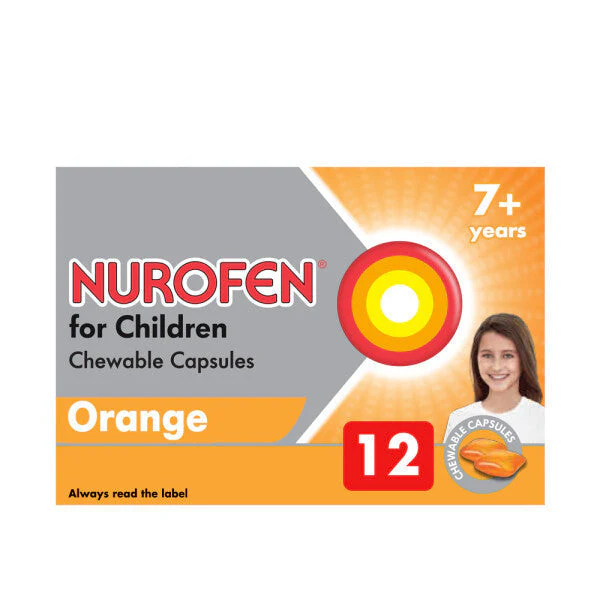
When your child is unwell — whether it's a sore throat, earache, or a temperature that just won't budge — finding a medicine they'll actually take can feel like half the battle. Ibuprofen chewable capsules for children like Nurofen For Children Soft Chews offer a practical solution. Each orange-flavoured capsule contains 100mg of ibuprofen, designed to be chewed rather than swallowed whole, making them far easier to administer to children who struggle with tablets or dislike liquid medicines. At just £5.59 for 12 capsules, they're a convenient option to keep in the family medicine cabinet. You can also explore our wider baby and toddler range for other child-friendly health essentials.
These soft chews are licensed for children aged 7 to 12 years. They're indicated for the short-term relief of mild to moderate pain — including headaches, dental pain, and muscular aches — as well as for reducing fever. The NHS recommends ibuprofen as one of the two main medicines suitable for managing pain and high temperature in children, alongside paracetamol.
How Do Nurofen For Children Soft Chews Work in the Body?
Ibuprofen belongs to a class of medicines called non-steroidal anti-inflammatory drugs, or NSAIDs. It works by inhibiting enzymes known as cyclooxygenase-1 (COX-1) and cyclooxygenase-2 (COX-2), which are responsible for producing prostaglandins — chemical messengers that trigger pain, inflammation, and fever responses in the body.
- Prostaglandin production is reduced, lowering the pain signal sent to the brain
- Inflammation at the site of injury or infection is dampened
- The hypothalamus (the brain's temperature regulator) is influenced, helping to bring down fever
- Effects typically begin within 20–30 minutes of administration
Because the capsule is chewed rather than swallowed whole, the ibuprofen is released quickly in the mouth and absorbed through the gastrointestinal tract. This format can be particularly helpful for children who find swallowing tablets difficult.
Who Are Nurofen For Children Soft Chews Suitable For?
These soft chews are specifically formulated for children aged 7 to 12 years. They are not suitable for younger children — parents of children under 7 should look at ibuprofen suspension products licensed for younger age groups. They are appropriate for children who:
- Are aged between 7 and 12 years and weigh at least 20kg
- Experience mild to moderate pain such as headaches, toothache, or earache
- Have a fever (temperature of 38°C or above) requiring short-term management
- Have difficulty swallowing tablets or dislike liquid medicines
They are not suitable for children with known hypersensitivity to ibuprofen or other NSAIDs, those with active gastrointestinal ulcers, or children with severe kidney, liver, or heart conditions. Always check with a pharmacist if you're unsure whether ibuprofen is appropriate for your child.
How Do Nurofen Soft Chews Compare to Ibuprofen Suspension for Children?
| Feature | Nurofen Soft Chews (100mg) | Ibuprofen Oral Suspension (100mg/5ml) |
|---|---|---|
| Age range | 7–12 years | 3 months–12 years (weight-dependent) |
| Dosage form | Chewable capsule | Liquid suspension |
| Portability | Easy to carry, no measuring required | Requires measuring spoon or syringe |
| Taste | Orange flavour | Strawberry or orange flavour (varies by brand) |
How Should Nurofen Soft Chews Be Stored and Are They Clinically Appropriate?
Store Nurofen For Children Soft Chews below 25°C in a dry place, away from direct sunlight. Keep them out of the reach and sight of children at all times — the orange flavour may make them appealing to young children who could mistake them for sweets. Do not use after the expiry date printed on the packaging.
Clinically, these ibuprofen chewable capsules for children are a well-established option for short-term pain and fever management. If your child's symptoms persist beyond three days, worsen, or if you have any concerns, consult your GP or pharmacist promptly. For broader children's health needs, our pain relief collection includes a range of options for different ages and conditions.
This product is a medicine. Speak to your doctor or pharmacist before using if you have an underlying medical condition or are taking other medicines.
Nurofen For Children Soft Chews - 12 Chewable Capsules specifications
| Treatment category | Children's pain relief and fever management |
| Mechanism of action | COX-1 and COX-2 inhibition; reduces prostaglandin synthesis |
| Effective for | Mild to moderate pain, fever (pyrexia) |
| Suitable for | Children aged 7–12 years |
| Active ingredient | Ibuprofen 100mg per capsule |
| Pack size | 12 chewable capsules |
| Strength | 100mg ibuprofen per capsule |
| UK classification | General Sale List (GSL) |
| Drug class | Non-steroidal anti-inflammatory drug (NSAID) |
| Preparation | Soft chewable capsule |
| Route of administration | Oral |
Specifications of Nurofen For Children Soft Chews - 12 Chewable Capsules
What Is Nurofen For Children Soft Chews and What Is It Used For?
Nurofen For Children Soft Chews are orange-flavoured chewable capsules, each containing 100mg of ibuprofen. They are used for the short-term relief of mild to moderate pain and to reduce fever in children aged 7 to 12 years. Conditions they can help with include headaches, dental pain, earache, sore throats, and muscular aches. They can also be used to manage the fever and discomfort associated with colds and flu — if your child is also experiencing cold symptoms, our cold and flu collection may offer additional support.
Ibuprofen is one of the two medicines recommended by the NHS for managing pain and high temperature in children. These soft chews are a convenient, portable alternative to liquid ibuprofen suspension, particularly for older children who prefer not to take syrup.
What Do You Need to Know Before Giving Nurofen Soft Chews to Your Child?
Do not give these soft chews if your child:
- Is under 7 years of age
- Has a known allergy or hypersensitivity to ibuprofen, aspirin, or any other NSAID
- Has or has previously had a stomach ulcer or gastrointestinal bleeding
- Has severe kidney, liver, or heart failure
- Has chickenpox — ibuprofen use during chickenpox has been associated with serious skin complications
- Is taking other NSAID-containing medicines concurrently
Use with caution and speak to a pharmacist or GP first if your child has asthma, inflammatory bowel disease, or any blood clotting disorder. The following medicines may interact with ibuprofen:
- Aspirin or other NSAIDs (increased risk of side effects)
- Anticoagulants such as warfarin (increased bleeding risk)
- Corticosteroids (increased risk of gastrointestinal ulceration)
- Antihypertensives (ibuprofen may reduce their effectiveness)
- Methotrexate (ibuprofen may increase methotrexate toxicity)
How Should You Give Nurofen For Children Soft Chews?
- Check your child's age — these chews are only for children aged 7 to 12 years.
- Give the capsule(s) with or after food to reduce the chance of stomach upset.
- Ensure your child chews the capsule thoroughly before swallowing.
- Give a glass of water alongside to help with swallowing.
- Wait at least 6–8 hours before giving the next dose.
- Do not give more than 3 doses in any 24-hour period.
- Do not use for more than 3 days without seeking medical advice.
| Age Group | Dose | Maximum Frequency | Maximum Daily Dose |
|---|---|---|---|
| 7–9 years | 1 capsule (100mg) | 3 times daily | 300mg (3 capsules) |
| 10–12 years | 1–2 capsules (100–200mg) | 3 times daily | 600mg (6 capsules) |
What Are the Possible Side Effects of Nurofen For Children Soft Chews?
Like all medicines, ibuprofen can cause side effects, although not every child will experience them. Giving the chews with food significantly reduces the risk of gastrointestinal effects.
Common side effects (may affect up to 1 in 10 children):
- Nausea or stomach discomfort
- Diarrhoea
- Indigestion or heartburn
- Mild stomach pain
Less common side effects (may affect up to 1 in 100 children):
- Dizziness or headache
- Skin rash or itching
- Vomiting
- Flatulence
Stop giving the medicine and seek immediate medical attention if your child develops signs of an allergic reaction — such as swelling of the face, lips, or throat, difficulty breathing, or a severe skin reaction. These are rare but serious. If your child experiences any gastrointestinal bleeding (blood in stools or vomit), stop use immediately and contact a doctor. For children who also need support with digestive discomfort, our indigestion range may be helpful alongside medical advice.
How Should You Store Nurofen For Children Soft Chews?
- Store below 25°C in a dry place, away from direct heat and sunlight
- Keep the packaging tightly closed when not in use
- Keep out of the sight and reach of children at all times
- Do not use after the expiry date printed on the pack
- Do not dispose of medicines via wastewater or household waste — return unused medicines to your pharmacy
References
- https://www.nhs.uk/medicines/ibuprofen-for-children/
- https://www.nhs.uk/conditions/fever-in-children/
- https://www.nhs.uk/conditions/pain-in-children/
- https://www.nhs.uk/medicines/ibuprofen-for-adults/side-effects-of-ibuprofen/
- https://www.nhs.uk/conditions/chickenpox/
- https://bnf.nice.org.uk/drugs/ibuprofen/
Written and reviewed by our qualified team
Your safety and success are our highest priorities. Our medical team rigorously evaluates every product and piece of advice we provide, ensuring you receive only the most effective, science-backed solutions available.
Frequently Asked Questions
Where can I buy Nurofen For Children Soft Chews online in the UK?
You can buy Nurofen For Children Soft Chews directly from Cured Pharmacy, a GPhC-registered UK online pharmacy, for £5.59 per pack of 12. They are classed as a General Sale List (GSL) medicine, so no prescription is needed. They are also available from most high street pharmacies and supermarkets across the UK.
How do Nurofen For Children Soft Chews work in the body?
Each soft chew contains 100mg of ibuprofen, an NSAID that works by blocking COX-1 and COX-2 enzymes, which are responsible for producing prostaglandins — the chemicals that cause pain, inflammation, and fever. By reducing prostaglandin levels, ibuprofen helps relieve discomfort and lower temperature. Effects typically begin within 20–30 minutes of the chew being taken.
What age are Nurofen For Children Soft Chews suitable for?
Nurofen For Children Soft Chews are licensed for children aged 7 to 12 years only. They should not be given to children under 7 years of age. For younger children, a weight-appropriate ibuprofen oral suspension is the recommended alternative — speak to your pharmacist for guidance.
How many Nurofen Soft Chews can my child take at once?
Children aged 7 to 9 years should take 1 capsule (100mg) per dose, up to three times daily. Children aged 10 to 12 years may take 1 to 2 capsules (100–200mg) per dose, up to three times daily. Never exceed 3 doses in any 24-hour period, and always leave at least 6–8 hours between doses.
Should Nurofen Soft Chews be given with food?
Yes — it is recommended to give Nurofen Soft Chews with or after food to help reduce the risk of stomach upset, which is one of the more common side effects of ibuprofen. A glass of water alongside the chew is also advisable. Giving ibuprofen on an empty stomach increases the likelihood of nausea or indigestion.
What are the side effects of Nurofen For Children Soft Chews?
Common side effects include nausea, stomach discomfort, diarrhoea, and indigestion. Less commonly, children may experience dizziness, skin rash, or vomiting. Serious but rare reactions include allergic responses such as facial swelling or breathing difficulties — if these occur, stop the medicine immediately and seek urgent medical attention.
Can I give Nurofen Soft Chews alongside paracetamol?
Ibuprofen and paracetamol work via different mechanisms and can generally be used together in children, which can be helpful for managing higher fevers or more significant pain. However, always follow the individual dosing instructions for each medicine carefully and do not exceed the recommended doses. If you are unsure, consult your pharmacist before combining them.
Are Nurofen Soft Chews safe to give during chickenpox?
No — ibuprofen should not be given to children with chickenpox. The NHS advises that ibuprofen use during chickenpox has been associated with serious skin infections and complications. Paracetamol is the recommended option for managing fever and discomfort during chickenpox. Always check with a pharmacist or GP if you are unsure.
How long can my child take Nurofen Soft Chews for?
Nurofen For Children Soft Chews are intended for short-term use only and should not be given for more than 3 consecutive days without consulting a doctor or pharmacist. If your child's symptoms persist, worsen, or new symptoms develop, seek medical advice promptly. Prolonged use of ibuprofen without medical supervision is not recommended in children.
What happens if my child accidentally takes too many Nurofen Soft Chews?
If your child takes more than the recommended dose, contact NHS 111 or go to your nearest A&E immediately — even if they seem well. Overdose symptoms may include nausea, vomiting, stomach pain, dizziness, or in severe cases, drowsiness. Always keep medicines stored out of the reach and sight of children to prevent accidental ingestion.
What are the alternatives to Nurofen For Children Soft Chews?
Alternatives include ibuprofen oral suspension (suitable for younger children), paracetamol suspension or tablets (for children who cannot take ibuprofen), and other branded ibuprofen products. You can browse our pain relief collection for a full range of children's and adult pain relief options. Always choose a product appropriate for your child's age and weight.
Can children with asthma take Nurofen Soft Chews?
Ibuprofen can trigger bronchospasm in some children with asthma, particularly those who are sensitive to NSAIDs. The NHS advises caution when giving ibuprofen to children with asthma. You should speak to your GP or pharmacist before giving these soft chews to an asthmatic child, as paracetamol may be a safer alternative in such cases.
Do Nurofen For Children Soft Chews contain any allergens?
Nurofen For Children Soft Chews contain gelatin (derived from pork), which means they are not suitable for children following a vegetarian, vegan, or halal diet. They also contain sorbitol, which may have a mild laxative effect if consumed in large amounts. Always check the full ingredients list on the packaging if your child has known food allergies or dietary requirements.
What is the latest guidance on ibuprofen use in children?
Current NHS and MHRA guidance supports the use of ibuprofen for short-term pain and fever management in children aged 3 months and over (weight-dependent for suspensions; 7 years and over for these soft chews). The MHRA continues to advise against ibuprofen use in children with chickenpox and recommends using the lowest effective dose for the shortest time necessary. Always follow up-to-date product labelling and NHS guidance.
Can Nurofen Soft Chews be used for teething pain?
No — Nurofen For Children Soft Chews are not suitable for teething pain, as they are only licensed for children aged 7 years and over. Teething typically affects much younger infants. For children's dental pain in the appropriate age group, you can explore our dental products collection for suitable options. Always consult a pharmacist for advice on the right product for your child's age.
Description
Are Ibuprofen Chewable Capsules for Children Effective for Pain and Fever?
When your child is unwell — whether it's a sore throat, earache, or a temperature that just won't budge — finding a medicine they'll actually take can feel like half the battle. Ibuprofen chewable capsules for children like Nurofen For Children Soft Chews offer a practical solution. Each orange-flavoured capsule contains 100mg of ibuprofen, designed to be chewed rather than swallowed whole, making them far easier to administer to children who struggle with tablets or dislike liquid medicines. At just £5.59 for 12 capsules, they're a convenient option to keep in the family medicine cabinet. You can also explore our wider baby and toddler range for other child-friendly health essentials.
These soft chews are licensed for children aged 7 to 12 years. They're indicated for the short-term relief of mild to moderate pain — including headaches, dental pain, and muscular aches — as well as for reducing fever. The NHS recommends ibuprofen as one of the two main medicines suitable for managing pain and high temperature in children, alongside paracetamol.
How Do Nurofen For Children Soft Chews Work in the Body?
Ibuprofen belongs to a class of medicines called non-steroidal anti-inflammatory drugs, or NSAIDs. It works by inhibiting enzymes known as cyclooxygenase-1 (COX-1) and cyclooxygenase-2 (COX-2), which are responsible for producing prostaglandins — chemical messengers that trigger pain, inflammation, and fever responses in the body.
- Prostaglandin production is reduced, lowering the pain signal sent to the brain
- Inflammation at the site of injury or infection is dampened
- The hypothalamus (the brain's temperature regulator) is influenced, helping to bring down fever
- Effects typically begin within 20–30 minutes of administration
Because the capsule is chewed rather than swallowed whole, the ibuprofen is released quickly in the mouth and absorbed through the gastrointestinal tract. This format can be particularly helpful for children who find swallowing tablets difficult.
Who Are Nurofen For Children Soft Chews Suitable For?
These soft chews are specifically formulated for children aged 7 to 12 years. They are not suitable for younger children — parents of children under 7 should look at ibuprofen suspension products licensed for younger age groups. They are appropriate for children who:
- Are aged between 7 and 12 years and weigh at least 20kg
- Experience mild to moderate pain such as headaches, toothache, or earache
- Have a fever (temperature of 38°C or above) requiring short-term management
- Have difficulty swallowing tablets or dislike liquid medicines
They are not suitable for children with known hypersensitivity to ibuprofen or other NSAIDs, those with active gastrointestinal ulcers, or children with severe kidney, liver, or heart conditions. Always check with a pharmacist if you're unsure whether ibuprofen is appropriate for your child.
How Do Nurofen Soft Chews Compare to Ibuprofen Suspension for Children?
| Feature | Nurofen Soft Chews (100mg) | Ibuprofen Oral Suspension (100mg/5ml) |
|---|---|---|
| Age range | 7–12 years | 3 months–12 years (weight-dependent) |
| Dosage form | Chewable capsule | Liquid suspension |
| Portability | Easy to carry, no measuring required | Requires measuring spoon or syringe |
| Taste | Orange flavour | Strawberry or orange flavour (varies by brand) |
How Should Nurofen Soft Chews Be Stored and Are They Clinically Appropriate?
Store Nurofen For Children Soft Chews below 25°C in a dry place, away from direct sunlight. Keep them out of the reach and sight of children at all times — the orange flavour may make them appealing to young children who could mistake them for sweets. Do not use after the expiry date printed on the packaging.
Clinically, these ibuprofen chewable capsules for children are a well-established option for short-term pain and fever management. If your child's symptoms persist beyond three days, worsen, or if you have any concerns, consult your GP or pharmacist promptly. For broader children's health needs, our pain relief collection includes a range of options for different ages and conditions.
This product is a medicine. Speak to your doctor or pharmacist before using if you have an underlying medical condition or are taking other medicines.
Nurofen For Children Soft Chews - 12 Chewable Capsules specifications
| Treatment category | Children's pain relief and fever management |
| Mechanism of action | COX-1 and COX-2 inhibition; reduces prostaglandin synthesis |
| Effective for | Mild to moderate pain, fever (pyrexia) |
| Suitable for | Children aged 7–12 years |
| Active ingredient | Ibuprofen 100mg per capsule |
| Pack size | 12 chewable capsules |
| Strength | 100mg ibuprofen per capsule |
| UK classification | General Sale List (GSL) |
| Drug class | Non-steroidal anti-inflammatory drug (NSAID) |
| Preparation | Soft chewable capsule |
| Route of administration | Oral |
Specifications of Nurofen For Children Soft Chews - 12 Chewable Capsules
What Is Nurofen For Children Soft Chews and What Is It Used For?
Nurofen For Children Soft Chews are orange-flavoured chewable capsules, each containing 100mg of ibuprofen. They are used for the short-term relief of mild to moderate pain and to reduce fever in children aged 7 to 12 years. Conditions they can help with include headaches, dental pain, earache, sore throats, and muscular aches. They can also be used to manage the fever and discomfort associated with colds and flu — if your child is also experiencing cold symptoms, our cold and flu collection may offer additional support.
Ibuprofen is one of the two medicines recommended by the NHS for managing pain and high temperature in children. These soft chews are a convenient, portable alternative to liquid ibuprofen suspension, particularly for older children who prefer not to take syrup.
What Do You Need to Know Before Giving Nurofen Soft Chews to Your Child?
Do not give these soft chews if your child:
- Is under 7 years of age
- Has a known allergy or hypersensitivity to ibuprofen, aspirin, or any other NSAID
- Has or has previously had a stomach ulcer or gastrointestinal bleeding
- Has severe kidney, liver, or heart failure
- Has chickenpox — ibuprofen use during chickenpox has been associated with serious skin complications
- Is taking other NSAID-containing medicines concurrently
Use with caution and speak to a pharmacist or GP first if your child has asthma, inflammatory bowel disease, or any blood clotting disorder. The following medicines may interact with ibuprofen:
- Aspirin or other NSAIDs (increased risk of side effects)
- Anticoagulants such as warfarin (increased bleeding risk)
- Corticosteroids (increased risk of gastrointestinal ulceration)
- Antihypertensives (ibuprofen may reduce their effectiveness)
- Methotrexate (ibuprofen may increase methotrexate toxicity)
How Should You Give Nurofen For Children Soft Chews?
- Check your child's age — these chews are only for children aged 7 to 12 years.
- Give the capsule(s) with or after food to reduce the chance of stomach upset.
- Ensure your child chews the capsule thoroughly before swallowing.
- Give a glass of water alongside to help with swallowing.
- Wait at least 6–8 hours before giving the next dose.
- Do not give more than 3 doses in any 24-hour period.
- Do not use for more than 3 days without seeking medical advice.
| Age Group | Dose | Maximum Frequency | Maximum Daily Dose |
|---|---|---|---|
| 7–9 years | 1 capsule (100mg) | 3 times daily | 300mg (3 capsules) |
| 10–12 years | 1–2 capsules (100–200mg) | 3 times daily | 600mg (6 capsules) |
What Are the Possible Side Effects of Nurofen For Children Soft Chews?
Like all medicines, ibuprofen can cause side effects, although not every child will experience them. Giving the chews with food significantly reduces the risk of gastrointestinal effects.
Common side effects (may affect up to 1 in 10 children):
- Nausea or stomach discomfort
- Diarrhoea
- Indigestion or heartburn
- Mild stomach pain
Less common side effects (may affect up to 1 in 100 children):
- Dizziness or headache
- Skin rash or itching
- Vomiting
- Flatulence
Stop giving the medicine and seek immediate medical attention if your child develops signs of an allergic reaction — such as swelling of the face, lips, or throat, difficulty breathing, or a severe skin reaction. These are rare but serious. If your child experiences any gastrointestinal bleeding (blood in stools or vomit), stop use immediately and contact a doctor. For children who also need support with digestive discomfort, our indigestion range may be helpful alongside medical advice.
How Should You Store Nurofen For Children Soft Chews?
- Store below 25°C in a dry place, away from direct heat and sunlight
- Keep the packaging tightly closed when not in use
- Keep out of the sight and reach of children at all times
- Do not use after the expiry date printed on the pack
- Do not dispose of medicines via wastewater or household waste — return unused medicines to your pharmacy
References
- https://www.nhs.uk/medicines/ibuprofen-for-children/
- https://www.nhs.uk/conditions/fever-in-children/
- https://www.nhs.uk/conditions/pain-in-children/
- https://www.nhs.uk/medicines/ibuprofen-for-adults/side-effects-of-ibuprofen/
- https://www.nhs.uk/conditions/chickenpox/
- https://bnf.nice.org.uk/drugs/ibuprofen/
Written and reviewed by our qualified team
Your safety and success are our highest priorities. Our medical team rigorously evaluates every product and piece of advice we provide, ensuring you receive only the most effective, science-backed solutions available.
Frequently Asked Questions
Where can I buy Nurofen For Children Soft Chews online in the UK?
You can buy Nurofen For Children Soft Chews directly from Cured Pharmacy, a GPhC-registered UK online pharmacy, for £5.59 per pack of 12. They are classed as a General Sale List (GSL) medicine, so no prescription is needed. They are also available from most high street pharmacies and supermarkets across the UK.
How do Nurofen For Children Soft Chews work in the body?
Each soft chew contains 100mg of ibuprofen, an NSAID that works by blocking COX-1 and COX-2 enzymes, which are responsible for producing prostaglandins — the chemicals that cause pain, inflammation, and fever. By reducing prostaglandin levels, ibuprofen helps relieve discomfort and lower temperature. Effects typically begin within 20–30 minutes of the chew being taken.
What age are Nurofen For Children Soft Chews suitable for?
Nurofen For Children Soft Chews are licensed for children aged 7 to 12 years only. They should not be given to children under 7 years of age. For younger children, a weight-appropriate ibuprofen oral suspension is the recommended alternative — speak to your pharmacist for guidance.
How many Nurofen Soft Chews can my child take at once?
Children aged 7 to 9 years should take 1 capsule (100mg) per dose, up to three times daily. Children aged 10 to 12 years may take 1 to 2 capsules (100–200mg) per dose, up to three times daily. Never exceed 3 doses in any 24-hour period, and always leave at least 6–8 hours between doses.
Should Nurofen Soft Chews be given with food?
Yes — it is recommended to give Nurofen Soft Chews with or after food to help reduce the risk of stomach upset, which is one of the more common side effects of ibuprofen. A glass of water alongside the chew is also advisable. Giving ibuprofen on an empty stomach increases the likelihood of nausea or indigestion.
What are the side effects of Nurofen For Children Soft Chews?
Common side effects include nausea, stomach discomfort, diarrhoea, and indigestion. Less commonly, children may experience dizziness, skin rash, or vomiting. Serious but rare reactions include allergic responses such as facial swelling or breathing difficulties — if these occur, stop the medicine immediately and seek urgent medical attention.
Can I give Nurofen Soft Chews alongside paracetamol?
Ibuprofen and paracetamol work via different mechanisms and can generally be used together in children, which can be helpful for managing higher fevers or more significant pain. However, always follow the individual dosing instructions for each medicine carefully and do not exceed the recommended doses. If you are unsure, consult your pharmacist before combining them.
Are Nurofen Soft Chews safe to give during chickenpox?
No — ibuprofen should not be given to children with chickenpox. The NHS advises that ibuprofen use during chickenpox has been associated with serious skin infections and complications. Paracetamol is the recommended option for managing fever and discomfort during chickenpox. Always check with a pharmacist or GP if you are unsure.
How long can my child take Nurofen Soft Chews for?
Nurofen For Children Soft Chews are intended for short-term use only and should not be given for more than 3 consecutive days without consulting a doctor or pharmacist. If your child's symptoms persist, worsen, or new symptoms develop, seek medical advice promptly. Prolonged use of ibuprofen without medical supervision is not recommended in children.
What happens if my child accidentally takes too many Nurofen Soft Chews?
If your child takes more than the recommended dose, contact NHS 111 or go to your nearest A&E immediately — even if they seem well. Overdose symptoms may include nausea, vomiting, stomach pain, dizziness, or in severe cases, drowsiness. Always keep medicines stored out of the reach and sight of children to prevent accidental ingestion.
What are the alternatives to Nurofen For Children Soft Chews?
Alternatives include ibuprofen oral suspension (suitable for younger children), paracetamol suspension or tablets (for children who cannot take ibuprofen), and other branded ibuprofen products. You can browse our pain relief collection for a full range of children's and adult pain relief options. Always choose a product appropriate for your child's age and weight.
Can children with asthma take Nurofen Soft Chews?
Ibuprofen can trigger bronchospasm in some children with asthma, particularly those who are sensitive to NSAIDs. The NHS advises caution when giving ibuprofen to children with asthma. You should speak to your GP or pharmacist before giving these soft chews to an asthmatic child, as paracetamol may be a safer alternative in such cases.
Do Nurofen For Children Soft Chews contain any allergens?
Nurofen For Children Soft Chews contain gelatin (derived from pork), which means they are not suitable for children following a vegetarian, vegan, or halal diet. They also contain sorbitol, which may have a mild laxative effect if consumed in large amounts. Always check the full ingredients list on the packaging if your child has known food allergies or dietary requirements.
What is the latest guidance on ibuprofen use in children?
Current NHS and MHRA guidance supports the use of ibuprofen for short-term pain and fever management in children aged 3 months and over (weight-dependent for suspensions; 7 years and over for these soft chews). The MHRA continues to advise against ibuprofen use in children with chickenpox and recommends using the lowest effective dose for the shortest time necessary. Always follow up-to-date product labelling and NHS guidance.
Can Nurofen Soft Chews be used for teething pain?
No — Nurofen For Children Soft Chews are not suitable for teething pain, as they are only licensed for children aged 7 years and over. Teething typically affects much younger infants. For children's dental pain in the appropriate age group, you can explore our dental products collection for suitable options. Always consult a pharmacist for advice on the right product for your child's age.