Original: $6.55
-65%$6.55
$2.29The Story
What Is Kinesiology Tape and How Can It Help You?
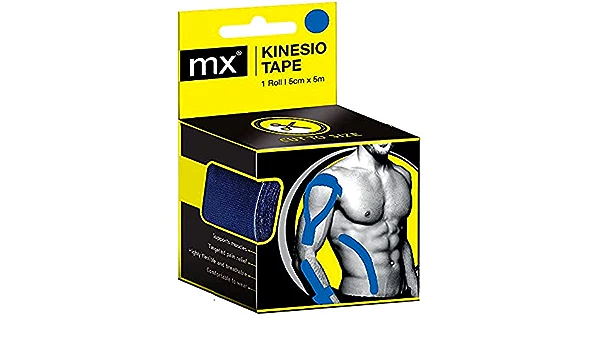
If you've ever watched a sporting event and noticed brightly coloured strips of tape on an athlete's knee or shoulder, you've already seen kinesiology tape in action. The mx Health Kinesiology Tape is a 5 cm x 5 m roll of elastic therapeutic tape designed to support muscles, tendons, and joints without restricting your natural range of movement. Whether you're recovering from a sports injury, managing a repetitive strain, or simply looking for extra support during physical activity, this tape offers a practical, non-invasive option. You can also browse our pain relief collection for complementary products to use alongside it.
Unlike rigid strapping tape, kinesiology tape stretches with your body. It's made from a cotton-elastane blend with a medical-grade acrylic adhesive, making it breathable and suitable for wear over several days — even through showers and light swimming. At just £6.55 per roll, it's an accessible tool for anyone managing an active lifestyle or a musculoskeletal complaint.
How Does mx Health Kinesiology Tape Work?
The mechanism behind kinesiology tape is rooted in its elasticity and the way it interacts with the skin and underlying tissue. When applied correctly, the tape gently lifts the skin away from the fascia beneath it. This is thought to:
- Reduce pressure on pain receptors (nociceptors) in the skin and subcutaneous tissue
- Improve local lymphatic and blood circulation by creating more space in the tissue
- Provide proprioceptive feedback — essentially reminding your muscles and joints of their correct position during movement
- Offer structural support to weakened or fatigued muscles without immobilising them
It's worth noting that while many athletes and physiotherapists report positive outcomes, the clinical evidence base is still developing. Current research suggests kinesiology tape may be most useful as part of a broader rehabilitation programme rather than as a standalone treatment.
Who Should Use mx Health Kinesiology Tape?
This tape is suitable for a wide range of people — from weekend runners to those managing chronic joint discomfort. It's particularly popular among those who want support during activity without the stiffness of a rigid brace. That said, it's not appropriate for everyone.
It may be suitable for you if you:
- Are recovering from a mild to moderate sports injury such as a sprain or muscle strain
- Experience knee, shoulder, or lower back discomfort during exercise
- Are undergoing physiotherapy and want additional support between sessions
- Need postural support or help managing swelling after minor injury
It is not suitable for use over broken, infected, or significantly inflamed skin. If you have a known adhesive allergy or a skin condition such as eczema or psoriasis affecting the area, speak to your GP or pharmacist before use.
How Does mx Health Kinesiology Tape Compare to Other Support Options?
| Feature | mx Health Kinesiology Tape | Rigid Sports Tape |
|---|---|---|
| Flexibility | Elastic — full range of motion | Rigid — restricts movement |
| Wear duration | 2–5 days | Typically removed after activity |
| Water resistance | Yes — shower-safe | Limited |
| Skin breathability | High — cotton-elastane blend | Lower — less breathable |
Is mx Health Kinesiology Tape Safe to Store and Use Long-Term?
Store the roll below 25°C in a dry location away from direct sunlight. Exposure to heat or humidity can degrade the adhesive before use. Once applied to the skin, the tape should be removed gently — rolling it back slowly rather than pulling sharply — to minimise skin trauma, particularly on sensitive areas. If you're also managing a musculoskeletal condition and looking for additional first aid supplies, our first aid collection includes a range of supportive products.
This product is a medical device. Speak to your doctor or pharmacist before using if you have an underlying medical condition or are taking other medicines.
mx Health Kinesiology Tape 1 Roll 5cm x 5m specifications
| Treatment category | Musculoskeletal support / Sports injury |
| Mechanism of action | Elastic skin-lifting tape providing proprioceptive feedback and soft tissue support |
| Effective for | Muscle strains, joint support, swelling management, postural support |
| Suitable for | Adults and older children; sports, rehabilitation, everyday activity |
| Active ingredient | None — medical device (cotton-elastane with acrylic adhesive) |
| Pack size | 1 roll, 5 cm x 5 m |
| UK classification | Medical device (CE marked) |
| Preparation | Elastic adhesive tape |
| Route of administration | Topical / external application |
Specifications of mx Health Kinesiology Tape 1 Roll 5cm x 5m
What Is mx Health Kinesiology Tape and What Is It Used For?
mx Health Kinesiology Tape is an elastic, adhesive therapeutic tape applied directly to the skin to support muscles, joints, and soft tissue. It is used as a non-pharmacological aid in the management of sports injuries, musculoskeletal discomfort, and rehabilitation. Common applications include knee pain, shoulder instability, lower back support, ankle sprains, and shin splints. It may also be used to help manage mild swelling following minor injury by supporting lymphatic drainage in the affected area.
What Do You Need to Know Before Using mx Health Kinesiology Tape?
Before applying this tape, read the following carefully. It is not suitable for everyone.
Do not use this tape if you:
- Have broken, open, or infected skin in the area of application
- Have a known allergy to acrylic adhesives or similar materials
- Have active deep vein thrombosis (DVT) — do not apply over the affected limb
- Have a malignant tumour in the area — do not apply directly over it
- Have fragile skin due to long-term corticosteroid use or a skin condition such as severe eczema or psoriasis in the target area
Use with caution if you:
- Are pregnant — seek physiotherapy guidance on appropriate application technique
- Have diabetes with peripheral neuropathy, as reduced skin sensation may mask irritation
- Have lymphoedema — consult a lymphoedema specialist before use
Known interactions:
- No pharmacological drug interactions — this is a medical device, not a medicine
- Avoid concurrent use of topical creams, oils, or emollients on the application site, as these reduce adhesion and may cause the tape to lift prematurely
How Should You Use mx Health Kinesiology Tape?
Correct application is key to getting the most from this tape. Applying it incorrectly — with too much or too little tension — can reduce its effectiveness or cause skin discomfort. If you are unsure about the correct technique for your specific injury, a physiotherapist can demonstrate the appropriate method.
- Clean the skin thoroughly and ensure it is completely dry and free from lotions or oils
- Shave any excessive body hair in the area if needed — this improves adhesion and reduces discomfort on removal
- Cut the tape to the required length and round off the corners with scissors to prevent early peeling
- Tear the backing paper at the centre of the strip and apply the middle section first with the appropriate tension (typically 25–75% stretch depending on the application)
- Lay the anchor ends (first and last 2–3 cm) down with zero stretch
- Rub the tape firmly for 10–15 seconds to activate the heat-sensitive adhesive
- Allow 30–60 minutes before exercise or exposure to water for the adhesive to fully bond
| Indication | Age Group | Tape Tension | Typical Wear Duration |
|---|---|---|---|
| Muscle support / fatigue | Adults | 15–25% stretch | 2–5 days |
| Joint stability (e.g. knee) | Adults | 50–75% stretch | 2–3 days |
| Swelling / lymphatic support | Adults | 0–15% stretch (fan technique) | 2–4 days |
If you are managing a sports injury alongside other treatments, you may find our foot care collection useful for lower limb conditions such as plantar fasciitis.
What Are the Possible Side Effects of mx Health Kinesiology Tape?
As a medical device rather than a medicine, kinesiology tape does not carry systemic side effects. However, local skin reactions can occur, particularly with prolonged wear or in those with sensitive skin.
Common side effects:
- Mild skin redness at the tape margins after removal
- Slight itching or tingling under the tape during wear
- Minor skin irritation from the adhesive
Less common side effects:
- Contact dermatitis — a more pronounced allergic skin reaction with redness, swelling, and blistering
- Skin abrasion or superficial tearing on removal, particularly in elderly patients or those on long-term steroids
- Folliculitis (inflammation of hair follicles) if applied over hairy skin without preparation
Remove the tape immediately if you develop significant redness, blistering, or a rash. Do not reapply until the skin has fully recovered. If symptoms persist, consult your GP or pharmacist. For general skin concerns, our skin care collection includes products that may help soothe mild irritation.
How Should You Store mx Health Kinesiology Tape?
- Store below 25°C in a cool, dry place
- Keep away from direct sunlight and sources of heat, which can degrade the adhesive
- Keep out of reach and sight of children
- Do not store in a bathroom or humid environment
- Once opened, reseal the packaging or store in a zip-lock bag to maintain adhesive quality
- Check the expiry date on the packaging before use — do not use after the stated date
References
- https://www.nhs.uk/conditions/sprains-and-strains/
- https://www.nhs.uk/conditions/knee-pain/
- https://www.nhs.uk/conditions/back-pain/
- https://www.nhs.uk/conditions/shin-splints/
- https://www.nhs.uk/conditions/contact-dermatitis/
Written and reviewed by our qualified team
Your safety and success are our highest priorities. Our medical team rigorously evaluates every product and piece of advice we provide, ensuring you receive only the most effective, science-backed solutions available.
Frequently Asked Questions
Where can I buy kinesiology tape online in the UK?
You can buy mx Health Kinesiology Tape directly from Cured Pharmacy online for £6.55 per roll. No prescription is needed, and it is dispatched quickly to UK addresses. It is also available alongside other supportive products in our first aid collection.
How does kinesiology tape work on muscles and joints?
Kinesiology tape is thought to work by gently lifting the skin away from the underlying fascia, which may reduce pressure on pain receptors and improve local circulation. It also provides proprioceptive feedback, helping your body maintain correct joint positioning during movement. The elastic nature of the tape means it moves with you rather than restricting your range of motion.
How do I apply kinesiology tape correctly step by step?
Start by cleaning and thoroughly drying the skin, then cut the tape to length and round the corners. Apply the middle section first with the appropriate stretch (typically 25–75% depending on the application), then lay the anchor ends down with zero tension. Rub the tape firmly for 10–15 seconds to activate the adhesive, and wait at least 30 minutes before exercise or water exposure.
How long can you leave kinesiology tape on your skin?
Most applications are designed to last between two and five days, and the tape is water-resistant enough to wear through showers. However, you should remove it sooner if you notice skin redness, itching, or any signs of irritation. Leaving tape on for longer than five days is generally not recommended, as it can increase the risk of skin reactions.
Can kinesiology tape cause skin irritation or an allergic reaction?
Yes, some people experience mild redness or itching, particularly those with sensitive skin or a history of adhesive allergies. In rarer cases, contact dermatitis can develop, presenting as a more pronounced rash or blistering. Remove the tape immediately if this occurs and allow the skin to recover fully before considering reapplication.
Is kinesiology tape suitable for use during pregnancy?
Kinesiology tape is sometimes used during pregnancy to support the lower back and abdomen, but application technique is important and differs from standard sports use. It is strongly advisable to consult a physiotherapist or midwife before applying tape during pregnancy. Avoid applying over the abdomen without professional guidance.
Who is eligible to use kinesiology tape?
Kinesiology tape is suitable for most adults and older children who need muscle or joint support during sport, rehabilitation, or daily activity. It is not suitable for those with broken or infected skin, known adhesive allergies, active DVT, or fragile skin conditions in the application area. If you are unsure whether it is appropriate for you, speak to your pharmacist or GP.
What is the difference between kinesiology tape and rigid sports tape?
Rigid sports tape is designed to immobilise a joint and restrict movement, making it useful for acute injury management immediately after trauma. Kinesiology tape, by contrast, is elastic and allows a full range of motion while still providing support and proprioceptive feedback. Kinesiology tape is also typically worn for several days, whereas rigid tape is usually removed after activity.
How do I remove kinesiology tape without hurting my skin?
To remove kinesiology tape safely, press the skin down with one hand while slowly rolling the tape back on itself — never pull it sharply upwards. Applying a small amount of baby oil or rubbing alcohol to the tape edge can help loosen the adhesive before removal. This is especially important for those with sensitive or fragile skin.
Can I shower or swim while wearing kinesiology tape?
Yes, mx Health Kinesiology Tape is water-resistant and can be worn during showering and light swimming. Pat the tape dry gently after water exposure rather than rubbing it, as rubbing can cause the edges to lift. Prolonged submersion in water (such as long swimming sessions) may reduce the adhesive lifespan slightly.
What conditions can kinesiology tape be used for?
Kinesiology tape is commonly used for knee pain, lower back pain, shoulder instability, ankle sprains, shin splints, plantar fasciitis, and tennis or golfer's elbow. It is also used to help manage mild swelling and bruising following minor soft tissue injuries. It is not a substitute for medical treatment in the case of serious injury.
How long should I use kinesiology tape as part of my recovery?
The duration of use depends entirely on the nature of your injury or condition. For acute sports injuries, tape is often used for two to six weeks alongside physiotherapy. For chronic conditions such as ongoing knee pain, some people use it intermittently during high-activity periods. If your symptoms are not improving after a few weeks, seek advice from a physiotherapist or GP.
What are the latest research findings on kinesiology tape?
Research into kinesiology tape is ongoing, and findings are mixed. Some studies suggest modest benefits for pain reduction and proprioception in conditions such as knee osteoarthritis and shoulder impingement, while others find no significant advantage over sham taping. Current clinical consensus is that it works best as part of a broader rehabilitation programme rather than as a standalone intervention.
What are the alternatives to kinesiology tape for muscle and joint support?
Alternatives include rigid zinc oxide sports tape, neoprene joint supports, compression bandages, and adjustable braces. For pain management alongside physical support, topical analgesics and anti-inflammatory gels are also available — you can explore options in our pain relief collection. The best option depends on the type and severity of your injury.
Does kinesiology tape actually work, or is it a placebo?
The evidence is nuanced. Some clinical trials show statistically significant improvements in pain and function, while others attribute benefits partly to placebo effect and the psychological reassurance of physical support. That said, many physiotherapists and sports medicine practitioners continue to use it as a useful adjunct tool, and patient-reported outcomes are frequently positive. It is generally considered safe to try as part of a broader management plan.
Description
What Is Kinesiology Tape and How Can It Help You?
If you've ever watched a sporting event and noticed brightly coloured strips of tape on an athlete's knee or shoulder, you've already seen kinesiology tape in action. The mx Health Kinesiology Tape is a 5 cm x 5 m roll of elastic therapeutic tape designed to support muscles, tendons, and joints without restricting your natural range of movement. Whether you're recovering from a sports injury, managing a repetitive strain, or simply looking for extra support during physical activity, this tape offers a practical, non-invasive option. You can also browse our pain relief collection for complementary products to use alongside it.
Unlike rigid strapping tape, kinesiology tape stretches with your body. It's made from a cotton-elastane blend with a medical-grade acrylic adhesive, making it breathable and suitable for wear over several days — even through showers and light swimming. At just £6.55 per roll, it's an accessible tool for anyone managing an active lifestyle or a musculoskeletal complaint.
How Does mx Health Kinesiology Tape Work?
The mechanism behind kinesiology tape is rooted in its elasticity and the way it interacts with the skin and underlying tissue. When applied correctly, the tape gently lifts the skin away from the fascia beneath it. This is thought to:
- Reduce pressure on pain receptors (nociceptors) in the skin and subcutaneous tissue
- Improve local lymphatic and blood circulation by creating more space in the tissue
- Provide proprioceptive feedback — essentially reminding your muscles and joints of their correct position during movement
- Offer structural support to weakened or fatigued muscles without immobilising them
It's worth noting that while many athletes and physiotherapists report positive outcomes, the clinical evidence base is still developing. Current research suggests kinesiology tape may be most useful as part of a broader rehabilitation programme rather than as a standalone treatment.
Who Should Use mx Health Kinesiology Tape?
This tape is suitable for a wide range of people — from weekend runners to those managing chronic joint discomfort. It's particularly popular among those who want support during activity without the stiffness of a rigid brace. That said, it's not appropriate for everyone.
It may be suitable for you if you:
- Are recovering from a mild to moderate sports injury such as a sprain or muscle strain
- Experience knee, shoulder, or lower back discomfort during exercise
- Are undergoing physiotherapy and want additional support between sessions
- Need postural support or help managing swelling after minor injury
It is not suitable for use over broken, infected, or significantly inflamed skin. If you have a known adhesive allergy or a skin condition such as eczema or psoriasis affecting the area, speak to your GP or pharmacist before use.
How Does mx Health Kinesiology Tape Compare to Other Support Options?
| Feature | mx Health Kinesiology Tape | Rigid Sports Tape |
|---|---|---|
| Flexibility | Elastic — full range of motion | Rigid — restricts movement |
| Wear duration | 2–5 days | Typically removed after activity |
| Water resistance | Yes — shower-safe | Limited |
| Skin breathability | High — cotton-elastane blend | Lower — less breathable |
Is mx Health Kinesiology Tape Safe to Store and Use Long-Term?
Store the roll below 25°C in a dry location away from direct sunlight. Exposure to heat or humidity can degrade the adhesive before use. Once applied to the skin, the tape should be removed gently — rolling it back slowly rather than pulling sharply — to minimise skin trauma, particularly on sensitive areas. If you're also managing a musculoskeletal condition and looking for additional first aid supplies, our first aid collection includes a range of supportive products.
This product is a medical device. Speak to your doctor or pharmacist before using if you have an underlying medical condition or are taking other medicines.
mx Health Kinesiology Tape 1 Roll 5cm x 5m specifications
| Treatment category | Musculoskeletal support / Sports injury |
| Mechanism of action | Elastic skin-lifting tape providing proprioceptive feedback and soft tissue support |
| Effective for | Muscle strains, joint support, swelling management, postural support |
| Suitable for | Adults and older children; sports, rehabilitation, everyday activity |
| Active ingredient | None — medical device (cotton-elastane with acrylic adhesive) |
| Pack size | 1 roll, 5 cm x 5 m |
| UK classification | Medical device (CE marked) |
| Preparation | Elastic adhesive tape |
| Route of administration | Topical / external application |
Specifications of mx Health Kinesiology Tape 1 Roll 5cm x 5m
What Is mx Health Kinesiology Tape and What Is It Used For?
mx Health Kinesiology Tape is an elastic, adhesive therapeutic tape applied directly to the skin to support muscles, joints, and soft tissue. It is used as a non-pharmacological aid in the management of sports injuries, musculoskeletal discomfort, and rehabilitation. Common applications include knee pain, shoulder instability, lower back support, ankle sprains, and shin splints. It may also be used to help manage mild swelling following minor injury by supporting lymphatic drainage in the affected area.
What Do You Need to Know Before Using mx Health Kinesiology Tape?
Before applying this tape, read the following carefully. It is not suitable for everyone.
Do not use this tape if you:
- Have broken, open, or infected skin in the area of application
- Have a known allergy to acrylic adhesives or similar materials
- Have active deep vein thrombosis (DVT) — do not apply over the affected limb
- Have a malignant tumour in the area — do not apply directly over it
- Have fragile skin due to long-term corticosteroid use or a skin condition such as severe eczema or psoriasis in the target area
Use with caution if you:
- Are pregnant — seek physiotherapy guidance on appropriate application technique
- Have diabetes with peripheral neuropathy, as reduced skin sensation may mask irritation
- Have lymphoedema — consult a lymphoedema specialist before use
Known interactions:
- No pharmacological drug interactions — this is a medical device, not a medicine
- Avoid concurrent use of topical creams, oils, or emollients on the application site, as these reduce adhesion and may cause the tape to lift prematurely
How Should You Use mx Health Kinesiology Tape?
Correct application is key to getting the most from this tape. Applying it incorrectly — with too much or too little tension — can reduce its effectiveness or cause skin discomfort. If you are unsure about the correct technique for your specific injury, a physiotherapist can demonstrate the appropriate method.
- Clean the skin thoroughly and ensure it is completely dry and free from lotions or oils
- Shave any excessive body hair in the area if needed — this improves adhesion and reduces discomfort on removal
- Cut the tape to the required length and round off the corners with scissors to prevent early peeling
- Tear the backing paper at the centre of the strip and apply the middle section first with the appropriate tension (typically 25–75% stretch depending on the application)
- Lay the anchor ends (first and last 2–3 cm) down with zero stretch
- Rub the tape firmly for 10–15 seconds to activate the heat-sensitive adhesive
- Allow 30–60 minutes before exercise or exposure to water for the adhesive to fully bond
| Indication | Age Group | Tape Tension | Typical Wear Duration |
|---|---|---|---|
| Muscle support / fatigue | Adults | 15–25% stretch | 2–5 days |
| Joint stability (e.g. knee) | Adults | 50–75% stretch | 2–3 days |
| Swelling / lymphatic support | Adults | 0–15% stretch (fan technique) | 2–4 days |
If you are managing a sports injury alongside other treatments, you may find our foot care collection useful for lower limb conditions such as plantar fasciitis.
What Are the Possible Side Effects of mx Health Kinesiology Tape?
As a medical device rather than a medicine, kinesiology tape does not carry systemic side effects. However, local skin reactions can occur, particularly with prolonged wear or in those with sensitive skin.
Common side effects:
- Mild skin redness at the tape margins after removal
- Slight itching or tingling under the tape during wear
- Minor skin irritation from the adhesive
Less common side effects:
- Contact dermatitis — a more pronounced allergic skin reaction with redness, swelling, and blistering
- Skin abrasion or superficial tearing on removal, particularly in elderly patients or those on long-term steroids
- Folliculitis (inflammation of hair follicles) if applied over hairy skin without preparation
Remove the tape immediately if you develop significant redness, blistering, or a rash. Do not reapply until the skin has fully recovered. If symptoms persist, consult your GP or pharmacist. For general skin concerns, our skin care collection includes products that may help soothe mild irritation.
How Should You Store mx Health Kinesiology Tape?
- Store below 25°C in a cool, dry place
- Keep away from direct sunlight and sources of heat, which can degrade the adhesive
- Keep out of reach and sight of children
- Do not store in a bathroom or humid environment
- Once opened, reseal the packaging or store in a zip-lock bag to maintain adhesive quality
- Check the expiry date on the packaging before use — do not use after the stated date
References
- https://www.nhs.uk/conditions/sprains-and-strains/
- https://www.nhs.uk/conditions/knee-pain/
- https://www.nhs.uk/conditions/back-pain/
- https://www.nhs.uk/conditions/shin-splints/
- https://www.nhs.uk/conditions/contact-dermatitis/
Written and reviewed by our qualified team
Your safety and success are our highest priorities. Our medical team rigorously evaluates every product and piece of advice we provide, ensuring you receive only the most effective, science-backed solutions available.
Frequently Asked Questions
Where can I buy kinesiology tape online in the UK?
You can buy mx Health Kinesiology Tape directly from Cured Pharmacy online for £6.55 per roll. No prescription is needed, and it is dispatched quickly to UK addresses. It is also available alongside other supportive products in our first aid collection.
How does kinesiology tape work on muscles and joints?
Kinesiology tape is thought to work by gently lifting the skin away from the underlying fascia, which may reduce pressure on pain receptors and improve local circulation. It also provides proprioceptive feedback, helping your body maintain correct joint positioning during movement. The elastic nature of the tape means it moves with you rather than restricting your range of motion.
How do I apply kinesiology tape correctly step by step?
Start by cleaning and thoroughly drying the skin, then cut the tape to length and round the corners. Apply the middle section first with the appropriate stretch (typically 25–75% depending on the application), then lay the anchor ends down with zero tension. Rub the tape firmly for 10–15 seconds to activate the adhesive, and wait at least 30 minutes before exercise or water exposure.
How long can you leave kinesiology tape on your skin?
Most applications are designed to last between two and five days, and the tape is water-resistant enough to wear through showers. However, you should remove it sooner if you notice skin redness, itching, or any signs of irritation. Leaving tape on for longer than five days is generally not recommended, as it can increase the risk of skin reactions.
Can kinesiology tape cause skin irritation or an allergic reaction?
Yes, some people experience mild redness or itching, particularly those with sensitive skin or a history of adhesive allergies. In rarer cases, contact dermatitis can develop, presenting as a more pronounced rash or blistering. Remove the tape immediately if this occurs and allow the skin to recover fully before considering reapplication.
Is kinesiology tape suitable for use during pregnancy?
Kinesiology tape is sometimes used during pregnancy to support the lower back and abdomen, but application technique is important and differs from standard sports use. It is strongly advisable to consult a physiotherapist or midwife before applying tape during pregnancy. Avoid applying over the abdomen without professional guidance.
Who is eligible to use kinesiology tape?
Kinesiology tape is suitable for most adults and older children who need muscle or joint support during sport, rehabilitation, or daily activity. It is not suitable for those with broken or infected skin, known adhesive allergies, active DVT, or fragile skin conditions in the application area. If you are unsure whether it is appropriate for you, speak to your pharmacist or GP.
What is the difference between kinesiology tape and rigid sports tape?
Rigid sports tape is designed to immobilise a joint and restrict movement, making it useful for acute injury management immediately after trauma. Kinesiology tape, by contrast, is elastic and allows a full range of motion while still providing support and proprioceptive feedback. Kinesiology tape is also typically worn for several days, whereas rigid tape is usually removed after activity.
How do I remove kinesiology tape without hurting my skin?
To remove kinesiology tape safely, press the skin down with one hand while slowly rolling the tape back on itself — never pull it sharply upwards. Applying a small amount of baby oil or rubbing alcohol to the tape edge can help loosen the adhesive before removal. This is especially important for those with sensitive or fragile skin.
Can I shower or swim while wearing kinesiology tape?
Yes, mx Health Kinesiology Tape is water-resistant and can be worn during showering and light swimming. Pat the tape dry gently after water exposure rather than rubbing it, as rubbing can cause the edges to lift. Prolonged submersion in water (such as long swimming sessions) may reduce the adhesive lifespan slightly.
What conditions can kinesiology tape be used for?
Kinesiology tape is commonly used for knee pain, lower back pain, shoulder instability, ankle sprains, shin splints, plantar fasciitis, and tennis or golfer's elbow. It is also used to help manage mild swelling and bruising following minor soft tissue injuries. It is not a substitute for medical treatment in the case of serious injury.
How long should I use kinesiology tape as part of my recovery?
The duration of use depends entirely on the nature of your injury or condition. For acute sports injuries, tape is often used for two to six weeks alongside physiotherapy. For chronic conditions such as ongoing knee pain, some people use it intermittently during high-activity periods. If your symptoms are not improving after a few weeks, seek advice from a physiotherapist or GP.
What are the latest research findings on kinesiology tape?
Research into kinesiology tape is ongoing, and findings are mixed. Some studies suggest modest benefits for pain reduction and proprioception in conditions such as knee osteoarthritis and shoulder impingement, while others find no significant advantage over sham taping. Current clinical consensus is that it works best as part of a broader rehabilitation programme rather than as a standalone intervention.
What are the alternatives to kinesiology tape for muscle and joint support?
Alternatives include rigid zinc oxide sports tape, neoprene joint supports, compression bandages, and adjustable braces. For pain management alongside physical support, topical analgesics and anti-inflammatory gels are also available — you can explore options in our pain relief collection. The best option depends on the type and severity of your injury.
Does kinesiology tape actually work, or is it a placebo?
The evidence is nuanced. Some clinical trials show statistically significant improvements in pain and function, while others attribute benefits partly to placebo effect and the psychological reassurance of physical support. That said, many physiotherapists and sports medicine practitioners continue to use it as a useful adjunct tool, and patient-reported outcomes are frequently positive. It is generally considered safe to try as part of a broader management plan.