Original: $8.59
-65%$8.59
$3.01The Story
Is Ibuprofen Gel 5% Right for Your Pain?
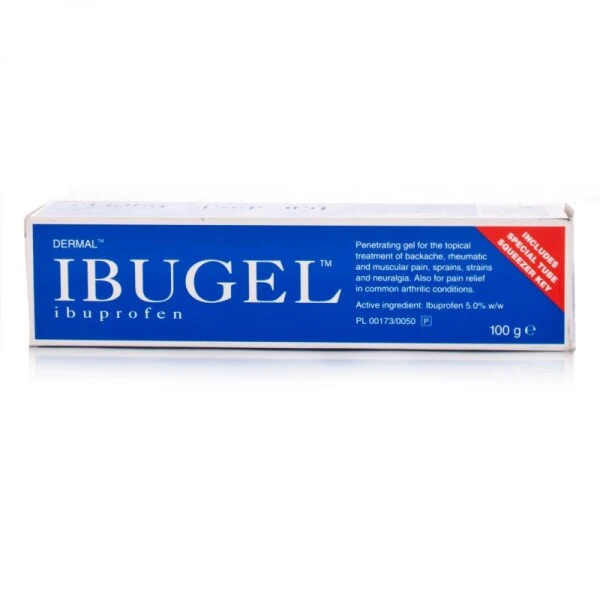
If you're dealing with aching muscles, stiff joints, or the kind of nagging soreness that makes everyday movement uncomfortable, ibuprofen gel 5% could be exactly what you need. Ibugel Ibuprofen 5% Gel is a topical non-steroidal anti-inflammatory drug (NSAID) that delivers targeted relief directly to the affected area. At just £8.59 for a 100g tube, it offers a practical, cost-effective option for managing localised pain without reaching for oral tablets. You can browse our full range of pain relief products if you're looking for additional options alongside this gel.
According to the NHS, ibuprofen is one of the most widely used anti-inflammatory medicines in the UK, available in several forms including gels, tablets, and capsules. The topical gel format is particularly useful when you want to treat a specific area rather than taking a systemic medicine.
How Does Ibugel Ibuprofen 5% Gel Work?
Ibugel works by penetrating the skin at the site of application and inhibiting the enzymes — specifically cyclo-oxygenase (COX-1 and COX-2) — responsible for producing prostaglandins. Prostaglandins are chemical messengers that trigger inflammation, swelling, and pain. By reducing their production locally, the gel helps ease discomfort without the same level of systemic exposure you'd get from an oral NSAID.
- Ibuprofen penetrates the skin and reaches underlying soft tissue
- COX enzyme inhibition reduces local prostaglandin synthesis
- Inflammation, swelling, and pain signals are reduced at the site
- Systemic absorption is significantly lower than with oral ibuprofen
Who Is Ibugel Ibuprofen 5% Gel Suitable For?
This gel is suitable for adults and young people aged 12 and over who need relief from localised musculoskeletal pain. It's a particularly good choice for those who prefer not to take oral pain relief, or who experience gastrointestinal discomfort with ibuprofen tablets. That said, it's not appropriate for everyone — always check the contraindications before use.
- Adults and children aged 12 years and over
- People with minor sports injuries, sprains, or strains
- Those with localised joint pain such as knee or shoulder discomfort
- Individuals who prefer topical treatment over oral NSAIDs
How Does Ibugel Compare to Other Topical Pain Gels?
| Feature | Ibugel Ibuprofen 5% Gel | Voltarol (Diclofenac 1.16% Gel) |
|---|---|---|
| Active ingredient | Ibuprofen 5% w/w | Diclofenac diethylammonium 1.16% |
| Drug class | NSAID (topical) | NSAID (topical) |
| Suitable age | 12 years and over | 14 years and over |
| Application frequency | Up to 3 times daily | Up to 3–4 times daily |
How Should You Store Ibugel and Is It Clinically Suitable for You?
Store Ibugel below 25°C, away from direct sunlight and out of reach of children. Do not freeze the gel. Once opened, use within the period indicated on the packaging. If you're already using other creams and ointments on the same area of skin, speak to your pharmacist before combining treatments, as layering topical products can affect absorption and increase the risk of skin reactions.
It's worth noting that ibuprofen gel 5% is not suitable for use on broken, infected, or inflamed skin, and should never be applied near the eyes or mucous membranes. If you have a history of asthma triggered by NSAIDs, kidney problems, or are pregnant, consult your GP before using this product.
This product is a medicine. Speak to your doctor or pharmacist before using if you have an underlying medical condition or are taking other medicines.
Ibugel Ibuprofen 5% Gel 100g specifications
| Treatment category | Muscle & Joint Pain Relief |
| Active ingredient | Ibuprofen 5% w/w |
| Mechanism of action | COX-1 and COX-2 enzyme inhibition; reduces local prostaglandin synthesis |
| Drug class | Non-steroidal anti-inflammatory drug (NSAID) |
| Preparation | Topical gel |
| Route of administration | Topical (cutaneous) |
| Strengths | 5% w/w |
| Pack sizes | 100g |
| Suitable for | Adults and children aged 12 years and over |
| UK classification | General Sale List (GSL) |
| Effective for | Sprains, strains, muscle pain, minor joint pain |
Specifications of Ibugel Ibuprofen 5% Gel 100g
What Is Ibugel Ibuprofen 5% Gel and What Is It Used For?
Ibugel Ibuprofen 5% Gel is a topical NSAID used to relieve pain and reduce inflammation in muscles and joints. It contains ibuprofen as its active ingredient at a concentration of 5% w/w, making it one of the higher-strength over-the-counter topical ibuprofen options available in the UK. It is used to treat conditions such as sprains, strains, bruising, and localised joint pain including that associated with mild arthritis. The NHS recognises ibuprofen as an effective anti-inflammatory medicine for musculoskeletal pain when used correctly.
What Do You Need to Know Before Using Ibugel Ibuprofen 5% Gel?
Before applying this gel, it's important to check whether it's appropriate for you. There are several situations where you should not use it, and others where caution is needed.
Do not use Ibugel if you:
- Are allergic to ibuprofen, aspirin, or any other NSAID
- Have previously experienced asthma, urticaria, or rhinitis triggered by NSAIDs
- Are pregnant, particularly from 20 weeks onwards
- Have broken, infected, or damaged skin at the application site
- Are under 12 years of age
Use with caution if you:
- Have a history of kidney or liver problems
- Are breastfeeding — seek medical advice first
- Are using other topical products on the same area
- Have eczema or other chronic skin conditions
Potential drug interactions:
- Oral NSAIDs (e.g. ibuprofen tablets, naproxen) — combined use may increase systemic NSAID exposure
- Anticoagulants (e.g. warfarin) — although topical absorption is low, caution is advised
- Other topical medicines applied to the same area — may affect absorption
How Should You Use Ibugel Ibuprofen 5% Gel?
Using Ibugel correctly ensures you get the most benefit while minimising any risk of skin irritation. Always follow the instructions on the packaging or as directed by your pharmacist.
- Wash and dry your hands before and after application
- Squeeze a small amount of gel (roughly 4–10cm of gel) onto your fingertips
- Gently massage the gel into the affected area until fully absorbed
- Do not cover the area with an airtight dressing after application
- Avoid contact with eyes, mouth, and mucous membranes
- Do not apply to broken, infected, or inflamed skin
| Indication | Age Group | Dose | Frequency |
|---|---|---|---|
| Muscle pain, sprains, strains | Adults & children 12+ | 4–10cm strip of gel | Up to 3 times daily |
| Minor joint pain | Adults & children 12+ | 4–10cm strip of gel | Up to 3 times daily |
| Children under 12 | Under 12 years | Not suitable | Do not use |
What Are the Possible Side Effects of Ibugel Ibuprofen 5% Gel?
Like all medicines, Ibugel can cause side effects, although not everyone experiences them. Most side effects are localised to the skin at the application site and are generally mild.
Common side effects:
- Mild skin irritation or burning sensation at the application site
- Redness or itching of the skin
- Dry skin at the treated area
Less common side effects:
- Localised rash or dermatitis
- Photosensitivity (increased sensitivity to sunlight at the treated area)
- Allergic skin reactions such as hives or swelling
Stop using the gel and seek medical advice if you develop a severe skin reaction, widespread rash, or any signs of a systemic allergic response such as difficulty breathing or facial swelling. If you're managing multiple conditions and looking for other treatments, our first aid range includes products that may complement your recovery.
How Should You Store Ibugel Ibuprofen 5% Gel?
- Store below 25°C in a cool, dry place
- Do not freeze
- Keep out of reach and sight of children
- Do not use after the expiry date printed on the tube or carton
- Do not store near heat sources or in direct sunlight
- Dispose of unused medicine responsibly — return to your local pharmacy
References
- https://www.nhs.uk/medicines/ibuprofen-for-adults/
- https://www.nhs.uk/medicines/ibuprofen-for-adults/side-effects-of-ibuprofen/
- https://www.nhs.uk/medicines/ibuprofen-for-adults/who-can-and-cannot-take-ibuprofen/
- https://www.nhs.uk/conditions/sprains-and-strains/
- https://www.nhs.uk/conditions/joint-pain/
- https://bnf.nice.org.uk/drugs/ibuprofen/
Written and reviewed by our qualified team
Your safety and success are our highest priorities. Our medical team rigorously evaluates every product and piece of advice we provide, ensuring you receive only the most effective, science-backed solutions available.
Frequently Asked Questions
Where can I buy Ibugel Ibuprofen 5% Gel online in the UK?
You can buy Ibugel Ibuprofen 5% Gel 100g directly from Cured Pharmacy, a GPhC-registered UK online pharmacy, for just £8.59. It is available without a prescription as an over-the-counter medicine. You can also browse our wider pain relief collection for complementary products.
How does ibuprofen gel 5% work on muscle and joint pain?
Ibuprofen gel 5% penetrates the skin and inhibits COX-1 and COX-2 enzymes locally, reducing the production of prostaglandins — the chemicals responsible for pain and inflammation. This targeted action means relief is delivered directly to the affected area. Systemic absorption is considerably lower than with oral ibuprofen tablets.
How do I apply Ibugel Ibuprofen 5% Gel step by step?
Wash your hands, then squeeze approximately 4–10cm of gel onto your fingertips and gently massage it into the painful area until fully absorbed. Wash your hands again after application and avoid touching your eyes, mouth, or any broken skin. Do not cover the treated area with an airtight bandage or dressing.
How often can I use Ibugel Ibuprofen 5% Gel each day?
Adults and children aged 12 and over can apply Ibugel up to three times daily. Try to space applications evenly throughout the day for consistent relief. Do not apply more frequently than directed, as this will not improve results and may increase the risk of skin irritation.
What are the side effects of Ibugel Ibuprofen 5% Gel?
The most common side effects are mild and localised to the skin, including redness, itching, or a slight burning sensation at the application site. Less commonly, some people may develop a localised rash or increased sensitivity to sunlight on the treated area. Stop using the gel and speak to a pharmacist if any skin reaction worsens or spreads.
Can I use Ibugel Ibuprofen 5% Gel if I am pregnant?
Ibugel is not recommended during pregnancy, particularly from 20 weeks onwards, as ibuprofen — even in topical form — may carry risks to the unborn baby. The NHS advises avoiding ibuprofen in pregnancy unless specifically directed by a doctor. Always consult your GP or midwife before using any NSAID-containing product during pregnancy.
Is Ibugel Ibuprofen 5% Gel suitable for children?
Ibugel Ibuprofen 5% Gel is suitable for adults and young people aged 12 years and over. It must not be used in children under 12 years of age. If your child is under 12 and experiencing muscle or joint pain, speak to your GP or pharmacist about age-appropriate alternatives.
How does Ibugel compare to ibuprofen tablets for pain relief?
Topical ibuprofen gel delivers the active ingredient directly to the site of pain with much lower systemic absorption compared to oral tablets, which means a reduced risk of gastrointestinal side effects. Oral ibuprofen may be more appropriate for widespread or internal pain, whereas the gel is ideal for localised musculoskeletal discomfort. Your pharmacist can help you decide which form is most suitable for your situation.
Who should not use Ibugel Ibuprofen 5% Gel?
You should not use Ibugel if you are allergic to ibuprofen, aspirin, or any other NSAID, or if you have previously experienced asthma, hives, or nasal inflammation triggered by these medicines. It is also unsuitable for children under 12, those who are pregnant (especially from 20 weeks), and anyone with broken or infected skin at the application site. Always read the full list of contraindications on the packaging before use.
What are the alternatives to Ibugel Ibuprofen 5% Gel?
Alternatives include other topical NSAIDs such as diclofenac gel (e.g. Voltarol), as well as non-NSAID options like topical ketoprofen or cooling menthol gels for symptomatic relief. For those who cannot use NSAIDs at all, paracetamol-based products or heat/cold therapy may be appropriate. Browse our pain relief range to explore your options.
How long can I use Ibugel Ibuprofen 5% Gel for?
Ibugel should not be used for more than two weeks without consulting a pharmacist or GP. If your symptoms have not improved after this time, or if they worsen, seek professional medical advice. Prolonged use without review is not recommended, as it may mask an underlying condition that requires further assessment.
Can I use Ibugel on my knee or back?
Yes, Ibugel can be applied to areas such as the knee, shoulder, lower back, and other joints or muscles where localised pain is present. Apply the gel directly to the painful area and massage gently until absorbed. Avoid applying near the spine if the skin is broken, and do not use on large areas of the body simultaneously.
What happens if I accidentally get Ibugel in my eyes?
If Ibugel comes into contact with your eyes, rinse them immediately and thoroughly with clean, lukewarm water for several minutes. Do not rub your eyes. If irritation persists or your vision is affected, seek medical attention promptly. Always wash your hands carefully after applying the gel to prevent accidental eye contact.
Can I use Ibugel alongside oral ibuprofen tablets?
Using Ibugel at the same time as oral ibuprofen is generally not recommended without medical advice, as it may increase your total ibuprofen exposure and the risk of systemic side effects. If you feel you need both forms simultaneously, speak to your pharmacist first. They can advise on the safest approach for your specific situation.
What is the latest evidence on topical ibuprofen for musculoskeletal pain?
Clinical evidence supports the use of topical NSAIDs, including ibuprofen gel, for localised musculoskeletal pain such as sprains, strains, and osteoarthritis of superficial joints. The NHS and NICE acknowledge topical NSAIDs as a first-line option for knee osteoarthritis in particular, given their favourable local efficacy and lower systemic side-effect profile compared to oral NSAIDs. Research continues to support their use as part of a broader pain management strategy.
Description
Is Ibuprofen Gel 5% Right for Your Pain?
If you're dealing with aching muscles, stiff joints, or the kind of nagging soreness that makes everyday movement uncomfortable, ibuprofen gel 5% could be exactly what you need. Ibugel Ibuprofen 5% Gel is a topical non-steroidal anti-inflammatory drug (NSAID) that delivers targeted relief directly to the affected area. At just £8.59 for a 100g tube, it offers a practical, cost-effective option for managing localised pain without reaching for oral tablets. You can browse our full range of pain relief products if you're looking for additional options alongside this gel.
According to the NHS, ibuprofen is one of the most widely used anti-inflammatory medicines in the UK, available in several forms including gels, tablets, and capsules. The topical gel format is particularly useful when you want to treat a specific area rather than taking a systemic medicine.
How Does Ibugel Ibuprofen 5% Gel Work?
Ibugel works by penetrating the skin at the site of application and inhibiting the enzymes — specifically cyclo-oxygenase (COX-1 and COX-2) — responsible for producing prostaglandins. Prostaglandins are chemical messengers that trigger inflammation, swelling, and pain. By reducing their production locally, the gel helps ease discomfort without the same level of systemic exposure you'd get from an oral NSAID.
- Ibuprofen penetrates the skin and reaches underlying soft tissue
- COX enzyme inhibition reduces local prostaglandin synthesis
- Inflammation, swelling, and pain signals are reduced at the site
- Systemic absorption is significantly lower than with oral ibuprofen
Who Is Ibugel Ibuprofen 5% Gel Suitable For?
This gel is suitable for adults and young people aged 12 and over who need relief from localised musculoskeletal pain. It's a particularly good choice for those who prefer not to take oral pain relief, or who experience gastrointestinal discomfort with ibuprofen tablets. That said, it's not appropriate for everyone — always check the contraindications before use.
- Adults and children aged 12 years and over
- People with minor sports injuries, sprains, or strains
- Those with localised joint pain such as knee or shoulder discomfort
- Individuals who prefer topical treatment over oral NSAIDs
How Does Ibugel Compare to Other Topical Pain Gels?
| Feature | Ibugel Ibuprofen 5% Gel | Voltarol (Diclofenac 1.16% Gel) |
|---|---|---|
| Active ingredient | Ibuprofen 5% w/w | Diclofenac diethylammonium 1.16% |
| Drug class | NSAID (topical) | NSAID (topical) |
| Suitable age | 12 years and over | 14 years and over |
| Application frequency | Up to 3 times daily | Up to 3–4 times daily |
How Should You Store Ibugel and Is It Clinically Suitable for You?
Store Ibugel below 25°C, away from direct sunlight and out of reach of children. Do not freeze the gel. Once opened, use within the period indicated on the packaging. If you're already using other creams and ointments on the same area of skin, speak to your pharmacist before combining treatments, as layering topical products can affect absorption and increase the risk of skin reactions.
It's worth noting that ibuprofen gel 5% is not suitable for use on broken, infected, or inflamed skin, and should never be applied near the eyes or mucous membranes. If you have a history of asthma triggered by NSAIDs, kidney problems, or are pregnant, consult your GP before using this product.
This product is a medicine. Speak to your doctor or pharmacist before using if you have an underlying medical condition or are taking other medicines.
Ibugel Ibuprofen 5% Gel 100g specifications
| Treatment category | Muscle & Joint Pain Relief |
| Active ingredient | Ibuprofen 5% w/w |
| Mechanism of action | COX-1 and COX-2 enzyme inhibition; reduces local prostaglandin synthesis |
| Drug class | Non-steroidal anti-inflammatory drug (NSAID) |
| Preparation | Topical gel |
| Route of administration | Topical (cutaneous) |
| Strengths | 5% w/w |
| Pack sizes | 100g |
| Suitable for | Adults and children aged 12 years and over |
| UK classification | General Sale List (GSL) |
| Effective for | Sprains, strains, muscle pain, minor joint pain |
Specifications of Ibugel Ibuprofen 5% Gel 100g
What Is Ibugel Ibuprofen 5% Gel and What Is It Used For?
Ibugel Ibuprofen 5% Gel is a topical NSAID used to relieve pain and reduce inflammation in muscles and joints. It contains ibuprofen as its active ingredient at a concentration of 5% w/w, making it one of the higher-strength over-the-counter topical ibuprofen options available in the UK. It is used to treat conditions such as sprains, strains, bruising, and localised joint pain including that associated with mild arthritis. The NHS recognises ibuprofen as an effective anti-inflammatory medicine for musculoskeletal pain when used correctly.
What Do You Need to Know Before Using Ibugel Ibuprofen 5% Gel?
Before applying this gel, it's important to check whether it's appropriate for you. There are several situations where you should not use it, and others where caution is needed.
Do not use Ibugel if you:
- Are allergic to ibuprofen, aspirin, or any other NSAID
- Have previously experienced asthma, urticaria, or rhinitis triggered by NSAIDs
- Are pregnant, particularly from 20 weeks onwards
- Have broken, infected, or damaged skin at the application site
- Are under 12 years of age
Use with caution if you:
- Have a history of kidney or liver problems
- Are breastfeeding — seek medical advice first
- Are using other topical products on the same area
- Have eczema or other chronic skin conditions
Potential drug interactions:
- Oral NSAIDs (e.g. ibuprofen tablets, naproxen) — combined use may increase systemic NSAID exposure
- Anticoagulants (e.g. warfarin) — although topical absorption is low, caution is advised
- Other topical medicines applied to the same area — may affect absorption
How Should You Use Ibugel Ibuprofen 5% Gel?
Using Ibugel correctly ensures you get the most benefit while minimising any risk of skin irritation. Always follow the instructions on the packaging or as directed by your pharmacist.
- Wash and dry your hands before and after application
- Squeeze a small amount of gel (roughly 4–10cm of gel) onto your fingertips
- Gently massage the gel into the affected area until fully absorbed
- Do not cover the area with an airtight dressing after application
- Avoid contact with eyes, mouth, and mucous membranes
- Do not apply to broken, infected, or inflamed skin
| Indication | Age Group | Dose | Frequency |
|---|---|---|---|
| Muscle pain, sprains, strains | Adults & children 12+ | 4–10cm strip of gel | Up to 3 times daily |
| Minor joint pain | Adults & children 12+ | 4–10cm strip of gel | Up to 3 times daily |
| Children under 12 | Under 12 years | Not suitable | Do not use |
What Are the Possible Side Effects of Ibugel Ibuprofen 5% Gel?
Like all medicines, Ibugel can cause side effects, although not everyone experiences them. Most side effects are localised to the skin at the application site and are generally mild.
Common side effects:
- Mild skin irritation or burning sensation at the application site
- Redness or itching of the skin
- Dry skin at the treated area
Less common side effects:
- Localised rash or dermatitis
- Photosensitivity (increased sensitivity to sunlight at the treated area)
- Allergic skin reactions such as hives or swelling
Stop using the gel and seek medical advice if you develop a severe skin reaction, widespread rash, or any signs of a systemic allergic response such as difficulty breathing or facial swelling. If you're managing multiple conditions and looking for other treatments, our first aid range includes products that may complement your recovery.
How Should You Store Ibugel Ibuprofen 5% Gel?
- Store below 25°C in a cool, dry place
- Do not freeze
- Keep out of reach and sight of children
- Do not use after the expiry date printed on the tube or carton
- Do not store near heat sources or in direct sunlight
- Dispose of unused medicine responsibly — return to your local pharmacy
References
- https://www.nhs.uk/medicines/ibuprofen-for-adults/
- https://www.nhs.uk/medicines/ibuprofen-for-adults/side-effects-of-ibuprofen/
- https://www.nhs.uk/medicines/ibuprofen-for-adults/who-can-and-cannot-take-ibuprofen/
- https://www.nhs.uk/conditions/sprains-and-strains/
- https://www.nhs.uk/conditions/joint-pain/
- https://bnf.nice.org.uk/drugs/ibuprofen/
Written and reviewed by our qualified team
Your safety and success are our highest priorities. Our medical team rigorously evaluates every product and piece of advice we provide, ensuring you receive only the most effective, science-backed solutions available.
Frequently Asked Questions
Where can I buy Ibugel Ibuprofen 5% Gel online in the UK?
You can buy Ibugel Ibuprofen 5% Gel 100g directly from Cured Pharmacy, a GPhC-registered UK online pharmacy, for just £8.59. It is available without a prescription as an over-the-counter medicine. You can also browse our wider pain relief collection for complementary products.
How does ibuprofen gel 5% work on muscle and joint pain?
Ibuprofen gel 5% penetrates the skin and inhibits COX-1 and COX-2 enzymes locally, reducing the production of prostaglandins — the chemicals responsible for pain and inflammation. This targeted action means relief is delivered directly to the affected area. Systemic absorption is considerably lower than with oral ibuprofen tablets.
How do I apply Ibugel Ibuprofen 5% Gel step by step?
Wash your hands, then squeeze approximately 4–10cm of gel onto your fingertips and gently massage it into the painful area until fully absorbed. Wash your hands again after application and avoid touching your eyes, mouth, or any broken skin. Do not cover the treated area with an airtight bandage or dressing.
How often can I use Ibugel Ibuprofen 5% Gel each day?
Adults and children aged 12 and over can apply Ibugel up to three times daily. Try to space applications evenly throughout the day for consistent relief. Do not apply more frequently than directed, as this will not improve results and may increase the risk of skin irritation.
What are the side effects of Ibugel Ibuprofen 5% Gel?
The most common side effects are mild and localised to the skin, including redness, itching, or a slight burning sensation at the application site. Less commonly, some people may develop a localised rash or increased sensitivity to sunlight on the treated area. Stop using the gel and speak to a pharmacist if any skin reaction worsens or spreads.
Can I use Ibugel Ibuprofen 5% Gel if I am pregnant?
Ibugel is not recommended during pregnancy, particularly from 20 weeks onwards, as ibuprofen — even in topical form — may carry risks to the unborn baby. The NHS advises avoiding ibuprofen in pregnancy unless specifically directed by a doctor. Always consult your GP or midwife before using any NSAID-containing product during pregnancy.
Is Ibugel Ibuprofen 5% Gel suitable for children?
Ibugel Ibuprofen 5% Gel is suitable for adults and young people aged 12 years and over. It must not be used in children under 12 years of age. If your child is under 12 and experiencing muscle or joint pain, speak to your GP or pharmacist about age-appropriate alternatives.
How does Ibugel compare to ibuprofen tablets for pain relief?
Topical ibuprofen gel delivers the active ingredient directly to the site of pain with much lower systemic absorption compared to oral tablets, which means a reduced risk of gastrointestinal side effects. Oral ibuprofen may be more appropriate for widespread or internal pain, whereas the gel is ideal for localised musculoskeletal discomfort. Your pharmacist can help you decide which form is most suitable for your situation.
Who should not use Ibugel Ibuprofen 5% Gel?
You should not use Ibugel if you are allergic to ibuprofen, aspirin, or any other NSAID, or if you have previously experienced asthma, hives, or nasal inflammation triggered by these medicines. It is also unsuitable for children under 12, those who are pregnant (especially from 20 weeks), and anyone with broken or infected skin at the application site. Always read the full list of contraindications on the packaging before use.
What are the alternatives to Ibugel Ibuprofen 5% Gel?
Alternatives include other topical NSAIDs such as diclofenac gel (e.g. Voltarol), as well as non-NSAID options like topical ketoprofen or cooling menthol gels for symptomatic relief. For those who cannot use NSAIDs at all, paracetamol-based products or heat/cold therapy may be appropriate. Browse our pain relief range to explore your options.
How long can I use Ibugel Ibuprofen 5% Gel for?
Ibugel should not be used for more than two weeks without consulting a pharmacist or GP. If your symptoms have not improved after this time, or if they worsen, seek professional medical advice. Prolonged use without review is not recommended, as it may mask an underlying condition that requires further assessment.
Can I use Ibugel on my knee or back?
Yes, Ibugel can be applied to areas such as the knee, shoulder, lower back, and other joints or muscles where localised pain is present. Apply the gel directly to the painful area and massage gently until absorbed. Avoid applying near the spine if the skin is broken, and do not use on large areas of the body simultaneously.
What happens if I accidentally get Ibugel in my eyes?
If Ibugel comes into contact with your eyes, rinse them immediately and thoroughly with clean, lukewarm water for several minutes. Do not rub your eyes. If irritation persists or your vision is affected, seek medical attention promptly. Always wash your hands carefully after applying the gel to prevent accidental eye contact.
Can I use Ibugel alongside oral ibuprofen tablets?
Using Ibugel at the same time as oral ibuprofen is generally not recommended without medical advice, as it may increase your total ibuprofen exposure and the risk of systemic side effects. If you feel you need both forms simultaneously, speak to your pharmacist first. They can advise on the safest approach for your specific situation.
What is the latest evidence on topical ibuprofen for musculoskeletal pain?
Clinical evidence supports the use of topical NSAIDs, including ibuprofen gel, for localised musculoskeletal pain such as sprains, strains, and osteoarthritis of superficial joints. The NHS and NICE acknowledge topical NSAIDs as a first-line option for knee osteoarthritis in particular, given their favourable local efficacy and lower systemic side-effect profile compared to oral NSAIDs. Research continues to support their use as part of a broader pain management strategy.