The Story
What Is Difflam Throat Spray and How Does It Help?
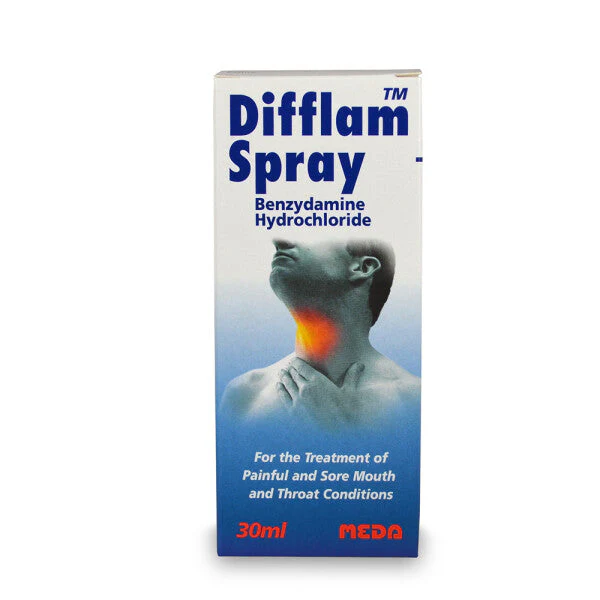
A sore throat can make even swallowing feel like a challenge. Whether it's come on after a cold, following dental work, or as part of a bout of tonsillitis, the discomfort can be genuinely draining. Difflam throat spray is a clinically established over-the-counter treatment that targets throat pain and inflammation directly at the source, offering localised relief without the need for a prescription. Each 30ml bottle contains benzydamine hydrochloride 0.15%, a non-steroidal anti-inflammatory drug (NSAID) that works topically in the mouth and throat. You can browse our full range of ear, nose and throat products if you're looking for additional support alongside this spray.
Sore throats are one of the most common reasons people visit a pharmacist in the UK. Most cases are caused by viral infections and resolve on their own, but the pain in the meantime can be significant. Difflam throat spray is designed to ease that discomfort quickly, making it a practical option to keep in your medicine cabinet.
How Does Difflam Throat Numbing Spray Work?
Benzydamine hydrochloride, the active ingredient in this spray, works locally rather than systemically. That means it acts directly on the tissues of the throat and mouth rather than being absorbed into the bloodstream in meaningful amounts. Here's how it works:
- It inhibits the production of prostaglandins — the chemicals responsible for triggering inflammation and pain signals.
- It has a mild local anaesthetic effect, which is why you may notice a temporary numbing sensation after use.
- It also has some antimicrobial properties, which may help in cases where the throat irritation is associated with minor infections.
- Because it acts topically, it begins working relatively quickly after application to the affected area.
This combination of anti-inflammatory and numbing action makes it particularly useful for conditions where the throat lining is inflamed and painful.
Who Should Use Difflam Throat Numbing Spray?
This spray is suitable for a range of people dealing with throat and mouth discomfort. It's commonly used by adults and older children, and it's particularly helpful in situations where swallowing tablets or lozenges is difficult due to throat pain. It may be appropriate for you if you are experiencing:
- A sore throat caused by a viral upper respiratory tract infection
- Mouth ulcers or oral mucositis (including that caused by radiotherapy or chemotherapy — under medical supervision)
- Post-operative throat pain following tonsillectomy or dental procedures
- Pharyngitis or tonsillitis (alongside appropriate medical treatment if bacterial)
It is suitable for adults and children aged 6 and over. Children under 6 should not use this product without specific medical advice.
How Does Difflam Throat Spray Compare to Other Sore Throat Treatments?
| Feature | Difflam Throat Spray | Throat Lozenges (e.g. Strepsils) |
|---|---|---|
| Active ingredient | Benzydamine HCl 0.15% | Amylmetacresol / 2,4-dichlorobenzyl alcohol |
| Route of administration | Oropharyngeal spray | Oral (dissolved in mouth) |
| Suitable when swallowing is painful | Yes — spray avoids need to swallow | Less ideal — requires sucking a lozenge |
| Anti-inflammatory action | Yes (NSAID) | Primarily antiseptic |
Is Difflam Throat Spray Suitable for Long-Term Use and How Should It Be Stored?
Difflam throat spray is intended for short-term use only. If your symptoms persist beyond 7 days, you should stop using the spray and seek advice from your GP or pharmacist, as a persistent sore throat can occasionally indicate a more serious underlying condition. If you're also managing other symptoms like congestion, you might find our cold and flu range helpful alongside this product.
Store the spray below 25°C, away from direct sunlight and out of the reach of children. Do not freeze. Check the expiry date on the bottle before use and do not use the product after that date.
This product is a medicine. Speak to your doctor or pharmacist before using if you have an underlying medical condition or are taking other medicines.
Difflam Throat Numbing Spray - 30ml specifications
| Treatment category | Sore throat / oropharyngeal pain relief |
| Active ingredient | Benzydamine hydrochloride 0.15% |
| Mechanism of action | Topical NSAID — inhibits prostaglandin synthesis; local anaesthetic effect |
| Effective for | Sore throat, mouth ulcers, pharyngitis, post-operative throat pain |
| Suitable for | Adults and children aged 6 and over |
| Pack size | 30ml |
| UK classification | General Sale Medicine (GSL) |
| Drug class | Non-steroidal anti-inflammatory drug (NSAID) |
| Preparation | Oropharyngeal spray solution |
| Route of administration | Oropharyngeal (sprayed into the mouth/throat) |
Specifications of Difflam Throat Numbing Spray - 30ml
What Is Difflam Throat Numbing Spray and What Is It Used For?
Difflam Throat Numbing Spray 30ml is an over-the-counter oropharyngeal spray containing benzydamine hydrochloride 0.15%. It is used to relieve pain and inflammation in the mouth and throat. Common uses include sore throats associated with colds and flu, pharyngitis, tonsillitis, mouth ulcers, and post-operative discomfort following dental or throat procedures. It may also be used under medical supervision for oral mucositis caused by radiotherapy or chemotherapy. The spray delivers the active ingredient directly to the affected area, providing targeted localised relief.
What Do You Need to Know Before Using Difflam Throat Spray?
Before using this spray, read the following carefully. There are certain situations where this product may not be appropriate for you.
Do not use this spray if you:
- Are allergic to benzydamine hydrochloride or any other ingredient in the product
- Are allergic to aspirin or other NSAIDs (non-steroidal anti-inflammatory drugs)
- Are under 6 years of age
- Have been told by a doctor to avoid NSAIDs
Speak to your pharmacist or GP before use if you:
- Are pregnant, especially in the third trimester, or breastfeeding
- Have asthma — some people with asthma are sensitive to NSAIDs
- Have kidney or liver problems
- Are taking other medicines, including prescribed treatments
Drug interactions:
- No clinically significant interactions are known at standard OTC doses when used topically as directed
- If you are taking systemic NSAIDs or anticoagulants, speak to your pharmacist before use
How Should You Use Difflam Throat Numbing Spray?
Using the spray correctly ensures you get the most benefit from each dose. Follow these steps carefully:
- Remove the cap from the spray nozzle.
- Point the nozzle towards the back of your throat or the affected area in your mouth.
- Press the pump firmly to release the spray — each press delivers one metered dose.
- Do not inhale the spray into your lungs.
- Do not swallow the spray — allow it to coat the affected area.
- Replace the cap after use.
- Wash your hands before and after use.
| Age Group | Dose | Frequency |
|---|---|---|
| Adults and children aged 12 and over | 4 to 8 sprays | Every 1.5 to 3 hours as needed |
| Children aged 6 to 12 | 4 sprays | Every 1.5 to 3 hours as needed |
| Children under 6 | Not recommended | — |
If you are looking for additional support for related symptoms, our pain relief range includes a variety of options that may complement your recovery.
What Are the Possible Side Effects of Difflam Throat Spray?
Like all medicines, Difflam throat spray can cause side effects, although not everyone experiences them. Most side effects are mild and temporary.
Common side effects:
- Temporary numbness or tingling in the mouth or throat
- Mild stinging or burning sensation on application
- Nausea (particularly if the spray is accidentally swallowed)
Less common side effects:
- Hypersensitivity reactions such as skin rash or itching
- Photosensitisation (increased sensitivity to sunlight) — rare
- Bronchospasm in people with aspirin-sensitive asthma — rare but serious
Stop using the spray immediately and seek medical attention if you develop swelling of the face, lips, or throat, difficulty breathing, or a severe skin reaction. These may be signs of a serious allergic reaction (anaphylaxis), which requires urgent treatment.
How Should You Store Difflam Throat Spray?
Correct storage helps maintain the effectiveness and safety of the product. Follow these guidelines:
- Store below 25°C in a cool, dry place
- Keep away from direct sunlight and heat sources
- Do not freeze the spray
- Keep the bottle tightly capped when not in use
- Keep out of the sight and reach of children
- Do not use after the expiry date printed on the bottle
- Do not dispose of medicines via wastewater or household waste — return unused medicines to your pharmacist
If you're managing a range of health concerns alongside a sore throat, our vitamins and supplements collection includes immune-support options that may be worth exploring during recovery.
References
- https://www.nhs.uk/conditions/sore-throat/
- https://www.nhs.uk/conditions/tonsillitis/
- https://www.nhs.uk/conditions/mouth-ulcers/
- https://www.nhs.uk/conditions/nsaids/
- https://www.nhs.uk/conditions/cold/
- https://bnf.nice.org.uk/drugs/benzydamine-hydrochloride/
Written and reviewed by our qualified team
Your safety and success are our highest priorities. Our medical team rigorously evaluates every product and piece of advice we provide, ensuring you receive only the most effective, science-backed solutions available.
Frequently Asked Questions
Where can I buy Difflam throat spray online in the UK?
You can buy Difflam Throat Numbing Spray 30ml directly from Cured Pharmacy, a GPhC-registered UK online pharmacy. It is available without a prescription as an over-the-counter medicine. Simply add it to your basket and choose your preferred delivery option at checkout.
How does Difflam throat spray work in the body?
Difflam throat spray contains benzydamine hydrochloride, a topical NSAID that inhibits prostaglandin synthesis to reduce inflammation and pain in the throat lining. It also has a mild local anaesthetic effect, which is why you may feel a temporary numbing sensation after spraying. Because it acts locally rather than systemically, it does not enter the bloodstream in significant amounts at standard doses.
How do I use Difflam throat spray step by step?
Remove the cap, point the nozzle towards the back of your throat, and press the pump to release the spray — each press delivers one metered dose. Adults and children aged 12 and over should use 4 to 8 sprays every 1.5 to 3 hours as needed. Do not swallow the spray and replace the cap after each use.
What is the correct dose of Difflam throat spray for adults?
Adults and children aged 12 and over should use 4 to 8 sprays directed to the affected area every 1.5 to 3 hours. The number of sprays can be adjusted within this range depending on the severity of your symptoms. Do not exceed the recommended dose without speaking to a pharmacist or GP.
Can children use Difflam throat spray?
Children aged 6 to 12 can use 4 sprays every 1.5 to 3 hours, but Difflam throat spray is not recommended for children under 6 years of age. Always consult a pharmacist or GP before giving this product to a child, particularly if they have any underlying health conditions. For younger children with throat discomfort, our baby and toddler range may include more age-appropriate options.
What are the side effects of Difflam throat spray?
Common side effects include temporary numbness, tingling, or a mild stinging sensation in the mouth or throat after application. Less commonly, some people may experience nausea, skin rash, or — rarely — bronchospasm in those with aspirin-sensitive asthma. Stop use immediately and seek medical attention if you develop swelling of the face or throat, or difficulty breathing.
How long can you use Difflam throat spray for?
Difflam throat spray is intended for short-term use only and should not be used for more than 7 days without medical advice. If your symptoms have not improved after a week, stop using the spray and consult your GP, as a persistent sore throat can occasionally indicate a more serious condition. Prolonged use beyond the recommended period is not advised.
Is Difflam throat spray safe to use during pregnancy?
If you are pregnant or breastfeeding, you should speak to your GP or pharmacist before using Difflam throat spray. NSAIDs are generally not recommended during the third trimester of pregnancy due to potential risks to the unborn baby. Your healthcare provider can advise on the safest option for managing throat pain during pregnancy.
Can I use Difflam throat spray if I have asthma?
People with aspirin-sensitive asthma should use Difflam throat spray with caution, as NSAIDs can occasionally trigger bronchospasm in this group. If you have asthma and are unsure whether this applies to you, speak to your pharmacist or GP before use. If you experience any breathing difficulties after using the spray, stop immediately and seek medical help.
What happens if I accidentally swallow Difflam throat spray?
Accidentally swallowing a small amount of the spray is unlikely to cause serious harm, but it may cause nausea or stomach upset. The spray is designed to coat the throat and mouth rather than be ingested. If a large amount is swallowed — particularly by a child — contact NHS 111 or your nearest A&E for advice.
What are the alternatives to Difflam throat spray?
Alternatives include throat lozenges containing antiseptic ingredients such as amylmetacresol (e.g. Strepsils), or paracetamol and ibuprofen taken orally for systemic pain relief. Difflam throat spray has the advantage of acting directly on the inflamed tissue without requiring you to swallow anything, which can be particularly helpful when swallowing is very painful. You can explore our broader ear, nose and throat range for further options.
How quickly does Difflam throat spray start to work?
Because benzydamine hydrochloride acts locally on the throat tissues, many people notice a numbing or soothing effect relatively quickly after application. The anti-inflammatory effect builds over repeated doses used throughout the day. Individual responses can vary depending on the severity of the inflammation.
Can I use Difflam throat spray alongside other cold and flu medicines?
Difflam throat spray can generally be used alongside other cold and flu remedies, but you should be cautious about taking it at the same time as other systemic NSAIDs such as ibuprofen, as this may increase the risk of side effects. Always check with your pharmacist if you are unsure about combining medicines. Our cold and flu collection includes a range of complementary products.
Does Difflam throat spray contain alcohol or sugar?
Difflam throat spray does contain a small amount of ethanol (alcohol) as an excipient in the formulation. It does not contain sugar, making it suitable for people managing their sugar intake. If you have concerns about specific ingredients, check the patient information leaflet supplied with the product or speak to your pharmacist.
What is the latest research on benzydamine for sore throat?
Benzydamine hydrochloride has been used clinically for several decades and is well-established in the management of oropharyngeal pain and inflammation. Published literature supports its use for post-operative throat pain, oral mucositis associated with cancer treatment, and general pharyngitis. It remains a recommended option in UK pharmacy practice for short-term sore throat relief.
Description
What Is Difflam Throat Spray and How Does It Help?
A sore throat can make even swallowing feel like a challenge. Whether it's come on after a cold, following dental work, or as part of a bout of tonsillitis, the discomfort can be genuinely draining. Difflam throat spray is a clinically established over-the-counter treatment that targets throat pain and inflammation directly at the source, offering localised relief without the need for a prescription. Each 30ml bottle contains benzydamine hydrochloride 0.15%, a non-steroidal anti-inflammatory drug (NSAID) that works topically in the mouth and throat. You can browse our full range of ear, nose and throat products if you're looking for additional support alongside this spray.
Sore throats are one of the most common reasons people visit a pharmacist in the UK. Most cases are caused by viral infections and resolve on their own, but the pain in the meantime can be significant. Difflam throat spray is designed to ease that discomfort quickly, making it a practical option to keep in your medicine cabinet.
How Does Difflam Throat Numbing Spray Work?
Benzydamine hydrochloride, the active ingredient in this spray, works locally rather than systemically. That means it acts directly on the tissues of the throat and mouth rather than being absorbed into the bloodstream in meaningful amounts. Here's how it works:
- It inhibits the production of prostaglandins — the chemicals responsible for triggering inflammation and pain signals.
- It has a mild local anaesthetic effect, which is why you may notice a temporary numbing sensation after use.
- It also has some antimicrobial properties, which may help in cases where the throat irritation is associated with minor infections.
- Because it acts topically, it begins working relatively quickly after application to the affected area.
This combination of anti-inflammatory and numbing action makes it particularly useful for conditions where the throat lining is inflamed and painful.
Who Should Use Difflam Throat Numbing Spray?
This spray is suitable for a range of people dealing with throat and mouth discomfort. It's commonly used by adults and older children, and it's particularly helpful in situations where swallowing tablets or lozenges is difficult due to throat pain. It may be appropriate for you if you are experiencing:
- A sore throat caused by a viral upper respiratory tract infection
- Mouth ulcers or oral mucositis (including that caused by radiotherapy or chemotherapy — under medical supervision)
- Post-operative throat pain following tonsillectomy or dental procedures
- Pharyngitis or tonsillitis (alongside appropriate medical treatment if bacterial)
It is suitable for adults and children aged 6 and over. Children under 6 should not use this product without specific medical advice.
How Does Difflam Throat Spray Compare to Other Sore Throat Treatments?
| Feature | Difflam Throat Spray | Throat Lozenges (e.g. Strepsils) |
|---|---|---|
| Active ingredient | Benzydamine HCl 0.15% | Amylmetacresol / 2,4-dichlorobenzyl alcohol |
| Route of administration | Oropharyngeal spray | Oral (dissolved in mouth) |
| Suitable when swallowing is painful | Yes — spray avoids need to swallow | Less ideal — requires sucking a lozenge |
| Anti-inflammatory action | Yes (NSAID) | Primarily antiseptic |
Is Difflam Throat Spray Suitable for Long-Term Use and How Should It Be Stored?
Difflam throat spray is intended for short-term use only. If your symptoms persist beyond 7 days, you should stop using the spray and seek advice from your GP or pharmacist, as a persistent sore throat can occasionally indicate a more serious underlying condition. If you're also managing other symptoms like congestion, you might find our cold and flu range helpful alongside this product.
Store the spray below 25°C, away from direct sunlight and out of the reach of children. Do not freeze. Check the expiry date on the bottle before use and do not use the product after that date.
This product is a medicine. Speak to your doctor or pharmacist before using if you have an underlying medical condition or are taking other medicines.
Difflam Throat Numbing Spray - 30ml specifications
| Treatment category | Sore throat / oropharyngeal pain relief |
| Active ingredient | Benzydamine hydrochloride 0.15% |
| Mechanism of action | Topical NSAID — inhibits prostaglandin synthesis; local anaesthetic effect |
| Effective for | Sore throat, mouth ulcers, pharyngitis, post-operative throat pain |
| Suitable for | Adults and children aged 6 and over |
| Pack size | 30ml |
| UK classification | General Sale Medicine (GSL) |
| Drug class | Non-steroidal anti-inflammatory drug (NSAID) |
| Preparation | Oropharyngeal spray solution |
| Route of administration | Oropharyngeal (sprayed into the mouth/throat) |
Specifications of Difflam Throat Numbing Spray - 30ml
What Is Difflam Throat Numbing Spray and What Is It Used For?
Difflam Throat Numbing Spray 30ml is an over-the-counter oropharyngeal spray containing benzydamine hydrochloride 0.15%. It is used to relieve pain and inflammation in the mouth and throat. Common uses include sore throats associated with colds and flu, pharyngitis, tonsillitis, mouth ulcers, and post-operative discomfort following dental or throat procedures. It may also be used under medical supervision for oral mucositis caused by radiotherapy or chemotherapy. The spray delivers the active ingredient directly to the affected area, providing targeted localised relief.
What Do You Need to Know Before Using Difflam Throat Spray?
Before using this spray, read the following carefully. There are certain situations where this product may not be appropriate for you.
Do not use this spray if you:
- Are allergic to benzydamine hydrochloride or any other ingredient in the product
- Are allergic to aspirin or other NSAIDs (non-steroidal anti-inflammatory drugs)
- Are under 6 years of age
- Have been told by a doctor to avoid NSAIDs
Speak to your pharmacist or GP before use if you:
- Are pregnant, especially in the third trimester, or breastfeeding
- Have asthma — some people with asthma are sensitive to NSAIDs
- Have kidney or liver problems
- Are taking other medicines, including prescribed treatments
Drug interactions:
- No clinically significant interactions are known at standard OTC doses when used topically as directed
- If you are taking systemic NSAIDs or anticoagulants, speak to your pharmacist before use
How Should You Use Difflam Throat Numbing Spray?
Using the spray correctly ensures you get the most benefit from each dose. Follow these steps carefully:
- Remove the cap from the spray nozzle.
- Point the nozzle towards the back of your throat or the affected area in your mouth.
- Press the pump firmly to release the spray — each press delivers one metered dose.
- Do not inhale the spray into your lungs.
- Do not swallow the spray — allow it to coat the affected area.
- Replace the cap after use.
- Wash your hands before and after use.
| Age Group | Dose | Frequency |
|---|---|---|
| Adults and children aged 12 and over | 4 to 8 sprays | Every 1.5 to 3 hours as needed |
| Children aged 6 to 12 | 4 sprays | Every 1.5 to 3 hours as needed |
| Children under 6 | Not recommended | — |
If you are looking for additional support for related symptoms, our pain relief range includes a variety of options that may complement your recovery.
What Are the Possible Side Effects of Difflam Throat Spray?
Like all medicines, Difflam throat spray can cause side effects, although not everyone experiences them. Most side effects are mild and temporary.
Common side effects:
- Temporary numbness or tingling in the mouth or throat
- Mild stinging or burning sensation on application
- Nausea (particularly if the spray is accidentally swallowed)
Less common side effects:
- Hypersensitivity reactions such as skin rash or itching
- Photosensitisation (increased sensitivity to sunlight) — rare
- Bronchospasm in people with aspirin-sensitive asthma — rare but serious
Stop using the spray immediately and seek medical attention if you develop swelling of the face, lips, or throat, difficulty breathing, or a severe skin reaction. These may be signs of a serious allergic reaction (anaphylaxis), which requires urgent treatment.
How Should You Store Difflam Throat Spray?
Correct storage helps maintain the effectiveness and safety of the product. Follow these guidelines:
- Store below 25°C in a cool, dry place
- Keep away from direct sunlight and heat sources
- Do not freeze the spray
- Keep the bottle tightly capped when not in use
- Keep out of the sight and reach of children
- Do not use after the expiry date printed on the bottle
- Do not dispose of medicines via wastewater or household waste — return unused medicines to your pharmacist
If you're managing a range of health concerns alongside a sore throat, our vitamins and supplements collection includes immune-support options that may be worth exploring during recovery.
References
- https://www.nhs.uk/conditions/sore-throat/
- https://www.nhs.uk/conditions/tonsillitis/
- https://www.nhs.uk/conditions/mouth-ulcers/
- https://www.nhs.uk/conditions/nsaids/
- https://www.nhs.uk/conditions/cold/
- https://bnf.nice.org.uk/drugs/benzydamine-hydrochloride/
Written and reviewed by our qualified team
Your safety and success are our highest priorities. Our medical team rigorously evaluates every product and piece of advice we provide, ensuring you receive only the most effective, science-backed solutions available.
Frequently Asked Questions
Where can I buy Difflam throat spray online in the UK?
You can buy Difflam Throat Numbing Spray 30ml directly from Cured Pharmacy, a GPhC-registered UK online pharmacy. It is available without a prescription as an over-the-counter medicine. Simply add it to your basket and choose your preferred delivery option at checkout.
How does Difflam throat spray work in the body?
Difflam throat spray contains benzydamine hydrochloride, a topical NSAID that inhibits prostaglandin synthesis to reduce inflammation and pain in the throat lining. It also has a mild local anaesthetic effect, which is why you may feel a temporary numbing sensation after spraying. Because it acts locally rather than systemically, it does not enter the bloodstream in significant amounts at standard doses.
How do I use Difflam throat spray step by step?
Remove the cap, point the nozzle towards the back of your throat, and press the pump to release the spray — each press delivers one metered dose. Adults and children aged 12 and over should use 4 to 8 sprays every 1.5 to 3 hours as needed. Do not swallow the spray and replace the cap after each use.
What is the correct dose of Difflam throat spray for adults?
Adults and children aged 12 and over should use 4 to 8 sprays directed to the affected area every 1.5 to 3 hours. The number of sprays can be adjusted within this range depending on the severity of your symptoms. Do not exceed the recommended dose without speaking to a pharmacist or GP.
Can children use Difflam throat spray?
Children aged 6 to 12 can use 4 sprays every 1.5 to 3 hours, but Difflam throat spray is not recommended for children under 6 years of age. Always consult a pharmacist or GP before giving this product to a child, particularly if they have any underlying health conditions. For younger children with throat discomfort, our baby and toddler range may include more age-appropriate options.
What are the side effects of Difflam throat spray?
Common side effects include temporary numbness, tingling, or a mild stinging sensation in the mouth or throat after application. Less commonly, some people may experience nausea, skin rash, or — rarely — bronchospasm in those with aspirin-sensitive asthma. Stop use immediately and seek medical attention if you develop swelling of the face or throat, or difficulty breathing.
How long can you use Difflam throat spray for?
Difflam throat spray is intended for short-term use only and should not be used for more than 7 days without medical advice. If your symptoms have not improved after a week, stop using the spray and consult your GP, as a persistent sore throat can occasionally indicate a more serious condition. Prolonged use beyond the recommended period is not advised.
Is Difflam throat spray safe to use during pregnancy?
If you are pregnant or breastfeeding, you should speak to your GP or pharmacist before using Difflam throat spray. NSAIDs are generally not recommended during the third trimester of pregnancy due to potential risks to the unborn baby. Your healthcare provider can advise on the safest option for managing throat pain during pregnancy.
Can I use Difflam throat spray if I have asthma?
People with aspirin-sensitive asthma should use Difflam throat spray with caution, as NSAIDs can occasionally trigger bronchospasm in this group. If you have asthma and are unsure whether this applies to you, speak to your pharmacist or GP before use. If you experience any breathing difficulties after using the spray, stop immediately and seek medical help.
What happens if I accidentally swallow Difflam throat spray?
Accidentally swallowing a small amount of the spray is unlikely to cause serious harm, but it may cause nausea or stomach upset. The spray is designed to coat the throat and mouth rather than be ingested. If a large amount is swallowed — particularly by a child — contact NHS 111 or your nearest A&E for advice.
What are the alternatives to Difflam throat spray?
Alternatives include throat lozenges containing antiseptic ingredients such as amylmetacresol (e.g. Strepsils), or paracetamol and ibuprofen taken orally for systemic pain relief. Difflam throat spray has the advantage of acting directly on the inflamed tissue without requiring you to swallow anything, which can be particularly helpful when swallowing is very painful. You can explore our broader ear, nose and throat range for further options.
How quickly does Difflam throat spray start to work?
Because benzydamine hydrochloride acts locally on the throat tissues, many people notice a numbing or soothing effect relatively quickly after application. The anti-inflammatory effect builds over repeated doses used throughout the day. Individual responses can vary depending on the severity of the inflammation.
Can I use Difflam throat spray alongside other cold and flu medicines?
Difflam throat spray can generally be used alongside other cold and flu remedies, but you should be cautious about taking it at the same time as other systemic NSAIDs such as ibuprofen, as this may increase the risk of side effects. Always check with your pharmacist if you are unsure about combining medicines. Our cold and flu collection includes a range of complementary products.
Does Difflam throat spray contain alcohol or sugar?
Difflam throat spray does contain a small amount of ethanol (alcohol) as an excipient in the formulation. It does not contain sugar, making it suitable for people managing their sugar intake. If you have concerns about specific ingredients, check the patient information leaflet supplied with the product or speak to your pharmacist.
What is the latest research on benzydamine for sore throat?
Benzydamine hydrochloride has been used clinically for several decades and is well-established in the management of oropharyngeal pain and inflammation. Published literature supports its use for post-operative throat pain, oral mucositis associated with cancer treatment, and general pharyngitis. It remains a recommended option in UK pharmacy practice for short-term sore throat relief.