Original: $6.45
-65%$6.45
$2.26The Story
What Are Cystitis Sachets and How Can Cystopurin Help?
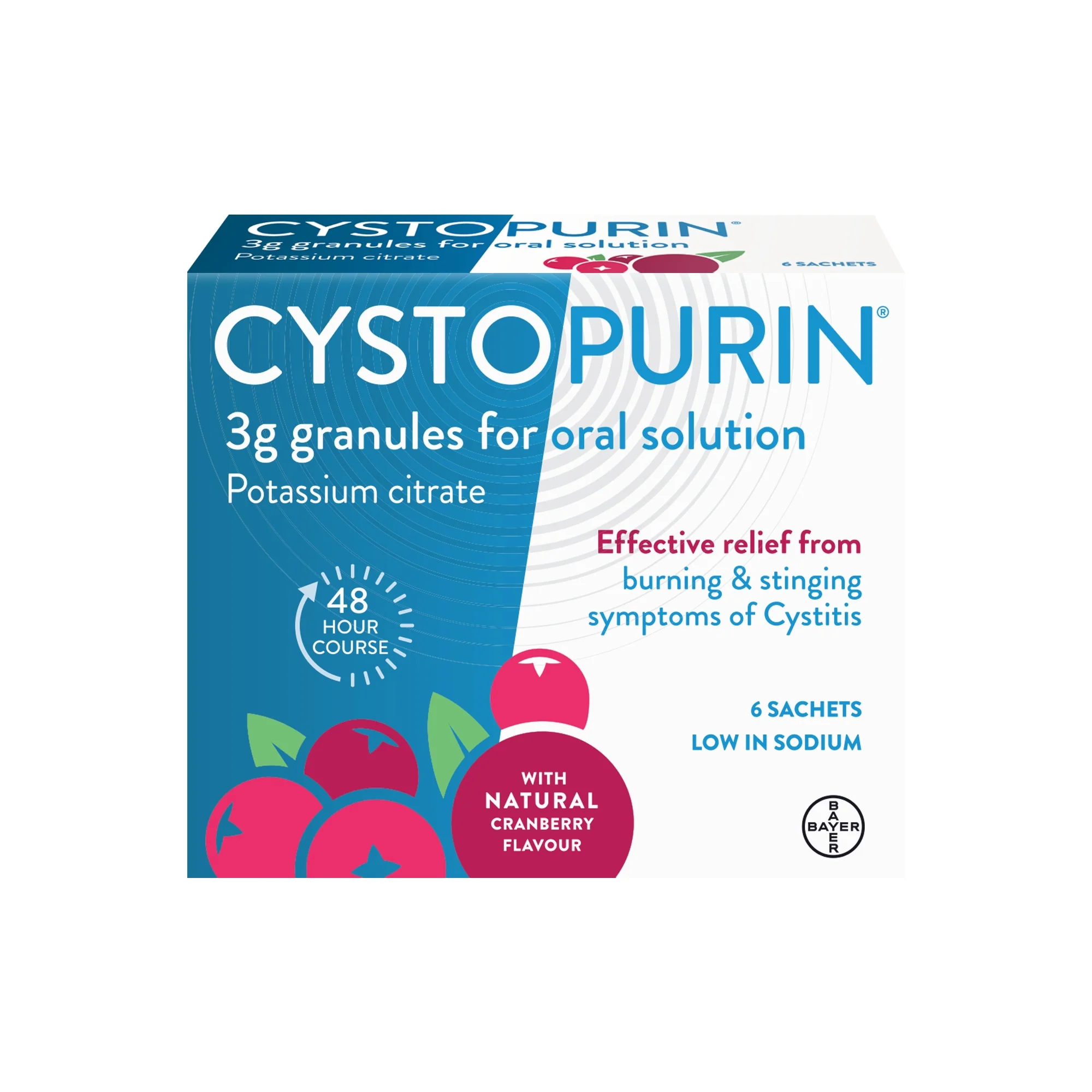
If you've ever had cystitis, you'll know just how uncomfortable it can be. That urgent, frequent need to urinate — combined with a burning or stinging sensation — can make even a normal day feel unbearable. Cystitis sachets like Cystopurin 3g granules offer a simple, over-the-counter way to ease those symptoms quickly, without needing a prescription. Each pack contains six sachets of potassium citrate granules, designed to be dissolved in water and taken orally to relieve the discomfort of mild, uncomplicated cystitis in adults. You can browse our full range of cystitis and bladder infection treatments if you'd like to compare your options.
Cystitis is one of the most common urinary tract infections (UTIs) in the UK, particularly affecting women. According to the NHS, around half of all women will experience at least one UTI in their lifetime. Cystopurin is a well-established, trusted brand that has been used for decades to provide symptomatic relief while the body works through a mild infection.
How Does Cystopurin Work to Relieve Cystitis Symptoms?
The active ingredient in Cystopurin is potassium citrate (3g per sachet). It works by alkalising the urine — in other words, it raises the pH of your urine, making it less acidic. Bacteria that cause cystitis thrive in an acidic environment, and acidic urine is also what causes that characteristic burning sensation when you urinate. By reducing acidity, Cystopurin helps to soothe the lining of the bladder and urethra, making urination less painful.
- Potassium citrate is absorbed into the bloodstream after ingestion
- It is metabolised and excreted by the kidneys into the urine
- This raises urinary pH, reducing acidity
- The less acidic urine causes less irritation to the inflamed urinary tract lining
It's worth noting that Cystopurin does not kill bacteria — it is not an antibiotic. It treats the symptoms of cystitis rather than the underlying infection. If your symptoms do not improve within 48 hours, you should seek medical advice, as you may need antibiotic treatment.
Who Is Cystopurin 3g Granules Suitable For?
Cystopurin is intended for adults and young people aged 16 and over who are experiencing the early symptoms of mild, uncomplicated cystitis. It is most commonly used by women, though men can also develop cystitis. That said, cystitis in men is less common and may indicate an underlying condition, so men should always consult a GP before self-treating.
Cystopurin may be suitable for you if:
- You are aged 16 or over
- You have mild burning or stinging when urinating
- You have a frequent urge to urinate with little output
- You have no fever, back pain, or blood in your urine (which would suggest a more serious infection)
It is not suitable for children under 16, pregnant women (without medical advice), or people with kidney disease, heart failure, or high potassium levels in the blood.
How Does Cystopurin Compare to Other Cystitis Sachets?
| Feature | Cystopurin 3g Granules | Canesten Oasis |
|---|---|---|
| Active ingredient | Potassium citrate 3g | Sodium citrate 4g |
| Number of sachets | 6 sachets | 6 sachets |
| Suitable for low-sodium diets | Yes | No |
| Suitable for kidney disease | No | No |
How Should Cystopurin Be Stored and Is It Right for You?
Store Cystopurin below 25°C in a dry place, away from direct sunlight and out of the reach of children. Do not use the sachets after the expiry date printed on the packaging. Each sachet should be used immediately once dissolved — do not prepare a drink in advance and store it for later use.
If you are managing other health conditions alongside a urinary infection — for example, if you also need support with women's health products — it's always worth speaking to your pharmacist to make sure everything is compatible. As a cystitis sachet, Cystopurin is a convenient, well-tolerated option for most healthy adults, but individual circumstances vary. Always read the label carefully before use.
This product is a medicine. Speak to your doctor or pharmacist before using if you have an underlying medical condition or are taking other medicines.
Cystopurin 3g Granules 6 Sachets specifications
| Treatment category | Urinary tract infection / Cystitis relief |
| Mechanism of action | Alkalises urine by raising urinary pH via potassium citrate metabolism |
| Effective for | Burning and stinging associated with mild, uncomplicated cystitis |
| Suitable for | Adults and young people aged 16 and over |
| Active ingredient | Potassium citrate 3g per sachet |
| Pack size | 6 sachets |
| Strength | 3g potassium citrate per sachet |
| UK classification | General Sale List (GSL) |
| Drug class | Urinary alkalinising agent |
| Preparation | Granules for oral solution |
| Route of administration | Oral (dissolved in water) |
Specifications of Cystopurin 3g Granules 6 Sachets
What Is Cystopurin 3g Granules and What Is It Used For?
Cystopurin 3g granules are an over-the-counter urinary alkalinising treatment used to relieve the symptoms of mild, uncomplicated cystitis in adults aged 16 and over. The active ingredient, potassium citrate, works by reducing the acidity of urine, which in turn soothes the burning, stinging, and discomfort that cystitis causes. Each sachet contains 3g of potassium citrate in granule form, which you dissolve in a glass of water before drinking. The pack contains six sachets — enough for a full two-day course of treatment.
Cystitis is a lower urinary tract infection (UTI) that causes inflammation of the bladder. It is particularly common in women, though it can affect anyone. Symptoms typically include a burning sensation when urinating, a frequent and urgent need to pass urine, and cloudy or strong-smelling urine. Cystopurin does not treat the bacterial infection itself — it relieves symptoms only. If you also experience fever, back or loin pain, or blood in your urine, these may indicate a kidney infection and you should seek urgent medical attention.
What Do You Need to Know Before Using Cystopurin 3g Granules?
Before using Cystopurin, check the following contraindications and warnings carefully:
- Do not use if you are under 16 years of age
- Do not use if you have kidney disease or impaired kidney function
- Do not use if you have heart failure or severe heart disease
- Do not use if you have high levels of potassium in your blood (hyperkalaemia)
- Do not use if you are pregnant or breastfeeding without first speaking to your GP or midwife
- Do not use for more than 48 hours without seeking medical advice
- Do not use if you have symptoms suggesting a kidney infection (fever, back pain, vomiting)
The following medicines may interact with Cystopurin. Tell your pharmacist or GP if you are taking any of these:
- Potassium-sparing diuretics (e.g. spironolactone, amiloride)
- ACE inhibitors (e.g. ramipril, lisinopril)
- Potassium supplements or potassium-containing salt substitutes
- Lithium (urinary alkalinisation can affect lithium excretion)
How Should You Use Cystopurin 3g Granules?
Always use Cystopurin exactly as described in the patient information leaflet. Do not exceed the stated dose. Here is how to take it correctly:
- Open one sachet of Cystopurin granules
- Pour the granules into a full glass of water (approximately 200ml)
- Stir well until the granules are completely dissolved
- Drink the solution immediately — do not store it
- Repeat three times daily, spacing doses evenly throughout the day
- Continue for a maximum of two days (48 hours)
- Drink plenty of additional water throughout the day to help flush the urinary tract
| Indication | Age Group | Dose | Frequency |
|---|---|---|---|
| Mild cystitis symptom relief | Adults and young people aged 16+ | 1 sachet (3g potassium citrate) dissolved in 200ml water | Three times daily for up to 2 days |
| Children under 16 | Under 16 | Not recommended | Not applicable |
If your symptoms have not improved after 48 hours, stop using Cystopurin and consult your GP. You may need antibiotic treatment. For additional support with related conditions, you might also find our pain relief range helpful for managing discomfort alongside your cystitis treatment.
What Are the Possible Side Effects of Cystopurin 3g Granules?
Like all medicines, Cystopurin can cause side effects, although not everyone experiences them. Most people tolerate it well when taken as directed.
Common side effects:
- Mild nausea
- Stomach discomfort or bloating
- Diarrhoea
Less common side effects:
- Vomiting
- Elevated potassium levels in the blood (hyperkalaemia) — particularly in those with kidney problems
- Weakness or muscle cramps (signs of electrolyte imbalance)
If you experience any signs of a serious allergic reaction — such as swelling of the face, lips, or throat, difficulty breathing, or a severe rash — stop taking Cystopurin immediately and seek emergency medical help. Serious reactions are rare but require prompt attention.
How Should You Store Cystopurin 3g Granules?
Proper storage helps maintain the quality and safety of the product. Follow these guidelines:
- Store below 25°C in a cool, dry place
- Keep away from direct sunlight and moisture
- Keep out of the sight and reach of children
- Do not use after the expiry date printed on the outer carton
- Do not store a prepared drink — use immediately after dissolving
- Do not dispose of medicines via wastewater or household waste — return unused sachets to your pharmacy
If you are looking after your general health alongside treating cystitis, our vitamins and supplements range includes products that may support immune and urinary health. Always speak to your pharmacist before combining any supplements with medicines.
References
- https://www.nhs.uk/conditions/cystitis/
- https://www.nhs.uk/conditions/urinary-tract-infections-utis/
- https://www.nhs.uk/conditions/kidney-infection/
- https://www.nhs.uk/medicines/potassium-citrate/
- https://www.medicines.org.uk/emc/product/1163/smpc
Written and reviewed by our qualified team
Your safety and success are our highest priorities. Our medical team rigorously evaluates every product and piece of advice we provide, ensuring you receive only the most effective, science-backed solutions available.
Frequently Asked Questions
Where can I buy Cystopurin 3g granules online in the UK?
You can buy Cystopurin 3g granules 6 sachets online from Cured Pharmacy, a UK GPhC-registered online pharmacy, for just £6.45. No prescription is needed, as it is a General Sale List (GSL) medicine. It is also available from most high street pharmacies and supermarkets across the UK. You can browse our full cystitis and bladder infection range for more options.
How do Cystopurin 3g granules work in the body?
Cystopurin contains potassium citrate, which is absorbed into the bloodstream and then excreted by the kidneys into the urine. This raises the pH of the urine, making it less acidic and therefore less irritating to the inflamed lining of the bladder and urethra. It does not kill bacteria — it simply reduces the burning and stinging sensation associated with cystitis. Think of it as soothing the symptoms while your immune system does the rest.
How do I use Cystopurin 3g granules step by step?
Using Cystopurin is straightforward. Tear open one sachet, pour the granules into a full glass of water (around 200ml), stir until completely dissolved, and drink immediately. Take one sachet three times a day for a maximum of two days. Make sure you also drink plenty of plain water throughout the day to help flush the urinary tract and support recovery.
What is the correct dose of Cystopurin 3g granules?
The recommended dose for adults and young people aged 16 and over is one 3g sachet dissolved in a glass of water, taken three times daily. You should not take more than three sachets in a 24-hour period, and you should not use the product for more than two consecutive days without seeking medical advice. There is no recommended dose for children under 16 — this product is not suitable for that age group.
What are the side effects of Cystopurin 3g granules?
Most people tolerate Cystopurin well, but some may experience mild side effects such as nausea, stomach discomfort, or diarrhoea. Less commonly, it may cause vomiting or, in people with kidney problems, elevated potassium levels in the blood. If you notice muscle weakness, an irregular heartbeat, or any signs of an allergic reaction such as facial swelling or difficulty breathing, stop taking it immediately and seek medical help.
Who should not use Cystopurin 3g granules?
Cystopurin is not suitable for everyone. You should not use it if you are under 16, have kidney disease, heart failure, or high potassium levels in your blood. It is also not recommended if you are pregnant or breastfeeding without first speaking to your GP. Men with cystitis symptoms should always consult a doctor before self-treating, as cystitis in men can indicate an underlying condition that needs investigation.
Can I take Cystopurin if I am pregnant?
You should not use Cystopurin during pregnancy without first speaking to your GP or midwife. Urinary tract infections are common in pregnancy and can carry risks if left untreated, so it is important to get proper medical advice rather than self-treating. Your doctor may recommend a course of antibiotics that are safe to use during pregnancy instead.
How long can you use Cystopurin 3g granules for?
Cystopurin should only be used for a maximum of 48 hours (two days). If your symptoms have not improved within this time, you should stop using it and consult your GP, as you may have a bacterial infection that requires antibiotic treatment. Using it for longer than recommended without medical supervision is not advised and could mask a worsening infection.
What happens if I miss a dose of Cystopurin?
If you miss a dose, simply take it as soon as you remember — unless it is nearly time for your next dose, in which case skip the missed one and carry on as normal. Do not take two sachets at once to make up for a missed dose. Given that the treatment course is only two days, try to space your three daily doses as evenly as possible throughout the day for the best effect.
Does Cystopurin interact with any other medicines?
Yes, Cystopurin can interact with certain medicines. The most important interactions are with potassium-sparing diuretics (such as spironolactone or amiloride), ACE inhibitors (such as ramipril or lisinopril), potassium supplements, and lithium. These combinations can raise potassium levels in the blood to potentially dangerous levels. Always tell your pharmacist about all medicines you are taking before using Cystopurin.
What are the alternatives to Cystopurin for cystitis relief?
Other OTC cystitis sachets include Canesten Oasis (sodium citrate 4g) and UT Clear (sodium citrate). If you prefer sodium citrate over potassium citrate — for example, if you are on a potassium-restricted diet — these may be worth considering. Drinking plenty of water and taking paracetamol or ibuprofen for pain can also help manage symptoms. You can explore our women's health range for further support products.
Is Cystopurin suitable for men with cystitis?
Cystitis is much less common in men than in women, and when it does occur it can sometimes indicate an underlying condition such as a prostate problem or a sexually transmitted infection. For this reason, men with cystitis symptoms are generally advised to see a GP rather than self-treat with OTC products like Cystopurin. If a GP has confirmed a simple UTI, Cystopurin may be used to relieve symptoms, but always follow medical advice first.
Can I drink cranberry juice alongside Cystopurin?
There is no known interaction between cranberry juice and Cystopurin. Some people find cranberry products helpful for urinary health, though the NHS notes that the evidence for cranberry juice preventing or treating UTIs is limited. Drinking plenty of plain water is the most important thing you can do alongside taking Cystopurin to help flush the urinary tract and support recovery.
What are the latest studies on potassium citrate for cystitis?
Potassium citrate has been used as a urinary alkalinising agent for many decades and is well established in clinical practice. Current NHS guidance acknowledges its role in providing symptomatic relief for mild, uncomplicated cystitis, though it emphasises that antibiotic treatment is required for confirmed bacterial infections. Research continues to focus on antibiotic stewardship and whether OTC symptomatic treatments can safely reduce unnecessary antibiotic prescribing for mild UTIs.
How quickly does Cystopurin start to work?
Many people notice some relief from burning and stinging within a few hours of taking their first dose of Cystopurin, as the potassium citrate begins to alkalise the urine relatively quickly after absorption. However, the full effect builds over the course of the two-day treatment. If you notice no improvement at all after 24 hours, or if your symptoms are getting worse, contact your GP rather than continuing to self-treat.
Description
What Are Cystitis Sachets and How Can Cystopurin Help?
If you've ever had cystitis, you'll know just how uncomfortable it can be. That urgent, frequent need to urinate — combined with a burning or stinging sensation — can make even a normal day feel unbearable. Cystitis sachets like Cystopurin 3g granules offer a simple, over-the-counter way to ease those symptoms quickly, without needing a prescription. Each pack contains six sachets of potassium citrate granules, designed to be dissolved in water and taken orally to relieve the discomfort of mild, uncomplicated cystitis in adults. You can browse our full range of cystitis and bladder infection treatments if you'd like to compare your options.
Cystitis is one of the most common urinary tract infections (UTIs) in the UK, particularly affecting women. According to the NHS, around half of all women will experience at least one UTI in their lifetime. Cystopurin is a well-established, trusted brand that has been used for decades to provide symptomatic relief while the body works through a mild infection.
How Does Cystopurin Work to Relieve Cystitis Symptoms?
The active ingredient in Cystopurin is potassium citrate (3g per sachet). It works by alkalising the urine — in other words, it raises the pH of your urine, making it less acidic. Bacteria that cause cystitis thrive in an acidic environment, and acidic urine is also what causes that characteristic burning sensation when you urinate. By reducing acidity, Cystopurin helps to soothe the lining of the bladder and urethra, making urination less painful.
- Potassium citrate is absorbed into the bloodstream after ingestion
- It is metabolised and excreted by the kidneys into the urine
- This raises urinary pH, reducing acidity
- The less acidic urine causes less irritation to the inflamed urinary tract lining
It's worth noting that Cystopurin does not kill bacteria — it is not an antibiotic. It treats the symptoms of cystitis rather than the underlying infection. If your symptoms do not improve within 48 hours, you should seek medical advice, as you may need antibiotic treatment.
Who Is Cystopurin 3g Granules Suitable For?
Cystopurin is intended for adults and young people aged 16 and over who are experiencing the early symptoms of mild, uncomplicated cystitis. It is most commonly used by women, though men can also develop cystitis. That said, cystitis in men is less common and may indicate an underlying condition, so men should always consult a GP before self-treating.
Cystopurin may be suitable for you if:
- You are aged 16 or over
- You have mild burning or stinging when urinating
- You have a frequent urge to urinate with little output
- You have no fever, back pain, or blood in your urine (which would suggest a more serious infection)
It is not suitable for children under 16, pregnant women (without medical advice), or people with kidney disease, heart failure, or high potassium levels in the blood.
How Does Cystopurin Compare to Other Cystitis Sachets?
| Feature | Cystopurin 3g Granules | Canesten Oasis |
|---|---|---|
| Active ingredient | Potassium citrate 3g | Sodium citrate 4g |
| Number of sachets | 6 sachets | 6 sachets |
| Suitable for low-sodium diets | Yes | No |
| Suitable for kidney disease | No | No |
How Should Cystopurin Be Stored and Is It Right for You?
Store Cystopurin below 25°C in a dry place, away from direct sunlight and out of the reach of children. Do not use the sachets after the expiry date printed on the packaging. Each sachet should be used immediately once dissolved — do not prepare a drink in advance and store it for later use.
If you are managing other health conditions alongside a urinary infection — for example, if you also need support with women's health products — it's always worth speaking to your pharmacist to make sure everything is compatible. As a cystitis sachet, Cystopurin is a convenient, well-tolerated option for most healthy adults, but individual circumstances vary. Always read the label carefully before use.
This product is a medicine. Speak to your doctor or pharmacist before using if you have an underlying medical condition or are taking other medicines.
Cystopurin 3g Granules 6 Sachets specifications
| Treatment category | Urinary tract infection / Cystitis relief |
| Mechanism of action | Alkalises urine by raising urinary pH via potassium citrate metabolism |
| Effective for | Burning and stinging associated with mild, uncomplicated cystitis |
| Suitable for | Adults and young people aged 16 and over |
| Active ingredient | Potassium citrate 3g per sachet |
| Pack size | 6 sachets |
| Strength | 3g potassium citrate per sachet |
| UK classification | General Sale List (GSL) |
| Drug class | Urinary alkalinising agent |
| Preparation | Granules for oral solution |
| Route of administration | Oral (dissolved in water) |
Specifications of Cystopurin 3g Granules 6 Sachets
What Is Cystopurin 3g Granules and What Is It Used For?
Cystopurin 3g granules are an over-the-counter urinary alkalinising treatment used to relieve the symptoms of mild, uncomplicated cystitis in adults aged 16 and over. The active ingredient, potassium citrate, works by reducing the acidity of urine, which in turn soothes the burning, stinging, and discomfort that cystitis causes. Each sachet contains 3g of potassium citrate in granule form, which you dissolve in a glass of water before drinking. The pack contains six sachets — enough for a full two-day course of treatment.
Cystitis is a lower urinary tract infection (UTI) that causes inflammation of the bladder. It is particularly common in women, though it can affect anyone. Symptoms typically include a burning sensation when urinating, a frequent and urgent need to pass urine, and cloudy or strong-smelling urine. Cystopurin does not treat the bacterial infection itself — it relieves symptoms only. If you also experience fever, back or loin pain, or blood in your urine, these may indicate a kidney infection and you should seek urgent medical attention.
What Do You Need to Know Before Using Cystopurin 3g Granules?
Before using Cystopurin, check the following contraindications and warnings carefully:
- Do not use if you are under 16 years of age
- Do not use if you have kidney disease or impaired kidney function
- Do not use if you have heart failure or severe heart disease
- Do not use if you have high levels of potassium in your blood (hyperkalaemia)
- Do not use if you are pregnant or breastfeeding without first speaking to your GP or midwife
- Do not use for more than 48 hours without seeking medical advice
- Do not use if you have symptoms suggesting a kidney infection (fever, back pain, vomiting)
The following medicines may interact with Cystopurin. Tell your pharmacist or GP if you are taking any of these:
- Potassium-sparing diuretics (e.g. spironolactone, amiloride)
- ACE inhibitors (e.g. ramipril, lisinopril)
- Potassium supplements or potassium-containing salt substitutes
- Lithium (urinary alkalinisation can affect lithium excretion)
How Should You Use Cystopurin 3g Granules?
Always use Cystopurin exactly as described in the patient information leaflet. Do not exceed the stated dose. Here is how to take it correctly:
- Open one sachet of Cystopurin granules
- Pour the granules into a full glass of water (approximately 200ml)
- Stir well until the granules are completely dissolved
- Drink the solution immediately — do not store it
- Repeat three times daily, spacing doses evenly throughout the day
- Continue for a maximum of two days (48 hours)
- Drink plenty of additional water throughout the day to help flush the urinary tract
| Indication | Age Group | Dose | Frequency |
|---|---|---|---|
| Mild cystitis symptom relief | Adults and young people aged 16+ | 1 sachet (3g potassium citrate) dissolved in 200ml water | Three times daily for up to 2 days |
| Children under 16 | Under 16 | Not recommended | Not applicable |
If your symptoms have not improved after 48 hours, stop using Cystopurin and consult your GP. You may need antibiotic treatment. For additional support with related conditions, you might also find our pain relief range helpful for managing discomfort alongside your cystitis treatment.
What Are the Possible Side Effects of Cystopurin 3g Granules?
Like all medicines, Cystopurin can cause side effects, although not everyone experiences them. Most people tolerate it well when taken as directed.
Common side effects:
- Mild nausea
- Stomach discomfort or bloating
- Diarrhoea
Less common side effects:
- Vomiting
- Elevated potassium levels in the blood (hyperkalaemia) — particularly in those with kidney problems
- Weakness or muscle cramps (signs of electrolyte imbalance)
If you experience any signs of a serious allergic reaction — such as swelling of the face, lips, or throat, difficulty breathing, or a severe rash — stop taking Cystopurin immediately and seek emergency medical help. Serious reactions are rare but require prompt attention.
How Should You Store Cystopurin 3g Granules?
Proper storage helps maintain the quality and safety of the product. Follow these guidelines:
- Store below 25°C in a cool, dry place
- Keep away from direct sunlight and moisture
- Keep out of the sight and reach of children
- Do not use after the expiry date printed on the outer carton
- Do not store a prepared drink — use immediately after dissolving
- Do not dispose of medicines via wastewater or household waste — return unused sachets to your pharmacy
If you are looking after your general health alongside treating cystitis, our vitamins and supplements range includes products that may support immune and urinary health. Always speak to your pharmacist before combining any supplements with medicines.
References
- https://www.nhs.uk/conditions/cystitis/
- https://www.nhs.uk/conditions/urinary-tract-infections-utis/
- https://www.nhs.uk/conditions/kidney-infection/
- https://www.nhs.uk/medicines/potassium-citrate/
- https://www.medicines.org.uk/emc/product/1163/smpc
Written and reviewed by our qualified team
Your safety and success are our highest priorities. Our medical team rigorously evaluates every product and piece of advice we provide, ensuring you receive only the most effective, science-backed solutions available.
Frequently Asked Questions
Where can I buy Cystopurin 3g granules online in the UK?
You can buy Cystopurin 3g granules 6 sachets online from Cured Pharmacy, a UK GPhC-registered online pharmacy, for just £6.45. No prescription is needed, as it is a General Sale List (GSL) medicine. It is also available from most high street pharmacies and supermarkets across the UK. You can browse our full cystitis and bladder infection range for more options.
How do Cystopurin 3g granules work in the body?
Cystopurin contains potassium citrate, which is absorbed into the bloodstream and then excreted by the kidneys into the urine. This raises the pH of the urine, making it less acidic and therefore less irritating to the inflamed lining of the bladder and urethra. It does not kill bacteria — it simply reduces the burning and stinging sensation associated with cystitis. Think of it as soothing the symptoms while your immune system does the rest.
How do I use Cystopurin 3g granules step by step?
Using Cystopurin is straightforward. Tear open one sachet, pour the granules into a full glass of water (around 200ml), stir until completely dissolved, and drink immediately. Take one sachet three times a day for a maximum of two days. Make sure you also drink plenty of plain water throughout the day to help flush the urinary tract and support recovery.
What is the correct dose of Cystopurin 3g granules?
The recommended dose for adults and young people aged 16 and over is one 3g sachet dissolved in a glass of water, taken three times daily. You should not take more than three sachets in a 24-hour period, and you should not use the product for more than two consecutive days without seeking medical advice. There is no recommended dose for children under 16 — this product is not suitable for that age group.
What are the side effects of Cystopurin 3g granules?
Most people tolerate Cystopurin well, but some may experience mild side effects such as nausea, stomach discomfort, or diarrhoea. Less commonly, it may cause vomiting or, in people with kidney problems, elevated potassium levels in the blood. If you notice muscle weakness, an irregular heartbeat, or any signs of an allergic reaction such as facial swelling or difficulty breathing, stop taking it immediately and seek medical help.
Who should not use Cystopurin 3g granules?
Cystopurin is not suitable for everyone. You should not use it if you are under 16, have kidney disease, heart failure, or high potassium levels in your blood. It is also not recommended if you are pregnant or breastfeeding without first speaking to your GP. Men with cystitis symptoms should always consult a doctor before self-treating, as cystitis in men can indicate an underlying condition that needs investigation.
Can I take Cystopurin if I am pregnant?
You should not use Cystopurin during pregnancy without first speaking to your GP or midwife. Urinary tract infections are common in pregnancy and can carry risks if left untreated, so it is important to get proper medical advice rather than self-treating. Your doctor may recommend a course of antibiotics that are safe to use during pregnancy instead.
How long can you use Cystopurin 3g granules for?
Cystopurin should only be used for a maximum of 48 hours (two days). If your symptoms have not improved within this time, you should stop using it and consult your GP, as you may have a bacterial infection that requires antibiotic treatment. Using it for longer than recommended without medical supervision is not advised and could mask a worsening infection.
What happens if I miss a dose of Cystopurin?
If you miss a dose, simply take it as soon as you remember — unless it is nearly time for your next dose, in which case skip the missed one and carry on as normal. Do not take two sachets at once to make up for a missed dose. Given that the treatment course is only two days, try to space your three daily doses as evenly as possible throughout the day for the best effect.
Does Cystopurin interact with any other medicines?
Yes, Cystopurin can interact with certain medicines. The most important interactions are with potassium-sparing diuretics (such as spironolactone or amiloride), ACE inhibitors (such as ramipril or lisinopril), potassium supplements, and lithium. These combinations can raise potassium levels in the blood to potentially dangerous levels. Always tell your pharmacist about all medicines you are taking before using Cystopurin.
What are the alternatives to Cystopurin for cystitis relief?
Other OTC cystitis sachets include Canesten Oasis (sodium citrate 4g) and UT Clear (sodium citrate). If you prefer sodium citrate over potassium citrate — for example, if you are on a potassium-restricted diet — these may be worth considering. Drinking plenty of water and taking paracetamol or ibuprofen for pain can also help manage symptoms. You can explore our women's health range for further support products.
Is Cystopurin suitable for men with cystitis?
Cystitis is much less common in men than in women, and when it does occur it can sometimes indicate an underlying condition such as a prostate problem or a sexually transmitted infection. For this reason, men with cystitis symptoms are generally advised to see a GP rather than self-treat with OTC products like Cystopurin. If a GP has confirmed a simple UTI, Cystopurin may be used to relieve symptoms, but always follow medical advice first.
Can I drink cranberry juice alongside Cystopurin?
There is no known interaction between cranberry juice and Cystopurin. Some people find cranberry products helpful for urinary health, though the NHS notes that the evidence for cranberry juice preventing or treating UTIs is limited. Drinking plenty of plain water is the most important thing you can do alongside taking Cystopurin to help flush the urinary tract and support recovery.
What are the latest studies on potassium citrate for cystitis?
Potassium citrate has been used as a urinary alkalinising agent for many decades and is well established in clinical practice. Current NHS guidance acknowledges its role in providing symptomatic relief for mild, uncomplicated cystitis, though it emphasises that antibiotic treatment is required for confirmed bacterial infections. Research continues to focus on antibiotic stewardship and whether OTC symptomatic treatments can safely reduce unnecessary antibiotic prescribing for mild UTIs.
How quickly does Cystopurin start to work?
Many people notice some relief from burning and stinging within a few hours of taking their first dose of Cystopurin, as the potassium citrate begins to alkalise the urine relatively quickly after absorption. However, the full effect builds over the course of the two-day treatment. If you notice no improvement at all after 24 hours, or if your symptoms are getting worse, contact your GP rather than continuing to self-treat.