The Story
What Is Cymex Cream Cold Sore Treatment?
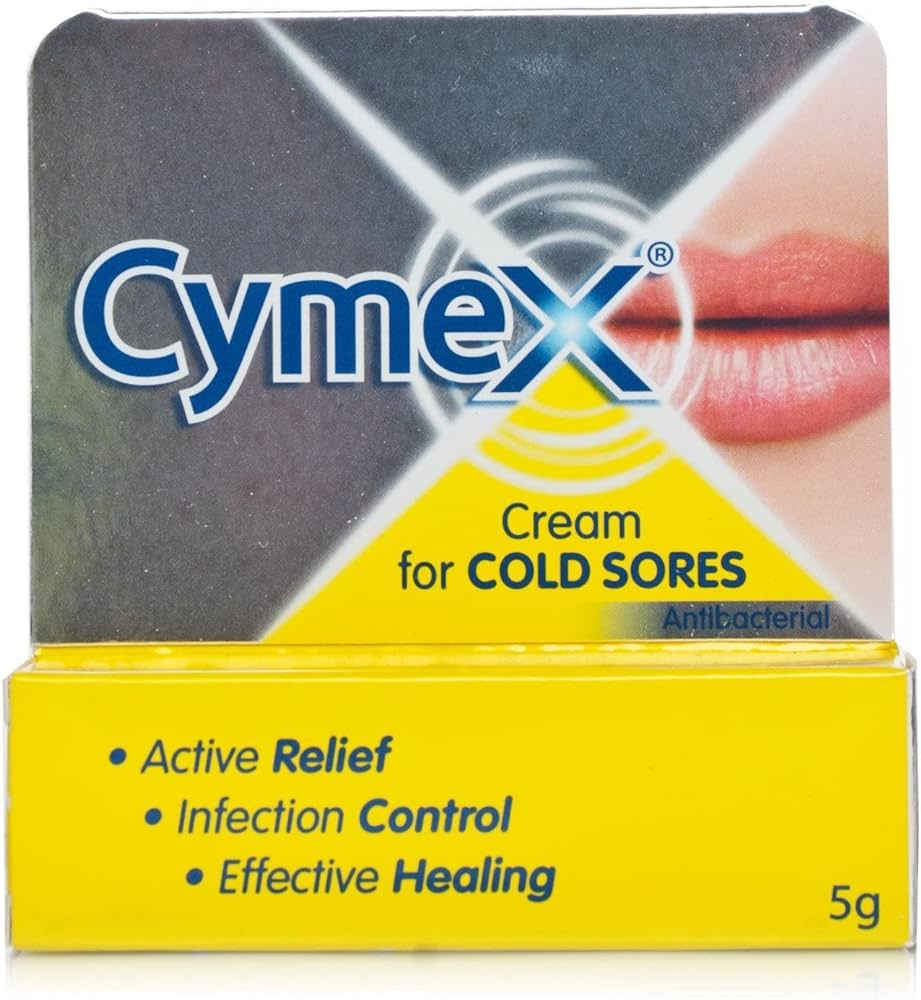
Cold sores are one of those things that always seem to appear at the worst possible moment — before a big event, when you're run down, or right in the middle of a stressful week. They're caused by the herpes simplex virus type 1 (HSV-1), which lies dormant in nerve tissue and reactivates when your immune system is under pressure. According to the NHS, cold sores are very common and most people will experience them at some point in their lives. Cymex cream cold sore treatment is a topical over-the-counter cream designed to soothe, protect, and support healing of cold sores on and around the lips. You can find it alongside other creams and ointments at Cured Pharmacy.
Each 5g tube contains three active ingredients working together: cetrimide 0.5%, dimethicone 9%, and urea 10%. This combination targets the discomfort and vulnerability of the affected skin rather than the virus itself. At just £2.99, it's an accessible option for managing symptoms quickly and conveniently.
How Does Cymex Cream Work on Cold Sores?
Understanding what's actually in the tube helps you use it with confidence. Each ingredient plays a distinct role:
- Cetrimide 0.5% — an antiseptic agent that helps reduce the risk of secondary bacterial infection at the cold sore site, which can otherwise slow healing.
- Dimethicone 9% — a silicone-based compound that forms a protective, occlusive barrier over the sore, shielding it from environmental irritants and reducing moisture loss.
- Urea 10% — a keratolytic and humectant that softens the hardened, crusted skin around the sore and helps maintain hydration in the affected area.
Together, these ingredients create an environment that supports the skin's natural healing process. It's worth noting that Cymex Cream does not contain an antiviral agent, so it works differently from aciclovir-based products.
Who Should Use Cymex Cream?
Cymex Cream is suitable for adults and children over 12 years of age who are experiencing a cold sore on or around the lips. It's particularly useful if you want a gentle, barrier-focused approach to managing symptoms. That said, it's not right for everyone.
- Adults aged 18 and over with a cold sore on the lips or surrounding skin
- Teenagers aged 12–17 (under adult supervision)
- Those who prefer a non-antiviral, symptom-relief approach
- People looking for an affordable, easy-to-use OTC option
Do not use Cymex Cream on children under 12, inside the mouth, near the eyes, or on any area of skin that is severely broken, infected, or inflamed beyond the cold sore itself.
How Does Cymex Cream Compare to Aciclovir Cold Sore Cream?
| Feature | Cymex Cream 5g | Aciclovir 5% Cream (e.g. Zovirax) |
|---|---|---|
| Active ingredient(s) | Cetrimide, Dimethicone, Urea | Aciclovir 5% |
| Mechanism | Antiseptic, barrier, skin softening | Antiviral — inhibits HSV-1 replication |
| Best used | Symptom relief and skin protection | Early antiviral intervention (tingling stage) |
| Suitable for under 12s | No | Check product labelling |
| Price (approx.) | £2.99 | £4.00–£7.00 |
Is Cymex Cream Suitable for Sensitive Skin?
Cymex Cream is generally well tolerated, but if you have a known sensitivity to any of its ingredients — particularly cetrimide — you should avoid using it. Cetrimide can occasionally cause contact dermatitis in sensitive individuals. If you notice increased redness, swelling, or itching beyond what you'd expect from the cold sore itself, stop use and consult your pharmacist. You might also want to explore our wider range of skin care products for complementary options.
Store Cymex Cream below 25°C, away from direct sunlight, and keep it out of reach of children. Do not use after the expiry date printed on the tube.
This product is a medicine. Speak to your doctor or pharmacist before using if you have an underlying medical condition or are taking other medicines.
Cymex Cream 5g specifications
| Treatment category | Cold sore treatment |
| Mechanism of action | Antiseptic, occlusive barrier, skin hydration and softening |
| Effective for | Cold sores on and around the lips |
| Suitable for | Adults and children aged 12 and over |
| Active ingredients | Cetrimide 0.5%, Dimethicone 9%, Urea 10% |
| Pack size | 5g |
| UK classification | General Sale List (GSL) |
| Drug class | Topical antiseptic / barrier preparation |
| Preparation | Cream |
| Route of administration | Topical (external use only) |
Specifications of Cymex Cream 5g
What Is Cymex Cream and What Is It Used For?
Cymex Cream 5g is an over-the-counter topical preparation used to treat cold sores on the lips and surrounding skin. Cold sores are caused by the herpes simplex virus type 1 (HSV-1), a very common virus that the NHS estimates affects around two thirds of people under 50 in the UK. Once you have the virus, it stays in your body permanently — but most of the time it remains dormant. Triggers such as illness, stress, sun exposure, or hormonal changes can cause it to reactivate, producing the familiar tingling, blistering, and crusting on or near the lips.
Cymex Cream does not contain an antiviral ingredient. Instead, it works by protecting the affected skin, reducing the risk of secondary bacterial infection, and softening the crusted tissue to support natural healing. It is classified as a General Sale List (GSL) medicine in the UK, meaning you can buy it without a prescription.
What Do You Need to Know Before Using Cymex Cream?
Before applying Cymex Cream, read the following carefully. There are situations where this product may not be appropriate for you.
Do not use Cymex Cream if you:
- Are allergic to cetrimide, dimethicone, urea, or any other ingredient in the formulation
- Are under 12 years of age
- Have severely broken, infected, or inflamed skin beyond the cold sore area
- Need to apply it inside the mouth, near the eyes, or on mucous membranes
Speak to your pharmacist or GP before using if you:
- Are pregnant or breastfeeding
- Have a known skin condition such as eczema or psoriasis affecting the lip area
- Have a weakened immune system (e.g. due to HIV, chemotherapy, or immunosuppressant medicines)
Drug interactions:
- No significant drug interactions are currently known for topical Cymex Cream when used as directed
- Avoid applying alongside other topical preparations to the same area without pharmacist advice
How Should You Use Cymex Cream?
Using Cymex Cream correctly gives you the best chance of a smooth, comfortable recovery. Follow these steps each time you apply it:
- Wash your hands thoroughly with soap and water before touching the cold sore area.
- Using a clean fingertip or cotton bud, apply a small amount of cream directly to the cold sore and the immediately surrounding skin.
- Gently smooth the cream over the affected area — do not rub vigorously.
- Wash your hands again immediately after application to avoid spreading the virus.
- Repeat up to four times daily until the cold sore has fully healed.
Avoid touching your eyes, nose, or other people's skin after contact with the cold sore. The herpes simplex virus is contagious, particularly when blisters are present. You can find further guidance on managing skin conditions in our skin care collection.
| Indication | Age Group | Dose | Frequency |
|---|---|---|---|
| Cold sore on lips | Adults (18+) | Small amount to affected area | Up to 4 times daily |
| Cold sore on lips | 12–17 years (supervised) | Small amount to affected area | Up to 4 times daily |
| Under 12 years | Not suitable | — | — |
What Are the Possible Side Effects of Cymex Cream?
Like all medicines, Cymex Cream can cause side effects, although not everyone experiences them. Most side effects are mild and localised to the application site.
Common side effects:
- Mild stinging or burning sensation immediately after application
- Temporary redness at the application site
- Slight skin dryness around the treated area
Less common side effects:
- Contact dermatitis (skin inflammation) — particularly in those sensitive to cetrimide
- Localised allergic reaction, including increased itching or swelling
If you experience a severe allergic reaction — such as widespread rash, difficulty breathing, or swelling of the face or throat — stop use immediately and seek urgent medical attention. This type of reaction is rare but serious. The NHS advises seeking emergency help if you suspect anaphylaxis.
How Should You Store Cymex Cream?
Correct storage keeps the cream effective for its full shelf life. If you're also managing other health products at home, our first aid collection has useful complementary items worth keeping to hand.
- Store below 25°C in a cool, dry place
- Keep away from direct sunlight and heat sources
- Do not freeze
- Keep the tube tightly closed when not in use
- Keep out of the sight and reach of children
- Do not use after the expiry date printed on the tube or carton
- Do not dispose of medicines via wastewater or household waste — return unused product to your pharmacy
References
- https://www.nhs.uk/conditions/cold-sores/
- https://www.nhs.uk/conditions/cold-sores/treatment/
- https://www.nhs.uk/conditions/cold-sores/causes/
- https://www.nhs.uk/conditions/allergies/symptoms/
- https://www.nhs.uk/conditions/anaphylaxis/
- https://bnf.nice.org.uk/drugs/cetrimide/
Written and reviewed by our qualified team
Your safety and success are our highest priorities. Our medical team rigorously evaluates every product and piece of advice we provide, ensuring you receive only the most effective, science-backed solutions available.
Frequently Asked Questions
Where can I buy Cymex Cream online in the UK?
You can buy Cymex Cream 5g online from Cured Pharmacy for just £2.99, with no prescription required. It is classified as a General Sale List (GSL) medicine, so it is available over the counter. Simply add it to your basket and it will be dispatched directly to your door.
How does Cymex Cream work on a cold sore?
Cymex Cream works through three active ingredients: cetrimide acts as an antiseptic to reduce the risk of secondary bacterial infection, dimethicone creates a protective barrier over the sore, and urea softens and hydrates the crusted skin. Together they support the skin's natural healing process. It does not contain an antiviral agent, so it targets symptom relief rather than the herpes simplex virus directly.
How do I apply Cymex Cream step by step?
Wash your hands before and after every application to avoid spreading the virus. Apply a small amount of cream to the cold sore and the immediately surrounding skin using a clean fingertip or cotton bud, up to four times daily. Continue until the cold sore has fully healed, which typically takes 7 to 10 days.
How often should I apply Cymex Cream each day?
The recommended frequency is up to four times daily. Try to space applications evenly throughout the day — for example, morning, midday, afternoon, and evening. Do not apply more frequently than directed, as this will not speed up healing and may increase the risk of skin irritation.
What are the side effects of Cymex Cream?
Most people tolerate Cymex Cream well, but mild stinging, temporary redness, or slight dryness at the application site can occur. Less commonly, contact dermatitis or a localised allergic reaction may develop, particularly in people sensitive to cetrimide. If you notice significant swelling, widespread rash, or difficulty breathing, stop use immediately and seek urgent medical attention.
Can I use Cymex Cream if I am pregnant or breastfeeding?
There is limited clinical data on the use of Cymex Cream during pregnancy or breastfeeding. If you are pregnant, planning to become pregnant, or currently breastfeeding, speak to your GP or pharmacist before using this product. They can advise on the most appropriate treatment option for your situation.
Is Cymex Cream suitable for children?
Cymex Cream is suitable for adults and young people aged 12 and over. It should not be used in children under 12 years of age. If your child is under 12 and has a cold sore, speak to your pharmacist or GP for appropriate advice on management.
How long does it take for Cymex Cream to work?
Cold sores typically go through several stages — tingling, blistering, weeping, and crusting — before healing fully, which usually takes 7 to 10 days according to the NHS. Cymex Cream helps soothe discomfort and protect the skin throughout this process. It does not shorten the duration of the cold sore in the way antiviral creams may.
What are the alternatives to Cymex Cream for cold sores?
The main alternative is aciclovir 5% cream (e.g. Zovirax), which is an antiviral that works by inhibiting herpes simplex virus replication — it is most effective when applied at the very first sign of a cold sore (the tingling stage). Cymex Cream focuses on barrier protection and antiseptic action rather than antiviral activity. You can browse related creams and ointments at Cured Pharmacy to compare options.
Can I use Cymex Cream inside my mouth or on my lips?
Cymex Cream is intended for external use on the lips and surrounding skin only. Do not apply it inside the mouth, on mucous membranes, or near the eyes. If accidental contact with the eyes occurs, rinse thoroughly with clean water and seek medical advice if irritation persists.
Does Cymex Cream stop cold sores from spreading?
Cymex Cream contains cetrimide, which has antiseptic properties that may help reduce the risk of secondary bacterial infection at the cold sore site. However, it does not prevent the herpes simplex virus from spreading to other people or to other areas of your own body. Always wash your hands after touching a cold sore and avoid close contact such as kissing while blisters are present.
What happens if I miss an application of Cymex Cream?
If you forget to apply Cymex Cream at your usual time, simply apply it as soon as you remember and then continue with your regular schedule. Do not apply a double amount to make up for a missed application. Consistency is helpful, but missing one application is unlikely to significantly affect your recovery.
How long can I use Cymex Cream for?
Use Cymex Cream until the cold sore has fully healed, which is typically within 7 to 10 days. If your cold sore has not improved after 10 days of use, or if it worsens at any point, stop using the cream and consult your pharmacist or GP. Prolonged use beyond the healing period is not recommended.
Are there any medicines that interact with Cymex Cream?
No significant drug interactions are currently known for Cymex Cream when used topically as directed. However, you should avoid applying other topical preparations to the same area at the same time without first checking with your pharmacist. If you take any prescription medicines or have a complex medical history, it is always worth mentioning new OTC products to your GP or pharmacist. You can also explore our oral health range for complementary lip and mouth care products.
What is the latest research on cold sore treatments like Cymex Cream?
Current clinical guidance from the NHS and NICE continues to recommend topical treatments for mild cold sores, with antiviral creams such as aciclovir recommended for early-stage intervention and barrier/antiseptic creams like Cymex used for symptom management and skin protection. Research into cold sore prevention focuses largely on immune support and antiviral prophylaxis for frequent sufferers. For recurrent or severe cold sores, your GP may consider oral antiviral therapy.
Description
What Is Cymex Cream Cold Sore Treatment?
Cold sores are one of those things that always seem to appear at the worst possible moment — before a big event, when you're run down, or right in the middle of a stressful week. They're caused by the herpes simplex virus type 1 (HSV-1), which lies dormant in nerve tissue and reactivates when your immune system is under pressure. According to the NHS, cold sores are very common and most people will experience them at some point in their lives. Cymex cream cold sore treatment is a topical over-the-counter cream designed to soothe, protect, and support healing of cold sores on and around the lips. You can find it alongside other creams and ointments at Cured Pharmacy.
Each 5g tube contains three active ingredients working together: cetrimide 0.5%, dimethicone 9%, and urea 10%. This combination targets the discomfort and vulnerability of the affected skin rather than the virus itself. At just £2.99, it's an accessible option for managing symptoms quickly and conveniently.
How Does Cymex Cream Work on Cold Sores?
Understanding what's actually in the tube helps you use it with confidence. Each ingredient plays a distinct role:
- Cetrimide 0.5% — an antiseptic agent that helps reduce the risk of secondary bacterial infection at the cold sore site, which can otherwise slow healing.
- Dimethicone 9% — a silicone-based compound that forms a protective, occlusive barrier over the sore, shielding it from environmental irritants and reducing moisture loss.
- Urea 10% — a keratolytic and humectant that softens the hardened, crusted skin around the sore and helps maintain hydration in the affected area.
Together, these ingredients create an environment that supports the skin's natural healing process. It's worth noting that Cymex Cream does not contain an antiviral agent, so it works differently from aciclovir-based products.
Who Should Use Cymex Cream?
Cymex Cream is suitable for adults and children over 12 years of age who are experiencing a cold sore on or around the lips. It's particularly useful if you want a gentle, barrier-focused approach to managing symptoms. That said, it's not right for everyone.
- Adults aged 18 and over with a cold sore on the lips or surrounding skin
- Teenagers aged 12–17 (under adult supervision)
- Those who prefer a non-antiviral, symptom-relief approach
- People looking for an affordable, easy-to-use OTC option
Do not use Cymex Cream on children under 12, inside the mouth, near the eyes, or on any area of skin that is severely broken, infected, or inflamed beyond the cold sore itself.
How Does Cymex Cream Compare to Aciclovir Cold Sore Cream?
| Feature | Cymex Cream 5g | Aciclovir 5% Cream (e.g. Zovirax) |
|---|---|---|
| Active ingredient(s) | Cetrimide, Dimethicone, Urea | Aciclovir 5% |
| Mechanism | Antiseptic, barrier, skin softening | Antiviral — inhibits HSV-1 replication |
| Best used | Symptom relief and skin protection | Early antiviral intervention (tingling stage) |
| Suitable for under 12s | No | Check product labelling |
| Price (approx.) | £2.99 | £4.00–£7.00 |
Is Cymex Cream Suitable for Sensitive Skin?
Cymex Cream is generally well tolerated, but if you have a known sensitivity to any of its ingredients — particularly cetrimide — you should avoid using it. Cetrimide can occasionally cause contact dermatitis in sensitive individuals. If you notice increased redness, swelling, or itching beyond what you'd expect from the cold sore itself, stop use and consult your pharmacist. You might also want to explore our wider range of skin care products for complementary options.
Store Cymex Cream below 25°C, away from direct sunlight, and keep it out of reach of children. Do not use after the expiry date printed on the tube.
This product is a medicine. Speak to your doctor or pharmacist before using if you have an underlying medical condition or are taking other medicines.
Cymex Cream 5g specifications
| Treatment category | Cold sore treatment |
| Mechanism of action | Antiseptic, occlusive barrier, skin hydration and softening |
| Effective for | Cold sores on and around the lips |
| Suitable for | Adults and children aged 12 and over |
| Active ingredients | Cetrimide 0.5%, Dimethicone 9%, Urea 10% |
| Pack size | 5g |
| UK classification | General Sale List (GSL) |
| Drug class | Topical antiseptic / barrier preparation |
| Preparation | Cream |
| Route of administration | Topical (external use only) |
Specifications of Cymex Cream 5g
What Is Cymex Cream and What Is It Used For?
Cymex Cream 5g is an over-the-counter topical preparation used to treat cold sores on the lips and surrounding skin. Cold sores are caused by the herpes simplex virus type 1 (HSV-1), a very common virus that the NHS estimates affects around two thirds of people under 50 in the UK. Once you have the virus, it stays in your body permanently — but most of the time it remains dormant. Triggers such as illness, stress, sun exposure, or hormonal changes can cause it to reactivate, producing the familiar tingling, blistering, and crusting on or near the lips.
Cymex Cream does not contain an antiviral ingredient. Instead, it works by protecting the affected skin, reducing the risk of secondary bacterial infection, and softening the crusted tissue to support natural healing. It is classified as a General Sale List (GSL) medicine in the UK, meaning you can buy it without a prescription.
What Do You Need to Know Before Using Cymex Cream?
Before applying Cymex Cream, read the following carefully. There are situations where this product may not be appropriate for you.
Do not use Cymex Cream if you:
- Are allergic to cetrimide, dimethicone, urea, or any other ingredient in the formulation
- Are under 12 years of age
- Have severely broken, infected, or inflamed skin beyond the cold sore area
- Need to apply it inside the mouth, near the eyes, or on mucous membranes
Speak to your pharmacist or GP before using if you:
- Are pregnant or breastfeeding
- Have a known skin condition such as eczema or psoriasis affecting the lip area
- Have a weakened immune system (e.g. due to HIV, chemotherapy, or immunosuppressant medicines)
Drug interactions:
- No significant drug interactions are currently known for topical Cymex Cream when used as directed
- Avoid applying alongside other topical preparations to the same area without pharmacist advice
How Should You Use Cymex Cream?
Using Cymex Cream correctly gives you the best chance of a smooth, comfortable recovery. Follow these steps each time you apply it:
- Wash your hands thoroughly with soap and water before touching the cold sore area.
- Using a clean fingertip or cotton bud, apply a small amount of cream directly to the cold sore and the immediately surrounding skin.
- Gently smooth the cream over the affected area — do not rub vigorously.
- Wash your hands again immediately after application to avoid spreading the virus.
- Repeat up to four times daily until the cold sore has fully healed.
Avoid touching your eyes, nose, or other people's skin after contact with the cold sore. The herpes simplex virus is contagious, particularly when blisters are present. You can find further guidance on managing skin conditions in our skin care collection.
| Indication | Age Group | Dose | Frequency |
|---|---|---|---|
| Cold sore on lips | Adults (18+) | Small amount to affected area | Up to 4 times daily |
| Cold sore on lips | 12–17 years (supervised) | Small amount to affected area | Up to 4 times daily |
| Under 12 years | Not suitable | — | — |
What Are the Possible Side Effects of Cymex Cream?
Like all medicines, Cymex Cream can cause side effects, although not everyone experiences them. Most side effects are mild and localised to the application site.
Common side effects:
- Mild stinging or burning sensation immediately after application
- Temporary redness at the application site
- Slight skin dryness around the treated area
Less common side effects:
- Contact dermatitis (skin inflammation) — particularly in those sensitive to cetrimide
- Localised allergic reaction, including increased itching or swelling
If you experience a severe allergic reaction — such as widespread rash, difficulty breathing, or swelling of the face or throat — stop use immediately and seek urgent medical attention. This type of reaction is rare but serious. The NHS advises seeking emergency help if you suspect anaphylaxis.
How Should You Store Cymex Cream?
Correct storage keeps the cream effective for its full shelf life. If you're also managing other health products at home, our first aid collection has useful complementary items worth keeping to hand.
- Store below 25°C in a cool, dry place
- Keep away from direct sunlight and heat sources
- Do not freeze
- Keep the tube tightly closed when not in use
- Keep out of the sight and reach of children
- Do not use after the expiry date printed on the tube or carton
- Do not dispose of medicines via wastewater or household waste — return unused product to your pharmacy
References
- https://www.nhs.uk/conditions/cold-sores/
- https://www.nhs.uk/conditions/cold-sores/treatment/
- https://www.nhs.uk/conditions/cold-sores/causes/
- https://www.nhs.uk/conditions/allergies/symptoms/
- https://www.nhs.uk/conditions/anaphylaxis/
- https://bnf.nice.org.uk/drugs/cetrimide/
Written and reviewed by our qualified team
Your safety and success are our highest priorities. Our medical team rigorously evaluates every product and piece of advice we provide, ensuring you receive only the most effective, science-backed solutions available.
Frequently Asked Questions
Where can I buy Cymex Cream online in the UK?
You can buy Cymex Cream 5g online from Cured Pharmacy for just £2.99, with no prescription required. It is classified as a General Sale List (GSL) medicine, so it is available over the counter. Simply add it to your basket and it will be dispatched directly to your door.
How does Cymex Cream work on a cold sore?
Cymex Cream works through three active ingredients: cetrimide acts as an antiseptic to reduce the risk of secondary bacterial infection, dimethicone creates a protective barrier over the sore, and urea softens and hydrates the crusted skin. Together they support the skin's natural healing process. It does not contain an antiviral agent, so it targets symptom relief rather than the herpes simplex virus directly.
How do I apply Cymex Cream step by step?
Wash your hands before and after every application to avoid spreading the virus. Apply a small amount of cream to the cold sore and the immediately surrounding skin using a clean fingertip or cotton bud, up to four times daily. Continue until the cold sore has fully healed, which typically takes 7 to 10 days.
How often should I apply Cymex Cream each day?
The recommended frequency is up to four times daily. Try to space applications evenly throughout the day — for example, morning, midday, afternoon, and evening. Do not apply more frequently than directed, as this will not speed up healing and may increase the risk of skin irritation.
What are the side effects of Cymex Cream?
Most people tolerate Cymex Cream well, but mild stinging, temporary redness, or slight dryness at the application site can occur. Less commonly, contact dermatitis or a localised allergic reaction may develop, particularly in people sensitive to cetrimide. If you notice significant swelling, widespread rash, or difficulty breathing, stop use immediately and seek urgent medical attention.
Can I use Cymex Cream if I am pregnant or breastfeeding?
There is limited clinical data on the use of Cymex Cream during pregnancy or breastfeeding. If you are pregnant, planning to become pregnant, or currently breastfeeding, speak to your GP or pharmacist before using this product. They can advise on the most appropriate treatment option for your situation.
Is Cymex Cream suitable for children?
Cymex Cream is suitable for adults and young people aged 12 and over. It should not be used in children under 12 years of age. If your child is under 12 and has a cold sore, speak to your pharmacist or GP for appropriate advice on management.
How long does it take for Cymex Cream to work?
Cold sores typically go through several stages — tingling, blistering, weeping, and crusting — before healing fully, which usually takes 7 to 10 days according to the NHS. Cymex Cream helps soothe discomfort and protect the skin throughout this process. It does not shorten the duration of the cold sore in the way antiviral creams may.
What are the alternatives to Cymex Cream for cold sores?
The main alternative is aciclovir 5% cream (e.g. Zovirax), which is an antiviral that works by inhibiting herpes simplex virus replication — it is most effective when applied at the very first sign of a cold sore (the tingling stage). Cymex Cream focuses on barrier protection and antiseptic action rather than antiviral activity. You can browse related creams and ointments at Cured Pharmacy to compare options.
Can I use Cymex Cream inside my mouth or on my lips?
Cymex Cream is intended for external use on the lips and surrounding skin only. Do not apply it inside the mouth, on mucous membranes, or near the eyes. If accidental contact with the eyes occurs, rinse thoroughly with clean water and seek medical advice if irritation persists.
Does Cymex Cream stop cold sores from spreading?
Cymex Cream contains cetrimide, which has antiseptic properties that may help reduce the risk of secondary bacterial infection at the cold sore site. However, it does not prevent the herpes simplex virus from spreading to other people or to other areas of your own body. Always wash your hands after touching a cold sore and avoid close contact such as kissing while blisters are present.
What happens if I miss an application of Cymex Cream?
If you forget to apply Cymex Cream at your usual time, simply apply it as soon as you remember and then continue with your regular schedule. Do not apply a double amount to make up for a missed application. Consistency is helpful, but missing one application is unlikely to significantly affect your recovery.
How long can I use Cymex Cream for?
Use Cymex Cream until the cold sore has fully healed, which is typically within 7 to 10 days. If your cold sore has not improved after 10 days of use, or if it worsens at any point, stop using the cream and consult your pharmacist or GP. Prolonged use beyond the healing period is not recommended.
Are there any medicines that interact with Cymex Cream?
No significant drug interactions are currently known for Cymex Cream when used topically as directed. However, you should avoid applying other topical preparations to the same area at the same time without first checking with your pharmacist. If you take any prescription medicines or have a complex medical history, it is always worth mentioning new OTC products to your GP or pharmacist. You can also explore our oral health range for complementary lip and mouth care products.
What is the latest research on cold sore treatments like Cymex Cream?
Current clinical guidance from the NHS and NICE continues to recommend topical treatments for mild cold sores, with antiviral creams such as aciclovir recommended for early-stage intervention and barrier/antiseptic creams like Cymex used for symptom management and skin protection. Research into cold sore prevention focuses largely on immune support and antiviral prophylaxis for frequent sufferers. For recurrent or severe cold sores, your GP may consider oral antiviral therapy.


