Original: $1.99
-65%$1.99
$0.70The Story
What Is a Crepe Bandage 10cm Used For?
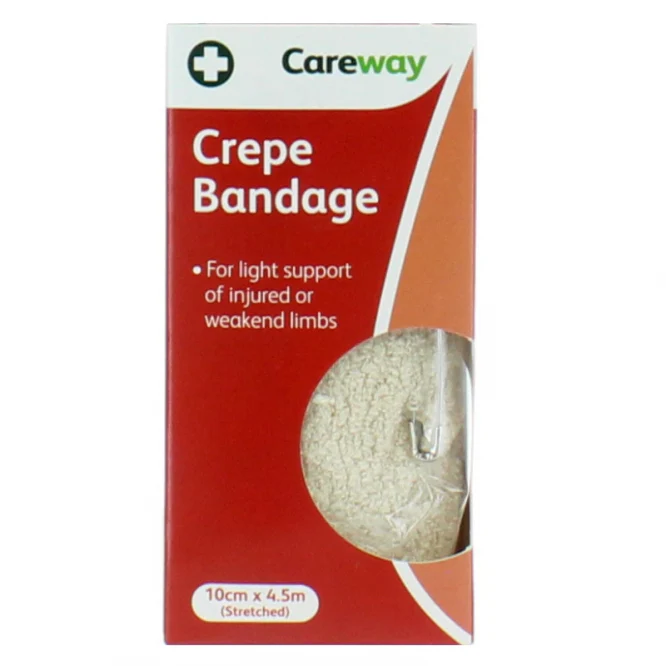
Whether you've twisted your ankle on the stairs or you're managing a minor soft tissue injury at home, having the right bandage to hand makes a real difference. The Careway crepe bandage 10cm is a woven elastic bandage designed to provide gentle compression, support, and retention of dressings across a wide range of everyday injuries. At just £1.99, it's an affordable and practical addition to any home first aid kit — and it's available right here from our first aid collection.
Crepe bandages have been a staple of first aid for decades. The 10cm width is particularly versatile — wide enough to cover the knee or ankle effectively, yet manageable enough for wrist and forearm support. The NHS recommends compression as part of the RICE method (Rest, Ice, Compression, Elevation) for soft tissue injuries, and a well-applied crepe bandage delivers exactly that.
How Does the Careway Crepe Bandage Work?
The bandage works through its woven elastic construction, which stretches to conform to the body's natural contours while applying consistent, graduated pressure. Here's how it helps:
- Compression: Gentle pressure reduces fluid accumulation (oedema) in injured soft tissue, helping to limit swelling in the hours after an injury.
- Support: The elastic tension stabilises the joint or muscle, reducing the risk of further strain during movement.
- Retention: It holds wound dressings or padding securely in place without the need for adhesive tape directly on the skin.
- Conformability: The crepe weave allows the bandage to mould around irregular body shapes — ankles, knees, elbows — without bunching or slipping.
Unlike rigid strapping tape, a crepe bandage allows some degree of movement, which is important during the early recovery phase of a sprain or strain.
Who Should Use the Careway Crepe Bandage 10cm?
This bandage is suitable for most adults and older children managing minor musculoskeletal injuries at home. It's also useful for carers, sports coaches, and anyone who regularly needs to dress wounds or support joints. That said, it's not a substitute for professional medical assessment if you suspect a fracture or serious injury.
- Adults and teenagers with minor sprains or strains
- People needing to retain wound dressings on limbs
- Those following the NHS RICE protocol for soft tissue injuries
- Sports participants requiring light joint support during recovery
How Does the Careway Crepe Bandage Compare to Other Bandage Types?
| Feature | Careway Crepe Bandage 10cm | Cohesive Bandage |
|---|---|---|
| Reusable | Yes — washable | No — single use |
| Adhesive | No — secured with clip | Self-adhesive |
| Compression level | Light to moderate | Light to moderate |
| Suitable for dressing retention | Yes | Yes |
Is the Careway Crepe Bandage Suitable for All Skin Types?
The Careway crepe bandage 10cm is made from a cotton-rich woven fabric, making it generally well tolerated by most skin types. If you have sensitive or fragile skin — for example, due to long-term corticosteroid use or a skin condition — take extra care when applying and removing the bandage to avoid friction damage. Always place a soft dressing or padding between the bandage and any open wound. If you're managing a wound alongside your injury, you may also find our creams and ointments collection useful for skin protection and wound care.
Store the bandage below 25°C in a dry location away from direct sunlight. Once washed, allow it to air dry completely before re-rolling and storing.
This product is a medical device. Speak to your doctor or pharmacist before using if you have an underlying medical condition or are taking other medicines.
Careway Crepe Bandage 10cm specifications
| Treatment category | First aid / wound care / musculoskeletal support |
| Mechanism of action | Elastic compression and support via woven crepe fabric |
| Effective for | Sprains, strains, swelling, dressing retention |
| Suitable for | Adults and older children |
| Active ingredient | None — medical device |
| Width | 10cm |
| UK classification | Medical device (CE marked) |
| Preparation | Woven elastic crepe bandage |
| Route of administration | External / topical |
Specifications of Careway Crepe Bandage 10cm
What Is the Careway Crepe Bandage 10cm and What Is It Used For?
The Careway Crepe Bandage 10cm is a reusable, woven elastic bandage used externally to provide compression, joint support, and retention of wound dressings. It is classified as an over-the-counter medical device and does not contain any active pharmaceutical ingredients. It is most commonly used as part of the RICE (Rest, Ice, Compression, Elevation) approach recommended by the NHS for managing soft tissue injuries such as sprains and strains. It may also be used to hold gauze dressings or padding in place on limbs.
What Do You Need to Know Before Using the Careway Crepe Bandage 10cm?
Although a crepe bandage is a simple medical device, there are important safety considerations to be aware of before use.
Do not use this bandage if:
- You have a known circulatory condition such as peripheral arterial disease, as compression may worsen blood flow
- You have deep vein thrombosis (DVT) or suspect you may have one — seek urgent medical attention instead
- The skin beneath the bandage is broken, infected, or severely blistered without appropriate wound dressing underneath
- You are applying it to an area where you suspect a fracture — seek emergency care first
Warnings and precautions:
- Check circulation regularly after application — look for numbness, tingling, coldness, or skin colour changes below the bandage
- Never apply so tightly that it causes discomfort or restricts movement beyond what is expected from the injury
- Remove the bandage at night unless specifically advised otherwise by a healthcare professional
- Keep out of reach of children when not in use
Drug interactions:
- No known drug interactions — this is a medical device, not a medicine
How Should You Apply the Careway Crepe Bandage 10cm?
Correct application is essential to ensure the bandage provides effective support without causing harm. Follow these steps carefully:
- Wash and dry your hands before handling the bandage or any wound dressing.
- If covering a wound, apply an appropriate dressing or padding to the wound first before bandaging over it.
- Hold the rolled bandage with the roll facing upward and begin wrapping at the narrowest point of the limb (e.g. the foot for an ankle injury).
- Wrap in overlapping spiral turns, covering approximately two-thirds of the previous layer with each pass.
- Continue wrapping upward toward the heart, maintaining even, consistent tension throughout.
- Secure the end of the bandage with the clip provided or with medical tape — never use pins.
- Check that two fingers can slide comfortably under the bandage. If not, it is too tight — unwrap and reapply.
| Indication | Age Group | Bandage Width | Application Notes |
|---|---|---|---|
| Ankle or knee sprain | Adults & older children | 10cm | Apply as part of RICE; remove at night |
| Wrist or forearm support | Adults | 10cm (or 7.5cm) | Ensure fingers remain mobile and warm |
| Dressing retention (limb) | Adults & children | 10cm | Place dressing first; bandage over it |
If you're also managing pain alongside your injury, our pain relief collection includes a range of options suitable for soft tissue injuries.
What Are the Possible Side Effects of the Careway Crepe Bandage 10cm?
As a medical device rather than a medicine, the Careway Crepe Bandage 10cm does not cause systemic side effects. However, incorrect application can lead to localised problems.
Common issues with incorrect application:
- Skin redness or pressure marks from over-tightening
- Mild skin irritation or itching beneath the bandage, particularly in warm conditions
- Discomfort or aching if the bandage is applied unevenly
Less common but more serious concerns:
- Impaired circulation — indicated by numbness, tingling, coldness, or bluish discolouration of the skin distal to the bandage
- Pressure sores or skin breakdown if the bandage is left on for extended periods without checking
- Worsening of swelling if the bandage is applied too loosely and slips
If you notice any signs of impaired circulation, remove the bandage immediately and seek medical advice.
How Should You Store the Careway Crepe Bandage 10cm?
Proper storage keeps the bandage hygienic and maintains its elasticity for reuse. For other items you might keep in your home first aid kit, browse our full first aid range at Cured Pharmacy.
- Store below 25°C in a cool, dry place away from direct sunlight
- Keep in its original packaging until first use to maintain cleanliness
- After washing, allow to air dry completely before re-rolling and storing
- Do not store in damp environments such as bathrooms, as moisture can degrade the fabric
- Keep out of reach of children
- Check the bandage for signs of wear, loss of elasticity, or damage before each use — replace if necessary
References
- https://www.nhs.uk/conditions/sprains-and-strains/
- https://www.nhs.uk/conditions/first-aid/sprains/
- https://www.nhs.uk/conditions/wounds-and-injuries/
- https://www.nhs.uk/conditions/deep-vein-thrombosis-dvt/
- https://www.nhs.uk/conditions/peripheral-arterial-disease-pad/
- https://www.nice.org.uk/guidance/cg168
Written and reviewed by our qualified team
Your safety and success are our highest priorities. Our medical team rigorously evaluates every product and piece of advice we provide, ensuring you receive only the most effective, science-backed solutions available.
Frequently Asked Questions
Where can I buy a crepe bandage 10cm online in the UK?
You can buy the Careway Crepe Bandage 10cm directly from Cured Pharmacy online for just £1.99 with fast UK delivery. No prescription is needed as it is an over-the-counter medical device. It's available in our first aid collection alongside other essential wound care products.
How does a crepe bandage work on a sprain?
A crepe bandage applies gentle compression to the injured area, which helps limit swelling by reducing fluid accumulation in the soft tissues. The elastic weave also provides support to the joint, reducing the risk of further strain during movement. The NHS recommends compression as part of the RICE method — Rest, Ice, Compression, Elevation — for managing sprains in the first 48 to 72 hours.
How do I apply a crepe bandage correctly step by step?
Begin at the narrowest part of the limb and wrap upward in overlapping spiral turns, covering about two-thirds of the previous layer each time. Keep the tension even throughout and secure the end with the clip or medical tape. Always check that two fingers can slide comfortably under the bandage — if they can't, it's too tight and needs to be reapplied more loosely.
How tight should a crepe bandage be when applied?
The bandage should feel firm and supportive but should never cause pain, numbness, or tingling. A simple test is to try sliding two fingers underneath — if you can do so comfortably, the tension is about right. If the skin below the bandage turns blue or cold, remove it immediately and reapply with less tension.
Can I reuse a crepe bandage after washing it?
Yes, the Careway Crepe Bandage 10cm is designed to be washable and reusable, making it a cost-effective choice for home first aid kits. Hand wash in warm water with a mild detergent, rinse thoroughly, and allow to air dry completely before re-rolling. Check the bandage for any loss of elasticity or signs of wear before each reuse, and replace it if it no longer provides adequate stretch.
Is a 10cm crepe bandage the right size for an ankle sprain?
Yes, 10cm is a widely recommended width for ankle and knee injuries because it covers a sufficient surface area to provide effective compression across the joint. Narrower bandages (such as 5cm or 7.5cm) are better suited to fingers, wrists, or smaller areas. If you're unsure which size is right for your injury, ask your pharmacist for guidance.
Who is eligible to use a crepe bandage?
Most adults and older children can safely use a crepe bandage for minor sprains, strains, and dressing retention. However, people with peripheral arterial disease, deep vein thrombosis, or poor circulation should not use compression bandages without medical advice, as compression can worsen blood flow in these conditions. Always seek professional assessment if you are unsure whether compression is appropriate for your situation.
What are the alternatives to a crepe bandage for sprains?
Alternatives include cohesive bandages (which are self-adhesive and don't require clips), tubular bandages for uniform compression, and rigid sports strapping tape for more structured joint support. For pain management alongside your injury, you might also consider products from our pain relief collection. The best option depends on the type and severity of your injury, so speak to a pharmacist if you're unsure.
How long can I wear a crepe bandage each day?
For most minor soft tissue injuries, the NHS advises wearing a compression bandage during the day and removing it at night to allow the skin to breathe and circulation to be checked. Avoid wearing the bandage for more than a few hours at a time without checking the skin underneath for redness, pressure marks, or signs of impaired circulation. If your injury requires longer-term compression, seek advice from a healthcare professional.
How long should I use a crepe bandage for a sprain?
The NHS recommends following the RICE method for the first 48 to 72 hours after a soft tissue injury, which includes compression with a bandage during this period. After that, the need for bandaging depends on how quickly the swelling and pain resolve. If symptoms persist beyond a week or worsen, you should see a GP or attend a minor injuries unit to rule out a more serious injury.
Can a crepe bandage be used on children?
A crepe bandage can be used on older children under adult supervision, but extra care is needed to avoid applying it too tightly on smaller limbs. Children's skin and circulation can be affected more quickly by over-tight bandaging, so check frequently for any signs of discomfort, numbness, or colour changes. For young children or infants, always seek advice from a GP or pharmacist before applying any compression bandage.
What should I do if the bandage causes numbness or tingling?
Remove the bandage immediately if you experience numbness, tingling, coldness, or a bluish discolouration of the skin below the bandage — these are signs that circulation may be compromised. Allow the area to recover for several minutes before reapplying the bandage with less tension. If symptoms do not resolve quickly after removing the bandage, seek urgent medical attention.
Can I use a crepe bandage to hold a wound dressing in place?
Yes, one of the primary uses of a crepe bandage is to retain wound dressings or padding on limbs without the need for adhesive tape directly on the skin. Always apply an appropriate sterile dressing to the wound first, then wrap the bandage over it to hold it securely. This is particularly useful for people with sensitive skin who react to adhesive dressings.
What are the latest guidelines on managing sprains at home?
Current NHS guidance recommends the PRICE method — Protection, Rest, Ice, Compression, and Elevation — for the first 48 to 72 hours following a soft tissue injury such as a sprain or strain. Compression with an elastic bandage like the Careway Crepe Bandage 10cm is a key component of this approach. NICE guidance also advises against applying heat, alcohol, or massage in the early stages of a soft tissue injury, as these can increase swelling.
How do I store a crepe bandage properly between uses?
Store the Careway Crepe Bandage 10cm in a cool, dry place below 25°C, away from direct sunlight and moisture. After washing, ensure it is completely dry before re-rolling and placing it back in its packaging or a clean, sealed bag. Avoid storing it in bathrooms or other damp environments, as moisture can degrade the fabric and reduce its elasticity over time.
Description
What Is a Crepe Bandage 10cm Used For?
Whether you've twisted your ankle on the stairs or you're managing a minor soft tissue injury at home, having the right bandage to hand makes a real difference. The Careway crepe bandage 10cm is a woven elastic bandage designed to provide gentle compression, support, and retention of dressings across a wide range of everyday injuries. At just £1.99, it's an affordable and practical addition to any home first aid kit — and it's available right here from our first aid collection.
Crepe bandages have been a staple of first aid for decades. The 10cm width is particularly versatile — wide enough to cover the knee or ankle effectively, yet manageable enough for wrist and forearm support. The NHS recommends compression as part of the RICE method (Rest, Ice, Compression, Elevation) for soft tissue injuries, and a well-applied crepe bandage delivers exactly that.
How Does the Careway Crepe Bandage Work?
The bandage works through its woven elastic construction, which stretches to conform to the body's natural contours while applying consistent, graduated pressure. Here's how it helps:
- Compression: Gentle pressure reduces fluid accumulation (oedema) in injured soft tissue, helping to limit swelling in the hours after an injury.
- Support: The elastic tension stabilises the joint or muscle, reducing the risk of further strain during movement.
- Retention: It holds wound dressings or padding securely in place without the need for adhesive tape directly on the skin.
- Conformability: The crepe weave allows the bandage to mould around irregular body shapes — ankles, knees, elbows — without bunching or slipping.
Unlike rigid strapping tape, a crepe bandage allows some degree of movement, which is important during the early recovery phase of a sprain or strain.
Who Should Use the Careway Crepe Bandage 10cm?
This bandage is suitable for most adults and older children managing minor musculoskeletal injuries at home. It's also useful for carers, sports coaches, and anyone who regularly needs to dress wounds or support joints. That said, it's not a substitute for professional medical assessment if you suspect a fracture or serious injury.
- Adults and teenagers with minor sprains or strains
- People needing to retain wound dressings on limbs
- Those following the NHS RICE protocol for soft tissue injuries
- Sports participants requiring light joint support during recovery
How Does the Careway Crepe Bandage Compare to Other Bandage Types?
| Feature | Careway Crepe Bandage 10cm | Cohesive Bandage |
|---|---|---|
| Reusable | Yes — washable | No — single use |
| Adhesive | No — secured with clip | Self-adhesive |
| Compression level | Light to moderate | Light to moderate |
| Suitable for dressing retention | Yes | Yes |
Is the Careway Crepe Bandage Suitable for All Skin Types?
The Careway crepe bandage 10cm is made from a cotton-rich woven fabric, making it generally well tolerated by most skin types. If you have sensitive or fragile skin — for example, due to long-term corticosteroid use or a skin condition — take extra care when applying and removing the bandage to avoid friction damage. Always place a soft dressing or padding between the bandage and any open wound. If you're managing a wound alongside your injury, you may also find our creams and ointments collection useful for skin protection and wound care.
Store the bandage below 25°C in a dry location away from direct sunlight. Once washed, allow it to air dry completely before re-rolling and storing.
This product is a medical device. Speak to your doctor or pharmacist before using if you have an underlying medical condition or are taking other medicines.
Careway Crepe Bandage 10cm specifications
| Treatment category | First aid / wound care / musculoskeletal support |
| Mechanism of action | Elastic compression and support via woven crepe fabric |
| Effective for | Sprains, strains, swelling, dressing retention |
| Suitable for | Adults and older children |
| Active ingredient | None — medical device |
| Width | 10cm |
| UK classification | Medical device (CE marked) |
| Preparation | Woven elastic crepe bandage |
| Route of administration | External / topical |
Specifications of Careway Crepe Bandage 10cm
What Is the Careway Crepe Bandage 10cm and What Is It Used For?
The Careway Crepe Bandage 10cm is a reusable, woven elastic bandage used externally to provide compression, joint support, and retention of wound dressings. It is classified as an over-the-counter medical device and does not contain any active pharmaceutical ingredients. It is most commonly used as part of the RICE (Rest, Ice, Compression, Elevation) approach recommended by the NHS for managing soft tissue injuries such as sprains and strains. It may also be used to hold gauze dressings or padding in place on limbs.
What Do You Need to Know Before Using the Careway Crepe Bandage 10cm?
Although a crepe bandage is a simple medical device, there are important safety considerations to be aware of before use.
Do not use this bandage if:
- You have a known circulatory condition such as peripheral arterial disease, as compression may worsen blood flow
- You have deep vein thrombosis (DVT) or suspect you may have one — seek urgent medical attention instead
- The skin beneath the bandage is broken, infected, or severely blistered without appropriate wound dressing underneath
- You are applying it to an area where you suspect a fracture — seek emergency care first
Warnings and precautions:
- Check circulation regularly after application — look for numbness, tingling, coldness, or skin colour changes below the bandage
- Never apply so tightly that it causes discomfort or restricts movement beyond what is expected from the injury
- Remove the bandage at night unless specifically advised otherwise by a healthcare professional
- Keep out of reach of children when not in use
Drug interactions:
- No known drug interactions — this is a medical device, not a medicine
How Should You Apply the Careway Crepe Bandage 10cm?
Correct application is essential to ensure the bandage provides effective support without causing harm. Follow these steps carefully:
- Wash and dry your hands before handling the bandage or any wound dressing.
- If covering a wound, apply an appropriate dressing or padding to the wound first before bandaging over it.
- Hold the rolled bandage with the roll facing upward and begin wrapping at the narrowest point of the limb (e.g. the foot for an ankle injury).
- Wrap in overlapping spiral turns, covering approximately two-thirds of the previous layer with each pass.
- Continue wrapping upward toward the heart, maintaining even, consistent tension throughout.
- Secure the end of the bandage with the clip provided or with medical tape — never use pins.
- Check that two fingers can slide comfortably under the bandage. If not, it is too tight — unwrap and reapply.
| Indication | Age Group | Bandage Width | Application Notes |
|---|---|---|---|
| Ankle or knee sprain | Adults & older children | 10cm | Apply as part of RICE; remove at night |
| Wrist or forearm support | Adults | 10cm (or 7.5cm) | Ensure fingers remain mobile and warm |
| Dressing retention (limb) | Adults & children | 10cm | Place dressing first; bandage over it |
If you're also managing pain alongside your injury, our pain relief collection includes a range of options suitable for soft tissue injuries.
What Are the Possible Side Effects of the Careway Crepe Bandage 10cm?
As a medical device rather than a medicine, the Careway Crepe Bandage 10cm does not cause systemic side effects. However, incorrect application can lead to localised problems.
Common issues with incorrect application:
- Skin redness or pressure marks from over-tightening
- Mild skin irritation or itching beneath the bandage, particularly in warm conditions
- Discomfort or aching if the bandage is applied unevenly
Less common but more serious concerns:
- Impaired circulation — indicated by numbness, tingling, coldness, or bluish discolouration of the skin distal to the bandage
- Pressure sores or skin breakdown if the bandage is left on for extended periods without checking
- Worsening of swelling if the bandage is applied too loosely and slips
If you notice any signs of impaired circulation, remove the bandage immediately and seek medical advice.
How Should You Store the Careway Crepe Bandage 10cm?
Proper storage keeps the bandage hygienic and maintains its elasticity for reuse. For other items you might keep in your home first aid kit, browse our full first aid range at Cured Pharmacy.
- Store below 25°C in a cool, dry place away from direct sunlight
- Keep in its original packaging until first use to maintain cleanliness
- After washing, allow to air dry completely before re-rolling and storing
- Do not store in damp environments such as bathrooms, as moisture can degrade the fabric
- Keep out of reach of children
- Check the bandage for signs of wear, loss of elasticity, or damage before each use — replace if necessary
References
- https://www.nhs.uk/conditions/sprains-and-strains/
- https://www.nhs.uk/conditions/first-aid/sprains/
- https://www.nhs.uk/conditions/wounds-and-injuries/
- https://www.nhs.uk/conditions/deep-vein-thrombosis-dvt/
- https://www.nhs.uk/conditions/peripheral-arterial-disease-pad/
- https://www.nice.org.uk/guidance/cg168
Written and reviewed by our qualified team
Your safety and success are our highest priorities. Our medical team rigorously evaluates every product and piece of advice we provide, ensuring you receive only the most effective, science-backed solutions available.
Frequently Asked Questions
Where can I buy a crepe bandage 10cm online in the UK?
You can buy the Careway Crepe Bandage 10cm directly from Cured Pharmacy online for just £1.99 with fast UK delivery. No prescription is needed as it is an over-the-counter medical device. It's available in our first aid collection alongside other essential wound care products.
How does a crepe bandage work on a sprain?
A crepe bandage applies gentle compression to the injured area, which helps limit swelling by reducing fluid accumulation in the soft tissues. The elastic weave also provides support to the joint, reducing the risk of further strain during movement. The NHS recommends compression as part of the RICE method — Rest, Ice, Compression, Elevation — for managing sprains in the first 48 to 72 hours.
How do I apply a crepe bandage correctly step by step?
Begin at the narrowest part of the limb and wrap upward in overlapping spiral turns, covering about two-thirds of the previous layer each time. Keep the tension even throughout and secure the end with the clip or medical tape. Always check that two fingers can slide comfortably under the bandage — if they can't, it's too tight and needs to be reapplied more loosely.
How tight should a crepe bandage be when applied?
The bandage should feel firm and supportive but should never cause pain, numbness, or tingling. A simple test is to try sliding two fingers underneath — if you can do so comfortably, the tension is about right. If the skin below the bandage turns blue or cold, remove it immediately and reapply with less tension.
Can I reuse a crepe bandage after washing it?
Yes, the Careway Crepe Bandage 10cm is designed to be washable and reusable, making it a cost-effective choice for home first aid kits. Hand wash in warm water with a mild detergent, rinse thoroughly, and allow to air dry completely before re-rolling. Check the bandage for any loss of elasticity or signs of wear before each reuse, and replace it if it no longer provides adequate stretch.
Is a 10cm crepe bandage the right size for an ankle sprain?
Yes, 10cm is a widely recommended width for ankle and knee injuries because it covers a sufficient surface area to provide effective compression across the joint. Narrower bandages (such as 5cm or 7.5cm) are better suited to fingers, wrists, or smaller areas. If you're unsure which size is right for your injury, ask your pharmacist for guidance.
Who is eligible to use a crepe bandage?
Most adults and older children can safely use a crepe bandage for minor sprains, strains, and dressing retention. However, people with peripheral arterial disease, deep vein thrombosis, or poor circulation should not use compression bandages without medical advice, as compression can worsen blood flow in these conditions. Always seek professional assessment if you are unsure whether compression is appropriate for your situation.
What are the alternatives to a crepe bandage for sprains?
Alternatives include cohesive bandages (which are self-adhesive and don't require clips), tubular bandages for uniform compression, and rigid sports strapping tape for more structured joint support. For pain management alongside your injury, you might also consider products from our pain relief collection. The best option depends on the type and severity of your injury, so speak to a pharmacist if you're unsure.
How long can I wear a crepe bandage each day?
For most minor soft tissue injuries, the NHS advises wearing a compression bandage during the day and removing it at night to allow the skin to breathe and circulation to be checked. Avoid wearing the bandage for more than a few hours at a time without checking the skin underneath for redness, pressure marks, or signs of impaired circulation. If your injury requires longer-term compression, seek advice from a healthcare professional.
How long should I use a crepe bandage for a sprain?
The NHS recommends following the RICE method for the first 48 to 72 hours after a soft tissue injury, which includes compression with a bandage during this period. After that, the need for bandaging depends on how quickly the swelling and pain resolve. If symptoms persist beyond a week or worsen, you should see a GP or attend a minor injuries unit to rule out a more serious injury.
Can a crepe bandage be used on children?
A crepe bandage can be used on older children under adult supervision, but extra care is needed to avoid applying it too tightly on smaller limbs. Children's skin and circulation can be affected more quickly by over-tight bandaging, so check frequently for any signs of discomfort, numbness, or colour changes. For young children or infants, always seek advice from a GP or pharmacist before applying any compression bandage.
What should I do if the bandage causes numbness or tingling?
Remove the bandage immediately if you experience numbness, tingling, coldness, or a bluish discolouration of the skin below the bandage — these are signs that circulation may be compromised. Allow the area to recover for several minutes before reapplying the bandage with less tension. If symptoms do not resolve quickly after removing the bandage, seek urgent medical attention.
Can I use a crepe bandage to hold a wound dressing in place?
Yes, one of the primary uses of a crepe bandage is to retain wound dressings or padding on limbs without the need for adhesive tape directly on the skin. Always apply an appropriate sterile dressing to the wound first, then wrap the bandage over it to hold it securely. This is particularly useful for people with sensitive skin who react to adhesive dressings.
What are the latest guidelines on managing sprains at home?
Current NHS guidance recommends the PRICE method — Protection, Rest, Ice, Compression, and Elevation — for the first 48 to 72 hours following a soft tissue injury such as a sprain or strain. Compression with an elastic bandage like the Careway Crepe Bandage 10cm is a key component of this approach. NICE guidance also advises against applying heat, alcohol, or massage in the early stages of a soft tissue injury, as these can increase swelling.
How do I store a crepe bandage properly between uses?
Store the Careway Crepe Bandage 10cm in a cool, dry place below 25°C, away from direct sunlight and moisture. After washing, ensure it is completely dry before re-rolling and placing it back in its packaging or a clean, sealed bag. Avoid storing it in bathrooms or other damp environments, as moisture can degrade the fabric and reduce its elasticity over time.