Original: $4.95
-65%$4.95
$1.73The Story
Are Ashton and Parsons Teething Powders Right for Your Baby?
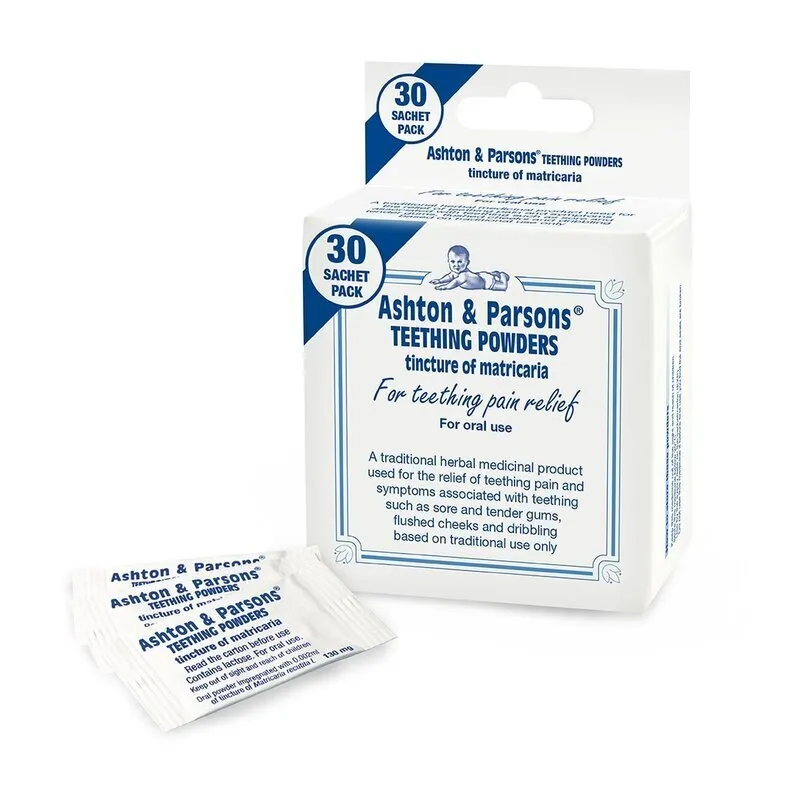
Teething is one of those milestones that every parent dreads a little. The sleepless nights, the constant dribbling, the inconsolable crying — it can be exhausting for everyone involved. Ashton and parsons teething powders have been trusted by parents in the UK for generations, offering a gentle, traditional herbal approach to easing infant teething discomfort. Available without a prescription, each pack contains 24 individual sachets, making them easy to use at home or on the go. You can find them alongside other trusted products in our baby and toddler range.
Teething typically begins around 6 months of age, though some babies start as early as 3 months. According to the NHS, symptoms can include sore and tender gums, flushing of the cheek, dribbling more than usual, and general irritability. These powders are designed specifically to address that discomfort in a format that's easy to administer to young infants.
How Do Ashton & Parsons Teething Powders Work?
The active ingredient in these powders is a tincture of Matricaria recutita, more commonly known as chamomile. Chamomile has a long history of traditional use in herbal medicine, particularly for its mild soothing properties. Here's how the product works in practice:
- The powder is poured directly onto the baby's tongue or dissolved in a small amount of cooled boiled water.
- The chamomile tincture is absorbed via the oral mucosa, where it is thought to exert a mild calming effect.
- The formulation is sugar-free, which is important for protecting developing teeth and gums.
- Each sachet delivers a consistent, pre-measured dose, removing any guesswork for parents.
It's worth noting that this is a traditional herbal medicinal product (THM), licensed in the UK under the Traditional Herbal Registration (THR) scheme. This means its use is based on traditional evidence rather than clinical trial data, though it has a well-established safety profile when used as directed.
Who Should Use Ashton & Parsons Teething Powders?
These powders are intended for infants who are experiencing the discomfort associated with teething. They are suitable for babies from 3 months of age. That said, they're not appropriate for every child, so it's worth checking the following:
- Babies aged 3 months and over who are showing signs of teething discomfort
- Infants whose parents prefer a herbal, sugar-free option over topical gels
- Babies without a known allergy to chamomile or plants in the Asteraceae/Compositae family
- Children where a non-medicated approach has not provided sufficient relief on its own
If your baby is under 3 months, or if teething symptoms seem unusually severe, always speak to your GP or health visitor before using any teething remedy.
How Do Ashton & Parsons Teething Powders Compare to Teething Gels?
| Feature | Ashton & Parsons Teething Powders | Teething Gel (e.g. Bonjela) |
|---|---|---|
| Active ingredient | Chamomile tincture (herbal) | Choline salicylate / lidocaine (depending on product) |
| Minimum age | 3 months | Varies — some not suitable under 16 (salicylate-based) |
| Sugar-free | Yes | Usually yes |
| Form | Oral powder sachet | Topical gel applied to gums |
| Licensing | Traditional Herbal Registration (THR) | Full medicinal licence (PL) |
How Should You Store Ashton & Parsons Teething Powders?
Store the sachets below 25°C in a dry place, away from direct sunlight. Keep them out of reach and sight of children at all times. Do not use any sachet past its printed expiry date, and check the packaging is intact before use. If you're also managing other aspects of your baby's health, our oral health collection includes a range of products to support healthy gums and teeth as your little one grows.
This product is a medicine. Speak to your doctor or pharmacist before using if you have an underlying medical condition or are taking other medicines.
Ashton & Parsons Infant Teething Powders specifications
| Treatment category | Teething relief |
| Mechanism of action | Traditional herbal — chamomile tincture with mild soothing properties |
| Effective for | Teething discomfort and irritability in infants |
| Suitable for | Infants aged 3 months and over |
| Active ingredient | Matricaria recutita (chamomile) tincture |
| Pack size | 24 sachets |
| UK classification | Traditional Herbal Registration (THR) |
| Drug class | Traditional herbal medicinal product |
| Preparation | Oral powder |
| Route of administration | Oral |
Specifications of Ashton & Parsons Infant Teething Powders
What Are Ashton & Parsons Infant Teething Powders and What Are They Used For?
Ashton & Parsons Infant Teething Powders are a traditional herbal medicinal product used to relieve the symptoms associated with infant teething. These include gum soreness, irritability, and general discomfort that occurs as a baby's first teeth begin to push through the gum line. The product is licensed in the UK under the Traditional Herbal Registration scheme, which means its use is based on a long-standing tradition of herbal medicine rather than formal clinical trials.
Each sachet contains a tincture of Matricaria recutita (chamomile) as the active ingredient. The product is sugar-free and suitable for babies from 3 months of age. It is not intended to treat fever, infection, or any other medical condition — if your baby has a high temperature alongside teething symptoms, the NHS advises seeking medical advice, as fever is not a recognised symptom of teething.
What Do You Need to Know Before Using Ashton & Parsons Teething Powders?
Before giving these powders to your baby, read the following carefully. There are some situations where this product should not be used.
Do not use if your baby:
- Is under 3 months of age
- Has a known allergy to chamomile or any plant in the Asteraceae/Compositae family (e.g. ragweed, chrysanthemums, marigolds)
- Has previously had an allergic reaction to any ingredient in this product
- Is currently unwell with a fever — consult your GP first
Drug interactions:
- No clinically significant drug interactions are currently known for this product at the doses used
- If your baby is taking any prescribed medicines, speak to your pharmacist before use
How Should You Use Ashton & Parsons Teething Powders?
Using these powders is straightforward, but it's important to follow the instructions carefully to ensure your baby receives the correct dose safely.
- Wash your hands thoroughly before handling the sachet.
- Tear open one sachet along the perforated edge.
- Pour the powder directly onto your baby's tongue, or dissolve it in a small amount of cooled boiled water.
- Allow at least 30 minutes between doses.
- Do not exceed 6 sachets in any 24-hour period.
- If symptoms persist beyond 7 days, consult your GP or pharmacist.
| Indication | Age Group | Dose | Frequency |
|---|---|---|---|
| Teething discomfort | 3 months – 2 years | 1 sachet | Up to 6 times in 24 hours |
What Are the Possible Side Effects of Ashton & Parsons Teething Powders?
Side effects with this product are uncommon when used as directed. However, as with any medicine, reactions can occur. If you notice anything unusual after giving your baby a dose, stop use immediately and seek advice from a pharmacist or GP.
Common side effects:
- None commonly reported at recommended doses
Less common side effects:
- Allergic skin reaction (rash, redness, or hives)
- Swelling of the lips, tongue, or throat
- Difficulty breathing — seek emergency medical help immediately if this occurs
- Gastrointestinal upset (rare)
Allergic reactions are most likely in babies with a sensitivity to chamomile or related plants. If you're unsure whether your baby has any such sensitivity, speak to your GP before use. You may also find it helpful to browse our pain relief range for additional options suitable for infants, such as paracetamol suspension, where appropriate.
How Should You Store Ashton & Parsons Teething Powders?
- Store below 25°C in a cool, dry place
- Keep away from direct sunlight and moisture
- Keep all sachets out of the reach and sight of children
- Do not use after the expiry date printed on the packaging
- Do not use any sachet if the packaging appears damaged or tampered with
- Dispose of unused sachets responsibly — return to your local pharmacy if possible
If you have any concerns about storage or the condition of your product, our team at Cured Pharmacy is always happy to help. You can also explore our dental products collection for further support as your baby's teeth begin to emerge.
References
- https://www.nhs.uk/conditions/baby/babys-development/teething/teething-symptoms-and-remedies/
- https://www.nhs.uk/conditions/baby/babys-development/teething/
- https://www.nhs.uk/medicines/paracetamol-for-children/
- https://www.nhs.uk/conditions/baby/health/when-to-call-a-doctor-or-health-visitor/
- https://www.medicines.org.uk/emc/product/1163/smpc
Written and reviewed by our qualified team
Your safety and success are our highest priorities. Our medical team rigorously evaluates every product and piece of advice we provide, ensuring you receive only the most effective, science-backed solutions available.
Frequently Asked Questions
Where can I buy Ashton and Parsons teething powders online in the UK?
You can buy Ashton and Parsons teething powders directly from Cured Pharmacy, a GPhC-registered UK online pharmacy. They are available without a prescription and are priced at £4.95 per pack of 24 sachets. Simply add to your basket and choose your preferred delivery option at checkout.
How do Ashton and Parsons teething powders work in the body?
The powders contain a tincture of Matricaria recutita (chamomile), a traditional herbal ingredient with a long history of use for soothing discomfort. When poured onto the baby's tongue, the chamomile is absorbed through the oral mucosa and is thought to exert a mild calming effect on irritated tissues. This is a traditional herbal medicinal product, so its use is based on established herbal tradition rather than formal clinical trial evidence.
How do I use Ashton and Parsons teething powders step by step?
Wash your hands, then tear open one sachet and pour the powder directly onto your baby's tongue. Alternatively, you can dissolve the powder in a small amount of cooled boiled water before giving it to your baby. Allow at least 30 minutes between doses and do not give more than 6 sachets in any 24-hour period.
What age can babies start using Ashton and Parsons teething powders?
Ashton and Parsons teething powders are suitable for babies from 3 months of age. If your baby is younger than 3 months and showing signs of discomfort, speak to your GP or health visitor before using any teething remedy. Always check the packaging and follow the dosage instructions carefully.
How many sachets can I give my baby in one day?
The maximum dose is 6 sachets in any 24-hour period, with at least 30 minutes between each dose. Do not exceed this amount, even if your baby seems particularly unsettled. If 6 sachets are not providing adequate relief, consult your pharmacist or GP for further guidance.
Are there any side effects of Ashton and Parsons teething powders?
Side effects are uncommon at the recommended dose, but allergic reactions can occur — particularly in babies sensitive to chamomile or related plants in the Asteraceae family. Signs of an allergic reaction include rash, swelling of the lips or tongue, or difficulty breathing. Stop use immediately and seek emergency medical help if any of these occur.
Can I use Ashton and Parsons teething powders alongside infant paracetamol?
No significant interactions between chamomile-based teething powders and infant paracetamol are currently known. However, if your baby is unwell or running a temperature, the NHS advises that fever is not a recognised symptom of teething and you should consult your GP. Always speak to a pharmacist before combining any medicines, even over-the-counter ones.
What happens if I accidentally give my baby too many sachets?
If you think your baby has received more than the recommended dose, contact NHS 111 or your nearest A&E for advice. Take the packaging with you so healthcare professionals can see exactly what was given. In most cases, a small excess is unlikely to cause serious harm, but it is always better to seek professional guidance promptly.
Who is not eligible to use Ashton and Parsons teething powders?
These powders should not be used in babies under 3 months of age or in any infant with a known allergy to chamomile or plants in the Asteraceae/Compositae family. They are also not suitable as a treatment for fever, infection, or any condition other than teething discomfort. If you are unsure whether this product is right for your baby, speak to your pharmacist before use.
What are the alternatives to Ashton and Parsons teething powders?
Alternatives include chilled (not frozen) teething rings, gentle gum massage, and teething gels. For more significant pain, infant paracetamol or ibuprofen suspension may be appropriate depending on your baby's age — always check with a pharmacist first. You can browse our baby and toddler range for a full selection of teething and infant care products.
How long can I keep using Ashton and Parsons teething powders?
These powders can be used throughout the teething period, which typically runs from around 3 months to 3 years of age as all 20 primary teeth come through. If symptoms persist beyond 7 days without improvement, or if your baby seems particularly unwell, consult your GP or health visitor. Do not use sachets beyond their printed expiry date.
Are Ashton and Parsons teething powders sugar-free?
Yes, Ashton and Parsons teething powders are sugar-free, which is important for protecting your baby's developing teeth and gums. The NHS recommends avoiding sugary foods and drinks from the moment your baby's first tooth appears. Choosing sugar-free teething remedies is a simple way to support good oral health from the very start.
Do Ashton and Parsons teething powders contain any artificial colours or preservatives?
Ashton and Parsons teething powders do not contain artificial colours. Always check the full ingredients list on the product packaging or patient information leaflet if your baby has any known sensitivities or allergies. If you have specific concerns about ingredients, your pharmacist can help you review the product information before purchase.
What is the latest research on herbal teething remedies like Ashton and Parsons?
Ashton and Parsons teething powders are licensed under the UK Traditional Herbal Registration (THR) scheme, which means their use is supported by traditional evidence rather than modern clinical trials. The MHRA oversees THR products to ensure they meet quality and safety standards. While large-scale randomised controlled trials on chamomile-based teething products are limited, the product has a well-established safety record when used as directed.
Can I use Ashton and Parsons teething powders if my baby is breastfed?
Yes, these powders are given directly to the baby and are not known to affect breastfeeding. The product is administered orally to the infant, not to the mother, so there is no known impact on breast milk. If you have any concerns, speak to your midwife, health visitor, or pharmacist for personalised advice. You can also explore our vitamins and supplements range for products to support maternal health during breastfeeding.
Description
Are Ashton and Parsons Teething Powders Right for Your Baby?
Teething is one of those milestones that every parent dreads a little. The sleepless nights, the constant dribbling, the inconsolable crying — it can be exhausting for everyone involved. Ashton and parsons teething powders have been trusted by parents in the UK for generations, offering a gentle, traditional herbal approach to easing infant teething discomfort. Available without a prescription, each pack contains 24 individual sachets, making them easy to use at home or on the go. You can find them alongside other trusted products in our baby and toddler range.
Teething typically begins around 6 months of age, though some babies start as early as 3 months. According to the NHS, symptoms can include sore and tender gums, flushing of the cheek, dribbling more than usual, and general irritability. These powders are designed specifically to address that discomfort in a format that's easy to administer to young infants.
How Do Ashton & Parsons Teething Powders Work?
The active ingredient in these powders is a tincture of Matricaria recutita, more commonly known as chamomile. Chamomile has a long history of traditional use in herbal medicine, particularly for its mild soothing properties. Here's how the product works in practice:
- The powder is poured directly onto the baby's tongue or dissolved in a small amount of cooled boiled water.
- The chamomile tincture is absorbed via the oral mucosa, where it is thought to exert a mild calming effect.
- The formulation is sugar-free, which is important for protecting developing teeth and gums.
- Each sachet delivers a consistent, pre-measured dose, removing any guesswork for parents.
It's worth noting that this is a traditional herbal medicinal product (THM), licensed in the UK under the Traditional Herbal Registration (THR) scheme. This means its use is based on traditional evidence rather than clinical trial data, though it has a well-established safety profile when used as directed.
Who Should Use Ashton & Parsons Teething Powders?
These powders are intended for infants who are experiencing the discomfort associated with teething. They are suitable for babies from 3 months of age. That said, they're not appropriate for every child, so it's worth checking the following:
- Babies aged 3 months and over who are showing signs of teething discomfort
- Infants whose parents prefer a herbal, sugar-free option over topical gels
- Babies without a known allergy to chamomile or plants in the Asteraceae/Compositae family
- Children where a non-medicated approach has not provided sufficient relief on its own
If your baby is under 3 months, or if teething symptoms seem unusually severe, always speak to your GP or health visitor before using any teething remedy.
How Do Ashton & Parsons Teething Powders Compare to Teething Gels?
| Feature | Ashton & Parsons Teething Powders | Teething Gel (e.g. Bonjela) |
|---|---|---|
| Active ingredient | Chamomile tincture (herbal) | Choline salicylate / lidocaine (depending on product) |
| Minimum age | 3 months | Varies — some not suitable under 16 (salicylate-based) |
| Sugar-free | Yes | Usually yes |
| Form | Oral powder sachet | Topical gel applied to gums |
| Licensing | Traditional Herbal Registration (THR) | Full medicinal licence (PL) |
How Should You Store Ashton & Parsons Teething Powders?
Store the sachets below 25°C in a dry place, away from direct sunlight. Keep them out of reach and sight of children at all times. Do not use any sachet past its printed expiry date, and check the packaging is intact before use. If you're also managing other aspects of your baby's health, our oral health collection includes a range of products to support healthy gums and teeth as your little one grows.
This product is a medicine. Speak to your doctor or pharmacist before using if you have an underlying medical condition or are taking other medicines.
Ashton & Parsons Infant Teething Powders specifications
| Treatment category | Teething relief |
| Mechanism of action | Traditional herbal — chamomile tincture with mild soothing properties |
| Effective for | Teething discomfort and irritability in infants |
| Suitable for | Infants aged 3 months and over |
| Active ingredient | Matricaria recutita (chamomile) tincture |
| Pack size | 24 sachets |
| UK classification | Traditional Herbal Registration (THR) |
| Drug class | Traditional herbal medicinal product |
| Preparation | Oral powder |
| Route of administration | Oral |
Specifications of Ashton & Parsons Infant Teething Powders
What Are Ashton & Parsons Infant Teething Powders and What Are They Used For?
Ashton & Parsons Infant Teething Powders are a traditional herbal medicinal product used to relieve the symptoms associated with infant teething. These include gum soreness, irritability, and general discomfort that occurs as a baby's first teeth begin to push through the gum line. The product is licensed in the UK under the Traditional Herbal Registration scheme, which means its use is based on a long-standing tradition of herbal medicine rather than formal clinical trials.
Each sachet contains a tincture of Matricaria recutita (chamomile) as the active ingredient. The product is sugar-free and suitable for babies from 3 months of age. It is not intended to treat fever, infection, or any other medical condition — if your baby has a high temperature alongside teething symptoms, the NHS advises seeking medical advice, as fever is not a recognised symptom of teething.
What Do You Need to Know Before Using Ashton & Parsons Teething Powders?
Before giving these powders to your baby, read the following carefully. There are some situations where this product should not be used.
Do not use if your baby:
- Is under 3 months of age
- Has a known allergy to chamomile or any plant in the Asteraceae/Compositae family (e.g. ragweed, chrysanthemums, marigolds)
- Has previously had an allergic reaction to any ingredient in this product
- Is currently unwell with a fever — consult your GP first
Drug interactions:
- No clinically significant drug interactions are currently known for this product at the doses used
- If your baby is taking any prescribed medicines, speak to your pharmacist before use
How Should You Use Ashton & Parsons Teething Powders?
Using these powders is straightforward, but it's important to follow the instructions carefully to ensure your baby receives the correct dose safely.
- Wash your hands thoroughly before handling the sachet.
- Tear open one sachet along the perforated edge.
- Pour the powder directly onto your baby's tongue, or dissolve it in a small amount of cooled boiled water.
- Allow at least 30 minutes between doses.
- Do not exceed 6 sachets in any 24-hour period.
- If symptoms persist beyond 7 days, consult your GP or pharmacist.
| Indication | Age Group | Dose | Frequency |
|---|---|---|---|
| Teething discomfort | 3 months – 2 years | 1 sachet | Up to 6 times in 24 hours |
What Are the Possible Side Effects of Ashton & Parsons Teething Powders?
Side effects with this product are uncommon when used as directed. However, as with any medicine, reactions can occur. If you notice anything unusual after giving your baby a dose, stop use immediately and seek advice from a pharmacist or GP.
Common side effects:
- None commonly reported at recommended doses
Less common side effects:
- Allergic skin reaction (rash, redness, or hives)
- Swelling of the lips, tongue, or throat
- Difficulty breathing — seek emergency medical help immediately if this occurs
- Gastrointestinal upset (rare)
Allergic reactions are most likely in babies with a sensitivity to chamomile or related plants. If you're unsure whether your baby has any such sensitivity, speak to your GP before use. You may also find it helpful to browse our pain relief range for additional options suitable for infants, such as paracetamol suspension, where appropriate.
How Should You Store Ashton & Parsons Teething Powders?
- Store below 25°C in a cool, dry place
- Keep away from direct sunlight and moisture
- Keep all sachets out of the reach and sight of children
- Do not use after the expiry date printed on the packaging
- Do not use any sachet if the packaging appears damaged or tampered with
- Dispose of unused sachets responsibly — return to your local pharmacy if possible
If you have any concerns about storage or the condition of your product, our team at Cured Pharmacy is always happy to help. You can also explore our dental products collection for further support as your baby's teeth begin to emerge.
References
- https://www.nhs.uk/conditions/baby/babys-development/teething/teething-symptoms-and-remedies/
- https://www.nhs.uk/conditions/baby/babys-development/teething/
- https://www.nhs.uk/medicines/paracetamol-for-children/
- https://www.nhs.uk/conditions/baby/health/when-to-call-a-doctor-or-health-visitor/
- https://www.medicines.org.uk/emc/product/1163/smpc
Written and reviewed by our qualified team
Your safety and success are our highest priorities. Our medical team rigorously evaluates every product and piece of advice we provide, ensuring you receive only the most effective, science-backed solutions available.
Frequently Asked Questions
Where can I buy Ashton and Parsons teething powders online in the UK?
You can buy Ashton and Parsons teething powders directly from Cured Pharmacy, a GPhC-registered UK online pharmacy. They are available without a prescription and are priced at £4.95 per pack of 24 sachets. Simply add to your basket and choose your preferred delivery option at checkout.
How do Ashton and Parsons teething powders work in the body?
The powders contain a tincture of Matricaria recutita (chamomile), a traditional herbal ingredient with a long history of use for soothing discomfort. When poured onto the baby's tongue, the chamomile is absorbed through the oral mucosa and is thought to exert a mild calming effect on irritated tissues. This is a traditional herbal medicinal product, so its use is based on established herbal tradition rather than formal clinical trial evidence.
How do I use Ashton and Parsons teething powders step by step?
Wash your hands, then tear open one sachet and pour the powder directly onto your baby's tongue. Alternatively, you can dissolve the powder in a small amount of cooled boiled water before giving it to your baby. Allow at least 30 minutes between doses and do not give more than 6 sachets in any 24-hour period.
What age can babies start using Ashton and Parsons teething powders?
Ashton and Parsons teething powders are suitable for babies from 3 months of age. If your baby is younger than 3 months and showing signs of discomfort, speak to your GP or health visitor before using any teething remedy. Always check the packaging and follow the dosage instructions carefully.
How many sachets can I give my baby in one day?
The maximum dose is 6 sachets in any 24-hour period, with at least 30 minutes between each dose. Do not exceed this amount, even if your baby seems particularly unsettled. If 6 sachets are not providing adequate relief, consult your pharmacist or GP for further guidance.
Are there any side effects of Ashton and Parsons teething powders?
Side effects are uncommon at the recommended dose, but allergic reactions can occur — particularly in babies sensitive to chamomile or related plants in the Asteraceae family. Signs of an allergic reaction include rash, swelling of the lips or tongue, or difficulty breathing. Stop use immediately and seek emergency medical help if any of these occur.
Can I use Ashton and Parsons teething powders alongside infant paracetamol?
No significant interactions between chamomile-based teething powders and infant paracetamol are currently known. However, if your baby is unwell or running a temperature, the NHS advises that fever is not a recognised symptom of teething and you should consult your GP. Always speak to a pharmacist before combining any medicines, even over-the-counter ones.
What happens if I accidentally give my baby too many sachets?
If you think your baby has received more than the recommended dose, contact NHS 111 or your nearest A&E for advice. Take the packaging with you so healthcare professionals can see exactly what was given. In most cases, a small excess is unlikely to cause serious harm, but it is always better to seek professional guidance promptly.
Who is not eligible to use Ashton and Parsons teething powders?
These powders should not be used in babies under 3 months of age or in any infant with a known allergy to chamomile or plants in the Asteraceae/Compositae family. They are also not suitable as a treatment for fever, infection, or any condition other than teething discomfort. If you are unsure whether this product is right for your baby, speak to your pharmacist before use.
What are the alternatives to Ashton and Parsons teething powders?
Alternatives include chilled (not frozen) teething rings, gentle gum massage, and teething gels. For more significant pain, infant paracetamol or ibuprofen suspension may be appropriate depending on your baby's age — always check with a pharmacist first. You can browse our baby and toddler range for a full selection of teething and infant care products.
How long can I keep using Ashton and Parsons teething powders?
These powders can be used throughout the teething period, which typically runs from around 3 months to 3 years of age as all 20 primary teeth come through. If symptoms persist beyond 7 days without improvement, or if your baby seems particularly unwell, consult your GP or health visitor. Do not use sachets beyond their printed expiry date.
Are Ashton and Parsons teething powders sugar-free?
Yes, Ashton and Parsons teething powders are sugar-free, which is important for protecting your baby's developing teeth and gums. The NHS recommends avoiding sugary foods and drinks from the moment your baby's first tooth appears. Choosing sugar-free teething remedies is a simple way to support good oral health from the very start.
Do Ashton and Parsons teething powders contain any artificial colours or preservatives?
Ashton and Parsons teething powders do not contain artificial colours. Always check the full ingredients list on the product packaging or patient information leaflet if your baby has any known sensitivities or allergies. If you have specific concerns about ingredients, your pharmacist can help you review the product information before purchase.
What is the latest research on herbal teething remedies like Ashton and Parsons?
Ashton and Parsons teething powders are licensed under the UK Traditional Herbal Registration (THR) scheme, which means their use is supported by traditional evidence rather than modern clinical trials. The MHRA oversees THR products to ensure they meet quality and safety standards. While large-scale randomised controlled trials on chamomile-based teething products are limited, the product has a well-established safety record when used as directed.
Can I use Ashton and Parsons teething powders if my baby is breastfed?
Yes, these powders are given directly to the baby and are not known to affect breastfeeding. The product is administered orally to the infant, not to the mother, so there is no known impact on breast milk. If you have any concerns, speak to your midwife, health visitor, or pharmacist for personalised advice. You can also explore our vitamins and supplements range for products to support maternal health during breastfeeding.