The Story
Is Anthisan Cream Effective for Insect Bites?
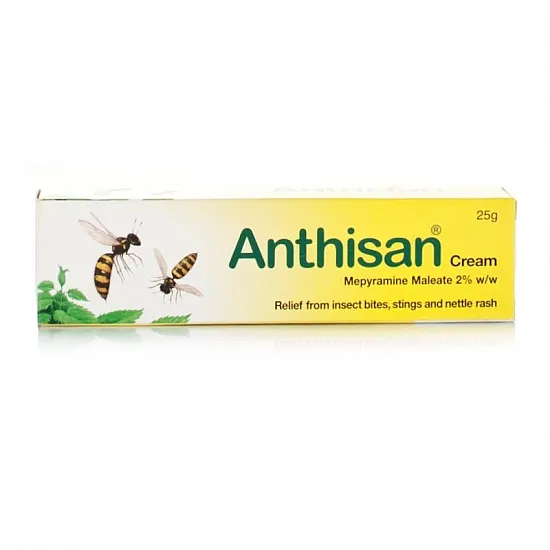
If you've ever been left with an itchy, swollen bite after a walk in the park or a summer barbecue, you'll know how irritating it can be. Anthisan cream insect bites treatment is one of the most widely recognised over-the-counter options available in the UK. It contains 2% mepyramine maleate, a topical antihistamine that works directly at the site of the bite to calm the skin's reaction. At just £4.99 for a 25g tube, it's a practical addition to any household first aid kit — especially during warmer months when insect activity peaks.
Insect bites and stings cause the body to release histamine, a chemical that triggers itching, redness, and swelling. Anthisan cream is designed to interrupt that process locally, without the need for oral medication. It's suitable for adults and children aged 3 and over, making it a versatile option for families. If you're looking for a broader range of topical treatments, you can explore our creams and ointments collection for more options.
How Does Anthisan Cream Work on Bites and Stings?
The active ingredient, mepyramine maleate, is a first-generation H1 antihistamine. When applied topically, it competes with histamine at receptor sites in the skin, blocking the signal that causes itching and inflammation. It doesn't treat the underlying cause of the bite, but it does provide meaningful symptomatic relief.
- Histamine is released at the bite site following skin penetration by an insect
- Mepyramine maleate binds to H1 receptors in the local tissue
- This blocks histamine from triggering the itch-scratch cycle
- Redness and swelling are reduced as the inflammatory response is dampened
Who Is Anthisan Cream Suitable For?
Anthisan cream is appropriate for most adults and children aged 3 years and above. It's particularly useful for people who experience localised reactions to insect bites — think mosquitoes, midges, gnats, wasps, and bee stings. It's not intended for severe allergic reactions (anaphylaxis), which require emergency medical treatment.
- Adults with localised itching or swelling from insect bites or stings
- Children aged 3 and over, under adult supervision
- People who prefer a topical treatment over oral antihistamines
- Those needing fast, targeted relief at the bite site
How Does Anthisan Cream Compare to Hydrocortisone Cream?
| Feature | Anthisan Cream 2% | Hydrocortisone 1% Cream |
|---|---|---|
| Active ingredient | Mepyramine maleate 2% | Hydrocortisone 1% |
| Mechanism | Topical antihistamine (H1 blocker) | Mild topical corticosteroid |
| Primary use | Insect bites, stings, nettle rash | Eczema, dermatitis, insect bites |
| Suitable for children | Age 3 and over | Age 10 and over (OTC) |
How Should You Store Anthisan Cream and Is It Right for You?
Anthisan cream should be stored below 25°C, away from direct sunlight and out of reach of children. Do not use after the expiry date printed on the tube. If you're prone to reactions from insect bites during travel or outdoor activities, keeping a tube in your bag is a sensible precaution. For those managing seasonal allergies alongside bite reactions, our allergy and hay fever collection includes a range of complementary products.
It's worth noting that anthisan cream insect bites treatment is not suitable for use on broken, infected, or weeping skin. If your bite site looks infected — with spreading redness, warmth, or pus — speak to a pharmacist or GP before applying any topical cream.
This product is a medicine. Speak to your doctor or pharmacist before using if you have an underlying medical condition or are taking other medicines.
Anthisan Cream For Insect Bites & Stings – 25g specifications
| Treatment category | Insect bite and sting relief |
| Active ingredient | Mepyramine maleate 2% |
| Mechanism of action | Topical H1 antihistamine — blocks histamine receptors in skin |
| Drug class | Topical antihistamine |
| Preparation | Cream |
| Route of administration | Topical (cutaneous) |
| Pack size | 25g tube |
| Suitable for | Adults and children aged 3 years and over |
| UK classification | General Sale List (GSL) |
Specifications of Anthisan Cream For Insect Bites & Stings – 25g
What Is Anthisan Cream and What Is It Used For?
Anthisan cream is a topical antihistamine cream containing 2% mepyramine maleate. It is used to relieve the itching, irritation, redness, and mild swelling associated with insect bites and stings. It may also be used for nettle rash (urticaria) and other minor skin irritations where histamine release is the underlying cause of discomfort.
The cream works locally on the skin and is not absorbed into the bloodstream in significant amounts when used as directed. This makes it a practical choice for people who want targeted relief without the drowsiness sometimes associated with oral antihistamines. It is available over the counter without a prescription and is classified as a General Sale List (GSL) medicine in the UK.
What Do You Need to Know Before Using Anthisan Cream?
Before applying Anthisan cream, read the following contraindications and warnings carefully:
- Do not use on broken, infected, blistered, or weeping skin
- Do not use near the eyes or on mucous membranes
- Not recommended for children under 3 years of age
- Do not use for more than 3 consecutive days without medical advice
- Avoid prolonged or repeated use — this can cause skin sensitisation
- If you have previously had an allergic reaction to mepyramine maleate or any other antihistamine, do not use this product
- Seek emergency medical help immediately if you experience signs of a severe allergic reaction (anaphylaxis) such as difficulty breathing, swelling of the face or throat, or a rapid heartbeat — Anthisan cream is not a treatment for anaphylaxis
Known drug interactions for topical mepyramine maleate are not clinically significant. However, if you are using other topical preparations on the same area, speak to your pharmacist first.
- No significant interactions with oral medicines are expected at topical doses
- Avoid combining with other topical antihistamines on the same skin area
How Should You Use Anthisan Cream?
Always use Anthisan cream exactly as described in the patient information leaflet or as directed by your pharmacist. Do not apply more than recommended, and do not use for longer than advised.
- Wash and gently dry the affected area before application
- Squeeze a small amount of cream onto a clean fingertip
- Apply directly to the bite or sting site and rub in gently
- Wash your hands after application unless the hands are the treated area
- Repeat up to 3 times daily as needed
- Do not use for more than 3 consecutive days
| Indication | Age Group | Dose | Frequency |
|---|---|---|---|
| Insect bites and stings | Adults and children aged 3+ | Small amount applied to affected area | Up to 3 times daily |
| Nettle rash / urticaria | Adults and children aged 3+ | Small amount applied to affected area | Up to 3 times daily |
| Children under 3 years | Under 3 years | Not recommended | — |
What Are the Possible Side Effects of Anthisan Cream?
Like all medicines, Anthisan cream can cause side effects, although not everyone experiences them. Most side effects are localised to the area of application and are mild in nature.
Common side effects:
- Mild skin irritation at the application site
- Temporary redness or a warm sensation on the skin
Less common side effects:
- Contact dermatitis (skin sensitisation with repeated or prolonged use)
- Localised rash or hives at the application site
- Photosensitivity — increased sensitivity to sunlight on treated skin
If you notice any worsening of your skin condition, or if the bite site becomes more inflamed, swollen, or shows signs of infection, stop using the cream and seek advice from a pharmacist or GP. For broader skin care support, you may find our skin care collection helpful.
How Should You Store Anthisan Cream?
- Store below 25°C in a cool, dry place
- Keep away from direct sunlight and heat sources
- Keep the tube tightly closed when not in use
- Keep out of the sight and reach of children
- Do not use after the expiry date printed on the tube or carton
- Do not dispose of medicines via wastewater or household waste — return unused medicines to your pharmacy
If you're heading outdoors or travelling, consider keeping Anthisan cream in your first aid kit alongside other essentials for minor injuries and skin reactions.
References
- https://www.nhs.uk/conditions/insect-bites-and-stings/
- https://www.nhs.uk/conditions/insect-bites-and-stings/treatment/
- https://www.nhs.uk/conditions/anaphylaxis/
- https://www.nhs.uk/conditions/antihistamines/
- https://www.nhs.uk/conditions/urticaria-hives/
- https://bnf.nice.org.uk/drugs/mepyramine-maleate/
Written and reviewed by our qualified team
Your safety and success are our highest priorities. Our medical team rigorously evaluates every product and piece of advice we provide, ensuring you receive only the most effective, science-backed solutions available.
Frequently Asked Questions
Where can I buy Anthisan cream for insect bites online in the UK?
You can buy Anthisan cream for insect bites directly from Cured Pharmacy, a GPhC-registered UK online pharmacy, for £4.99 per 25g tube. It is available without a prescription as an over-the-counter medicine. Simply add it to your basket and it will be dispatched to your door.
How does Anthisan cream work on insect bites and stings?
Anthisan cream contains 2% mepyramine maleate, a topical antihistamine that blocks H1 histamine receptors in the skin. When an insect bites or stings, your body releases histamine, which causes itching, redness, and swelling. By blocking those receptors locally, the cream reduces these symptoms at the site of the reaction.
How do I apply Anthisan cream step by step?
Clean and dry the affected area first, then apply a small amount of cream directly to the bite or sting site and rub in gently. You can repeat this up to three times a day, but do not use for more than three consecutive days. Always wash your hands after applying unless your hands are the area being treated.
How quickly does Anthisan cream relieve itching?
Many people notice a reduction in itching within 15 to 30 minutes of applying Anthisan cream, though this can vary depending on the severity of the reaction. The cream works locally at the bite site, so relief tends to be targeted and relatively prompt. If symptoms do not improve after a few applications, speak to your pharmacist.
What is the correct dose of Anthisan cream for adults?
For adults, apply a small amount of Anthisan cream to the affected area up to three times daily. Do not apply more than needed and do not use for longer than three consecutive days without medical advice. There is no specific quantity defined in milligrams for topical use — a thin layer covering the bite site is sufficient.
Can children use Anthisan cream for insect bites?
Anthisan cream is suitable for children aged 3 years and over, but it should not be used on children under 3 years of age. For younger children who have been bitten, seek advice from a pharmacist or GP about appropriate alternatives. When using on children aged 3 and over, always apply under adult supervision.
Can I use Anthisan cream on my face or near my eyes?
You should avoid applying Anthisan cream near the eyes or on mucous membranes. If you need to treat a bite close to the eye area, speak to a pharmacist first for guidance on safe application. Accidental contact with the eyes should be rinsed immediately with clean water.
What are the side effects of Anthisan cream?
Side effects are uncommon but can include mild skin irritation, temporary redness, or a warm sensation at the application site. With prolonged or repeated use, skin sensitisation (contact dermatitis) may develop, which is why the cream should not be used for more than three consecutive days. If you notice a worsening rash or increased irritation, stop use and consult a pharmacist.
Can I use Anthisan cream on broken or infected skin?
No — Anthisan cream must not be applied to broken, infected, blistered, or weeping skin. If your bite site looks infected, with spreading redness, warmth, swelling, or discharge, you should seek advice from a pharmacist or GP before using any topical treatment. Applying cream to infected skin could worsen the condition.
Is Anthisan cream safe to use during pregnancy or breastfeeding?
There is limited data on the use of topical mepyramine maleate during pregnancy or breastfeeding. If you are pregnant, trying to conceive, or breastfeeding, you should speak to your GP or pharmacist before using Anthisan cream. They can advise on the most appropriate and safe option for your situation.
What are the alternatives to Anthisan cream for insect bites?
Alternatives include hydrocortisone 1% cream, which reduces inflammation, or calamine lotion for soothing mild irritation. Oral antihistamines such as cetirizine or loratadine may help with more widespread allergic reactions to bites. You can browse our allergy and hay fever collection for a range of antihistamine options.
How long can I use Anthisan cream for?
Anthisan cream should not be used for more than three consecutive days without seeking medical advice. Prolonged use increases the risk of skin sensitisation, where the skin becomes reactive to the cream itself. If your symptoms persist beyond three days, consult a pharmacist or GP for further assessment.
Does Anthisan cream help with wasp stings as well as mosquito bites?
Yes — Anthisan cream is suitable for use on a range of insect bites and stings, including those from mosquitoes, midges, gnats, wasps, and bees. It works by blocking the histamine response that causes itching and swelling, regardless of the specific insect involved. However, if you experience a severe or widespread reaction to a sting, seek emergency medical help immediately.
What should I do if I have a severe allergic reaction to an insect sting?
Anthisan cream is not suitable for treating anaphylaxis or severe allergic reactions. If you experience difficulty breathing, swelling of the face, lips, or throat, dizziness, or a rapid heartbeat after a sting, call 999 immediately. People with known severe allergies to insect stings should carry an adrenaline auto-injector (such as an EpiPen) as prescribed by their doctor.
What are the latest findings on topical antihistamines for insect bites?
Current NHS and clinical guidance supports the use of topical antihistamines like mepyramine maleate for localised relief of insect bite symptoms, though some dermatology guidelines note that topical corticosteroids may be preferred for more pronounced inflammatory reactions. The key recommendation across sources is to limit topical antihistamine use to short courses to avoid sensitisation. Always follow the product instructions and seek pharmacist advice if you are unsure which treatment is most appropriate for your reaction. You can also explore our first aid collection for complementary bite and sting treatments.
Description
Is Anthisan Cream Effective for Insect Bites?
If you've ever been left with an itchy, swollen bite after a walk in the park or a summer barbecue, you'll know how irritating it can be. Anthisan cream insect bites treatment is one of the most widely recognised over-the-counter options available in the UK. It contains 2% mepyramine maleate, a topical antihistamine that works directly at the site of the bite to calm the skin's reaction. At just £4.99 for a 25g tube, it's a practical addition to any household first aid kit — especially during warmer months when insect activity peaks.
Insect bites and stings cause the body to release histamine, a chemical that triggers itching, redness, and swelling. Anthisan cream is designed to interrupt that process locally, without the need for oral medication. It's suitable for adults and children aged 3 and over, making it a versatile option for families. If you're looking for a broader range of topical treatments, you can explore our creams and ointments collection for more options.
How Does Anthisan Cream Work on Bites and Stings?
The active ingredient, mepyramine maleate, is a first-generation H1 antihistamine. When applied topically, it competes with histamine at receptor sites in the skin, blocking the signal that causes itching and inflammation. It doesn't treat the underlying cause of the bite, but it does provide meaningful symptomatic relief.
- Histamine is released at the bite site following skin penetration by an insect
- Mepyramine maleate binds to H1 receptors in the local tissue
- This blocks histamine from triggering the itch-scratch cycle
- Redness and swelling are reduced as the inflammatory response is dampened
Who Is Anthisan Cream Suitable For?
Anthisan cream is appropriate for most adults and children aged 3 years and above. It's particularly useful for people who experience localised reactions to insect bites — think mosquitoes, midges, gnats, wasps, and bee stings. It's not intended for severe allergic reactions (anaphylaxis), which require emergency medical treatment.
- Adults with localised itching or swelling from insect bites or stings
- Children aged 3 and over, under adult supervision
- People who prefer a topical treatment over oral antihistamines
- Those needing fast, targeted relief at the bite site
How Does Anthisan Cream Compare to Hydrocortisone Cream?
| Feature | Anthisan Cream 2% | Hydrocortisone 1% Cream |
|---|---|---|
| Active ingredient | Mepyramine maleate 2% | Hydrocortisone 1% |
| Mechanism | Topical antihistamine (H1 blocker) | Mild topical corticosteroid |
| Primary use | Insect bites, stings, nettle rash | Eczema, dermatitis, insect bites |
| Suitable for children | Age 3 and over | Age 10 and over (OTC) |
How Should You Store Anthisan Cream and Is It Right for You?
Anthisan cream should be stored below 25°C, away from direct sunlight and out of reach of children. Do not use after the expiry date printed on the tube. If you're prone to reactions from insect bites during travel or outdoor activities, keeping a tube in your bag is a sensible precaution. For those managing seasonal allergies alongside bite reactions, our allergy and hay fever collection includes a range of complementary products.
It's worth noting that anthisan cream insect bites treatment is not suitable for use on broken, infected, or weeping skin. If your bite site looks infected — with spreading redness, warmth, or pus — speak to a pharmacist or GP before applying any topical cream.
This product is a medicine. Speak to your doctor or pharmacist before using if you have an underlying medical condition or are taking other medicines.
Anthisan Cream For Insect Bites & Stings – 25g specifications
| Treatment category | Insect bite and sting relief |
| Active ingredient | Mepyramine maleate 2% |
| Mechanism of action | Topical H1 antihistamine — blocks histamine receptors in skin |
| Drug class | Topical antihistamine |
| Preparation | Cream |
| Route of administration | Topical (cutaneous) |
| Pack size | 25g tube |
| Suitable for | Adults and children aged 3 years and over |
| UK classification | General Sale List (GSL) |
Specifications of Anthisan Cream For Insect Bites & Stings – 25g
What Is Anthisan Cream and What Is It Used For?
Anthisan cream is a topical antihistamine cream containing 2% mepyramine maleate. It is used to relieve the itching, irritation, redness, and mild swelling associated with insect bites and stings. It may also be used for nettle rash (urticaria) and other minor skin irritations where histamine release is the underlying cause of discomfort.
The cream works locally on the skin and is not absorbed into the bloodstream in significant amounts when used as directed. This makes it a practical choice for people who want targeted relief without the drowsiness sometimes associated with oral antihistamines. It is available over the counter without a prescription and is classified as a General Sale List (GSL) medicine in the UK.
What Do You Need to Know Before Using Anthisan Cream?
Before applying Anthisan cream, read the following contraindications and warnings carefully:
- Do not use on broken, infected, blistered, or weeping skin
- Do not use near the eyes or on mucous membranes
- Not recommended for children under 3 years of age
- Do not use for more than 3 consecutive days without medical advice
- Avoid prolonged or repeated use — this can cause skin sensitisation
- If you have previously had an allergic reaction to mepyramine maleate or any other antihistamine, do not use this product
- Seek emergency medical help immediately if you experience signs of a severe allergic reaction (anaphylaxis) such as difficulty breathing, swelling of the face or throat, or a rapid heartbeat — Anthisan cream is not a treatment for anaphylaxis
Known drug interactions for topical mepyramine maleate are not clinically significant. However, if you are using other topical preparations on the same area, speak to your pharmacist first.
- No significant interactions with oral medicines are expected at topical doses
- Avoid combining with other topical antihistamines on the same skin area
How Should You Use Anthisan Cream?
Always use Anthisan cream exactly as described in the patient information leaflet or as directed by your pharmacist. Do not apply more than recommended, and do not use for longer than advised.
- Wash and gently dry the affected area before application
- Squeeze a small amount of cream onto a clean fingertip
- Apply directly to the bite or sting site and rub in gently
- Wash your hands after application unless the hands are the treated area
- Repeat up to 3 times daily as needed
- Do not use for more than 3 consecutive days
| Indication | Age Group | Dose | Frequency |
|---|---|---|---|
| Insect bites and stings | Adults and children aged 3+ | Small amount applied to affected area | Up to 3 times daily |
| Nettle rash / urticaria | Adults and children aged 3+ | Small amount applied to affected area | Up to 3 times daily |
| Children under 3 years | Under 3 years | Not recommended | — |
What Are the Possible Side Effects of Anthisan Cream?
Like all medicines, Anthisan cream can cause side effects, although not everyone experiences them. Most side effects are localised to the area of application and are mild in nature.
Common side effects:
- Mild skin irritation at the application site
- Temporary redness or a warm sensation on the skin
Less common side effects:
- Contact dermatitis (skin sensitisation with repeated or prolonged use)
- Localised rash or hives at the application site
- Photosensitivity — increased sensitivity to sunlight on treated skin
If you notice any worsening of your skin condition, or if the bite site becomes more inflamed, swollen, or shows signs of infection, stop using the cream and seek advice from a pharmacist or GP. For broader skin care support, you may find our skin care collection helpful.
How Should You Store Anthisan Cream?
- Store below 25°C in a cool, dry place
- Keep away from direct sunlight and heat sources
- Keep the tube tightly closed when not in use
- Keep out of the sight and reach of children
- Do not use after the expiry date printed on the tube or carton
- Do not dispose of medicines via wastewater or household waste — return unused medicines to your pharmacy
If you're heading outdoors or travelling, consider keeping Anthisan cream in your first aid kit alongside other essentials for minor injuries and skin reactions.
References
- https://www.nhs.uk/conditions/insect-bites-and-stings/
- https://www.nhs.uk/conditions/insect-bites-and-stings/treatment/
- https://www.nhs.uk/conditions/anaphylaxis/
- https://www.nhs.uk/conditions/antihistamines/
- https://www.nhs.uk/conditions/urticaria-hives/
- https://bnf.nice.org.uk/drugs/mepyramine-maleate/
Written and reviewed by our qualified team
Your safety and success are our highest priorities. Our medical team rigorously evaluates every product and piece of advice we provide, ensuring you receive only the most effective, science-backed solutions available.
Frequently Asked Questions
Where can I buy Anthisan cream for insect bites online in the UK?
You can buy Anthisan cream for insect bites directly from Cured Pharmacy, a GPhC-registered UK online pharmacy, for £4.99 per 25g tube. It is available without a prescription as an over-the-counter medicine. Simply add it to your basket and it will be dispatched to your door.
How does Anthisan cream work on insect bites and stings?
Anthisan cream contains 2% mepyramine maleate, a topical antihistamine that blocks H1 histamine receptors in the skin. When an insect bites or stings, your body releases histamine, which causes itching, redness, and swelling. By blocking those receptors locally, the cream reduces these symptoms at the site of the reaction.
How do I apply Anthisan cream step by step?
Clean and dry the affected area first, then apply a small amount of cream directly to the bite or sting site and rub in gently. You can repeat this up to three times a day, but do not use for more than three consecutive days. Always wash your hands after applying unless your hands are the area being treated.
How quickly does Anthisan cream relieve itching?
Many people notice a reduction in itching within 15 to 30 minutes of applying Anthisan cream, though this can vary depending on the severity of the reaction. The cream works locally at the bite site, so relief tends to be targeted and relatively prompt. If symptoms do not improve after a few applications, speak to your pharmacist.
What is the correct dose of Anthisan cream for adults?
For adults, apply a small amount of Anthisan cream to the affected area up to three times daily. Do not apply more than needed and do not use for longer than three consecutive days without medical advice. There is no specific quantity defined in milligrams for topical use — a thin layer covering the bite site is sufficient.
Can children use Anthisan cream for insect bites?
Anthisan cream is suitable for children aged 3 years and over, but it should not be used on children under 3 years of age. For younger children who have been bitten, seek advice from a pharmacist or GP about appropriate alternatives. When using on children aged 3 and over, always apply under adult supervision.
Can I use Anthisan cream on my face or near my eyes?
You should avoid applying Anthisan cream near the eyes or on mucous membranes. If you need to treat a bite close to the eye area, speak to a pharmacist first for guidance on safe application. Accidental contact with the eyes should be rinsed immediately with clean water.
What are the side effects of Anthisan cream?
Side effects are uncommon but can include mild skin irritation, temporary redness, or a warm sensation at the application site. With prolonged or repeated use, skin sensitisation (contact dermatitis) may develop, which is why the cream should not be used for more than three consecutive days. If you notice a worsening rash or increased irritation, stop use and consult a pharmacist.
Can I use Anthisan cream on broken or infected skin?
No — Anthisan cream must not be applied to broken, infected, blistered, or weeping skin. If your bite site looks infected, with spreading redness, warmth, swelling, or discharge, you should seek advice from a pharmacist or GP before using any topical treatment. Applying cream to infected skin could worsen the condition.
Is Anthisan cream safe to use during pregnancy or breastfeeding?
There is limited data on the use of topical mepyramine maleate during pregnancy or breastfeeding. If you are pregnant, trying to conceive, or breastfeeding, you should speak to your GP or pharmacist before using Anthisan cream. They can advise on the most appropriate and safe option for your situation.
What are the alternatives to Anthisan cream for insect bites?
Alternatives include hydrocortisone 1% cream, which reduces inflammation, or calamine lotion for soothing mild irritation. Oral antihistamines such as cetirizine or loratadine may help with more widespread allergic reactions to bites. You can browse our allergy and hay fever collection for a range of antihistamine options.
How long can I use Anthisan cream for?
Anthisan cream should not be used for more than three consecutive days without seeking medical advice. Prolonged use increases the risk of skin sensitisation, where the skin becomes reactive to the cream itself. If your symptoms persist beyond three days, consult a pharmacist or GP for further assessment.
Does Anthisan cream help with wasp stings as well as mosquito bites?
Yes — Anthisan cream is suitable for use on a range of insect bites and stings, including those from mosquitoes, midges, gnats, wasps, and bees. It works by blocking the histamine response that causes itching and swelling, regardless of the specific insect involved. However, if you experience a severe or widespread reaction to a sting, seek emergency medical help immediately.
What should I do if I have a severe allergic reaction to an insect sting?
Anthisan cream is not suitable for treating anaphylaxis or severe allergic reactions. If you experience difficulty breathing, swelling of the face, lips, or throat, dizziness, or a rapid heartbeat after a sting, call 999 immediately. People with known severe allergies to insect stings should carry an adrenaline auto-injector (such as an EpiPen) as prescribed by their doctor.
What are the latest findings on topical antihistamines for insect bites?
Current NHS and clinical guidance supports the use of topical antihistamines like mepyramine maleate for localised relief of insect bite symptoms, though some dermatology guidelines note that topical corticosteroids may be preferred for more pronounced inflammatory reactions. The key recommendation across sources is to limit topical antihistamine use to short courses to avoid sensitisation. Always follow the product instructions and seek pharmacist advice if you are unsure which treatment is most appropriate for your reaction. You can also explore our first aid collection for complementary bite and sting treatments.